
Hot-weather campervan & motorhome guide
How to Keep Cool in a Campervan or Motorhome in Hot Weather
When a small living space heats up, the answer is not one gadget. The biggest gains usually come from stopping heat getting in, moving hot air out, changing when you drive and cook, and recognising when discomfort is becoming a health risk.
Use this guide before you set off, when you park up, through a hot night and on the road the next day.
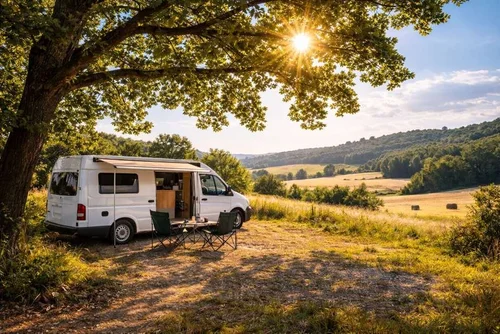
What is the best way to keep a campervan or motorhome cool?
Prevent solar heat entering through the windscreen and sun-facing windows, create airflow only where it helps, vent hot air through higher openings, reduce indoor heat from cooking and appliances, and move driving or strenuous activity to cooler parts of the day. Fans can improve comfort, but they work best as part of that wider strategy.
The first 10 minutes: what to do when the van is already too hot
Do not start by switching on every gadget. First remove stored heat and stop more heat entering.
Park smarter
How to keep a campervan cool when parked up
A parked van can gain heat rapidly through large glazed areas and sun-exposed bodywork. The most useful question is not simply “where is the shade now?” but “where will the sun be in two or four hours?”
Shade the glass
Prioritise the windscreen and the side taking direct sun. External covers can stop more heat before it reaches the glass; internal reflective screens can still help where external covers are impractical.
Think about orientation
A pitch that is comfortable at midday can become brutal by late afternoon. Consider the sun path, awning side and where you expect to sit or sleep.
Use high and low openings
Warm air rises. Where safe and suitable, combine a lower inlet on the cooler side with a roof vent or higher outlet.
Do not confuse breeze with cooling
If the outside air is hotter than the interior, wide-open windows can sometimes add heat. Shade first, then use airflow deliberately.
Fans and portable cooling
A 12V or USB fan can make people feel cooler by increasing air movement, particularly at night. Small evaporative coolers may help in some conditions but are not equivalent to compressor air conditioning and can add humidity. Portable air-conditioning units also need realistic power and exhaust planning.
The original article linked to this independent resource on 12V portable air-conditioning options. Check current product specifications, power draw and ventilation requirements before buying.
Night-time comfort
How to sleep in a hot campervan or motorhome
Hot nights are often the hardest part because upholstery, cupboards and interior surfaces continue releasing stored heat after sunset. Start cooling the van before bedtime rather than waiting until you are already trying to sleep.
- Vent accumulated heat as soon as outside air becomes cooler than inside air.
- Use breathable bedding and remove mattress toppers or heavy duvets that trap heat.
- Position a low-power fan to move air across the sleeping area rather than simply stirring hot air near the ceiling.
- Keep drinking water within reach, but avoid relying on alcohol to “help” sleep in hot conditions.
- Use a cool damp flannel on the neck or forehead; wrap cold packs so they are not applied directly to skin for long periods.
- If insects are a problem, use fitted mesh screens rather than closing every opening.
On the road
Keeping cool behind the wheel
Heat can turn a pleasant road trip into a tiring one. Build the day around comfort and concentration rather than treating every hot-weather mile as something to push through.
Move the driving window
Where practical, drive earlier or later and use the hottest part of the day for a shaded stop, attraction, lunch or rest.
Break before you feel exhausted
Long hot drives can be draining. Plan proper stops rather than relying on a quick fuel-station pause after fatigue has already set in.
Cool the cab before departure
Release trapped heat first, then use ventilation or air conditioning. Starting with an oven-hot cab makes every system work harder.
Plan height-safe stops
Motorhomes can waste time and fuel circling unsuitable car parks. Check height barriers and access before arriving in peak heat.
For longer journeys, the Met Office advises allowing time for breaks and recommends at least one break every two hours. Check current forecasts and warnings before changing a route purely to chase cooler weather.
Protect the vehicle
Motorhome and campervan maintenance in hot weather
Do not wait for a warning light on a fully loaded leisure vehicle. Use the vehicle handbook for the correct checks, pressures and fluids, and remember that conversion weight and tyre specification matter.
| Check | Why it matters in heat | Practical approach |
|---|---|---|
| Coolant | The cooling system is working harder. | Check only as directed by the handbook and never open a hot pressurised system. |
| Engine oil | Long hot journeys increase mechanical load. | Check level correctly on suitable ground and top up only to specification. |
| Tyres | Heat, load and under-inflation can be a dangerous combination. | Check cold pressures against the correct vehicle/load guidance; inspect condition and age. |
| Battery | High temperatures can expose a weak battery. | Watch for slow starting and have an ageing or suspect battery tested. |
| Belts & hoses | Existing deterioration can become more significant under heat and load. | Look for cracking, swelling, leaks or obvious damage; seek professional advice where unsure. |
| Air conditioning | A poorly performing system may become obvious only in extreme heat. | Test before a major trip rather than discovering the problem on the hottest day. |
For broader pre-journey checks, see the Met Office guidance on vehicle checks before a long journey.
Often overlooked
Fridges, food and cooking in very hot weather
Heat management is not only about comfort. Fridges can struggle when ambient temperatures are high, especially if ventilation around the appliance is poor or the door is opened repeatedly.
- Pre-cool food and drinks before loading where possible.
- Avoid packing a fridge so tightly that cold air cannot circulate.
- Open the door briefly and know what you need before opening it.
- Check that external fridge vents are unobstructed and follow the appliance manufacturer’s guidance.
- Use a fridge thermometer rather than guessing from how a drink feels.
- Move cooking outside only where site rules and fire safety allow; never use barbecues or fuel-burning appliances inside for cooling convenience.
- Choose cold meals during the hottest period so you are not adding hob or oven heat to the interior.
Non-negotiable safety
Children, older travellers, health conditions and pets
Some people are more vulnerable to heat, and a parked vehicle can become unsafe even when an adult initially feels comfortable. Build the trip around the most vulnerable traveller, not the person who tolerates heat best.
- Never leave a child, vulnerable person or pet alone in a hot parked vehicle.
- Keep water accessible during the journey rather than buried in a locker.
- Plan cooler indoor stops during the hottest part of the day.
- Check medicines for storage requirements and seek pharmacist/medical advice where heat may affect them.
- For pets, provide water, shade and ventilation and avoid exercise in the hottest part of the day.
For pets, see the Met Office hot-weather advice: looking after pets during hot weather.
Before you leave
Hot-weather campervan and motorhome checklist
Vehicle
- Coolant and oil checked
- Correct cold tyre pressures
- Tyre condition inspected
- Air conditioning tested
- Breakdown cover details handy
Living space
- Windscreen/screens packed
- Roof vents operating
- Fan charged or 12V-ready
- Mesh screens usable
- Light bedding packed
People
- Drinking water accessible
- Sun protection packed
- Cool-stop options identified
- Medication storage checked
- NHS heat advice saved
Continue planning
More campervan and road-trip help
Too hot to do much?
Dream up your next road trip while you cool down
Sometimes the best hot-weather plan is to stop, find shade, pour a cold drink and do something calm for half an hour. Rather than staring at the temperature, use the pause to imagine where you might go next.
Browse ideas, compare different kinds of journeys or quietly plan a future route from the comfort of your pitch. No rushing, no packing up — just a little road-trip daydreaming until the heat eases.
Quick answers
Campervan and motorhome hot-weather FAQs
How can I stop my motorhome or campervan overheating?
Reduce solar heat gain with shade and screens, release trapped hot air, create a deliberate airflow path, reduce indoor heat sources and keep the vehicle’s cooling system maintained. If the engine itself is overheating, stop safely and follow the vehicle handbook or breakdown advice rather than continuing to drive.
Should I leave campervan windows open all day in hot weather?
Not automatically. If outside air is hotter than the shaded interior, fully open windows can add heat. Prioritise shade first, then use openings to bring air from the cooler side and release warmer air through higher vents where safe.
What is the best way to keep a van cool when parked?
Choose shade with the future sun path in mind, block direct sun at the windscreen and sun-facing windows, vent hot air through roof or high openings and avoid cooking indoors during peak heat.
How can I sleep comfortably in a hot campervan?
Start cooling before bedtime, ventilate once outside air is cooler, use breathable bedding, position a fan across the sleeping area, keep water nearby and use a cool damp cloth for personal cooling.
Should I cook outside in very hot weather?
It can reduce heat added to the living space, but only cook outside where site rules, fire risk and equipment instructions allow. Never bring barbecues or unsuitable fuel-burning appliances inside.
How often should I check tyre pressures in hot weather?
Check before a trip and regularly during travel according to your vehicle, tyre and load guidance. Measure pressures cold where specified; do not simply bleed air from a hot tyre because the reading has risen after driving.
Why is my campervan fridge struggling in hot weather?
High ambient temperatures make heat rejection harder. Keep vents clear, minimise door opening, avoid overpacking and check actual temperature with a thermometer. Follow the specific appliance manual because cooling performance varies greatly by fridge type.
What are signs of heat exhaustion?
Possible signs include tiredness, dizziness, headache, nausea, heavy sweating, cramps, intense thirst and weakness. Move to a cool place, cool the person and follow current NHS guidance; call for urgent help if symptoms are severe or do not improve.