
Complete Cornwall Coastal Road Trip Guide
Complete Cornwall Road Trip: Atlantic Highway, Penwith & Fal River
Drive 212 miles (340 km) through Cornwall’s three great touring landscapes, following a clear route map through the Atlantic Highway, the Penwith Peninsula and West Cornwall, before continuing through the Fal River corridor and Bodmin Moor.


What this guide is
A complete Cornwall touring route
Cornwall is one of Britain’s most powerful road-trip landscapes, but it is not defined by one single road. This guide brings together three distinctive touring routes into one connected journey.
- Drive around 212 miles (340 km) through Cornwall’s north coast, far west and southern estuary landscapes.
- Explore 25 key destinations using a clear route map, plus hundreds of supporting references, scenic detours and route ideas.
- Connect the Atlantic Highway, Penwith Peninsula, Land’s End, Mount’s Bay, the Fal River and Bodmin Moor.
- Adapt the guide for a focused 3-day trip, a week-long road trip or a slower 14+ day Cornwall holiday.
Three great touring routes
Coast, headlands, estuaries and moorland
Bude to St Ives via dramatic North Cornwall coast, harbour villages and Atlantic beaches.
Land’s End, Minack Theatre, Mount’s Bay, St Michael’s Mount and the Lizard.
Falmouth, Truro, sheltered estuaries and Cornwall’s granite interior.
How the journey works
Three iconic Cornwall drives in one complete road trip
Rather than treating Cornwall as a loose collection of beaches and villages, the guide uses the region’s great touring roads as a backbone and then branches into the places that define each landscape.
Bude, Atlantic beaches and the northern gateway to Cornwall
Boscastle, Tintagel, Padstow and classic Atlantic Highway detours
St Ives and the transition into wild West Cornwall
Land’s End, Porthcurno and the Minack Theatre
St Michael’s Mount, Mount’s Bay and the Lizard Peninsula
Falmouth, Truro, Fal River landscapes and Bodmin Moor
Along the way
What you’ll experience on this Cornwall road trip
The journey changes constantly, moving from exposed Atlantic coast to granite headlands, sheltered estuaries, historic towns and open moorland.
The Atlantic Highway — Cornwall’s best-known long-distance scenic driving corridor
Tintagel — King Arthur legend, cliffs and one of Cornwall’s most dramatic headlands
Padstow & the Camel Estuary — harbour life, tidal scenery and slower coastal rhythms
St Ives — beaches, harbour streets and the western edge of the Atlantic route
Land’s End & the Minack — exposed granite cliffs and powerful Atlantic scenery
St Michael’s Mount — tidal crossing, castle views and the great sweep of Mount’s Bay
Falmouth & the Fal River — sailing waters, maritime heritage and sheltered estuary scenery
Bodmin Moor — open granite landscapes and a quieter inland finale
How long you need
Choose your own Cornwall pace
The three-route structure works for anything from a focused Cornwall highlights journey to a two-week or longer slow coastal holiday.
3 days
Focus on one major touring section, such as the Atlantic Highway or the Penwith Peninsula and West Cornwall.
4–7 days
Combine two or three major route sections with time for key coastal towns, viewpoints and scenic detours.
8–14 days
Travel the full route more slowly, adding beaches, longer walks, harbour towns and time around the Fal River.
14+ days
Stay in different bases, explore the three touring regions properly and add walking days, inland detours, quieter beaches and rest days.
Inside the digital guide
Plan Cornwall as one connected journey
The guide includes a clear route map that shows how Cornwall’s main touring roads fit together, making it easier to understand the journey before choosing the beaches, walks, villages and scenic detours that suit your trip.
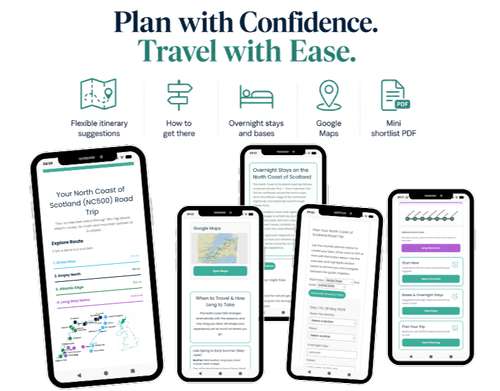
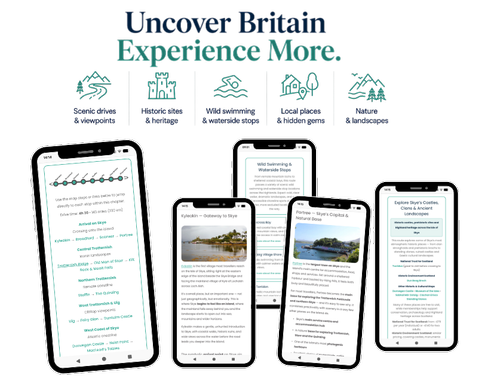
This is not simply a list of famous Cornwall attractions. The route map connects the Atlantic Highway, Penwith Peninsula, West Cornwall and the Fal River corridor into one coherent touring route, helping you understand the journey while still travelling at your own pace.
Route highlights
Cornwall road trip highlights
From Tintagel and Padstow to Land’s End, the Minack Theatre, St Michael’s Mount and Falmouth, the route connects Cornwall’s most distinctive coastal landscapes.

Tintagel
King Arthur legend, dramatic cliffs and one of North Cornwall’s most powerful coastal landscapes.

Padstow
Harbour life, estuary views and a natural slower stop on the Atlantic Highway section.

St Ives
Beaches, harbour streets and the transition point between North Cornwall and the far west.

Land’s End
Exposed granite scenery and a powerful sense of reaching the western edge of England.

Minack Theatre
An extraordinary open-air theatre carved into granite cliffs above the Atlantic.

St Michael’s Mount
Castle views, tidal access and one of the defining landmarks of Mount’s Bay.

Falmouth & the Fal
Sailing waters, maritime heritage and a gentler contrast to Cornwall’s exposed Atlantic edge.

Bodmin Moor
Open inland landscapes, changing weather and a quieter final contrast to the coastal route.
Plan more of your Cornwall trip
Cornwall road trip planning and inspiration
Explore scenic drives, driving routes, villages, hidden gems and practical planning advice before choosing your full Cornwall coastal route.
Cornwall driving inspiration
Best Scenic Drives in Cornwall Discover Cornwall’s coastal roads, moorland drives and scenic touring landscapes. Cornwall Driving Routes Explore five scenic route ideas, from the Atlantic Highway to the Roseland Peninsula and Bodmin Moor. Driving in Cornwall Practical advice on narrow lanes, parking, journey times, seasonal traffic and touring Cornwall by car.Places to explore in Cornwall
Cornwall Hidden Gems Find quieter coves, viewpoints, villages and lesser-known places to add to your Cornwall road trip. Best Villages in Cornwall Compare Cornwall’s best villages for a road trip, including parking, pacing and nearby scenic routes. How to Plan a Cornwall Road Trip Learn how many days to allow, where to base yourself and how to build a realistic Cornwall route.Continue your journey
More Southern England road trips
Extend a longer England journey into ancient landscapes, classic countryside or other distinctive southern regions.
Cornwall road trip FAQs
Planning your Cornwall coastal road trip
How long is the complete Cornwall road trip?
The guide covers approximately 212 miles (340 km) through three major touring sections: the Atlantic Highway, the Penwith Peninsula and West Cornwall loop, and the Fal River and Bodmin Moor corridor.
How many days do you need for a Cornwall road trip?
Three days works for one focused touring section. Four to seven days allows you to combine more of the main route, while eight to fourteen days gives time for beaches, walks, harbour towns and slower exploration. A two-week or longer trip works well for the full route with different bases and rest days.
Can you spend 14 days or longer exploring Cornwall?
Yes. A two-week or longer Cornwall road trip gives time to explore all three touring regions properly, stay in several bases and add walking days, beaches, quieter detours and longer stays in coastal towns.
Does the route include the Atlantic Highway?
Yes. The Atlantic Highway forms the backbone of the first major route section, running through North Cornwall towards St Ives with detours to places such as Boscastle, Tintagel and Padstow.
Does the guide include Land’s End and the Minack Theatre?
Yes. Land’s End, Porthcurno and the Minack Theatre are included within the Penwith Peninsula and West Cornwall section.
Does the route include St Michael’s Mount?
Yes. St Michael’s Mount and Mount’s Bay form part of the West Cornwall section before the journey continues towards the Lizard and the southern coast.
Does the road trip include Falmouth and Bodmin Moor?
Yes. The third touring section follows the Fal River corridor through Falmouth and Truro before moving towards Cornwall’s granite interior and Bodmin Moor.
Does the guide include a Cornwall road trip map?
Yes. The guide includes a route map showing the main touring sections and key destinations, making it easy to understand how the journey fits together before you travel.
Is this guide suitable for campervans and motorhomes?
The guide is designed for flexible self-drive travel by car, campervan or motorhome. Drivers of larger vehicles should consider narrow roads, village access, parking, seasonal traffic and current local restrictions when choosing individual roads and stops.
Is this a fixed Cornwall itinerary?
No. The guide uses three major touring routes to give your trip structure, but it is designed to support flexible self-guided travel rather than force you into a rigid day-by-day itinerary.
Your complete Cornwall road trip starts here
Drive 212 miles through the Atlantic Highway, wild West Cornwall, the Fal River and Bodmin Moor, whether you have three days, a week or a two-week-plus Cornwall holiday.
Buy the Cornwall Coastal Road Trip Guide — £12.99✓ Digital travel guide ✓ 12 months' access ✓ No app download required ✓ Instant access after purchase
✓ Ideal for cars, motorhomes & campervans ✓ Covers road trips from 3–14+ days