
Scenic drives & touring routes
Named Road Trips in the UK: Scenic Drives & Touring Routes Explained
Discover the UK’s named road trips, from coastal scenic drives to historic touring routes. Explore how long to allow, what to see, and how these routes shape the journey.

Route names matter
Named Road Trips in the UK: Scenic Drives & Touring Routes Explained
Britain is full of scenic drives, but only a small number are recognised as named road trips, official touring routes or established long-distance driving journeys. Some — like the North Coast 500 — were deliberately branded to showcase a region. Others are older scenic routes, coastal roads, historic corridors or locally promoted loops that have gained recognition through geography, tourism, habit and travel storytelling.
What links these journeys is not how they were created, but how they are experienced. These are routes that reward slow travel, where the road itself begins to matter as much as the places it connects. In some cases, people set out specifically to follow the full route. In others, they may already have driven parts of it — along a coastline, through a mountain pass, around a national park or across an ancient frontier — without ever thinking of it as a single named journey.
Once you know the name, the drive changes. A road becomes a route. Individual stops begin to form a pattern. And the journey starts to feel intentional — less about getting somewhere, and more about understanding how landscape, history and movement fit together.
Official touring routes
Routes such as The Wales Way are deliberately designed to help visitors explore a country or region through a connected journey.
Iconic scenic drives
Routes such as the North Coast 500 have become shorthand for the idea of a British road trip.
Historic corridors
Some routes follow older stories: frontiers, coasts, mountain passes, trade routes and long-established landscapes.
Six named routes that define British road travel
These six routes are not the only scenic drives in Britain, but they show how different types of named journeys work. Some are built around coastlines, some around historic frontiers, some around national touring strategies and some around a regional identity that travellers increasingly recognise by name.
North Coast 500
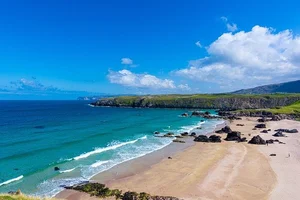
The North Coast 500 — also known as the NC500 — has become shorthand for the idea of a British road trip. Looping around the far north of mainland Scotland, the North Coast of Scotland links remote coastal scenery, empty roads and some of the most dramatic landscapes in Europe. What makes it special isn’t just the coastline, but the contrast: fertile farmland near Inverness gives way to mountain passes, empty beaches and long, exposed headlands where the Atlantic and North Sea meet.
While most travellers set out intentionally to complete the full loop, many people will have driven sections of the route — around Inverness, along the west coast, or through Sutherland — long before they realised those roads formed part of a named journey.
Most travellers allow 5–7 days at a minimum, though 10–14 days gives the route the breathing space it deserves. Driving days are rarely long in mileage, but progress is slow — and that’s the point. This is a scenic route designed around stopping, walking and simply absorbing scale.
Useful supporting guides include NC500 campsites, experiences and things to do on the NC500 and top places to visit on a Scotland road trip.
Key highlights along the way include:
- Bealach na Bà and Applecross Peninsula.
- Sutherland’s empty north coast beaches.
- Assynt’s mountain scenery.
- Duncansby Stacks and the far northeast cliffs.
- Historic fishing villages and crofting landscapes.
The Wales Way
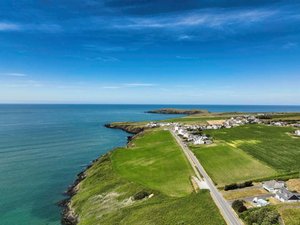
The Wales Way is one of the clearest examples of a nationally designed scenic driving route in the UK. Rather than being a single loop, it is made up of three routes: the North Wales Way, the Coastal Way and the Cambrian Way.
Together, these routes show how a country can be understood through movement. The North Wales Way links castles, mountains and historic towns. The Coastal Way follows the western shoreline through beaches, harbours and estuaries. The Cambrian Way cuts through the centre of Wales, connecting national parks, valleys and upland landscapes.
The Wales Way works especially well because it does not force one fixed pace. You can follow one route in a few days, join two together for a longer holiday, or use the three routes as a framework for a much bigger Welsh road trip.
Useful supporting guides include things to do in Wales, best places to visit on a Wales road trip and North Wales by motorhome.
Key highlights along the way include:
- North Wales Way castles, coast and mountains.
- The Coastal Way’s beaches, harbours and estuaries.
- The Cambrian Way’s national parks and upland roads.
- Flexible route planning across North, West and Mid Wales.
- Good options for cars, campervans and motorhomes.
Atlantic Highway
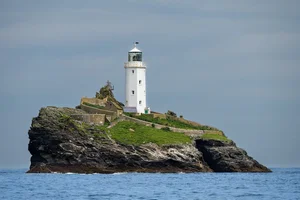
The Atlantic Highway is one of England’s most distinctive coastal road trips, following the western edge of North Cornwall and North Devon along a coastline shaped by long Atlantic swells and fast-changing weather. This is a classic Atlantic coastal route, where the sea is rarely far away, even when the road pulls inland and part of the complete Cornwall road trip.
Rather than clinging to the shoreline, the route weaves in and out of the landscape, creating a constant sense of anticipation — the feeling that the coast is always just ahead. Allow three to five days to experience it properly. Distances are short, but progress is naturally slow, shaped by narrow roads, small settlements and frequent stopping points. Wind, light and sudden sea views remain ever-present companions.
What defines this scenic drive is contrast. One moment you are high above the ocean on exposed headlands, the next descending into sheltered harbours or crossing quiet estuaries that pull you briefly away from the coast. Walking becomes part of the journey here: clifftop paths, long beaches and short coastal loops naturally break up the drive.
As well as following the main Atlantic coastal route, many travellers combine the Atlantic Highway with nearby loops that branch off into Cornwall’s far west and south. Routes such as the Penwith & Land’s End Loop and the Fal River, Truro & Bodmin Moor loop add depth and variety, pairing exposed Atlantic scenery with river landscapes, historic towns and open moorland.
Key features along the Atlantic Highway include:
- Atlantic-battered cliffs and headlands.
- Traditional harbour towns and fishing villages.
- Long beaches shaped by surf and tide.
- Sudden inland detours and estuary crossings.
- A strong sense of exposure to weather and light.

Cumbria Coastal Route
The Cumbria Coastal Route is a quieter alternative to the Lake District’s interior, following the western edge of Cumbria where the Irish Sea, estuaries and distant fell views shape the journey.
This is not the best-known named route in Britain, which is part of its appeal. It offers coastal towns, wide horizons, red sandstone, maritime history and access to western Lakeland without the pressure of the busiest central Lake District roads.
Allow three to four days to travel it slowly. The route works especially well for travellers who like coast, history, industrial heritage, quieter beaches and the feeling of discovering an edge of northern England that is often missed.
Key features along the Cumbria Coastal Route include:
- Wide Irish Sea views and open estuaries.
- Quieter coastal towns and beaches.
- Views inland towards the Lake District fells.
- Historic harbours, railways and maritime landscapes.
- A calmer alternative to the central Lake District.
Hadrian’s Wall
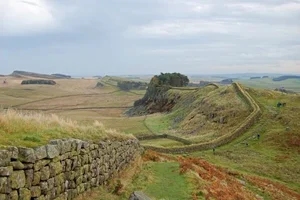
Hadrian’s Wall is not a road trip in the modern branded sense, but it is one of Britain’s most powerful named journeys. Following the line of the Roman frontier across northern England, it turns history into a landscape route.
Unlike coastal drives, Hadrian’s Wall is shaped by ridge lines, forts, milecastles, river valleys and the exposed hills of northern England. Travellers may walk sections of the route, visit Roman sites, or drive between viewpoints, museums and historic places.
The best approach is usually to allow two to four days, depending on how much walking and heritage time you want to include. It also works well as part of a wider Northumberland itinerary, especially when combined with Kielder, Coquetdale, Simonside and the coast.
Key features along Hadrian’s Wall include:
- Roman forts, milecastles and frontier landscapes.
- High viewpoints and short walking sections.
- Historic towns and valleys along the route.
- A strong sense of movement across northern England.
- Natural links with Northumberland National Park and the wider Northumberland 250 area.
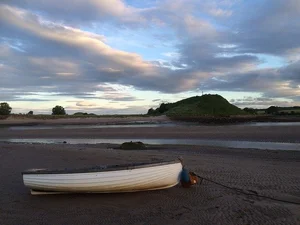
Northumberland 250
The Northumberland 250 is a circular road trip route of around 250 miles, designed to showcase the variety of Northumberland in one scenic driving loop. It brings together coast, castles, market towns, remote countryside, forest, dark skies and historic borderland landscapes, making it one of England’s most distinctive newer named road trips.
Unlike a simple coastal drive, the Northumberland 250 reaches well beyond the beaches. Depending on how you plan it, the route can connect places such as the Northumberland Coast, Bamburgh, Holy Island, Alnwick, Rothbury, Kielder, Hadrian’s Wall country and the wilder inland landscapes close to the Scottish border.
It is a good choice for travellers who want the feel of a big British road trip without heading as far north as the NC500. Expect castle views, sweeping beaches, quiet roads, big skies and plenty of detours into villages, viewpoints and historic sites.
If you like the idea of the Northumberland 250 but want a more flexible route with practical planning support, our Northumberland Road Trip guide helps you explore the county through the coast, castles, Hadrian’s Wall, Kielder, Simonside and Coquetdale. You can also use our supporting articles on Northumberland 250 highlights, Northumberland’s best castles and hidden gems beyond the coast.
Key features associated with the Northumberland 250 include:
- Castles, beaches and Holy Island on the Northumberland coast.
- Rothbury, Coquetdale and the Simonside Hills.
- Kielder Water, forest landscapes and dark skies.
- Hadrian’s Wall country and Roman frontier landscapes.
- A flexible mix of coast, countryside, villages and borderland scenery.
How to use named road trips without being boxed in
A named road trip can be a useful framework, but it does not have to become a rigid checklist. The strongest journeys use a named route as a guide, then adapt the pace, direction and stopping points to suit the traveller.
You might follow a full loop such as the North Coast 500, focus on one arm of The Wales Way, combine Hadrian’s Wall with Northumberland’s inland valleys and coast, or use the Atlantic Highway as part of a wider Cornwall journey.
The name gives the road trip shape. The best version of the journey is still the one that leaves enough space for weather, viewpoints, villages, walks and unexpected detours.
Plan a flexible UK road trip
Explore digital road trip guides across Britain, including Scotland, Wales, Cornwall, Cumbria and Northumberland.
Named road trips in the UK FAQs
What are the main named road trips in the UK?
Some of the best-known named road trips in the UK include the North Coast 500 in Scotland, The Wales Way, the Atlantic Highway, the Cumbria Coastal Route, Hadrian’s Wall and the Northumberland 250. Some are officially branded routes, while others have gained their names over time.
Are named road trips the same as scenic drives?
Not always. Many scenic drives are unnamed, while named road trips usually follow a broader narrative — a coastline, a mountain region, a national route, a circular tour or a historic frontier — rather than a single stretch of road.
Do you have to drive a named route in full?
No. Many travellers experience named routes in sections, often without realising it. Coastal stretches, mountain passes or historic corridors are frequently driven as part of wider journeys before people recognise them as part of a named road trip.
How long do UK named road trips usually take?
Most named UK road trips work best over 3–7 days, depending on the route. Longer journeys like the North Coast 500 reward 10–14 days, while coastal and regional routes often suit shorter, slower itineraries.
Which named UK road trip is best for coast and castles?
Northumberland is one of the strongest choices for coast and castles, especially if you combine the Northumberland coast, Bamburgh, Holy Island, Alnwick, Warkworth and the wider Northumberland 250 area.
Which named UK road trip is best for a first-time road trip?
The best choice depends on where you are starting and how long you have. The Wales Way, Northumberland 250, Atlantic Highway and Cumbria Coastal Route can all work well in sections, while the North Coast 500 needs more time and planning.