
NC500 campsites and North Coast Scotland planning
NC500 Campsites: Campsites Around the North Coast Scotland Route
Planning campsites around the NC500 or North Coast Scotland route? Use this guide to choose sensible overnight areas, understand why booking matters, and link campsite planning into a slower, more responsible Highlands road trip.
The North Coast route area is spectacular, but it is not a route to rush or treat casually. Campsites, touring pitches, approved overnight stops and planned bases can make the journey safer, calmer and more respectful of local communities.
This page is written for people searching for NC500 campsites, but it keeps the wording practical: think of the NC500 as a well-known North Coast route area, then build a realistic trip around campsites, road pace, weather, facilities and stopping points.
Quick answer
Where should you look for NC500 campsites?
Good NC500 campsite areas include Inverness and the Black Isle, Applecross and Torridon, Ullapool and Assynt, Durness and the far north-west, Thurso, Wick and John o’ Groats, and the east coast return towards Inverness. The best choice depends on your route direction, vehicle type, facilities needed and how long you have.
For campervans and motorhomes, do not rely on finding an informal overnight spot at the last minute. Campsites, approved stopovers and booked pitches are usually better for waste, water, showers, charging, local impact and peace of mind.
Before you book
How to use this NC500 campsites page
This is not a live campsite directory with prices, vacancies and opening times. Those details change too often. Instead, this page helps you understand where to look for campsites around the NC500 and North Coast Scotland route area, how to plan overnight stops, and how campsite choices affect the whole trip.
It is built for the keyword opportunity around NC500 campsites, but the content is intentionally broader and more useful. People are not only asking “which campsite?” They are asking where to stop, whether they need to book, what works for a motorhome, whether wild camping is realistic, and how to avoid making the route stressful.
For the wider driving route, use the Scottish Highlands & North Coast Road Trip guide. For things to see on the way, use NC500 Things to Do.
Campsite areas
Where to look for campsites around the NC500 / North Coast Scotland route area
These are useful planning areas rather than a fixed list of recommended businesses. Always check opening dates, booking requirements, facilities, vehicle rules and current local guidance before travelling.
Inverness, the Black Isle and route start
Good for first or last night planning
Many travellers start or finish their NC500-inspired trip around Inverness and the Black Isle. This is a sensible place to plan a campsite night before the more remote sections, especially if you are collecting a hire vehicle, buying supplies or easing into the route.
Look for campsites with easy road access, clear arrival instructions, space for your vehicle size and the facilities you need before heading into the north and west. A good first night can make the rest of the trip feel much calmer.
Applecross, Torridon and the western approach
Best for dramatic scenery, but plan carefully
The west side of the route is one of the big reasons people search for NC500 campsites. Applecross, Torridon and the wider western approach bring mountain roads, sea views, lochs and some of the most memorable scenery in northern Scotland.
This is also where slow travel matters. Campsites and stopovers may be limited, roads can feel narrower, and turning up without a plan in busy periods can create pressure on local communities. It is better to book or research sensible overnight options in advance.
Ullapool, Assynt and the north-west
Good base areas for beaches, lochs and viewpoints
Ullapool, Assynt and the north-west are useful areas to think about when planning campsites near the NC500 / North Coast Scotland route. This part of northern Scotland is about lochs, beaches, mountain profiles, short walks and scenic stopping places.
A campsite in or near this section can help break up the journey so you are not trying to cover too much ground in one day. It is also a good place to slow down for viewpoints, coastal detours and weather changes.
Durness and the far north-west
Useful for slower northern route planning
Durness and the far north-west can feel remote and spectacular, which is exactly why campsite planning matters. Distances, facilities and weather can feel very different from the more populated start and finish areas.
Choose overnight stops carefully here, especially if you are travelling by campervan or motorhome. Check whether the site suits your vehicle, whether facilities are available, and whether you need to book ahead.
Thurso, Wick and John o’ Groats
North coast stops, beaches and practical overnights
The north coast section around Thurso, Wick and John o’ Groats is useful for campsites, services, coastal stops and route pacing. It can work well as a planned overnight area before turning south or continuing around the coast.
This is also a good section to think about wind, weather, daylight and how much driving you still have ahead. A well-placed campsite can make the northern section feel like part of the trip, not just a long transit day.
East coast return towards Inverness
Good for easier final-night planning
The east coast return towards Inverness is often easier to pace than the wilder western sections, but it still benefits from planning. Campsites here can help you avoid a tired final push, especially if you have a ferry, hire-vehicle return or long onward drive.
Use this section to tidy up the journey: fuel, food, supplies, laundry, charging, vehicle checks and a less rushed final night before leaving the Highlands.
Planning checklist
How to choose an NC500 campsite or overnight stop
The best campsite is not always the prettiest one. It is the one that fits your vehicle, your day’s driving, your facilities and the way you want to travel.
Check vehicle suitability
Motorhomes, campervans, cars with tents and larger touring vehicles need different pitch types, access roads and turning space. Do not assume every small site suits every vehicle.
Book key nights early
Popular areas can fill quickly, especially in summer. Booking at least the more remote or high-demand nights can prevent stressful late-day searching.
Think about facilities
Water, waste disposal, showers, toilets, electric hook-up, laundry, dog rules and charging can matter more than a perfect view after several days on the road.
Match campsites to route pace
A campsite should make the route calmer, not force a long drive in the dark. Plan by daily sections, daylight, weather and realistic stopping time.
Protect communities and landscapes
Use formal campsites or approved overnight options where possible. Avoid blocking roads, parking on fragile ground or leaving waste behind.
Have a backup plan
Weather, ferries, road closures and full sites can change the day. Keep a second sensible option, especially in the north-west and far north.
How many campsite nights do you need?
A slower North Coast route is usually better than trying to cover the whole area too quickly. Many travellers find it easier to plan several campsite nights across the west, north-west, north coast and east return rather than using one base for everything.
Route pace
NC500 campsite planning by trip length
Campsite planning should match how much time you actually have. A rushed route often creates more pressure than the scenery deserves.
Campsites and overnight options
Formal campsites, stopovers and responsible overnight planning around the NC500
For a North Coast Scotland road trip, the strongest overnight plan usually combines proper campsites with recognised stopover options. Campsites give you facilities, waste disposal, showers, water, local information and a clearer base for each stage of the journey.
We do not recommend relying on wild camping or informal parking around this route. Feedback from road trippers and local communities has shown how quickly pressure can build around popular viewpoints, beaches, small villages and fragile landscapes. Bookable campsites, recognised overnight schemes, pub stopovers and low-impact small sites are usually a better way to travel.
Responsible tourism matters here because small communities, narrow roads, limited facilities and fragile landscapes can be affected quickly by poor parking, unmanaged overnight stays, litter, waste or rushed driving. Planning your stops helps keep the journey better for visitors and residents.
Formal campsites
Best for facilities, waste disposal, water, showers, local advice and a reliable base for each driving day. Book ahead in busy periods, especially around Durness, Ullapool, Applecross and popular beach locations.
Forestry Stay the Night scheme
Scotland’s Stay the Night scheme can be useful for some campervan and motorhome travellers where locations, dates and rules allow. Always check the current locations and conditions before relying on it.
Pub stopovers
Pub stopovers can work well as part of a responsible touring plan, especially where they are welcomed by the venue and you support the business. Always ask, book or confirm before arriving.
Almost-wild camping
Small, low-facility sites can give a more natural feel than a large campsite while still keeping overnight stays managed and respectful. These can be a good compromise for travellers wanting a quieter base.
Designated overnight stops
Some areas provide designated or managed overnight options. These are preferable to turning up at informal car parks, lay-bys or beauty spots where overnight stays may cause problems.
Mix your stops
A strong plan may combine campsites, pub stops, occasional managed overnight schemes and rest days. That usually works better than moving every night or chasing the most dramatic parking spot.
Independent note: NC500 and North Coast 500 are registered trademarks. This Uncover Britain page is independent and is not affiliated with, endorsed by or produced by North Coast 500 Ltd.
We use “NC500 campsites” descriptively because that is how many travellers search for campsites around the North Coast Scotland route.
Campsites by area
Some of the best campsites along the NC500 by area
These campsite suggestions are not just names on a list. They are places that can genuinely enhance the journey because of their views, atmosphere, useful locations or character. Treat them as planning ideas, then check current opening dates, facilities, booking rules and suitability before you travel.
Inverness & Black Isle
- Bunchrew Caravan Park, Inverness – woodland feel and a practical first-night or last-night stop.
- Fortrose Bay Campsite, Fortrose – right by the water, with dolphins often seen nearby.
East Coast
- Dunroamin Caravan & Camping Club Site, near Tain – good facilities and close to a beautiful beach.
- Brora Caravan & Motorhome Club Site – peaceful, with long sandy walks straight from the pitch.
- Dunnet Bay Caravan & Motorhome Club Site – huge beach and a classic far-north feel.
Far North
- Sango Sands Oasis, Durness – clifftop views, dramatic sunsets and an iconic North Coast camping feel.
- Kyle of Tongue Hostel & Campsite – loch and mountain scenery that feels cinematic.
North-West & West Coast
- Clachtoll Beach Campsite – wild, turquoise water, small and friendly; a favourite for many road trippers.
- Ardmair Point, Ullapool – ideal for supplies, ferries and a break from long driving days.
- Sands Caravan & Camping, Gairloch – big open vistas, dunes and starry nights.
West to South-West
- Gruinard Bay Caravan Park – peaceful bay setting and memorable sunsets.
- Applecross Campsite – a useful base for exploring the peninsula; book early in busy periods.
- Small sites near Eilean Donan – handy for Skye, Lochalsh and onward routes.
Why area planning matters
Each campsite area gives you something different: views, convenience, community, facilities, a calmer driving day or that “wake up and smile” moment. The strongest North Coast Scotland trips usually come from matching overnight stops to the pace of the route, rather than trying to chase every viewpoint in one go.
More Scotland road trip planning
Useful Scotland pages to pair with NC500 campsites
Use these links to join up campsite planning with route ideas, responsible overnight stops and the wider Scotland road trip cluster.
NC500 and North Coast planning
North Coast Scotland scenery and viewpoints
Match overnight stops with viewpoints, beaches, headlands and slower driving days around the North Coast.
NC500 things to do
Useful for planning what to see between campsite nights, from short walks and coastal stops to castles, villages and viewpoints.
Scottish Highlands and North Coast guide
Turn campsite ideas into a fuller North Coast Scotland road trip, with route structure, planning support and digital guide access.
Overnight stops and camping alternatives
Stay the Night Scotland
A helpful supporting page for campervan and motorhome travellers looking at recognised overnight options beyond traditional campsites.
Pub stopovers
Useful if you want to mix campsites with occasional pub-based overnight stops where they are welcomed, confirmed and planned responsibly.
Almost-wild camping
A gentler compromise for travellers wanting a quieter, more natural-feeling overnight stay without relying on informal parking.
Wider Scotland route ideas
Best scenic drives in Scotland
Helpful for comparing the North Coast with other scenic Scotland driving routes, including the West Coast, Skye, Fife and Borders.
5-day Scotland road trip itinerary
A useful shorter planning page if you want to compare a longer North Coast route with a tighter Scotland road trip.
Best places to visit in Scotland
Useful for travellers comparing the North Coast with Skye, the West Coast, Edinburgh, Fife, castles, coast and other Scotland road trip areas.
Hidden gems in Scotland
Good for adding quieter stops around a wider Scotland route, especially if you want to avoid making every day about the biggest-name viewpoints.
Best castles in Scotland
A useful supporting page for travellers who want to balance campsites, viewpoints and driving days with castles and historic places.
Scotland motorhome road trip
Useful for wider campervan and motorhome planning, including route pace, stops, facilities and overnight planning.
Other areas to connect en route
Things to do in Skye
Helpful if your North Coast route links with Skye, Lochalsh or the West Coast, or if you are comparing Highland and island stops.
West Coast Scotland road trip ideas
Useful if your campsite planning links the North Coast with Skye, Glenfinnan, Fort William, Glen Coe, Mallaig or ferry-linked west coast routes.
Edinburgh road trip ideas
Helpful if your North Coast or NC500-inspired trip starts after arriving through Edinburgh, or if travellers want a shorter Scotland route first.
Fife road trip Scotland
A gentler east-coast Scotland road trip idea to compare with longer Highland, North Coast and campervan-focused routes.
Orkney road trip Scotland
Useful for travellers extending a North Coast journey with island planning, ferries, slower travel and far-north scenery.
Scotland road trip guides
Turn campsite planning into a North Coast route
Once you know where you might stay overnight, the next step is connecting the campsites with viewpoints, beaches, scenic roads and realistic driving days.
 £14.99
Scottish Highlands & North Coast Road Trip
A flexible road trip guide for the Highlands and North Coast route area, with scenery, places to stop and route planning support.
Best for: NC500-inspired planning without rushing the route.
View the guide £12.99
West Coast of Scotland Road Trip
Useful if you are combining the North Coast with Glen Coe, Fort William, Glenfinnan, ferries or west coast scenery.
Best for: linking west coast scenery with northern Scotland.
View the guide £12.99
Isle of Skye Road Trip
Useful if you are comparing the North Coast with Skye or adding Skye to a longer Highlands and Islands plan.
Best for: island scenery and a slower Scotland extension.
View the guideScotland bundles
Save with Scotland road trip bundles
Bundles are useful if your campsite planning is part of a bigger Scotland trip across the North Coast, Skye, the West Coast, Fife or Edinburgh.
 £19.99Skye + West Coast + North Coast
Highlands & Islands
The most relevant bundle if you are comparing NC500 campsites with Skye and the West Coast.
View Highlands & Islands £25.99Broadest Scotland coverage
Scotland Explorer
The broadest Scotland bundle for comparing the North Coast, West Coast, Skye, Edinburgh, the Borders and Fife.
- Scottish Highlands & North Coast
- West Coast Scotland
- Isle of Skye
- Edinburgh & Borders
- Kingdom of Fife
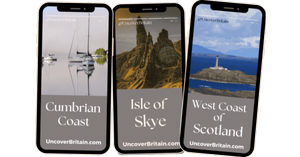 £19.99Cumbria + West Coast + Skye
West Coast Horizons
A useful cross-border bundle if your Highlands trip is part of a wider western Britain route.
View West Coast HorizonsNC500 campsites FAQs
Planning questions about campsites around the NC500
Do you need to book campsites on the NC500?
In busy periods, booking is strongly recommended, especially in smaller or more remote areas. A planned campsite is usually better than searching late in the day on narrow roads.
Can you wild camp in a motorhome on the NC500?
Do not assume that motorhomes or campervans can stop anywhere overnight. Follow local guidance, signs, landowner rules and responsible access principles. Campsites and approved stopovers are usually safer choices.
Which areas are useful for NC500 campsites?
Useful campsite areas include Inverness and the Black Isle, Applecross and Torridon, Ullapool and Assynt, Durness, Thurso, Wick, John o’ Groats and the east coast return towards Inverness.
How many days should you allow for the route?
A slower route is usually better. Five to seven days gives more room for campsite planning, viewpoints and weather, while ten days or more allows a more relaxed Highlands and North Coast trip.
Are NC500 campsites suitable for campervans?
Many campsites around the route area are useful for campervans, but facilities and vehicle suitability vary. Always check pitch type, access, hook-up, waste disposal, dog rules and arrival times before travelling.
Is it better to use one base or several campsites?
Several campsites usually work better because the North Coast route covers a large area. Moving between planned overnight areas helps reduce long driving days and gives more time for scenery and stops.
Ready to turn campsite planning into a route?
If this page has helped you think about where to stay, the Scottish Highlands & North Coast guide helps you connect those overnight areas with viewpoints, scenic roads and realistic driving days.
Independent note: NC500 and North Coast 500 are registered trademarks. Uncover Britain is not affiliated with or endorsed by North Coast 500 Ltd.