
Motorhome Practical Guide
Driving a Motorhome or Larger Vehicle in Britain
Practical advice for driving a motorhome in the UK, from vehicle dimensions and licence checks to narrow roads, low bridges, parking and route planning.
A motorhome can feel very different from a car, but careful preparation, a suitable route and a little extra time can make touring Britain far more straightforward.
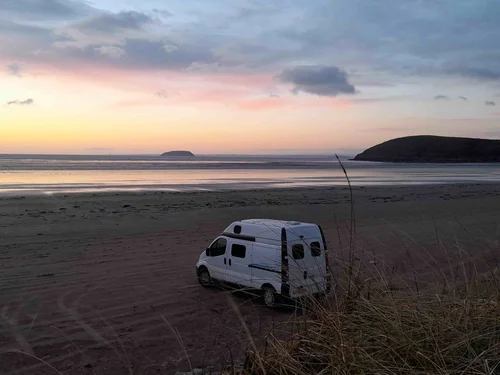
Driving a motorhome in Britain can feel very different from driving a car, particularly on narrow rural roads, through historic towns or when approaching bridges, car parks and height-restricted routes.
The difference is not simply the length of the vehicle. Drivers also need to understand its height, width, weight, turning circle and rear overhang, as well as the licence and speed-limit rules that apply to that particular motorhome.
This guide explains the checks to make before setting off and how to approach some of the situations most likely to concern first-time or less experienced motorhome drivers.
Before setting off
Know your motorhome’s dimensions and weight
Vehicle dimensions affect route choice, parking, bridges, barriers, ferry bookings and how much space you need when manoeuvring.
Overall height
Include roof-mounted equipment such as vents, aerials, air conditioning and storage.
Overall width
Check the width including mirrors, which may be the widest point of the vehicle.
Length and overhang
Allow for the rear of the vehicle swinging out as you turn.
Weight and axle limits
Check the plated maximum authorised mass and avoid overloading either axle.
Maximum authorised mass
Maximum authorised mass, often shortened to MAM, is the maximum permitted weight of the vehicle when loaded. It may also be called gross vehicle weight.
Actual loaded weight
The vehicle’s real weight changes with passengers, water, fuel, luggage, bicycles and other equipment. A weighbridge can provide a more accurate check.
Driving entitlement
Check that your licence covers the motorhome
The licence required depends on the motorhome’s maximum authorised mass. Do not assume that age or previous driving experience automatically gives you the correct entitlement.
Drivers should check the categories shown on their own licence, particularly where a vehicle is hired, a trailer is being used or the licence was issued outside Great Britain.
Check current motorhome licence guidance on GOV.UKRoad rules
Understand motorhome speed limits
National speed limits can depend on a motorhome’s maximum unladen weight. This is not the same measurement as maximum authorised mass.
| Road type | Not over 3.05 tonnes maximum unladen weight | Over 3.05 tonnes maximum unladen weight |
|---|---|---|
| Built-up roads | Follow the signed limit | Follow the signed limit |
| Single carriageways | 60mph | 50mph |
| Dual carriageways | 70mph | 60mph |
| Motorways | 70mph | 70mph |
Daily preparation
Carry out a check before each journey
Passengers, children and pets
Passengers should travel in suitable seats and use seat belts where fitted. Children need the correct restraint for their age and size. Pets should be secured so they cannot distract the driver or be injured during sudden braking.
Vehicle handling
Allow for the extra width, length and stopping distance
Take wider turns
The rear wheels follow a tighter path than the front of the vehicle. Avoid cutting corners or clipping kerbs.
Watch the rear overhang
The back of a long motorhome can swing out in the opposite direction as the front turns.
Leave more stopping space
A larger, heavier vehicle generally needs more time and distance to slow safely.
Use both mirrors
Check the nearside carefully around parked vehicles, walls, bollards and narrow entrances.
Rural Britain
Driving on narrow rural and single-track roads
A narrow road is not automatically unsuitable, but it may require slower driving, careful positioning and a willingness to wait or reverse to a suitable passing place.
- Slow down before bends and look well ahead.
- Do not enter a narrow section without considering the exit.
- Use passing places and never park in them.
- Give way where reversing is easier or safer.
- Avoid soft verges, which may not support the vehicle’s weight.
- Allow following traffic to pass where it is safe to do so.
- Give walkers, cyclists, animals and farm traffic plenty of room.
Route suitability
Low bridges, height barriers and width restrictions
Know the confirmed dimensions before approaching any restriction and do not continue when there is doubt about clearance.
Low bridges
Watch for imperial and metric height signs and include equipment mounted on the roof.
Car-park barriers
Check height limits before entering. Do not assume a visitor attraction or beach car park accepts motorhomes.
Width and weight limits
Restrictions may apply on rural lanes, bridges, historic streets and access roads.
Changing conditions
Hills, descents, crosswinds and exposed roads
Steep hills and descents
Approach steep routes and hairpin bends slowly. Select a suitable lower gear before a descent and avoid committing to a road that is unsuitable for the vehicle.
Crosswinds and poor weather
High-sided vehicles can be affected by sudden gusts on bridges, exposed roads and when passing large vehicles. Reduce speed and reconsider the journey when warnings or conditions make it unsafe.
Major roads
Motorways and dual carriageways
Leave a larger gap
Allow more time to slow and avoid following other vehicles too closely.
Plan lanes early
Move into the correct lane in good time rather than making late changes near junctions.
Overtake patiently
Allow enough distance before returning to the left and be aware of crosswinds beside larger vehicles.
Know the breakdown procedure
Check the vehicle handbook, breakdown cover and current motorway safety advice before travelling.
At your destination
Parking and manoeuvring a motorhome
- Check bay length, width and any vehicle restrictions.
- Consider whether the rear overhang extends beyond the bay.
- Look for height barriers before entering.
- Do not block pavements, entrances or visibility.
- Get out and inspect a tight space before reversing.
- Use a passenger as a guide and agree clear signals first.
- Use cameras and sensors as aids, not as the only check.
Navigation
Do not follow a sat nav without checking the road
Navigation software can be useful, particularly where vehicle dimensions can be entered, but it may not reflect every temporary closure, weak bridge, access rule, barrier or unsuitable lane.
Use route-planning tools and your preferred navigation app alongside current road signs and your own judgement.
Read Sat Nav for MotorhomesFirst-time drivers
Hiring a motorhome or visiting from overseas
Driving a hired motorhome
Allow enough time for the handover. Check dimensions, controls, fuel type, insurance excess, breakdown arrangements and how to secure doors, lockers and equipment.
Practise using the mirrors, turning and reversing before beginning a longer journey.
Read the motorhome and campervan hire guideAdvice for overseas visitors
Become familiar with driving on the left, roundabouts, miles per hour, UK road signs and the conditions attached to your licence, insurance and hire agreement.
Allow additional time while adjusting to an unfamiliar vehicle and road system.
Read the general Driving in the UK guideBefore every journey
A simple motorhome pre-drive checklist
- Confirm the driver has the correct licence entitlement.
- Check the vehicle’s height, width, length and weight.
- Secure passengers, pets, luggage and loose equipment.
- Close rooflights, windows, lockers, doors and cupboards.
- Disconnect the hook-up and retract steps and equipment.
- Check tyres, lights, mirrors and cameras.
- Review the route for bridges, barriers and restrictions.
- Check weather and road conditions.
- Allow additional driving and manoeuvring time.
- Follow road signs and change the route when necessary.
Continue planning
Related motorhome guides
Frequently asked questions
Driving a motorhome in the UK
Can I drive a motorhome on a normal car licence?
A category B licence normally covers a motorhome up to 3,500kg maximum authorised mass. Heavier motorhomes normally require C1 or C entitlement. Check your own licence and the plated weight of the vehicle before driving.
Are motorhome speed limits different from car speed limits?
They can be. Motorhomes over 3.05 tonnes maximum unladen weight have lower national limits on single and dual carriageways. Signed limits and any lower restrictions always apply.
How do I know the height of my motorhome?
Check the manufacturer’s information and include roof-mounted equipment. Keep the confirmed height visible in the cab and never guess when approaching a bridge or barrier.
Can passengers sit in the living area while travelling?
Passengers should use suitable travel seats and wear seat belts where fitted. Check the vehicle layout, seat-belt provision and current legal requirements before travelling.
Are single-track roads suitable for motorhomes?
Some are, but suitability depends on the vehicle, road width, passing places, gradients, traffic and weather. Check the route first and do not continue when the road is unsuitable.
Should I use a motorhome-specific sat nav?
A system that allows vehicle dimensions to be entered can be useful, but no navigation system should replace signs, current restrictions or driver judgement.
This guide is intended as general planning information, not legal or professional advice. Driving-licence rules, speed limits, road restrictions and vehicle requirements can change and may vary according to the vehicle, location and circumstances. Check current official guidance, road signs, your vehicle documents and any hire or insurance conditions before travelling.