
Driving in Britain
Driving in the UK: A Guide for Overseas Visitors
Driving is one of the best ways to explore Britain’s countryside, coast, historic towns, villages and less accessible places.
This guide explains the main UK driving rules, road signs, speed limits, parking arrangements and practical differences overseas visitors should understand before hiring a car, campervan or motorhome.
Quick answer: In the UK, vehicles drive on the left. Road distances are normally shown in miles and speed limits in miles per hour. Overseas visitors may be able to drive using a valid non-UK licence, but always check the official rules before travelling.
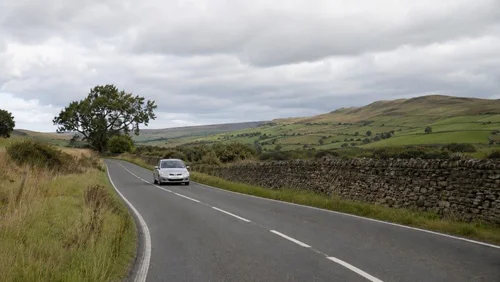
Important Driving Information
This guide is provided for general travel-planning and informational purposes only. It does not constitute legal, regulatory, insurance, vehicle-hire or road-safety advice.
Driving laws, licence requirements, speed limits, road restrictions, clean-air zones, tolls and rental conditions can change and may vary according to your nationality, licence, vehicle, destination and individual circumstances.
Before driving, use the official GOV.UK non-GB driving licence checker and read the official Highway Code . For Northern Ireland, consult the Northern Ireland Highway Code .
Always confirm the requirements with your vehicle-hire provider, insurer or another suitably qualified independent adviser. Official guidance should always take priority.
Before you drive
Can You Drive in the UK with an Overseas Licence?
Whether you can drive depends on where your licence was issued, how long you are staying, your residency status and the type of vehicle you intend to use.
Check whether your licence is valid
Use the official GOV.UK non-GB driving licence checker before booking a vehicle.
Check whether you need an IDP
Not every visitor needs an International Driving Permit, but requirements can depend on the licence and the rental company.
Read the rental conditions
Hire companies may apply minimum ages, surcharges, deposits, licence-holding periods and vehicle restrictions.
Documents you may need
- valid driving licence
- passport or accepted identification
- International Driving Permit where required
- rental agreement and insurance details
- breakdown and emergency contacts
- permission for ferries, islands or cross-border travel
Planning your arrival
Still deciding where to arrive or collect a vehicle? Read our guide to travelling to the UK from abroad for airports, ferry ports, Eurostar and collection-point planning.
Left-side driving
Driving on the Left in the UK
Most visitors adapt quickly, but the first hour requires more concentration because the road position, mirrors, roundabouts and junctions feel unfamiliar.
Keep left after every turn
Take extra care when leaving petrol stations, car parks, one-way streets and quiet junctions where old habits can return.
Learn the controls first
Find the indicators, lights, wipers, demister, handbrake and hazard lights before entering traffic.
Make the first drive easy
Avoid a long drive immediately after a flight. Choose a simple route and a nearby first overnight stop.
Road rules
Speed Limits, Miles and Road Measurements
UK distances are normally shown in miles and speed limits in miles per hour. Always follow posted signs and check the limit for your vehicle.
| Road type | Common maximum for cars | Important note |
|---|---|---|
| Built-up roads | Often 20 or 30 mph | Local limits and signs take priority. |
| Single carriageways | Up to 60 mph | Lower speeds are often appropriate on rural roads. |
| Dual carriageways | Up to 70 mph | Vehicle-specific limits may differ. |
| Motorways | Up to 70 mph | Variable limits and lane-control signs may apply. |
Road types
Motorways, A-Roads and Rural Lanes
A road number does not always tell you how wide, quick or easy the route will be.
Motorways
Join using the slip road, keep left unless overtaking, follow variable limits and never stop except in an emergency or designated area.
A-roads
An A-road may be a fast dual carriageway, a busy urban route or a winding road through a national park.
B-roads and lanes
Expect blind bends, high hedges, stone walls, farm traffic, narrow bridges and limited passing space.
Junctions
Roundabouts and Traffic Lights
Traffic circulates clockwise. Unless signs, lights or markings indicate otherwise, give way to traffic approaching from your right.
Choose the lane early
Read signs before entering and follow lane markings towards your exit.
Give way from the right
Wait for a safe gap and give priority to traffic already circulating.
Do not force an exit
If you miss the turn, continue safely and reroute rather than changing lanes suddenly.
No general left turn on red
Proceed only when the light or a filter arrow permits the movement.
Signs and markings
UK Road Signs Visitors Should Recognise
Signs use shape, colour and symbols to communicate warnings, directions and restrictions.
Give Way and Stop
Give Way uses an inverted triangle. Stop uses an octagonal sign and requires a complete stop.
National speed limit
A white circle with a black diagonal line. The actual maximum depends on the road and vehicle.
Restrictions
Look for low bridges, width limits, weight limits, bus lanes and no-entry signs.
Rural warnings
Signs may warn of livestock, steep hills, fords, narrow roads or concealed entrances.
Rural driving
Narrow and Single-Track Roads
Single-track roads and narrow lanes are common in scenic parts of Scotland, Wales, Cornwall, northern England and the islands.
Use passing places correctly
Use a passing place on your left or wait opposite one on your right. Never park in a passing place.
Be prepared to reverse
Reverse slowly to the nearest safe point where necessary and cooperate with the other driver.
Expect vulnerable road users
There may be walkers, cyclists, horses, sheep, cattle, buses and farm vehicles beyond a blind bend.
Parking
Parking in the UK
Parking can take more planning than visitors expect, particularly in historic towns, coastal villages, national parks and city centres.
Read the car park signs
Check tariffs, payment methods, maximum stays, no-return periods and overnight restrictions before leaving the vehicle.
Expect cashless payment
Many car parks use apps, number-plate recognition or contactless payment. Keep an alternative payment method available.
Use edge-of-centre parking
Park-and-ride or larger edge-of-town car parks are often easier than searching for a space beside every attraction.
Fuel and charging
Fuel, Electric Charging and Roadside Services
Availability is generally good around towns and major roads, but rural and island routes need more planning.
Fuel is sold by the litre
Check the correct fuel type before filling. Rural stations may close earlier or accept fewer payment methods.
Plan electric charging
Check charger type, speed, payment method, access hours and backup options before remote sections.
Motorway services
Services normally provide fuel, charging, food and toilets, but prices can be higher than elsewhere.
Charges
Tolls, Congestion Charges and Clean-Air Zones
Most UK roads are free to use, but some bridges, tunnels, crossings, private roads and urban zones charge.
Tolls and crossings
Some charges are paid at a barrier, while others must be paid online within a stated period.
Clean-air zones
Charges depend on the city, vehicle and emissions standard. Check before entering.
Rental vehicles
Ask how tolls, penalties and administration fees are handled under the rental agreement.
Vehicle hire
Hiring a Car for a UK Road Trip
A smaller vehicle is often easier on narrow roads, in historic towns and in compact car parks.
Automatic or manual?
Manual cars remain common. Book an automatic specifically if that is what you need.
Check the true cost
Compare insurance, excess, deposits, additional drivers, fuel policy, mileage and one-way fees.
Inspect the vehicle
Photograph existing damage, wheels, windscreen and fuel or charge level before leaving.
Larger vehicles
Driving a Campervan or Motorhome in the UK
A larger vehicle affects the route, parking, stopping distance and daily schedule.
Know the dimensions
Record the height, width, length, weight and fuel type before leaving.
Check road suitability
Look for low bridges, weight limits, width limits, steep gradients and narrow village streets.
Allow more space
Remember the rear can swing out and the vehicle needs more braking and turning room.
Plan authorised stops
Parking and sleeping overnight are separate permissions.
Regional differences
How Driving Conditions Vary Around Britain
The practical challenges change depending on the part of Britain you are exploring.
Scotland
Expect long distances, ferries, remote fuel stations and single-track roads.
Wales
Mountain roads, narrow lanes, steep gradients and bilingual signs are common.
South West England
Coastal traffic, compact villages and limited summer parking require planning.
Northern England
National parks combine major roads with slower rural and mountain routes.
Daily pacing
How Far Should You Drive in a Day?
Distance alone is a poor measure of a British road-trip day. A 100-mile motorway journey and a 100-mile coastal route are completely different experiences.
What uses up the day?
- vehicle collection and unfamiliar controls
- traffic, narrow roads and ferries
- parking and walking into attractions
- fuel, charging, food and rest breaks
- viewpoints, photographs and weather delays
A more realistic approach
- choose one main area
- set two or three priority stops
- add optional stops rather than fixed ones
- choose a sensible overnight point
- keep an alternative for delays or bad weather
Safety
Breakdowns, Accidents and Emergencies
Keep the hire company’s breakdown and emergency details accessible throughout the trip.
If the vehicle breaks down
- move to a safe place where possible
- switch on hazard lights
- keep away from moving traffic
- contact the breakdown provider or hire company
- give your location and direction of travel
Emergency help
Call 999 or 112 where someone is injured, there is immediate danger or the road is obstructed dangerously.
On a motorway, follow the current official motorway-safety guidance and never stand in a live traffic lane.
Before setting off
UK Driving Checklist
Complete the essential checks before beginning the first journey.
- Confirm your licence is valid.
- Check whether an International Driving Permit is needed.
- Understand the insurance and excess.
- Book an automatic when required.
- Record the vehicle dimensions and fuel type.
- Learn the lights, wipers and demister.
- Save emergency and breakdown numbers.
- Download offline maps.
- Check tolls and emissions zones.
- Plan city and attraction parking.
- Identify fuel or charging stops.
- Keep the first driving day short.
- Allow extra time for scenic roads.
- Confirm the first overnight stop.
Questions answered
Driving in the UK FAQs
Can tourists drive in the UK?
Many overseas visitors can drive using a valid non-UK licence, but eligibility depends on where it was issued and individual circumstances. Use the official GOV.UK checker.
What side of the road does the UK drive on?
Vehicles drive on the left-hand side of the road.
Are UK speed limits in miles or kilometres?
Speed limits are shown in miles per hour and road distances are normally shown in miles.
Do I need an International Driving Permit?
This depends on where your licence was issued and your circumstances. The rental company may also impose its own documentation rules.
Are rental cars manual or automatic?
Both are available, but manual vehicles remain common. Book an automatic specifically when needed.
Which way does traffic travel around a roundabout?
Traffic travels clockwise. Drivers entering normally give way to traffic approaching from the right and already circulating.
Can I turn left at a red light?
No general left turn on red applies. Proceed only when the traffic signal or a filter arrow permits it.
Can a campervan stay overnight in a public car park?
Not automatically. Daytime parking and permission to sleep overnight are separate.
Are there toll roads in the UK?
Most roads are free, but some roads, bridges, tunnels, crossings and city zones charge.
Is it better to drive or use trains?
Trains work well between major cities. Driving is usually more useful for rural areas, coastlines, national parks and flexible detours.
Plan the whole trip
Useful UK Road-Trip Planning Guides
Move from driving preparation into route planning, budgets, overnight stays and realistic daily pacing.
Travelling to the UK
Airports, ferries, Eurostar, rail travel and arrival hubs.
How to Plan a Road Trip in the UK
The main planning hub for routes, regions and overnight stops.
Build a Realistic Road Trip Plan
Create achievable days without racing between stops.
UK Road Trip Reality Check
Understand real journey times, narrow roads and parking.
Stay the Night
Plan campsites, pub stopovers and suitable overnight options.
UK Road Trip Costs and Budgeting
Estimate vehicle hire, fuel, parking, stays and attractions.
Ready to explore Britain by road?
Choose a flexible digital road-trip guide with mapped places to visit, scenic stops and overnight-planning support.