
Norfolk scenic driving inspiration
Best Scenic Drives in Norfolk
Explore some of the best scenic drives in Norfolk, from waterways and windpumps in the Broads to the North Norfolk Coast, harbour villages, royal countryside and historic west Norfolk.
Norfolk’s scenery is often subtle rather than mountainous: open skies, marshes, reedbeds, beaches, medieval towns and quiet lanes create a distinctive self-drive landscape that rewards unhurried travel.
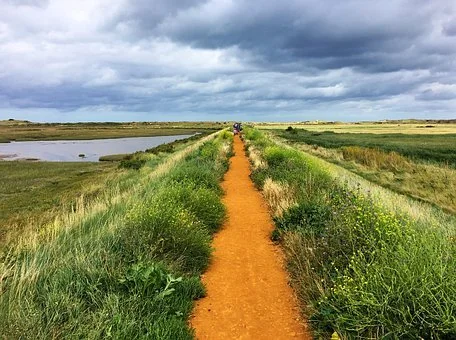
Some counties impress immediately with mountain passes or towering coastlines. Norfolk takes a gentler approach. Its beauty appears through enormous skies reflected in quiet waterways, country lanes leading to medieval villages, sweeping beaches backed by dunes and pinewoods, and peaceful roads designed for slow touring rather than rushing between attractions.
For anyone exploring under their own wheels—whether by car, campervan, motorhome or motorcycle—Norfolk is one of England’s most rewarding touring destinations. Distances are relatively short, making it easy to combine several scenic sections while still leaving time for a waterside walk, a traditional pub lunch, wildlife watching or an afternoon beside the coast.
Norfolk does not rely on one famous driving road. Its appeal comes from the changing landscapes: the waterways of the Broads, sandy beaches, fishing villages, saltmarsh, historic market towns, royal estates and quiet inland countryside.
These eight scenic drives can be explored independently or combined into a longer Norfolk road trip. The most enjoyable days usually pair one main driving section with time away from the vehicle.
How many Norfolk scenic drives should you combine in one day? One substantial route or two neighbouring shorter sections usually works best. Norfolk’s distances may look modest, but villages, walks, beaches and wildlife stops quickly turn a short drive into a full day.
Plan a complete Norfolk road trip
Norfolk Broads & Coast Road Trip Guide
Our Norfolk Road Trip Guide follows a flexible 113-mile (181 km) self-drive journey from Norwich through the Norfolk Broads and North Norfolk Coast to Sandringham country and historic King’s Lynn.
The complete route is organised into three connected sections: Norwich and the Norfolk Broads, the North Norfolk Coast, and North and West Norfolk to King’s Lynn.
It brings together 19 key destinations, planning maps, route guidance, walking and wildlife ideas, coastal highlights and practical support for a long weekend, a full week or a slower two-week-plus holiday.
- A carefully planned 113-mile journey
- Three connected route sections
- 19 key destinations
- Hundreds of curated references
- Planning maps and route guidance
- Broads, coast and heritage highlights
- Walking, wildlife and scenic stops
- Flexible 3–14+ day pacing
- Browser-based, mobile-friendly access
- One-off purchase with 12 months’ access
 Complete digital road trip guide
Travel from medieval Norwich through the waterways of the Broads, along the North Norfolk Coast and west towards Sandringham and King’s Lynn.
Buy the guide — £12.99This free article provides additional scenic-driving inspiration. Not every road, stop or detour mentioned on this page is necessarily included in the paid guide. Please check the product page for the confirmed route structure and guide contents.
Norwich to Horning – Discovering the Heart of the Broads
Best for: first-time visitors, riverside scenery and classic Broadland landscapes
Leaving historic Norwich, the landscape gradually changes from medieval streets and suburban edges into open countryside before the first glimpses of the River Bure appear. Wroxham provides the liveliest introduction to the Broads, with boats, cafés and traditional boatyards gathered around the river.
Continue to Horning, where the river flows beside waterside cottages, sailing boats and traditional pubs. This is not a section to hurry: leave time to walk beside the water, take a short cruise or simply watch life unfold on the river.
Drive details
- Approx. 18–25 miles depending on detours
- Allow half to a full day
- Easy touring roads for most vehicles
- Expect summer traffic around Wroxham
Highlights
- Historic Norwich
- Wroxham and Hoveton
- Horning riverside
- Boat trips and waterside walks
Potter Heigham to Horsey – Windpumps, Wildlife and Wide Skies
Best for: wildlife, photography and the quieter eastern Broads
East of Potter Heigham, the Broads begin to feel wilder. Quiet roads cross grazing marshes, reedbeds and drainage channels beneath immense skies, while traditional windpumps punctuate a landscape shaped by centuries of water management.
Hickling Broad is the largest of the Norfolk Broads and one of the region’s most important wetland habitats. The route then reaches Horsey, where freshwater marshes meet dunes and the North Sea. In winter, the nearby coast is especially known for its grey seals.
Drive details
- Approx. 22–30 miles as a flexible loop
- Allow a full day
- Some narrow rural sections
- Larger vehicles should use extra care
Highlights
- Potter Heigham
- Hickling Broad
- Horsey Windpump
- Horsey Gap and seasonal seals
Cromer to Wells-next-the-Sea – Norfolk’s Classic Coastal Drive
Best for: seaside towns, saltmarsh and coastal scenery
Beginning beneath the cliffs of Cromer, this section follows one of England’s most attractive coastlines through Sheringham, Cley-next-the-Sea, Blakeney and on towards Wells. Cliffs gradually give way to saltmarsh, tidal creeks, shingle and broad sandy beaches.
The route is less about uninterrupted sea views than a succession of memorable stopping places. Cromer and Sheringham provide traditional seaside character, while Cley and Blakeney introduce the wildlife-rich marshes that define the western part of the coast.
Drive details
- Approx. 35–40 miles
- Allow a full day
- Comfortable A and B roads
- Village traffic can be slow in summer
Highlights
- Cromer Pier
- Sheringham
- Cley-next-the-Sea
- Blakeney and Wells-next-the-Sea
Wells-next-the-Sea to Hunstanton – Beaches and Royal Norfolk
Best for: broad beaches, coastal villages and sunset views
West of Wells, the landscape becomes even more spacious. Holkham’s dunes, pinewoods and immense beach create one of Britain’s strongest coastal landscapes before the road continues through Burnham Market, Brancaster and Thornham.
Hunstanton faces west across The Wash, giving this part of the east coast an unusual evening light and the chance to watch the sun set over the sea. The changing light across marshes and tidal flats is one of the great pleasures of touring west Norfolk.
Drive details
- Approx. 28–35 miles
- Allow a leisurely full day
- Main roads suit most touring vehicles
- Popular beach parking fills quickly
Highlights
- Holkham Beach
- Burnham Market
- Brancaster and Thornham
- Hunstanton and The Wash
King’s Lynn to Sandringham – History, Woodland and Royal Estates
Best for: heritage, woodland and a shorter west Norfolk route
King’s Lynn provides a historic beginning, with merchant houses, quays and streets shaped by centuries of maritime trade. From here the road heads through west Norfolk countryside towards Sandringham and its surrounding woodland and parkland.
Castle Rising makes a rewarding detour, adding one of England’s best-preserved Norman castles to a route already rich in history. Autumn is particularly attractive when the estate woodland changes colour and the summer crowds have faded.
Drive details
- Approx. 18–25 miles plus detours
- Allow half to a full day
- Good roads for all touring vehicles
- Check attraction and estate parking
Highlights
- Historic King’s Lynn
- Castle Rising
- Sandringham Estate
- Woodland and parkland
Norwich to Castle Acre – Exploring Rural Norfolk
Best for: quiet countryside, churches and Norman history
The journey west from Norwich reveals a side of Norfolk many coastal visitors miss. Country roads pass through farmland, small settlements and landscapes punctuated by medieval churches before arriving at Castle Acre.
The village combines the remains of a Norman castle and priory with attractive streets and peaceful countryside. It is an excellent route for travellers who enjoy the journey itself and prefer quieter places beyond the main visitor circuit.
Drive details
- Approx. 35–45 miles depending on route
- Allow half to a full day
- Minor roads include narrow sections
- Avoid unsuitable sat-nav shortcuts
Highlights
- Rural Norfolk lanes
- Historic churches
- Castle Acre Castle
- Castle Acre Priory
The Broads Edge to the North Norfolk Coast
Best for: combining waterways, wildlife and seaside Norfolk
This route demonstrates how quickly Norfolk changes character. Leaving the eastern Broads around Hickling or Horsey, the roads cross open farmland before reaching the coast around Happisburgh and continuing towards Cromer and Sheringham.
Happisburgh’s striped lighthouse and changing cliffs contrast sharply with the calm waterways left behind. Within a relatively short distance, travellers experience marshes, dunes, beaches, cliff scenery and traditional seaside towns.
Drive details
- Approx. 30–40 miles
- Allow a full day with stops
- Mainly easy A and B roads
- Some narrower village approaches
Highlights
- Horsey and the eastern Broads
- Happisburgh Lighthouse
- Cromer
- Sheringham
The West Norfolk Circular
Best for: peaceful countryside, historic villages and slower touring
Starting around King’s Lynn, this circular route links quiet agricultural landscapes, ancient churches, medieval villages and Sandringham country. Traffic is generally lighter than on the coast, allowing the road trip to settle into a gentler rhythm.
Castle Rising and Castle Acre provide two very different historic stops, while the estate roads and woodland around Sandringham add seasonal colour. The appeal lies less in dramatic viewpoints than in peaceful roads and places that feel removed from the busiest visitor routes.
Drive details
- Approx. 45–60 miles depending on detours
- Allow a full day
- Generally suitable for all touring vehicles
- Take care on smaller inland lanes
Highlights
- King’s Lynn
- Castle Rising
- Castle Acre
- Sandringham country
The strongest Norfolk touring days combine one scenic driving section with time to explore on foot, by boat or around a village, beach or nature reserve. Short distances do not always mean short days.
Choosing your drive
Which Norfolk scenic route suits your trip?
Norfolk’s best driving days combine a manageable road section with time to explore on foot, by boat or around a village, harbour or nature reserve.
For the Broads
Choose Norwich to Horning or the Potter Heigham, Hickling and Horsey loop.
For the coast
Choose Cromer and Sheringham, or Blakeney to Holkham for Norfolk’s strongest coastal scenery.
For wildlife
Focus on Hickling, Horsey, Cley, Blakeney and the saltmarsh landscapes of North Norfolk.
For heritage
Combine Norwich, Holt, Sandringham, Castle Rising, King’s Lynn or Castle Acre.
For a short day
Select one compact loop and allow time for a walk, waterside lunch or beach stop.
For a longer road trip
Link the Broads, coast and west Norfolk over several days rather than attempting everything at once.
Driving practicalities
Planning a scenic drive in Norfolk
Narrow rural roads
Some Broads, coastal and inland lanes are narrow. Use passing places carefully and avoid unsuitable shortcuts.
Seasonal congestion
Popular coastal villages, beaches and Broads gateways can become busy during summer weekends and school holidays.
Parking
Use designated car parks where possible, especially in coastal villages, nature reserves and historic town centres.
Wildlife and tides
Some experiences depend on season, weather, tide and wildlife activity. Check local information before setting out.
Campervans and motorhomes
Main roads are generally manageable, but minor lanes, village streets and smaller parking areas require extra care.
Allow more time
Distances can look short on a map, but stops, traffic and slower roads mean scenic days often take longer than expected.
Continue planning Norfolk
Broads, villages, hidden gems and itineraries
Use the rest of the Norfolk cluster to plan what to see, how long to stay and which places work well together.
Frequently asked questions
Scenic driving in Norfolk
What are the best scenic drives in Norfolk?
Strong choices include Norwich to Horning, Potter Heigham to Hickling and Horsey, Cromer and Sheringham, Blakeney to Holkham, and Hunstanton through Sandringham country to Castle Rising.
Is Norfolk good for a road trip?
Yes. Norfolk combines Norwich, the Broads, the North Norfolk Coast, wildlife reserves, historic villages, Sandringham country and King’s Lynn within a relatively compact region.
Can you explore the Norfolk Broads by car?
Yes, although driving shows only part of the Broads. A car is useful for connecting waterside villages, nature reserves and walking stops, while boats and footpaths provide closer access to the waterways themselves.
How many scenic drives should you do in one day?
One larger section or two neighbouring shorter sections usually creates the best day. Allow time for parking, walking, wildlife, meals and seasonal traffic.
Are Norfolk’s scenic drives suitable for campervans and motorhomes?
Many main roads are suitable, but some rural lanes, village streets and parking areas are narrow. Drivers of larger vehicles should check current restrictions and avoid unsuitable sat-nav shortcuts.
Are all of these scenic drives included in the paid guide?
Not necessarily in exactly the same form or order. This free page provides broader scenic-driving inspiration, while the paid guide follows its own carefully planned 113-mile route. Check the product page for the confirmed route structure and contents.
Plan your complete Norfolk journey
Follow 113 miles from medieval Norwich through the Norfolk Broads and North Norfolk Coast to Sandringham country and historic King’s Lynn, with three connected sections and flexible digital planning support.
Buy the Norfolk Broads & Coast Road Trip Guide — £12.99