Viewing as a member

Cambrian Way: Cardiff & Valleys

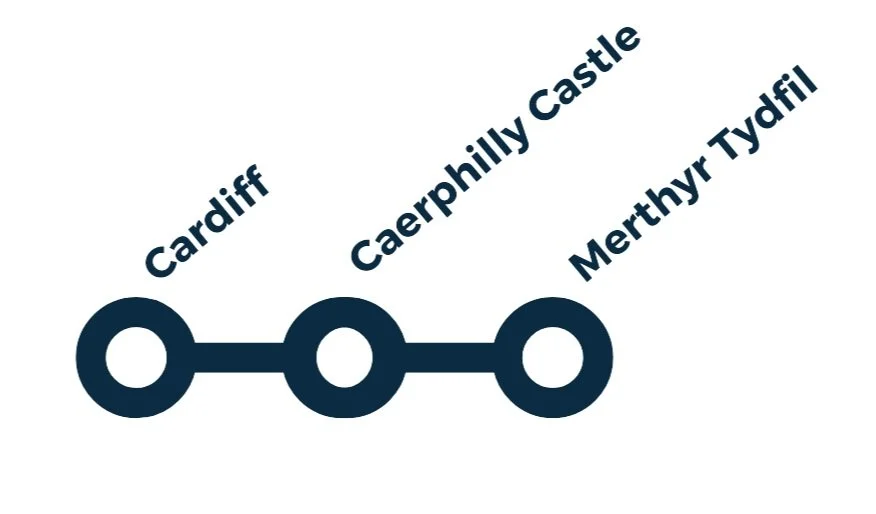
27 miles (43 km) with drive time approx. 40 minutes
Customisable and Live Navigation via Google Maps –
click here:
Or use the link to jump to the destinations in the guide below
Cardiff →
Caerphilly Castle →
Merthyr Tydfil
Part 1: Cardiff & The Valleys
Power, Industry & the Gateway North
The Cambrian Way begins in Cardiff, a city whose growth and confidence were built on coal, trade, and global ambition. Castles, civic buildings, and docks all tell the story of a capital shaped by industry and empire — and it is from here that the route turns inland, following the valleys that once powered the modern world.
Almost immediately, the landscape tightens and rises. The road leads past Caerphilly Castle, one of the greatest medieval fortresses in Europe, before climbing into the heads of the South Wales valleys. This is a country of steep-sided hills, terraced towns, and extraordinary engineering — where railways, canals, and roads were carved into the landscape to serve mines and ironworks.
Places like Merthyr Tydfil are not just stops on the route, but chapters in the story of how Wales was transformed by the Industrial Revolution. This opening section is about scale and contrast: from capital city to upland edge, from medieval power to industrial might — and about crossing the threshold into the wilder heart of the country.
How to Spend Your Time
This region offers a perfect mix of history, nature, and vibrant local culture — all within easy reach of one another. Whether you’re short on time or looking to explore at a slower pace, you’ll find plenty of options to suit your style of travel.
In just one day, you can visit medieval castles, walk through leafy city parks, and take in sweeping views of the Welsh valleys. If you have more time, a two- or three-day itinerary lets you dive deeper — from the Roman roots of Cardiff Castle to the open-air heritage at St Fagans, and on to scenic reservoirs and hidden gems in the surrounding hills.
-
Option 1: Culture & Castle Highlights (City + Short Drive)
Perfect for travellers who want to mix history, local flavour, and scenic views in one relaxed day.
Morning:
Start at Cardiff Castle (explore for 1–1.5 hours)
Walk through Bute Park, then grab coffee in one of Cardiff’s Victorian arcades
Visit St Fagans National Museum of History (20 mins drive) — allow 1.5 hours to explore
Lunch Suggestion:
St Fagans café or return to the city for a spot in Cardiff Market
Afternoon:
Head to Caerphilly Castle (15 mins drive from St Fagans) — explore the leaning tower and moat walk (1 hour)
Scenic drive back through The Valleys
Optional stop at Pontsticill Reservoir for a photo or short walk if time allows
✅ Option 2: The Valleys Scenic Drive + Hidden Gems
Ideal for road-trippers who prefer landscape, heritage, and a slower pace with less city time.
Morning:
Depart Cardiff and head straight to Caerphilly Castle (arrive early to beat crowds)
Drive north through Taff’s Well and into The Valleys
Stop at Joseph Parry’s Cottage in Merthyr Tydfil (30 mins)
Lunch Suggestion:
Pub lunch in Merthyr Tydfil (e.g. The Red Cow Inn) or picnic at Pontsticill
Afternoon:
Relax with a walk at Pontsticill Reservoir
Optional: Visit Brecon Mountain Railway (open seasonally), or drive part of the Taff Trail route for great views
Return to Cardiff via A470
-
Day 1: Cardiff & Surroundings
Morning: Cardiff Castle, walk through Bute Park
Lunch at Cardiff Bay, optional Techniquest visit
Afternoon: St Fagans Museum
Evening: Dinner at Cardiff Bay, overnight stay in or near Cardiff
Day 2: Castles & Valleys
Morning: Caerphilly Castle
Scenic drive through The Valleys, stop at Joseph Parry’s Cottage
End with a walk around Pontsticill Reservoir
-
Day 1: Cardiff Essentials
Morning: Cardiff Castle, City Hall, walk to Bute Park
Afternoon: St Fagans + coffee stop
Dinner in Cardiff city centre or the Bay
Day 2: History + Nature
Morning: Caerphilly Castle
Explore The Royal Mint (pre-booking recommended)
Drive the Taff Trail route for scenic views
Overnight in Merthyr area or near Pontsticill
Day 3: Hidden Valleys Gems
Visit Joseph Parry’s Cottage
Walk or picnic at Pontsticill Reservoir
Optional: detour to Brecon Mountain Railway or relax at a reservoir viewpoint
-
Great for a relaxed afternoon drive through castles and valleys.
Start: Cardiff city centre
Drive to Caerphilly Castle – explore for 45–60 mins
Continue north to Merthyr Tydfil, passing rolling hills and typical Valleys scenery
Stop at Pontsticill Reservoir for a short walk and photos
Return via the A470 for panoramic views over the Brecon Beacons foothills
How to Get There
Cardiff is one of the most accessible cities in the UK, whether you’re travelling by road, rail, air, or coach. Thanks to excellent motorway links, frequent train services, and budget-friendly coach routes, arriving in the Welsh capital is straightforward from all major UK hubs.
Once you’re here, getting around is just as easy. The city centre is compact and walkable, with buses, trains, and even a water taxi connecting you to key attractions like Cardiff Bay, St Fagans, and the surrounding valleys.
Whether you're planning to drive, take public transport, or mix both, this information will help you navigate Cardiff with ease.
-
Cardiff is well connected to major UK hubs via the M4 motorway, which runs directly past the city.
From London – approx. 2.5–3 hours (M4 westbound)
From Bristol – approx. 1 hour (M4 westbound over the Prince of Wales Bridge)
From Birmingham – approx. 2 hours via M5 then M4
From Manchester/Liverpool – approx. 3.5–4 hours via M6, M5, and M4
From Swansea (West Wales) – approx. 1 hour eastbound on M4
-
Cardiff has both city centre parking and Park & Ride options:
City Centre Car Parks
NCP Westgate Street – close to Cardiff Castle & Principality Stadium
John Lewis Car Park – great for shopping and walking into the city
Castle Mews – a small, convenient option near Bute Park
Park & Ride Services
Cardiff East Park & Ride
Just off the A48, postcode: CF23 8HH
Buses every 15 mins into the city centre
Great for avoiding traffic and saving on parking costs
Cardiff West and South Park & Ride sites also operate seasonally or during major events
-
Cardiff is well served by long-distance coach services, making it a budget-friendly and eco-conscious choice for travellers arriving from across the UK.
National Express
Regular services to/from:
London Victoria (~3.5–4 hrs)
Bristol (~1.5 hrs)
Birmingham (~3 hrs)
Manchester (~5 hrs)
Heathrow & Gatwick Airports
Coaches arrive at Cardiff Coach Station (Sophia Gardens) — about a 10-minute walk from Cardiff Castle and the city centre.
Megabus
Frequent routes from major cities including London, Bristol, Birmingham, and Leeds
Also arrives at Sophia Gardens Coach Station
Local Connections
TrawsCymru offers scenic and affordable coach services across Wales
Ideal for continuing your road trip without a car — e.g. to Brecon, Aberystwyth, or Llandrindod Wells
-
Cardiff Central Station is a major transport hub with direct services from:
London Paddington – ~1hr 50 mins (Great Western Railway)
Bristol Temple Meads – ~50 mins
Manchester Piccadilly – ~3.5 hrs
Birmingham New Street – ~2 hrs
Swansea – ~1 hr
From the station, it’s a short walk to the city centre, Cardiff Castle, and bus connections.
-
Getting to Cardiff by Air
Cardiff Airport (CWL) – ~30 minutes from the city
Direct flights from Europe and internal UK hubs
Connections via the T9 Airport Express Bus to the city centre
Or use local rail (via Rhoose Cardiff International Airport Station)
Bristol Airport (BRS) – ~1 hr 10 mins by car
More frequent international flights
Car hire, rail connections, and National Express coaches available
Cardiff
Sport & Major Venues
Principality Stadium – Home of Welsh rugby and one of the most famous stadiums in the world. You can take guided tours, attend major sporting events and concerts, or experience the stadium’s hospitality offerings.
Cardiff Bay & The Waterfront
Cardiff Bay can be reached easily from the city centre by train, bus, or on foot.
Once a busy tidal dockland, the area has been transformed into a vibrant waterfront district built around a freshwater lake.
Highlights include:
Wales Millennium Centre – One of Wales’s most important cultural venues, hosting theatre, opera, ballet, and musicals, and known for its striking architecture.
Mermaid Quay – A lively area of shops, restaurants, cafés, and bars overlooking the waterath Basin.
Cardiff Bay Barrage – A scenic walking and cycling route with wide views across the bay and the Bristol Channel.
Boat trips – Options include sightseeing cruises, water taxis, and high-speed RIB rides. You can also book trips out to Flat Holm Island, known for its wildlife and history.
Norwegian Church Arts Centre – A historic former sailors’ church turned into an arts and cultural centre with exhibitions, events, and a café.
Roald Dahl Plass – A public square named after the famous author born in Cardiff, often hosting events, festivals, the Cardiff International Food & Drink Festival, and the summer Cardiff Bay Beach.
Action & Adventure
Cardiff International White Water – Offers white water rafting, indoor surfing, air trail, hot dogging, gorge scrambling, river boarding, paddleboarding, canoeing, and kayaking.
Taff Valley Quad Bike & Activity Centre – Located on a Welsh hill farm near Cardiff, offering quad biking, assault courses, archery, laser shooting, and clay pigeon shooting

Cardiff is a thriving and cosmopolitan capital city and the cultural, sporting, and political heart of Wales. With over 2,000 years of history, it is a place where Roman walls, Norman fortifications, Victorian grandeur, and modern waterfront development all sit within easy walking distance of each other.
At the centre of the city stands Cardiff Castle, whose extraordinary story spans Roman, medieval, and Victorian eras. Around it, you’ll find a compact and lively city centre filled with museums, galleries, parks, shopping streets, and major sporting and cultural venues.
What to See & Do in Cardiff
Culture, Museums & Landmarks
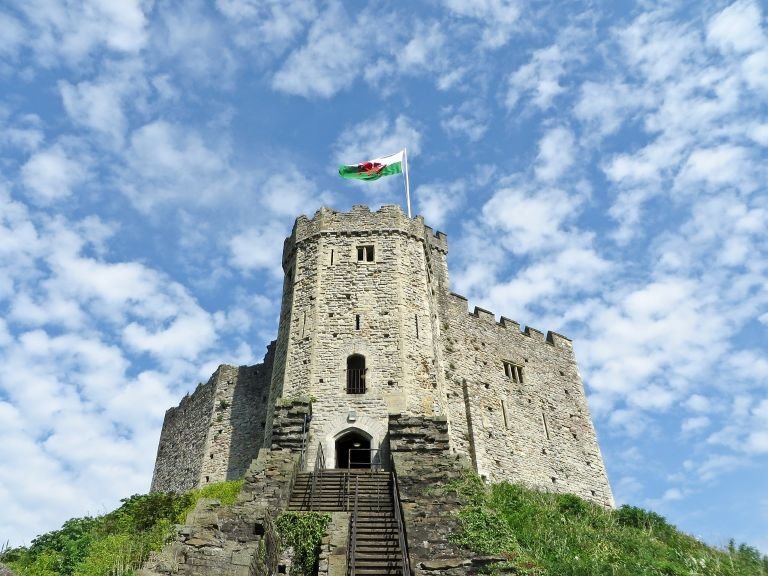
Cardiff Castle – The city’s most important historic site, dramatically rising from the centre of the city. Its story spans Roman fort, Norman stronghold, and Victorian Gothic fantasy palace (covered in detail in the Castle section).
National Museum– Free entry. Located in the city’s Civic Centre and home to Wales’s premier art, geology, and natural history collections. Highlights include The Evolution of Wales and the Natural History galleries.
The Museum of Cardiff – Free entry. Tells the story of the city through the people who created and lived in it, with engaging and interactive exhibits.
Civic Centre – An impressive group of early 20th-century buildings including City Hall and the National Museum, forming one of the UK’s finest civic spaces.
Techniquest is a hands-on science centre where you can engage with interactive exhibits and enjoy science shows and demonstrations.
-
Cardiff, the capital of Wales, is the largest city in the country. The city has a long history, that dates back to the Roman era. In the 11th century, Cardiff was founded by the Normans and became an important trading port. The city continued to grow and prosper in the Middle Ages, and by the 16th century, it was one of the most important cities in Wales.
In the 18th century, Cardiff began to grow rapidly as a result of the Industrial Revolution. The city became a major centre for coal mining and steel production, and its population grew rapidly. Cardiff was granted city status in 1905, and by the early 20th century it was one of the largest cities in the British Empire.
In the 20th century, Cardiff continued to grow and develop. The city became a major centre for tourism, and its cultural and financial sectors also flourished. Cardiff was also the site of the 1958 British Empire and Commonwealth Games.
-
An easy loop taking in the city’s top highlights.
Start: Cardiff Castle
Route:Explore the Castle grounds and ornate interiors
Walk into Bute Park through the Castle gates
Follow the riverside trail to The Animal Wall and City Hall
Stroll past the National Museum Cardiff (free entry)
Walk through the city’s Victorian arcades: Castle Arcade → Morgan Arcade
Optional: finish at Cardiff Market or take a short drive to Cardiff Bay for coffee
-
A Must-See on Your Welsh Road Trip
Set in the heart of the city, Cardiff Castle is one of Wales’ most iconic landmarks — a spectacular fusion of Roman ruins, medieval fortifications, and extravagant Victorian Gothic architecture. Whether you're a history lover, architecture buff, or just want stunning views of the city, this stop is well worth your time.
What to See & Do at Cardiff Castle
1. The Norman Keep
Climb the stone steps to the 12th-century keep, perched on an artificial motte. You’ll be rewarded with 360° views over Cardiff, including the city skyline and distant hills.2. The Castle Apartments
Step into the lavish Victorian interiors, redesigned by architect William Burges in the 1800s. Look out for the Arab Room ceiling, detailed murals, and the opulent Banqueting Hall — it’s all gloriously over-the-top.3. The Roman Wall Walk
Cardiff Castle sits on a 2,000-year-old Roman fort. Take the walk along the old Roman walls, where parts of the original stonework are still visible.4. Wartime Shelters
Hidden in the walls are tunnels used as air raid shelters during WWII. You can walk through them and hear original broadcasts — a moving and atmospheric experience.5. Interpretation Centre & Café
Learn more about the castle’s history in the on-site museum and enjoy a coffee or snack in the café in the visitor centre.How to Visit Cardiff Castle
Opening Times:
Typically open daily from 10:00am to 5:00pm (last entry 4:00pm)
(Check ahead for seasonal or holiday changes)Admission:
Adults: ~£14.50
Children: ~£10
Under 5s: Free
Family and local discount tickets available
Guided house tours are an optional extra
Getting There:
Located in the city centre — a short walk from Cardiff Central Station
Nearby parking at Castle Mews or NCP Westgate Street
Accessibility:
Most of the site is accessible, though the Norman Keep involves steep stairs
Wheelchair users and families with buggies will find good access to the grounds and apartmentsTop Tip:
Arrive early for fewer crowds, especially in summer. The castle is also included in some multi-attraction passes like Cardiff’s "Hop-on Hop-off" bus tours.
-
On Foot – Cardiff city centre is compact and walkable. You can walk from the castle to Cardiff Bay in ~30 mins.
By Bus – Cardiff Bus runs a comprehensive network with routes across the city and to places like St Fagans and Cardiff Bay.
By Bike – You can hire bikes or use Nextbike (bike share scheme) from multiple city stations.
Taxi & Uber – Widely available and easy to book via app or taxi ranks.
Water Bus – A scenic way to travel between Cardiff Bay and the city centre along the River Taff.
Nearby
The Royal Mint at Llantrisant makes a great trip on the route. The Royal Mint is one of the world's leading mints and has a rich history dating back over 1,100 years. Visitors have the opportunity to take guided tours of The Royal Mint facility, where they can witness the process of producing coins, medals, and commemorative items. The Royal Mint Experience offers interactive exhibitions that explore the history of coinage, the significance of currency in society, and the evolution of The Royal Mint itself. Visitors can learn about key moments in minting history and view rare and historic coins from different eras. The Royal Mint houses an impressive collection of coins and medals, showcasing examples from different periods and countries. From ancient coins to modern-day currency, the collection offers a comprehensive overview.
St Fagans National Museum of History

© Crown Copyright
St Fagans National Museum of History, Amgueddfa Cymru in Welsh, is located just outside Cardiff, is one of the finest open-air museums in Europe and one of the most rewarding cultural attractions in Wales. Set in beautiful parkland, it tells the story of Welsh life, culture, and identity through a remarkable collection of historic buildings and immersive displays.
The museum is home to over 40 original buildings from different periods of Welsh history, including farmhouses, cottages, workshops, chapels, and even a medieval church. These have been carefully dismantled from sites across Wales and reconstructed at St Fagans, creating an entire landscape of Welsh history that you can walk through and explore.
What to See & Do
Explore historic buildings from across Wales – Walk through rural farmhouses, industrial workers’ homes, chapels, workshops, and grand houses, each carefully furnished to reflect everyday life in its period.
Step inside a medieval church – One of the highlights of the site, relocated stone by stone.
See traditional crafts in action – Skilled craftspeople demonstrate historic techniques such as blacksmithing, weaving, and pottery, bringing the buildings and stories to life.
Discover Welsh social history – The museum explores how people lived, worked, worshipped, and socialised, covering themes such as agriculture, industry, religion, and community life.
Enjoy the grounds and gardens – The site is set in attractive parkland and is ideal for wandering at a relaxed pace.
Café, shop & picnic areas – Facilities make it easy to spend a full day here.

© Crown Copyright
-
St Fagans was established in 1948 as part of the National Museum of Wales, with the aim of preserving important historic buildings that were at risk of being lost. Rather than keeping them as isolated exhibits, the museum chose to rebuild them in a living landscape, where their original context and interiors could be understood.
Over time, the collection has grown to include buildings from across Wales, ranging from medieval to modern, creating a unique and evolving record of Welsh life, culture, and identity.
-
Location:
St Fagans is located just west of Cardiff, and is easily reached by car or public transport from the city centre.Getting there:
By car: Well signposted from Cardiff
By bus: Regular services run from Cardiff city centre
Parking:
There is a large on-site car park for visitors.
Visiting time:
Allow at least half a day, and ideally a full day, to explore properly.
Facilities:
Café
Shop
Toilets
Picnic areas
Caerphilly Castle
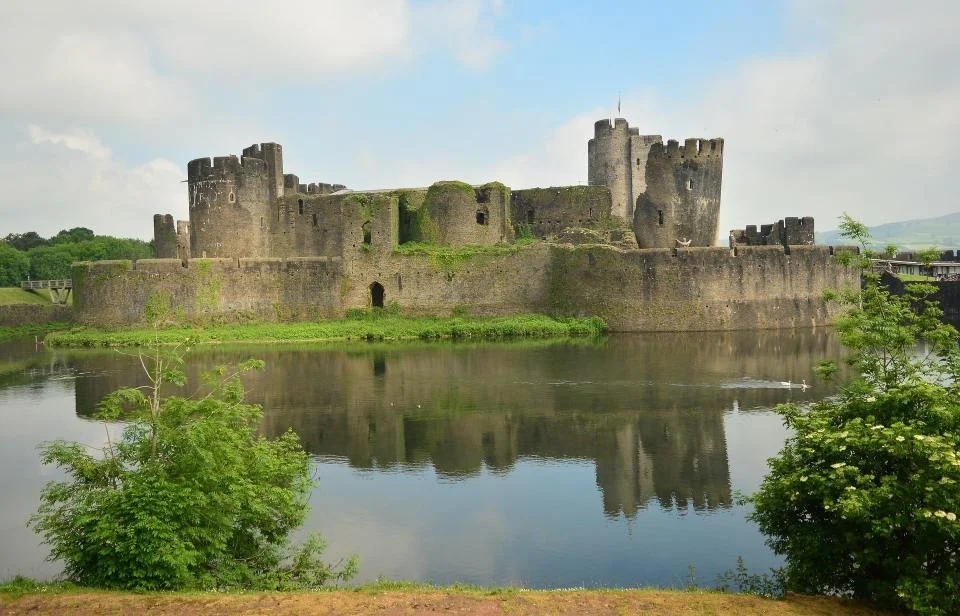
Caerphilly Castle is the largest castle in Wales and one of the biggest medieval fortresses in Europe. Famous for its vast water defences and dramatic scale, it dominates the town of Caerphilly and is one of the most impressive examples of medieval military architecture in Britain.
Built in the late 13th century, the castle was designed as a statement of power as much as a fortress, using lakes, moats, and massive walls to create an almost impregnable stronghold. Today it is managed by Cadw and is one of the must-see historic sites in south Wales.
How to Visit Caerphilly Castle
Caerphilly Castle sits in the centre of the town of Caerphilly, just north of Cardiff, and is very easy to reach.
It is a short walk from Caerphilly town centre and railway station.
The castle is visible from many parts of the town and forms the focal point of the area.
Because of its size, allow at least 1.5–2 hours for a proper visit.
-
Explore the vast inner and outer wards – The sheer scale of the castle is immediately striking, with huge open spaces, multiple walls, and extensive defences.
Walk the battlements and towers – Several sections are accessible and give excellent views over the town and surrounding countryside.
See the Great Hall – Once the ceremonial heart of the castle.
Explore the gatehouses and defensive works – Caerphilly is a masterclass in medieval military design.
Discover the water defences – The surrounding lakes and moats are a key part of what makes this castle so unique.
Find the famous leaning tower – Often compared to Pisa, this is one of the most photographed features of the castle.
-
The leaning south-east tower – A dramatic reminder of the damage caused during medieval warfare.
The huge water defences – One of the finest and most complete water-based defensive systems in Europe.
The concentric design – Multiple rings of walls showing cutting-edge 13th-century castle design.
Gatehouse details and murder holes – Classic features of a castle built for serious warfare.
Long sightlines across the lakes – Showing how the landscape itself was used as part of the defence.
-
Caerphilly Castle was built between 1268 and 1271 by Gilbert de Clare, one of the most powerful Norman lords in Wales, during a period of intense conflict with the Welsh prince Llywelyn ap Gruffudd.
The castle was designed not only to defend territory but also to demonstrate Norman dominance over south Wales. Its innovative use of water defences and concentric walls made it one of the most advanced fortresses of its time.
Over the centuries, the castle changed hands several times and was involved in various conflicts, including the English Civil War. Although it later fell into ruin, its immense structure survived largely intact, and major restoration work in the 19th and 20th centuries stabilised and preserved it for future generations.
-
Almost as soon as it was built, Caerphilly Castle was attacked and damaged during Welsh uprisings and later conflicts. One of the most dramatic episodes occurred during the early 14th century and again during the English Civil War, when the castle was deliberately damaged to prevent it being used as a stronghold.
It was during these events that the south-east tower was partially undermined and collapsed, creating the famous leaning tower that still stands today — a powerful visual reminder of medieval and early modern warfare.
-
Getting there:
Caerphilly is just north of Cardiff and is easily reached by road or train.
Caerphilly railway station is only a short walk from the castle.
Parking:
There are several public car parks in Caerphilly town centre within easy walking distance of the castle.
Access:
The site is large, with uneven surfaces, steps, and towers.
Sensible footwear is recommended.

Taff Trail

© Crown Copyright
From City to Countryside
The The Taff Trail begins in Cardiff Bay, passing through the heart of the city via Bute Park and alongside Cardiff Castle, before heading north into the Taff Valley. This gradual transition from urban landmarks to green corridors is one of the trail’s defining features.
Rivers, Woodlands & Valleys
Much of the route follows riverside paths, woodland tracks, and quiet lanes, offering frequent views of the River Taff and the surrounding hills. As the trail climbs northwards, the scenery becomes increasingly rural, with wide views across valleys and uplands.
Historic Landmarks
The Taff Trail passes several notable historic sites, including Castell Coch, the striking 19th-century “fairytale” castle hidden in woodland above the valley, and remnants of Wales’s industrial heritage such as the Taff’s Well Ironworks. These sites reflect the long history of settlement, industry, and transport along the Taff corridor.
Walking & Cycling
The trail is well signposted and largely traffic-free, making it suitable for both walkers and cyclists. Some sections are gentle and ideal for families or short outings, while others offer longer, more challenging stretches, particularly for cyclists heading north towards the Brecon Beacons.
Practical Information – Access & Using the Trail
Access points:
The Taff Trail can be joined at many points along its length, including Cardiff Bay, Cardiff city centre, Merthyr Tydfil, and Brecon. This makes it easy to explore short sections rather than the full route.
Route character:
Mostly traffic-free paths and tracks
Suitable for walking and cycling
Surface quality varies, particularly outside urban areas
Using the trail:
The trail works well for day walks, family cycling, or longer multi-day journeys, depending on how much of the route you choose to explore.
Check out the trail around Cardiff Bay, Merthyr Tydfil and Brecon, among many points to pick it up.
About The Valleys
The Welsh Valleys have a rich and powerful industrial heritage that dates back to the 18th and 19th centuries. Once the heartland of the coal mining and iron industries, the valleys were among the most important industrial regions in the world, with coal mines, ironworks, and factories driving the Industrial Revolution.
This industry shaped not only the landscape but also the communities, culture, and identity of south Wales. Although the decline of heavy industry brought major economic and social change, the Valleys today combine a remarkable industrial story with beautiful natural landscapes, outdoor activities, and a strong sense of place.
Industrial Heritage & Mining History
One of the best ways to understand the Valleys is by visiting the surviving industrial sites and museums.
Big Pit National Coal Museum (Blaenavon) – A UNESCO World Heritage Site and one of the most important industrial museums in Britain. Here you can descend into a real coal mine and experience what life was like for Welsh miners. Visiting the Big Pit is one of the most powerful and immersive ways to understand the region’s past.
Rhondda Heritage Park – Home to the Welsh Mining Experience at the former Lewis Merthyr Colliery. The Black Gold Experience includes guided underground tours and interactive displays that recreate the world of the Welsh miner and explain how coal powered the Industrial Revolution.
Landscapes, Waterfalls & Outdoor Scenery
The Welsh Valleys are not only about industry — they are also home to beautiful and surprisingly wild landscapes, with rolling hills, wooded valleys, rivers, and waterfalls.
One of the best places to explore is:
The Vale Of Neath Waterfalls – A spectacular area of woodland and gorge scenery. The Pontneddfechan and Ystradfellte Waterfalls Circular walk is a great place to start.
Notable waterfalls include:
Sgwd Gwladys (Lady Falls)
Aberdulais (National Trust)
These lie on the fringes of the Brecon Beacons National Park and are among the most beautiful waterfall landscapes in southern Wales.
Dark Sky Sites & Stargazing
The borough of Rhondda Cynon Taf has no fewer than eight Dark Sky Sites, making this one of the best places in south Wales for stargazing.
Uniquely, two of these sites are pubs:
Red Lion – A 12th-century drover’s inn
Rose and Crown, Eglwysilan – Situated above Pontypridd and offering panoramic views across the valley
Both allow you to combine stargazing with a drink in atmospheric surroundings.
You can also read more about Dark Skies in Wales here.
Merthyr Tydfil
Copyright: Cyfarthfa Museum & Art Gallery
Merthyr Tydfil, located in the historic county of Glamorgan, is one of the most important towns in the story of the Industrial Revolution in Wales. During the 18th and 19th centuries it became a global centre for iron production and coal mining, earning the nickname “the Iron Capital of the World.”
Its rapid rise was driven by abundant natural resources — especially iron ore and coal — and its strategic position along the River Taff. Ironworks such as Cyfarthfa Ironworks and Dowlais Ironworks became among the largest and most productive in the world, driving major technological advances in iron and steel production.
This explosive growth brought huge social change. Workers arrived from across Wales and beyond, leading to overcrowding, harsh living conditions, and growing labour unrest. One of the most dramatic moments was the Merthyr Rising of 1831, when ironworkers rebelled against low wages and oppressive conditions — a key moment in the wider struggle for workers’ rights in Britain.
In the 20th century, heavy industry declined, but today Merthyr Tydfil has reinvented itself as a centre for heritage, culture, and outdoor adventure, combining powerful industrial history with easy access to some of the best landscapes in south Wales.
What to See & Do in Merthyr Tydfil
Culture, Heritage & History
Cyfarthfa Park & Castle – Set in 65 hectares of parkland, this grand former home of the Crawshay family reflects the enormous wealth generated by the iron industry.
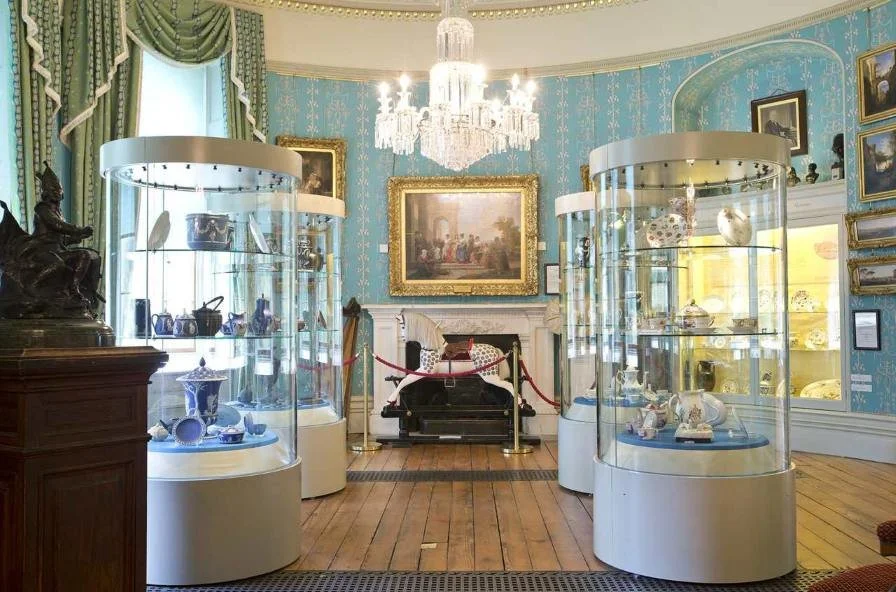
Cyfarthfa Museum & Art Gallery – Built between 1824 and 1825, this is one of the town’s most important attractions. It hosts walks, talks, workshops, and exhibitions. Highlights include:
A replica of the world’s first steam locomotive
Displays on Laura Ashley and Julien MacDonald, both of whom have strong connections to Merthyr Tydfil
Joseph Parry’s Cottage – The birthplace of one of Wales’s most famous composers. This well-preserved 19th-century ironworker’s cottage offers a fascinating glimpse into everyday life during the industrial era and celebrates Parry’s musical legacy.
Redhouse – An arts and creative centre in the Old Town Hall, a magnificent Grade II listed building. Hosts exhibitions, performances, workshops, and community events.
Ynysfach Engine House – Built in 1836. Currently closed, but worth keeping an eye on. You can read more about the four-storey blast engine house here and check the website for reopening updates.
Nature, Parks & Scenic Places
Pontsticill Reservoir (Taf Fechan Reservoir) – A beautiful reservoir in the Taf Fechan Valley, famous for its dramatic bell-mouth overflow that looks like a giant plughole. A peaceful place for walks and enjoying mountain scenery.
The surrounding valleys and hills offer easy access to walking, cycling, and outdoor exploration.
Adventure & Outdoor Activities
BikePark Wales – The UK’s largest purpose-built mountain biking centre, with downhill trails, uplift service, bike hire, coaching, and an on-site café.
Rock UK Summit Centre. – Home to the largest indoor climbing wall in Wales and a major adventure activity centre. Activities include canoeing on the Taff Bargoed lakes, man-made caving systems, aerial adventure courses, and over 20 instructor-led activities.
Spread across 65 hectares of sprawling land, Cyfarthfa Park & Castle stands as a testament to the grandeur once enjoyed by the esteemed Crawshay family.
The historic Cyfarthfa Museum & Art Gallery, constructed between 1824 and 1825, offers visitors a rich tapestry of experiences with its annual lineup of captivating walks, talks, immersive workshops, and exhibitions.
Highlights include a faithful replica of the world's pioneering steam locomotive, paying homage to Merthyr Tydfil's significant role in industrial history. Additionally, visitors can delve into the lives and legacies of renowned fashion icons Laura Ashley and Julien MacDonald, both of whom have roots tracing back to Merthyr Tydfil, through engaging displays that celebrate their contributions to the world of fashion.
Uncover More Map
The Uncover More map highlights key points of interest, scenic viewpoints, hidden gems, and much more along the recommended route. To make the most of it, use the map in conjunction with the destination information, and explore additional options in the area you’re visiting to discover even more experiences.
If your iPhone doesn’t load via the Google Map App via the button, check out the Help page for how to update your phone or copy and paste the link into your browser: bit.ly/Cambrian-uncover
Cambrian Way Last updated: 13 January 2026
Some links may earn Uncover Britain a small commission at no extra cost to you. This helps support the ongoing creation, review and presentation of our road trip guides.
Route information and listings are provided for general guidance only. Always use your preferred navigation system and check official websites to confirm suitability, opening times and the latest details before travelling.
Our guides are reviewed regularly and supported by a mix of editorial research and digital tools to help keep content clear and up to date. If you spot anything that needs updating, we’re always glad to hear from you.