Viewing as a member

Cambrian Way: Cambrians

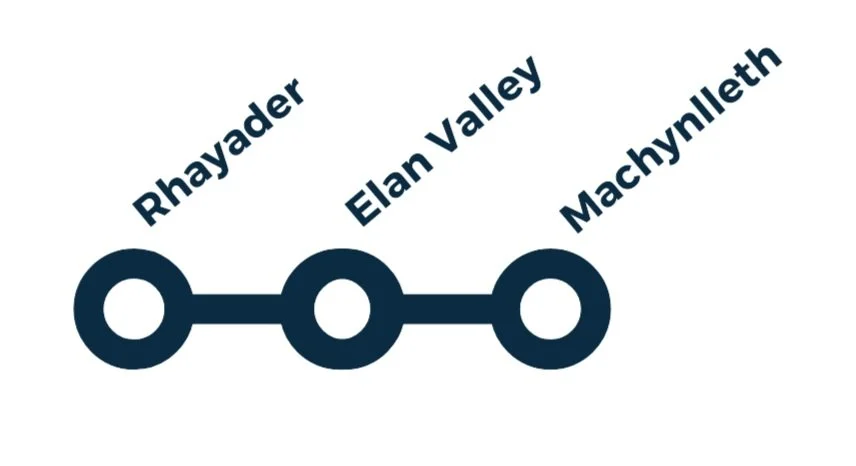
From Builth Wells: 73 miles (117 km) with drive time approx. 2 hours 40 minutes
Customisable and Live Navigation via Google Maps –
click here:
Or use the link to jump to the destinations in the guide below
Rhayader →
Elan Valley →
Machynlleth
Part 3: The Cambrian Mountains & Elan Valley
Reservoirs, Remoteness & the Empty Middle of Wales
North of Builth Wells, the Cambrian Way enters its quietest and most introspective stretch. The Cambrian Mountains and the Elan Valley form a landscape of remarkable space and silence — a place of high moors, long views, and roads that feel absorbed into the land rather than imposed upon it.
This is the least populated part of the entire route, and one of the least populated regions in Britain. The great Victorian reservoirs of the Elan Valley add a powerful sense of scale and purpose, their stone dams and empty waters held within vast, open uplands.
Towns like Rhayader and Machynlleth feel like true frontier settlements — historic meeting points between north and south, coast and interior. This section is not about attractions in the usual sense. It’s about atmosphere, distance, light, and weather — and about experiencing Wales at its most spacious and elemental before the journey rises once more into the mountains.
How to Spend Your Time
This part of the journey is all about slowing down, tuning into nature, and uncovering Wales’ quiet, soulful centre. With few crowds, vast skies, and a deep connection to the land, the Cambrian Mountains invite you to explore at your own pace.
Whether you’ve got a single day to experience the dramatic beauty of the Elan Valley, or a few days to dive into artisan crafts, wildlife, and local culture around Machynlleth, these itinerary options help you make the most of your time — from scenic drives to stargazing and forest walks.
-
Option 1: One-Day Highlights – Nature & Stargazing
Morning:
Begin in Rhayader with a walk at Gilfach Nature Reserve (great for spotting red kites and wildflowers)
Drive into the Elan Valley, stop at the Visitor Centre, and visit one or two of the Victorian dams
Enjoy a picnic by one of the reservoirs or lunch at the café
Afternoon:
Take a short walk (e.g. Caban Coch Dam trail)
Return later in the evening for stargazing – Elan Valley is part of an International Dark Sky Park
Option 2: One-Day Highlights – Culture & Craft
Morning:
Start at the Corris Craft Centre – browse local makers, book a short tour or underground experience
Stop at the nearby Centre for Alternative Technology for sustainable living inspiration and scenic views
Afternoon:
Explore Machynlleth: visit MOMA Machynlleth for Welsh art, and stroll the town’s quirky shops and cafes
Optional short drive to the RSPB Ynys-hir Nature Reserve for a peaceful late-day birdwatching walk
-
Day 1: Rhayader & Elan Valley
Morning: Explore Gilfach Nature Reserve or walk part of the Elan Valley Trail
Afternoon: Visit the Elan Valley dams, picnic at Claerwen Reservoir, and stargaze after dark
Overnight: Stay in or near Rhayader, Elan Valley lodge, or a countryside inn
Day 2: Corris & Machynlleth
Morning: Head west to Corris Craft Centre (allow 1.5–2 hrs)
Optional: Take a guided tour (e.g. King Arthur's Labyrinth)
Afternoon: Visit Centre for Alternative Technology then finish your day in Machynlleth with a museum visit, meal, or gallery stroll
-
Day 1: Wild Rhayader & Elan Valley
Start with a slow walk at Gilfach Nature Reserve
Spend the afternoon touring the dams of Elan Valley and taking photos
Relax with a pub dinner in Rhayader, return for stargazing if clear skies
Day 2: Hidden Trails & Reservoir Walks
Morning: Walk or cycle a longer trail (e.g. Elan Valley Trail or Claerwen circular route)
Afternoon: Visit the Elan Valley Visitor Centre and Caban Coch interpretation site
Stay another night in nature – rural B&B or campervan-friendly pitch
Day 3: Crafts, Culture & Nature
Morning: Drive west to Corris Craft Centre and CAT
Afternoon: Explore Machynlleth, visit MOMA, or enjoy a quiet walk at Ynys-hir Reserve
Depart via scenic A487 or loop back inland
-
Route: Rhayader → Elan Valley dams → Claerwen Reservoir → Mountain Road → Machynlleth
Duration: Approx. 2.5–3 hours including short stopsWhat You'll See:
A string of Victorian dams, each with distinct architecture
Remote upland scenery and moorland views
Panoramic descent into Machynlleth via a dramatic single-track mountain road
Best driven in daylight hours and dry conditions — great for photographers and nature lovers.
How to Get There
Known as the gateway to the Elan Valley and a perfect base for exploring the Cambrian Mountains, Rhayader is a small Welsh market town with a big personality. It's a hub for outdoor lovers, cyclists, and road trippers, surrounded by rolling hills, rivers, reservoirs, and wide-open skies.
Despite its peaceful and remote feel, Rhayader is surprisingly accessible — especially if you're travelling by car or campervan. While there's no train station in town, reliable bus routes and scenic drives make it a great stop on any journey through Mid Wales. Once you arrive, it’s easy to park and explore on foot.
Whether you're planning a quick stop or a longer stay, here’s how to get to Rhayader by road, rail, coach, or air — and where to park when you arrive.
-
Rhayader sits at the crossroads of two major routes:
A470 (Cardiff to Llandudno) – the main north–south route through Wales
A44 (Oxford to Aberystwyth) – scenic cross-country drive through the Cambrian Mountains
Approximate drive times:
Cardiff – 1 hr 45 mins (via A470)
Bristol – 2 hrs 30 mins
Birmingham – 2.5–3 hrs (via A44 or A456 → A49)
Manchester – 3.5 hrs
London – 4.5 hrs
-
Rhayader has no train station, but you can take the train to nearby towns and continue by bus or taxi:
Llandrindod Wells – ~25 mins by bus or taxi
(Direct trains from Shrewsbury and Swansea)Caersws – ~35 mins by taxi
(Direct trains from Birmingham and Aberystwyth)Builth Road – closest station, but limited services and remote location
Taxi transfer or local bus needed for the final leg.
-
TrawsCymru T4 Service runs regularly:
Cardiff → Merthyr Tydfil → Brecon → Builth Wells → Rhayader → NewtownT5 and 775 also connect Rhayader to coastal towns and Machynlleth (via Aberystwyth)
Buses are comfortable and scenic — ideal for slow travellers and walkers.
-
By Air
Closest airports to Rhayader:
Cardiff Airport (CWL) – ~2 hrs by car
Bristol Airport (BRS) – ~2.5 hrs by car
Birmingham Airport (BHX) – ~2.5–3 hrs by car or train + taxi via Caersws
Manchester Airport (MAN) – ~3.5 hrs by car
All airports offer car hire and public transport connections, but for the easiest access to Rhayader, a rental car is highly recommended from any of them.
The Cambrian Mountains
Overview
The Cambrian Mountains are a vast and rugged upland region in central Wales, stretching across parts of Powys, Ceredigion, and Gwynedd. They form one of the most wild, remote, and least populated landscapes in Britain.
Geographically, the Cambrian Mountains are a high plateau with numerous peaks over 600 metres, rising to Plynlimon (752 m), the highest point in the range. This region is the source of some of Wales’ greatest rivers, including the Wye, Severn, and Teifi, which flow outwards into deep valleys and across the country.
This is a land of big skies, empty roads, sweeping moorland, reservoirs, forests, and dramatic weather — one of the true wilderness areas of Wales.
Heritage & Historic Landscapes
The Cambrian Mountains are often described as the backbone of Wales, and their landscape is steeped in history.
Explore the historic lead mines of Cwmystwyth, among the oldest in Europe, revealing the region’s long industrial past.
Visit Soar y Mynydd, a remote Calvinist Methodist chapel deep in the mountains, still holding services today.
Discover Strata Florida Abbe near Pontrhydfendigaid, one of the most important medieval monastic sites in Wales, once home to Cistercian monks who shaped much of the surrounding landscape.
Walking & Exploring
The region is ideal for walking, quiet exploring, and slow travel.
There are 11 scenic local footpaths crossing moorland, valleys, forests, and river landscapes.
Many walks link into villages and small towns with cafés, pubs, and tearooms along the way.
This is walking for people who like space, silence, and big horizons rather than crowds.
Dark Skies
The Cambrian Mountains are one of the best stargazing areas in Wales.
The region contains nine Dark Sky Discovery Sites, forming part of the Cambrian Mountains Astro Trail.
Many locations are easily accessible by car and completely free from light pollution.
The nearby Elan Valley Estate is also designated an International Dark Sky Park, recognising its exceptional night skies and protected nocturnal environment.
Rhayader
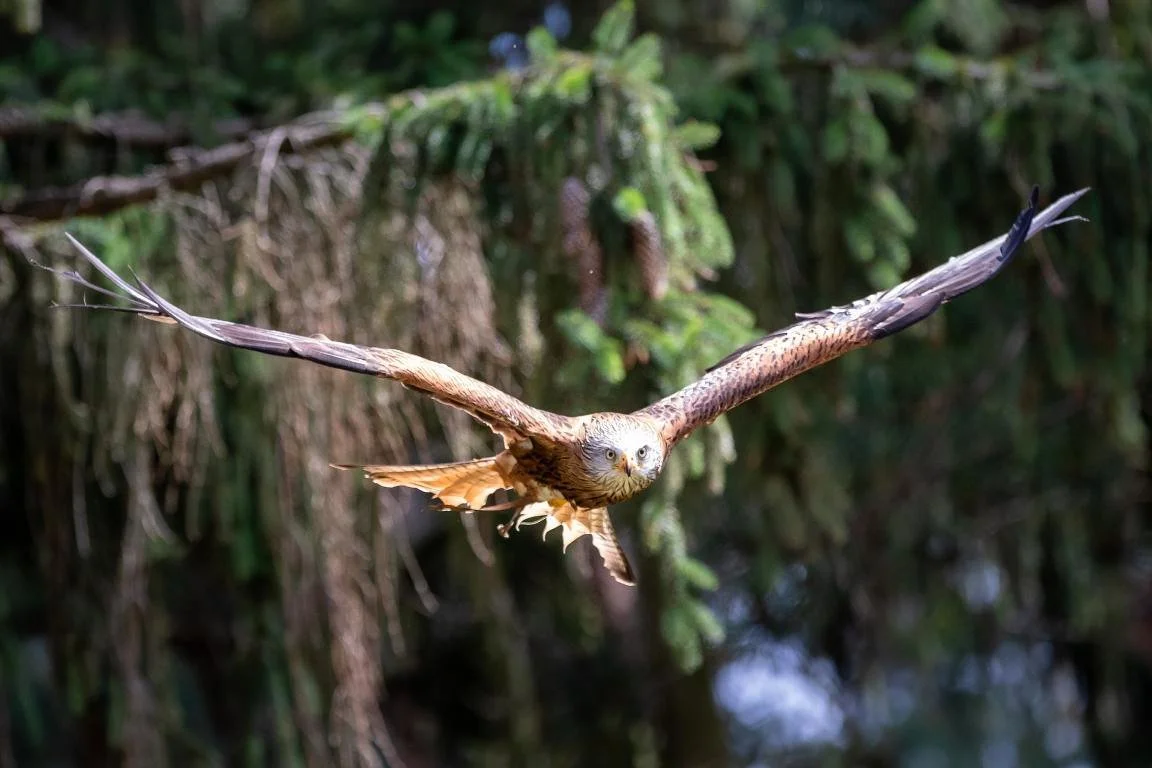
Red Kite in flight
Rhayader is an excellent base for exploring the Elan Valley and the wider Cambrian Mountains. The town is especially famous as the home of the red kite and has played a major role in the conservation of this once-rare bird of prey in Wales.
One of the main attractions is the Red Kite Feeding Station & Rehabilitation Centre, where you can watch red kites being fed daily from a purpose-built hide, often just a few feet away as the birds swoop overhead.
Rhayader also works well as a hub for walking, cycling, and outdoor activities, with easy access to rivers, reservoirs, forests, and open moorland.
What to See and Do
Watch the daily red kite feeding sessions at the Red Kite Feeding Station & Rehabilitation Centre
Explore Gilfach Nature Reserve with its meadows, rivers, waterfalls, and valley views
Visit The Wilderness Project on the banks of the River Wye for bushcraft, navigation training, and outdoor skills workshops
Try outdoor activities including mountain biking trails, Lion Royal Pony Trekking Centre, Pump Track Wales and Valley View Rhayader
Visit the Carad Rhayader Museum and Gallery to learn about the area’s social, cultural, and natural history
Tour Welsh Royal Crystal, Wales’ only hand-crafted crystal glass maker, and watch master craftsmen at work
-
Rhayader has several convenient places to park depending on what you plan to visit.
There are public car parks in and around the town centre, all within easy walking distance of shops, cafés, and local attractions.
If you are visiting the Red Kite Feeding Station, there is dedicated parking at the site.
Gilfach Nature Reserve also has its own parking areas for visitors using the walking trails.
For Elan Valley trips, additional parking is available at the dams and visitor centre once you leave the town.
Tips:
If you are spending time in the town itself, use one of the central car parks and explore on foot.
If you are heading straight into the Elan Valley or to a specific attraction, it is often easier to park at the destination itself.
-
The area around Rhayader has been inhabited for thousands of years. The nearby hills and valleys provided fertile land for farming and attracted early settlers.
Rhayader grew in importance during the medieval period, becoming a market town and trading centre. The town's strategic location along the River Wye contributed to its prosperity and development.
In the 18th and 19th centuries, Rhayader thrived as an agricultural hub and centre for wool production. The town's mills and workshops played a vital role in the local economy, attracting workers from surrounding areas.
Rhayader's location on major trade routes, including the historic drovers' roads and the Elan Valley Railway, further bolstered its importance as a transportation hub. The railway connected Rhayader to nearby towns and cities, facilitating the movement of goods and people.
Beyond its historical significance, Rhayader is renowned for its stunning natural beauty. Nestled amidst the Cambrian Mountains and bordered by the Elan Valley, the town is surrounded by picturesque landscapes, including rolling hills, lush forests, and tranquil lakes.
Today, Rhayader is a popular destination for outdoor enthusiasts, offering a wide range of recreational activities such as hiking, cycling, fishing, and birdwatching. Visitors can explore the nearby Elan Valley Reservoirs, known for their scenic beauty and abundant wildlife.
-
Rhayader is one of the most important places in Wales for the conservation of the red kite.
By the late 20th century, the red kite had become extremely rare in Britain due to persecution and habitat loss. The area around Rhayader became a key centre for conservation efforts, helping to protect and re-establish the species in Wales.
The Red Kite Feeding Station was established to support these efforts and to allow visitors to see the birds at close range without disturbing them in the wild. Today, red kites are once again a common sight across much of Wales, and Rhayader remains one of the best places in the country to see them in large numbers.
Watching dozens of red kites circling and diving for food is one of the most memorable wildlife experiences in mid Wales.
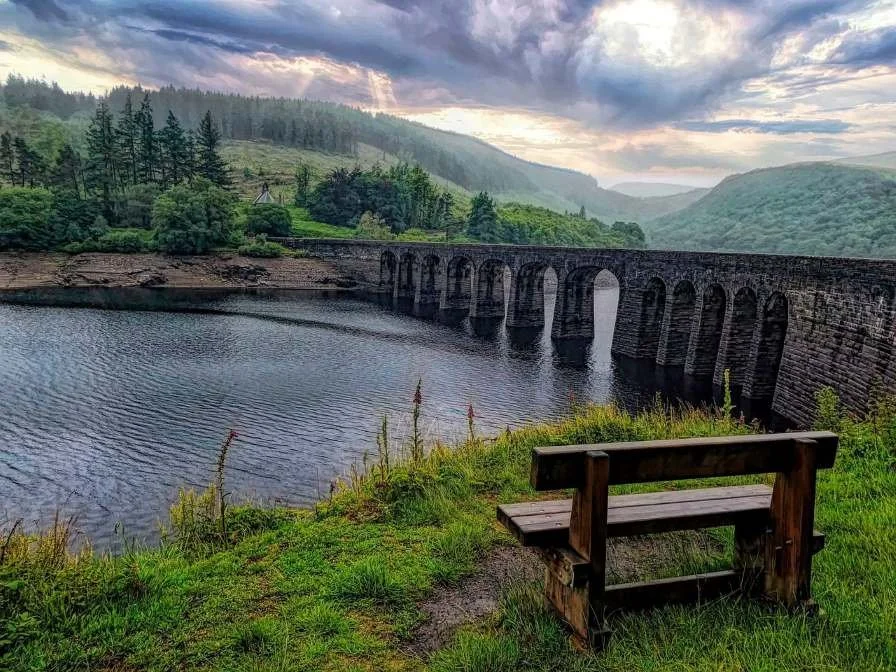
Elan Valley Lakes
Elan Valley Lakes is one of the most spectacular and unspoilt landscapes in Wales. Set deep in the Cambrian Mountains, it is a vast estate of reservoirs, dams, moorland, and empty mountain roads, created over 100 years ago to supply water to Birmingham via a 73-mile aqueduct.
This is a place of big skies, long views, quiet roads, and dramatic engineering, where Victorian ambition meets wild Welsh scenery. It is ideal for slow exploration by car, bike, or on foot.
The main hub for visitors is the Visitor Centre, where you’ll find information, maps, bike hire, a café, and a gift shop. Nearby is Penbont House Tea Room a popular stop for food and drinks.
What to See and Do
Discover the reservoirs and dams, including:
Caban Coch Dam
Garreg Ddu Dam
Pen y Garreg Dam
Craig Goch Dam
Claerwen Dam
Drive or cycle the spectacular mountain roads linking the reservoirs
Walk around the lakes and into the surrounding hills
Visit the Visitor Centre for maps, exhibitions, and bike hire
Discover the story of the “lost valleys” flooded to create the reservoirs
Stop at Penbont House Tea Room or the visitor centre café
Activities include:
Walking and cycling
Scenic driving
Wildlife watching
Stargazing
Fishing and angling
Kayaking (in permitted areas)
International Dark Sky Park
The estate has a unique environment that is so spectacular that it has been awarded an International Dark Sky Park Award and, of course, it’s filled with nocturnal wildlife and very dark skies.
Elan Valley is one of three UK Dark Sky Parks. Elan Valley is owned by Welsh Water and became the first privately owned Dark Sky Park in 2015. There are several good spots to star-gaze here – the area around Cwmdauddwr Common – where the Northern Lights were seen in 2016, and the Graig Goch and Claerwen Dam car parks.
-
Getting there:
The Elan Valley is best explored by car or bike.
The main access is via Rhayader, from where a scenic road leads directly into the estate.
Visitor centre:
The Elan Valley Visitor Centre is the best starting point and has:
Parking
Maps and information
Bike hire
Café and toilets
Parking:
There are multiple car parks around the dams and reservoirs, including at:
Claerwen Dam
Craig Goch Dam
Near the main reservoirs and viewpoints
These make it easy to explore the valley in sections rather than all at once.
Good to know:
Roads are narrow and winding in places, but quiet and very scenic
Mobile signal can be limited or absent
Weather can change quickly — even in summer
-
The Elan Valley is one of the very best places in the UK for stargazing.
It is:
One of only three International Dark Sky Parks in the UK
The first privately owned Dark Sky Park (awarded in 2015)
Because there is almost no light pollution, the night skies here are exceptionally clear, with the Milky Way often visible to the naked eye.
Good stargazing locations include:
Claerwen Dam car park
Craig Goch Dam car park
The area around Cwmdauddwr Common, where the Northern Lights were even seen in 2016
On clear nights, this is one of the finest dark-sky experiences in Britain.
-
Human activity in the Elan Valley goes back over 4,000 years, but the landscape you see today was shaped most dramatically at the end of the 19th century.
In the 1890s, Birmingham Corporation chose this remote valley as the site for a massive engineering project to supply clean water to the growing industrial city. Entire valleys were flooded, farms and settlements were abandoned, and a chain of huge dams and reservoirs was built.
The project also created:
The 73-mile aqueduct to Birmingham
The iconic stone dams
Model villages and worker housing
A new, carefully managed estate landscape
Today, the Elan Valley remains owned and managed by Welsh Water, and it stands as one of the greatest examples of Victorian civil engineering in Britain, set within a landscape that still feels wild and remote.
-
The Elan Valley sits within one of the oldest and most complex landscapes in Wales.
Here you can learn about:
The Ice Age and how glaciers shaped the valleys
Ancient seas and continental drift
Earthquakes and submarine canyons
The mineral-rich geology that helped shape the wider Cambrian Mountains
This deep geological history is part of what gives the Elan Valley its dramatic, sweeping forms and wide open character.

On route to Machynlleth, stop at the Corris Craft Centre, on the A487 north of Machynlleth to browse in its nine craft studios that specialise in everything from jewellery to pottery, handmade chocolates to exceptional award-winning artisan gin.
Machynlleth
Machynlleth is a historic market town with a strong eco and cultural identity, set at the edge of the Dyfi Estuary within the UNESCO Dyfi Biosphere. It is best known as the place where Owain Glyndŵr held his Welsh Parliament in the early 15th century, making it one of the most symbolically important towns in Welsh history.
Today, Machynlleth combines history, arts, sustainability, and access to outstanding landscapes. It also acts as a gateway to southern Snowdonia (Eryri), the Dyfi estuary, and the forests and hills of mid Wales.
What to See and Do
Visit Plas Machynlleth / Owain Glyndŵr Centre to learn about the life, vision, and rebellion of Wales’ national hero
Explore MOMA Machynlleth, a major arts centre with galleries and a concert hall
Browse the town’s independent shops, galleries, and craft outlets
Visit the Centre for Alternative Technology, a world-famous centre for sustainable living, renewable energy, and eco-building
Walk or cycle into the surrounding countryside and hills towards southern Snowdonia
Explore RSPB Ynys-hir Nature Reserve, with oak woodland, reedbeds, pools, peat bogs, and excellent birdlife
Visit the weekly markets:
Wednesday: local produce
Saturday: food stalls, crafts, antiques
Arts, Culture & Events
Machynlleth has one of the strongest cultural scenes of any small town in Wales.
It hosts the Machynlleth Comedy Festival, attracting performers from across the UK
The town has a lively programme of exhibitions, performances, and events at MOMA Machynlleth and other venues
What was once a chapel is now a thriving arts and performance space at MOMA
Uncover More Map
The Uncover More map highlights key points of interest, scenic viewpoints, hidden gems, and much more along the recommended route. To make the most of it, use the map in conjunction with the destination information, and explore additional options in the area you’re visiting to discover even more experiences.
If your iPhone doesn’t load via the Google Map App via the button, check out the Help page for how to update your phone or copy and paste the link into your browser: bit.ly/Cambrian-uncover
Cambrian Way Last updated: 13 January 2026
Some links may earn Uncover Britain a small commission at no extra cost to you. This helps support the ongoing creation, review and presentation of our road trip guides.
Route information and listings are provided for general guidance only. Always use your preferred navigation system and check official websites to confirm suitability, opening times and the latest details before travelling.
Our guides are reviewed regularly and supported by a mix of editorial research and digital tools to help keep content clear and up to date. If you spot anything that needs updating, we’re always glad to hear from you.