
Yorkshire Dales road trip inspiration
Best Scenic Drives in the Yorkshire Dales
Explore 14 beautiful driving routes through Wharfedale, Malhamdale, Ribblesdale, Wensleydale, Swaledale, Dentdale and the Dales’ most memorable high passes.
From gentle valley roads and stone-built villages to exposed moorland and Buttertubs Pass, these drives make the journey an essential part of exploring the Yorkshire Dales.
Explore by car
Why drive through the Yorkshire Dales?
The Yorkshire Dales is one of the best places in Britain to explore by car. Roads climb from stone-built villages into open moorland, follow rivers through broad green valleys and pass limestone scars, waterfalls, viaducts and working farms.
The pleasure is not simply reaching a famous attraction. Some of the most memorable moments come from the drive itself: rounding a bend to find a valley opening below, crossing an exposed high pass or following a drystone wall towards a distant fell.
You do not need to complete every road in one visit. Choose one or two areas, allow time to stop and treat the journey as part of the day rather than something to rush through.
These are some of the best scenic drives in the Yorkshire Dales, from gentle valley roads to more demanding high-level passes.
The routes
14 of the best scenic drives in the Yorkshire Dales
Choose one valley for a relaxed day or connect neighbouring routes into a longer Yorkshire Dales road trip.
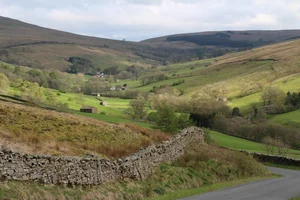
Skipton to Grassington through Wharfedale
Skipton is one of the easiest gateways into the southern Yorkshire Dales. From the town, the landscape gradually opens as you travel towards Bolton Abbey, Burnsall and Grassington.
This is an excellent introduction to driving in the Dales because it combines attractive villages, river scenery and open countryside without immediately sending you onto the region’s narrowest or steepest roads.
Bolton Abbey makes a rewarding early stop. The estate sits beside the River Wharfe and includes riverside walks, woodland and the remains of the priory.
Further north, Burnsall is one of Wharfedale’s most picturesque villages. Its stone bridge, riverside setting and surrounding hills create a classic Dales scene.
Grassington is the natural destination for this drive. The village has a cobbled market square, traditional stone buildings, independent shops and access to walks across the surrounding countryside.
Good stops along the way
- Bolton Abbey
- The River Wharfe
- Barden Bridge
- Burnsall
- Linton Falls
- Grassington
Who is this drive best for?
This is a good choice for first-time visitors, families and anyone who wants beautiful scenery without committing to the more exposed high passes.
Grassington to Kettlewell through Upper Wharfedale
The road north from Grassington towards Kettlewell follows one of the most attractive sections of Wharfedale.
The scenery becomes progressively more dramatic as the valley narrows and the surrounding fells rise more steeply. Drystone walls divide the fields, while small villages appear beside the River Wharfe.
Kilnsey Crag is one of the most recognisable landmarks along this part of the drive. The limestone cliff rises sharply above the valley and provides a clear sense of the geology that shapes the Yorkshire Dales.
Kettlewell is a good place to pause. Stone cottages cluster around the village centre, with walking routes leading into the surrounding hills and valleys.
The drive is relatively short, but it deserves time. Stop for views, explore one of the villages and include a short walk rather than treating Kettlewell simply as a turning point.
Places to consider visiting
- Kilnsey
- Kilnsey Crag
- Conistone
- Kettlewell
- The River Wharfe
- Upper Wharfedale viewpoints
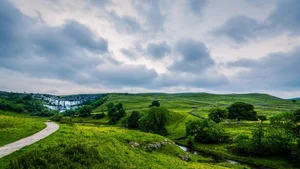
Kettlewell to Malham through the southern Dales
The journey between Upper Wharfedale and Malham crosses a quieter landscape of limestone pasture, open hills and scattered farms.
This is a rewarding drive for visitors who want to connect two of the best-known areas of the southern Yorkshire Dales without returning to the larger roads around Skipton.
The exact road chosen matters. Some options are narrow, exposed and unsuitable for larger vehicles or nervous drivers. Conditions can also change quickly in poor weather.
Malham is one of the most popular destinations in the National Park, so arriving early is sensible. The village is the starting point for walks to Malham Cove, Gordale Scar and Janet’s Foss.
Malham Cove is best experienced on foot rather than through the windscreen. Leave enough time to park properly and complete at least a short walk.
Why choose this drive?
- It crosses classic limestone country
- It connects Wharfedale with Malhamdale
- It includes quieter roads away from the main valley routes
- It provides access to some of the Dales’ best-known natural landmarks
Malham to Settle
The drive from Malham towards Settle is compact but varied.
Around Malham, the landscape is defined by limestone walls, exposed rock and steep-sided valleys. As you approach Settle, the countryside opens and the town provides a livelier contrast to the smaller settlements.
Settle is a useful place to stop for refreshments, supplies or a longer break. Its market square, traditional buildings and position beneath the surrounding hills make it one of the most attractive small towns in the western Dales.
The area also offers access to waterfalls, woodland walks and sections of the Settle–Carlisle railway.
This drive works well as part of a relaxed day that combines Malham’s scenery with time in Settle rather than attempting to fit in several long walks.
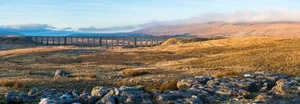
Settle to Ribblehead Viaduct
The road north from Settle towards Ribblehead is one of the defining drives of the western Yorkshire Dales.
The journey passes through Ribblesdale, with Pen-y-ghent, Ingleborough and Whernside shaping the wider landscape. These hills form the Yorkshire Three Peaks and give this part of the National Park a more rugged character.
Horton-in-Ribblesdale is a well-known base for walkers. From there, the road continues towards Ribblehead and its famous Victorian railway viaduct.
Ribblehead Viaduct crosses an exposed expanse of moorland beneath Whernside. It is one of the most recognisable landmarks in the Yorkshire Dales and a major feature of the Settle–Carlisle railway.
The surrounding scenery is often more memorable than a quick photograph suggests. Allow time for a short walk so that you can appreciate the scale of the viaduct and the open landscape around it.
Stops for this drive
- Settle
- Stainforth
- Horton-in-Ribblesdale
- Ribblehead Viaduct
- Views towards Pen-y-ghent
- Views towards Ingleborough and Whernside
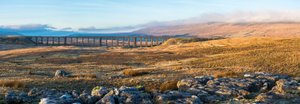
Ribblehead to Hawes on the B6255
The B6255 between Ribblehead and Hawes is one of the strongest scenic driving roads in the Yorkshire Dales.
It crosses high, open country before descending into Wensleydale. Long views, sweeping bends, drystone walls and the sense of travelling between remote valleys make it feel distinctly different from the more enclosed roads around Wharfedale.
Near Ribblehead, the viaduct and surrounding fells dominate the view. Further east, the road passes close to caves, waterfalls and walking areas before approaching Hawes.
Hawes is one of the main visitor centres in the northern Dales. The market town has shops, cafés, museums and access to Wensleydale’s surrounding landscape.
This drive is best enjoyed at a measured pace. It is not a road to race. Visibility, livestock, cyclists and changing weather all require attention.
Combine the drive with
- Ribblehead Viaduct
- White Scar Cave
- Ingleton or Chapel-le-Dale
- Hardraw
- Hawes
- Wensleydale walks
Hawes to Thwaite over Buttertubs Pass
Buttertubs Pass is perhaps the best-known high road in the Yorkshire Dales.
The road crosses the moorland between Wensleydale and Swaledale, linking the area around Hawes with the hamlet of Thwaite. The Yorkshire Dales National Park Authority describes it as one of the region’s most notable high passes.
The road climbs steeply from the valley and enters a much more exposed landscape. Views open across the surrounding fells, while the route’s sharp bends and changes in gradient make it a more demanding drive than the main valley roads.
The pass takes its name from the deep limestone potholes known as the Buttertubs. These are close to the road, but parking and stopping space are limited.
This is not the best route for every driver. It may be unsuitable in snow, ice, dense fog or very strong winds. Larger motorhomes may also find the road uncomfortable.
When conditions are suitable, however, Buttertubs Pass provides one of the most memorable driving experiences in the Dales.
Before driving Buttertubs Pass
- Check the weather
- Avoid the pass in snow or ice
- Expect cyclists and livestock
- Use passing places correctly
- Do not stop where you obstruct the road
- Allow approaching vehicles enough space
- Consider an alternative route if driving a large vehicle
Thwaite to Reeth through Swaledale
After crossing Buttertubs Pass, the road through Swaledale offers a gentler but equally beautiful continuation.
Swaledale is known for stone barns, hay meadows, drystone walls and villages set beneath broad hills. The valley feels more remote than Wharfedale, especially away from the main settlement of Reeth.
Muker is one of the best places to stop. The village has traditional stone buildings and access to walks through the surrounding meadows and hills.
Further east, Gunnerside reflects the valley’s lead-mining heritage. Remains of old workings can still be seen in the wider landscape.
Reeth sits where Swaledale and Arkengarthdale meet. Its large village green and position beneath the surrounding hills make it an excellent base for exploring the northern Dales.
Highlights of Swaledale
- Thwaite
- Muker
- Keld
- Gunnerside
- Reeth
- Hay meadows and stone barns
- Lead-mining landscapes
Reeth to Tan Hill through Arkengarthdale
The road north from Reeth through Arkengarthdale leads into one of the most remote-feeling parts of the Yorkshire Dales.
The valley begins with farms and small settlements before climbing into increasingly open moorland.
Langthwaite is an attractive village and a useful stopping point before the road continues towards the higher ground.
Tan Hill stands in a famously exposed position close to the northern edge of the National Park. The surrounding landscape feels expansive and isolated, particularly outside the busiest periods.
This road is rewarding in clear weather but can be challenging in winter or poor visibility. Snow, ice, fog and strong winds can transform conditions very quickly.
Drivers should treat the road as a scenic journey rather than a shortcut.
Hawes to Aysgarth through Wensleydale
For a more relaxed Yorkshire Dales scenic drive, follow Wensleydale east from Hawes towards Aysgarth.
This route stays largely within the valley and passes through farmland, stone-built villages and gently changing countryside.
Wensleydale is wider than some of the neighbouring valleys, creating long views towards the surrounding fells.
Bainbridge is an attractive stopping point, while Askrigg has traditional stone streets and a strong connection with the television adaptation of All Creatures Great and Small.
Aysgarth Falls is the principal natural attraction. The River Ure passes over a series of limestone steps, creating upper, middle and lower falls.
Parking properly and exploring on foot is essential. The waterfalls cannot be appreciated fully from the road.
Good stops between Hawes and Aysgarth
- Bainbridge
- Semerwater
- Askrigg
- Mill Gill
- Aysgarth village
- Aysgarth Falls
Aysgarth to Leyburn
The eastern section of Wensleydale provides an easy scenic drive through villages, farmland and historic estates.
From Aysgarth, the road continues towards Leyburn with opportunities to detour to Castle Bolton, Redmire and Middleham.
Bolton Castle is one of the most striking historic landmarks in the valley. Its elevated position provides broad views across Wensleydale.
Leyburn is a practical place to finish the drive. The market town has shops, cafés and viewpoints across the surrounding countryside.
This route suits visitors who prefer heritage, villages and open valley scenery to steep passes.
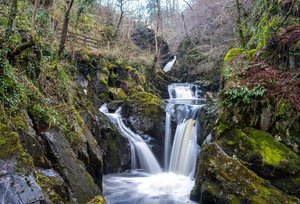
Sedbergh to Dent through Dentdale
Dentdale lies in the western part of the Yorkshire Dales and has a quieter character than the better-known valleys around Malham and Hawes.
Sedbergh is an attractive starting point. From there, the road follows the valley towards Dent through a landscape of hills, farms and stone walls.
Dent is known for its cobbled streets, whitewashed cottages and compact village centre.
The drive is peaceful, but some sections are narrow. Take care around bends and be prepared to reverse when meeting oncoming vehicles.
Dentdale can be combined with a journey towards Ribblehead, creating a scenic loop through the western Dales.
Dent to Ribblehead
The road from Dent towards Ribblehead climbs out of the valley and returns to more exposed moorland scenery.
This is one of the quieter scenic routes in the Yorkshire Dales and suits visitors who want to move away from the busiest villages.
The journey reveals the transition between enclosed Dentdale and the broad, open landscape around Whernside and Ribblehead.
It can be combined with the B6255 to Hawes or used as part of a loop returning towards Settle.
As with many minor Dales roads, narrow sections, livestock and changing weather require a cautious approach.
Bolton Abbey to Malham through the southern Dales
A longer day can connect Bolton Abbey with Malham by travelling through Wharfedale and the limestone country around the southern Dales.
The journey includes riverside scenery, villages, exposed uplands and two of the region’s best-known destinations.
It is tempting to treat Bolton Abbey and Malham as quick stops, but both deserve several hours.
A better approach is to visit one early, enjoy the connecting drive and spend the rest of the day exploring the other.
This drive also works well in reverse, particularly when staying near Skipton or Settle.
Choose by experience
Which Yorkshire Dales scenic drive should you choose?
The best drive will depend on the weather, your vehicle and the sort of scenery you enjoy.
For a first visit
Choose Skipton, Bolton Abbey, Burnsall and Grassington.
This provides an accessible introduction to the Dales through river scenery, villages and attractive countryside.
For dramatic limestone landscapes
Combine Malham, Settle and Ribblehead.
This part of the Dales includes limestone cliffs, caves, exposed moorland and some of the region’s best-known walking areas.
For a famous high pass
Drive Buttertubs Pass between Hawes and Thwaite.
Choose a clear day and avoid it when snow, ice or poor visibility is forecast.
For traditional villages
Explore Wharfedale, Wensleydale or Swaledale.
Grassington, Kettlewell, Askrigg, Muker and Reeth all offer different examples of Dales village character.
For a quieter drive
Choose Dentdale or Arkengarthdale.
These areas generally feel more remote than the central visitor destinations.
For waterfalls
Base a drive around Hawes, Hardraw and Aysgarth.
Leave enough time to park and walk rather than trying to view each place from the road.
For Victorian engineering and open moorland
Drive from Settle to Ribblehead and continue towards Hawes.
Ribblehead Viaduct forms one of the most memorable landmarks in the western Dales.
Plan your time
How long do you need for a Yorkshire Dales scenic drive?
The distances between places may appear short, but journey times can be deceptive.
Narrow roads, cyclists, livestock, slow traffic and frequent stops all affect the pace.
Half a day
Choose one compact area, such as:
- Skipton to Grassington
- Grassington to Kettlewell
- Hawes to Aysgarth
- Settle to Ribblehead
- Sedbergh to Dent
One day
Create a loop through one or two neighbouring valleys.
You might combine Wharfedale with Malhamdale, Ribblesdale with Wensleydale, or Wensleydale with Swaledale.
Two or three days
A short break allows you to explore several contrasting parts of the Dales without rushing.
Use one base or move once, allowing time for villages, walks and attractions between drives.
Four days or longer
A longer trip makes it possible to combine the southern limestone country, the western Three Peaks landscape and the northern valleys.
It also gives you flexibility to change plans when the weather makes a high pass unsuitable.
Before setting off
Practical advice for driving in the Yorkshire Dales
Driving in the Yorkshire Dales is rewarding, but it requires patience and consideration.
Expect narrow roads
Many minor roads are only wide enough for one vehicle. Drive slowly and look ahead for oncoming traffic.
Use passing places properly
Passing places are for allowing vehicles to pass. Do not use them for parking or photography.
The National Park’s guidance asks visitors to park only in designated areas or suitable surfaced lay-bys and not in passing places or locations that cause an obstruction.
Be prepared to reverse
The vehicle nearest a passing place may need to reverse. Take your time and do not pressure less confident drivers.
Watch for livestock
Sheep and cattle may be on or beside the road. Pass slowly and be prepared for animals to move unpredictably.
Give cyclists space
The Dales attracts large numbers of cyclists. Wait until you have a clear view before overtaking and leave plenty of room.
Check weather conditions
High roads can become difficult in fog, heavy rain, snow, ice and strong winds.
A route that feels straightforward in summer may be unsuitable during winter weather.
Park responsibly
Use official car parks where possible. Do not block gates, farm entrances, driveways or emergency access.
Parking information and charges can change, so check the Yorkshire Dales National Park website before travelling.
Do not camp at viewpoints
Parking at a viewpoint does not normally provide permission to stay overnight. The National Park’s accessible-viewpoint guidance specifically states that overnight parking and motorhome use are not permitted at those locations.
Do not follow satnav blindly
Navigation systems may select narrow lanes or unsuitable shortcuts.
Check the route in advance, particularly when driving a motorhome, campervan or towing a caravan.
Larger vehicles
Are the Yorkshire Dales suitable for campervans and motorhomes?
The Dales can be explored in a campervan or motorhome, but vehicle size matters.
Main valley roads are generally more manageable than minor passes and narrow village lanes.
Large vehicles should be particularly cautious around:
- Buttertubs Pass
- Minor roads between valleys
- Narrow bridges
- Steep gradients
- Small village centres
- Roads with limited turning space
Choose official campsites for overnight stays and plan routes using current road information rather than relying entirely on satnav.
Plan conservatively
Main valley roads are generally more manageable than minor passes. Check gradients, width restrictions, parking and turning space before committing a larger vehicle to a cross-valley road.
Find UK campsites and touring staysSeasonal planning
When is the best time for a Yorkshire Dales scenic drive?
Every season changes the landscape.
Spring
Lambs, fresh grass and longer daylight make spring attractive, although the weather can remain unsettled.
Summer
Summer offers the longest days and the best chance of suitable weather for combining driving with walks.
It is also the busiest period, especially around Malham, Grassington, Aysgarth Falls and Ribblehead.
Autumn
Autumn brings softer light, changing woodland colours and fewer visitors after the main school holidays.
Shorter days mean it is important to plan high or remote roads carefully.
Winter
Winter can reveal a dramatic and peaceful side of the Dales, but snow, ice, fog and flooding may close or restrict roads.
Avoid high passes unless conditions are clearly safe.
Travel without driving
Exploring the Yorkshire Dales without a car
You do not have to drive to experience the Yorkshire Dales.
The Settle–Carlisle railway provides access to places including Settle, Horton-in-Ribblesdale and Ribblehead, while other rail and bus services reach parts of the National Park. The railway itself provides extensive views of valleys, fells and the Ribblehead landscape.
Public transport can be especially useful for walkers who do not want to return to the same starting point.
Services vary by season and day of the week, so timetables should be checked before travel.
Build a longer journey
Turn separate scenic drives into a complete Yorkshire road trip
The individual drives are free inspiration. The paid digital guide connects the landscapes into one practical, flexible journey.
Yorkshire Dales & West Yorkshire
From Brontë Country to Herriot Country
The drives in this article can be enjoyed independently. Choose one valley, follow the road slowly and leave enough time to explore on foot. Travellers who want to connect the Yorkshire Dales with Brontë Country and West Yorkshire can also use the Uncover Britain digital road trip guide. Rather than focusing only on individual driving roads, the guide helps you understand how places such as Saltaire, Haworth, Malham, Ribblehead, Hawes and Aysgarth fit together as part of a longer self-drive journey. It includes flexible planning support, route guidance and ideas for adapting the trip to the time available.
Yorkshire Explorer bundle
Explore both sides of Yorkshire
Pair the Dales with York, Whitby, the North York Moors and the North Yorkshire coast.
Yorkshire Explorer
Includes the Yorkshire Dales Road Trip and the North Yorkshire Coast & Moors Road Trip.
Get the Yorkshire Explorer bundleContinue planning
More Yorkshire and UK road trip inspiration
FAQs
Yorkshire Dales scenic drives FAQs
What is the best scenic drive in the Yorkshire Dales?
Buttertubs Pass is the best-known high road, but the best overall drive depends on your interests. Settle to Ribblehead and Hawes combines broad moorland with the famous viaduct, while Skipton to Grassington is a gentler introduction to the Dales.
Is Buttertubs Pass difficult to drive?
Buttertubs Pass is steep, exposed and narrow in places. Confident drivers should find it manageable in good weather, but it may be unsuitable during snow, ice, fog or strong winds. Larger motorhomes may prefer an alternative route.
Can you drive to Ribblehead Viaduct?
Yes. Ribblehead Viaduct is close to the B6255 between Ingleton and Hawes. Visitors should park responsibly and allow time to explore the surrounding landscape on foot.
What is the best scenic driving loop in the Yorkshire Dales?
A popular loop can combine Settle, Ribblehead, Hawes, Aysgarth and Wharfedale. However, it is better divided over more than one day if you want time for walks and village stops.
Can you drive through Malham?
Yes, but Malham can become extremely busy and parking is limited during peak periods. Arrive early, use designated parking and avoid obstructing narrow roads through the village.
Which Yorkshire Dales roads are best for nervous drivers?
The main roads between Skipton, Bolton Abbey, Grassington, Hawes, Aysgarth and Leyburn are generally less challenging than minor high passes. Nervous drivers may wish to avoid Buttertubs Pass and the narrowest cross-valley roads.
Are Yorkshire Dales roads suitable for motorhomes?
Many main valley roads are suitable, but some high passes, village streets and minor routes are narrow or steep. Check the route carefully and avoid allowing satnav to direct a large vehicle onto unsuitable lanes.
How many days do you need to drive around the Yorkshire Dales?
Two or three days allows you to experience several valleys without rushing. Four days or longer provides more flexibility for walks, attractions and changes caused by the weather.
Is driving the only way to see the Yorkshire Dales?
No. Railways and seasonal bus services provide access to parts of the National Park, including Settle, Horton-in-Ribblesdale and Ribblehead. Public transport can also be combined with walking.
When should you avoid the high roads?
Avoid exposed passes when snow, ice, flooding, dense fog or severe winds are forecast. Conditions can change quickly, particularly outside the summer months.
Ready to explore?
Turn Yorkshire Dales scenic drives into one connected journey
Use the digital guide to link Brontë Country, Wharfedale, Malham, Ribblehead, Hawes and Aysgarth with flexible route planning.