


Morecambe Bay & Southern Estuaries
This opening section of the Cumbria coast feels softer and more sheltered, shaped by wide tidal sands, quiet estuaries and elegant coastal towns. It’s a slower, more atmospheric start to the journey, where the landscape opens out rather than rises dramatically.
Begin inland at Sizergh Castle, where historic grounds and woodland walks set the tone, before moving toward the coast at Grange-over-Sands, known for its long promenade and sweeping views across the bay. From here, the route weaves through Cartmel, a characterful village centred around its priory and well-known for its food scene, before continuing to Ulverston, a lively market town with a strong local identity.
This section is less about dramatic coastline and more about easing into the journey — combining heritage, food and gentle coastal scenery before the route becomes more rugged further north.
How to Spend Your Time — Morecambe Bay & South Cumbria
This opening section centres on Grange-over-Sands, Cartmel and Ulverston — a gentler introduction to the Cumbria coast, shaped by tidal estuaries, historic houses and relaxed market towns.
If you're following the full route, this is a natural starting point. If not, this section works equally well as a standalone short break or scenic drive.
1 Day — Key Highlights
Morning: Sizergh Castle → Grange promenade
Midday: Cartmel Priory and village
Afternoon: Ulverston town and canal walk
Best for: Short visits • First introduction
2 Days — Add Depth
Day 1: Follow highlights at a slower pace
Day 2: Holker Hall → Lakeland Motor Museum → Conishead Priory
Best for: Variety • Historic houses • Scenic walks
3 Days — Slower Exploration
Day 1–2: As above with more time
Day 3: Swarthmoor Hall → Ulverston → return to Grange
Best for: Slow travel • Local character
Short on Time? Take the Scenic Drive Instead
If you’re not following the full road trip, this compact loop captures the character of Morecambe Bay — estuary views, historic villages and gentle coastal scenery.
Drive time: ~1.5–2 hours • Allow: 3–4 hours with stops
Grange-over-Sands → Cartmel → Holker Hall → Ulverston → Conishead Priory → return
Highlights:
Estuary promenade views • Cartmel village • historic estates • Ulverston market town • coastal woodland walks
Add the Lake District Road Trip from the Start
At the beginning of this route, you are just minutes from the southern edge of the Lake District. A short detour via Kendal allows you to loop into Windermere, Bowness and the central lakes before joining the Cumbria coast.
Our Lake District Road Trip guide is designed as four flexible scenic loops, making it easy to add a short extension or build a longer stay before starting the coastal journey.
£12.99 • 4 scenic loops • 164 miles total • ideal for 4–7 days
Easy Start Detour
Begin inland via Kendal and Windermere before heading west to join the Cumbria coast route.
Classic Lake District
Explore Windermere, Ambleside and surrounding lakes before transitioning to quieter coastal landscapes.
Flexible to Add
Add a single loop or extend your trip with multiple days before starting the coastal journey.
Morecambe Bay — Tidal landscapes and coastal villages
A vast, shifting landscape of tidal sands, estuaries and quiet coastal towns, Morecambe Bay offers a gentler introduction to the Cumbria coast. Rather than dramatic cliffs, this is a place of wide horizons, changing light and a slower pace, where the coastline feels expansive and open.
The bay is also known for its strong food heritage, with local producers, farms and artisan businesses drawn to the mild climate and fertile surroundings. Villages and small towns are scattered along its edge, each offering a slightly different perspective across the sands and water.
• Wide tidal landscapes and ever-changing coastal views
• Food-focused destinations and local produce
• A relaxed, scenic start to the journey

Sizergh Castle — Historic estate and gardens
Positioned just outside Kendal, Sizergh Castle works naturally as the starting point for those approaching from the south via the M6. It offers a gentle introduction to the journey, with gardens, woodland and open estate walks before reaching the coast. If arriving directly to the bay, this stop works equally well as a short inland detour before continuing to Grange-over-Sands and the start of the coastal route.
Sizergh Castle is a historic estate surrounded by varied landscapes, from formal gardens to ancient woodland and open parkland. The house itself reflects centuries of history, with richly decorated interiors and one of the finest surviving Tudor rooms in England.
The wider estate offers space to explore at a slower pace, with clearly marked walks that reveal the diversity of the landscape — from limestone outcrops and orchards to wetlands and deer parkland.
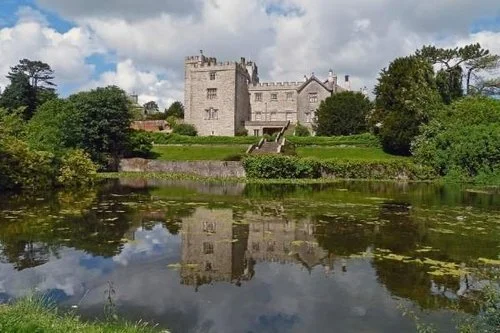
Image copyright: Sizergh Castle
Historic house with one of England’s finest Tudor interiors
• Extensive gardens, woodland and estate walks
• A calm and spacious start point to the journey
What to See & Do
The Inlaid Chamber – A remarkable Tudor room featuring intricate wood panelling, considered among the finest of its kind in England.
Limestone Rock Garden – A distinctive garden area shaped by natural rock formations and carefully planted displays.
Park End Moss Walk – A circular route through wetlands, woodland and pasture, showcasing the estate’s varied habitats.
Sizergh Estate Wildlife Walk – A quieter route through woodland and open areas, ideal for spotting wildlife and enjoying the landscape.
Grange-over-Sands - Elegant coastal town, bay views and gardens
For those beginning directly on the coast, Grange-over-Sands provides the natural starting point for exploring Morecambe Bay. Its promenade, gardens and wide views across the estuary set the tone for the journey ahead.
Overlooking the wide expanse of Morecambe Bay, Grange-over-Sands is a refined coastal town shaped by its Victorian and Edwardian past. Once a small fishing village, it grew into a popular seaside retreat with the arrival of the railway, attracting visitors seeking fresh air, mild climate and coastal views.
Today, much of that heritage remains. Elegant buildings, well-kept gardens and a long promenade give the town a relaxed, timeless feel, making it an ideal place to slow down and take in the surroundings.
• Elegant promenade with wide views across the bay
• Historic seaside character with Victorian charm
• Access to nearby walks and countryside viewpoints
What to See & Do
Grange Promenade– A mile-long coastal walkway with open views across Morecambe Bay, ideal for a relaxed stroll at any time of day.
Ornamental Gardens – Well-maintained gardens with a pond, flowerbeds and seating, reflecting the town’s traditional seaside character.
Hampsfell Hospice Walk – A short but rewarding hike up Hampsfell leading to panoramic views across the Lake District, the bay and beyond.
Grange Lido(historic site) – An Art Deco structure dating from the 1930s, offering a glimpse into the town’s past as a seaside resort.
Holker Hall and Gardens (nearby) – A large country estate with landscaped gardens, woodland and historic interiors set within extensive grounds. The grounds consist of 200 acres of gardens and woodlands, with a deer park & tours, set in the countryside with gardens that merge into parkland, framed by the Lakeland Hills. The hall is situated near Grange-over-Sands and the expanse of Morecambe Bay.
Levens Hall and Gardens(nearby) – Known for its Elizabethan house and world-famous topiary gardens, among the oldest in the world.
-
Getting Around – Grange-over-Sands is compact and easy to explore on foot. The promenade, gardens and town centre are all within a short walking distance. For nearby areas such as Cartmel or Holker Hall, a short drive is the easiest option.
Parking – Several convenient car parks are located close to the centre and promenade:
• Main Promenade Car Park – Ideal for direct access to the seafront
• Ornamental Gardens Car Park – Central and well placed for exploring the town
• Railway Station Car Park – Useful for longer stays or quieter parkingBest Time to Visit – Spring and summer bring the gardens into full colour and offer the best coastal views, while autumn provides quieter streets and softer light across the bay. Sunset along the promenade is a highlight year-round.
Facilities – The town has a good range of cafés, tearooms and local shops, particularly around the centre and near the promenade. Public toilets are available near the gardens and seafront.
Walking & Access – The promenade is largely flat and accessible, making it suitable for all ages and abilities. Paths around the Ornamental Gardens are also well maintained and easy to navigate.
Visiting Lakeland Motor Museum: A Short Detour from Grange-over-Sands
Set in the Leven Valley just a short drive from Grange-over-Sands, the Lakeland Motor Museum makes an easy and worthwhile inland detour before continuing to Cartmel. The route follows a simple loop via the A590, adding around 15 minutes of driving while introducing a completely different landscape away from the coast.
The museum itself is well laid out and easy to explore, combining classic vehicles, local transport history and one of the most notable exhibitions dedicated to the Campbell Bluebird land and water speed records. It works particularly well as a natural pause in the journey, whether you’re interested in motoring or simply looking to break up the route.
What to See & Do
Classic Cars & Motorcycles – A wide-ranging collection from early vehicles to modern classics, alongside historic motorcycles and bicycles.
Campbell Bluebird Exhibition – A standout display exploring the record-breaking achievements of Sir Malcolm and Donald Campbell, with full-scale replicas.
Automotive Memorabilia – Vintage petrol pumps, signage, advertising and motoring artefacts from different eras.
1930s Garage Scene – A recreated workshop offering a glimpse into early motoring life and mechanics.
Café Ambio – Riverside café serving locally sourced food and drinks in a relaxed setting.
Riverside Walks – Short walks along the River Leven, offering a quieter moment away from the museum.
Lakeside & Haverthwaite Railway (nearby) – A heritage steam railway connecting to Lakeside, where boat trips on Windermere are available.
-
Time Needed – Around 2–3 hours to explore at a relaxed pace.
Family-Friendly – Interactive displays and varied exhibits suitable for all ages.
Indoor Attraction – A good option in poor weather or as a break from driving.
Gift Shop – Books, model vehicles and motoring-themed souvenirs available.
How to Get There
By Car (approx. 15 minutes from Grange-over-Sands)
Take the B5277 towards Allithwaite and Cark → join the A590 eastbound → continue for around 7 miles following signs for Backbarrow.
The museum is just off the A590 with ample free parking.By Bus (approx. 30 minutes)
Stagecoach 6 or 6A to Newby Bridge → walk 1.5 miles or take a short taxi.By Train & Bus
Train to Ulverston (~15 minutes) → Stagecoach X6 to Haverthwaite or Backbarrow.
Cartmel — Historic village and food destination
Just a short drive from Grange-over-Sands, Cartmel feels more enclosed and intimate — a village shaped around its priory, with a strong sense of history and local character.
Cartmel is one of Cumbria’s most distinctive villages, where medieval streets, historic buildings and a strong food culture come together in a compact and characterful setting. Just a short drive inland from the coast, it feels tucked away — centred around its priory, with narrow lanes, stone cottages and a clear sense of history.
Despite its size, Cartmel has built a reputation well beyond the region. Independent shops, artisan producers and well-known restaurants sit alongside traditional tearooms and quiet corners of the village, making it as much about atmosphere as it is about individual attractions.
• Well-preserved medieval village centred around Cartmel Priory
• Renowned food destination, from local specialities to Michelin-star dining
• Compact and walkable, with a strong sense of place
What to See & Do
Cartmel Priory – Founded in 1190, this striking medieval church features stained glass, carved woodwork and peaceful surroundings, offering a glimpse into the village’s monastic past.
Cartmel Village Streets – Cobbled lanes, independent shops and historic buildings make the village itself one of the main attractions, best explored on foot.
Cartmel Racecourse – One of the UK’s most picturesque racecourses, known for its relaxed atmosphere and popular summer race days.
Sticky Toffee Pudding – Originating in Cartmel, this local speciality can be found in cafés and at the Cartmel Village Shop
L’Enclume&Rogan and Co – Highly regarded restaurants led by Simon Rogan, offering refined, seasonal dining experiences.
Unsworth's Yard – A hub of local food and drink, including a microbrewery, wine shop, Cartmel Cheese Shop, café and bakery.
Cartmel Fell Walks – Scenic walking routes with wide views over Morecambe Bay and the surrounding countryside.
Humphrey Head (nearby) – Coastal viewpoint with far-reaching views and historical significance.
Cartmel Park & River Eea – A peaceful area for a short walk or pause by the water.
Lakeland Segway (nearby) – Guided Segway tours offering a different way to explore the surrounding countryside.
Travelling to Cartmel: Note that there is a lack of parking, and the medieval village of Cartmel has narrow roads that are not great for campervans and motorhomes. Consider using the train from Grange-Over-Sands to Cark-in-Cartmel. Walk through Cartmel Racecourse to the village. Another option to consider is the Cistercian Way long-distance path that leaves Grange-over-Sands which is a 4.5 km walk (opposite the rail station and up through Eggerslack Woods onto Hampsfell before dropping down into Cartmel. Hampsfell Hospice is a sturdy limestone tower monument where you can enjoy one of the best viewpoints of all the foothills and Lakeland Fells).
-
Getting Around – Cartmel is small and best explored on foot. The village centre, priory, shops and cafés are all within a few minutes’ walk.
Parking – Parking is limited within the village itself:
• Cartmel Racecourse Car Park – The main and most reliable option, a short walk into the village
• Limited village parking – Small areas available but can fill quickly, especially on busy daysAccess & Road Conditions – The village has narrow roads and tight turns, which can be difficult for larger vehicles, motorhomes or campervans.
Alternative Access –
• Train to Cark-in-Cartmel (via Grange-over-Sands), followed by a short walk
• Walking route from Grange-over-Sands via Hampsfell and the Cistercian Way (approx. 4.5 km), with excellent views along the wayBest Time to Visit – Early morning or later afternoon for a quieter experience. Race days and weekends can be busy.
Facilities – A good selection of cafés, restaurants, food shops and local retailers throughout the village.
From Cartmel to Ulverston
As you leave the enclosed village of Cartmel, the road opens out again toward Morecambe Bay. Ulverston marks a shift in tone — a market town with wider streets, independent shops and a more bustling feel, while still closely tied to the surrounding landscape.
Ulverston - Historic market town near the bay
Ulverstonis a lively and distinctive market town on the edge of Morecambe Bay, known for its independent spirit, historic streets and strong sense of community. Larger and more energetic than nearby villages, it offers a different pace — with a mix of heritage, culture and everyday local life.
Often referred to as the “Festival Town”, Ulverston hosts events throughout the year, while its market square, independent shops and cafés give it a vibrant, lived-in feel. The town’s history as a trading and industrial centre is still visible today, but it sits comfortably alongside creative businesses, cultural venues and open green spaces.
• Lively market town with a strong local identity
• Regular festivals, events and cultural venues
• Mix of heritage, independent shops and outdoor spaces
What to See & Do
Ulverston Canal – A peaceful one-mile canal walk linking the town to Morecambe Bay, ideal for walking, cycling and wildlife spotting.
Laurel and Hardy Museum – Celebrating Stan Laurel, who was born in Ulverston, with exhibits dedicated to the famous comedy duo. See below.
Market Square & Street Market – Traditional market days (Thursday and Saturday) with local produce, crafts and independent traders.
Ford Park– Open green space with woodland walks, play areas and the Coach House Café.
Coronation Hall (The Coro) – A central venue for theatre, music and community events, housed in an Edwardian building.
Cumbria Crystal (nearby) – One of the UK’s last remaining luxury crystal manufacturers, where visitors can watch artisans at work.
Hoad Monument (Sir John Barrow Monument) – A lighthouse-style structure overlooking the town, offering wide views across Morecambe Bay and the surrounding landscape. Built in 1850 in honour of Sir John Barrow, a local man who became a prominent naval administrator and explorer. Visitors can climb the monument (open on selected days) to enjoy breathtaking views of Morecambe Bay, the Furness Peninsula, and the Lake District.
Swarthmoor Hall (nearby) – Historic house linked to the early Quaker movement, with gardens and grounds to explore.
Conishead Priory(nearby) – A striking Gothic building set within woodland, with walking routes leading down to the bay.
Manjushri Kadampa Meditation Centre- Visitors can take part in meditation sessions, attend Buddhist teachings, or simply enjoy the peaceful surroundings. The priory grounds include gardens, woodland walks, and a short trail to the beach on Morecambe Bay.
Birkrigg Common – Open heathland with panoramic views. The common is also home to the Birkrigg Stone Circle, an ancient monument believed to date back to the Bronze Age.
Shed 1 Distillery – Small-batch gin distillery offering tours, tastings and a relaxed, informal experience.
Safari Zoo Cumbria - A short drive from Ulverston, this popular wildlife park is home to lions, tigers, giraffes, and other exotic animals. It’s a great day out for families and animal lovers.
-
Getting Around – Ulverston is easy to explore on foot, particularly around the town centre and market square. A car is useful for nearby sites such as Birkrigg Common or Conishead Priory.
Parking – Several well-located car parks are available:
• Town Centre Car Parks (including New Market Street) – Convenient for shops and cafés
• Ford Park Car Park – Good option for combining green space with a visit into town
• Canal Head / Canal Area – Useful for canal walksBest Time to Visit – Market days (Thursday and Saturday) bring the town to life. Festival weekends can be busy but offer a more vibrant atmosphere.
Facilities – A wide range of cafés, pubs, shops and local services, making it one of the better-served stops along the route.
Walking & Access – The town centre is mostly flat and accessible, while surrounding walks vary from gentle canal paths to more open and uneven terrain at Birkrigg Common.
Laurel and Hardy Museum, Ulverston
The Laurel and Hardy Museum celebrates the life and vocation of Stan Laurel, here at Ulverston, the birthplace of the comedian. Laurel and Hardy were a comedy duo act consisting of Englishman Stan Laurel and American Oliver Hardy.
Starting as a few scrapbooks of photos, the collection grew over time until it filled one small room with pictures covering all the walls and even the ceiling. The collection outgrew the space and now occupies a 1930s-period cinema that feels like the perfect place for us. The memorabilia are believed to be the largest in the world and include letters, photographs, personal items, and furniture. There is a small cinema showing free films and documentaries all day.

Morecambe Bay & Southern Estuaries
Sizergh Castle → Grange-over-Sands → Cartmel → Ulverston
Cumbrian Coastal Route Last updated: 14 May 2026
Some links may earn Uncover Britain a small commission at no extra cost to you. This helps support the ongoing creation, review and presentation of our road trip guides.
Route information and listings are provided for general guidance only. Always use your preferred navigation system and check official websites to confirm suitability, opening times and the latest details before travelling.
Our guides are reviewed regularly and supported by a mix of editorial research and digital tools to help keep content clear and up to date. If you spot anything that needs updating, we’re always glad to hear from you.