 Sandwich
Deal
Dover
White Cliffs
St Margaret’s Bay
Folkestone
Dungeness
Sandwich
Deal
Dover
White Cliffs
St Margaret’s Bay
Folkestone
Dungeness


White Cliffs, Castles & the Cinque Ports
South of Thanet, the coastline becomes more elemental. Medieval Sandwich and Deal reflect the legacy of the Cinque Ports, once central to England’s coastal defence and trade. Tudor artillery forts stand directly on the shoreline, reminders that this stretch of coast has long been a frontier.
Then the land rises sharply at Dover. The White Cliffs dominate the skyline, and Dover Castle commands the heights above the Channel. The mood shifts from seaside charm to national symbolism and strategic history.
From there, the route gradually loosens again. Folkestone’s Harbour Arm introduces modern coastal reinvention, and the journey concludes at Dungeness — a vast shingle expanse of lighthouses, fishing boats and open sky that feels stark, quiet and almost otherworldly.
This final section adds scale and perspective. It moves from fortified coast to elemental landscape, ending the journey at the very edge of England.
How to Spend Your Time — White Cliffs, Castles & the Cinque Ports
This final stretch carries more weight — historically and visually. The mood shifts from seaside energy to fortified coastline, rising cliffs and long Channel views. Towns feel older, the architecture more defensive, and the landscape increasingly symbolic.
Distances are short, but this section rewards time. From medieval towns to clifftop walks and open shingle landscapes, it is best approached at a slower pace.
1 Day
Castles & Clifftop Highlights
- Start in Sandwich
- Continue to Deal and visit Deal Castle
- Explore Dover Castle (2–3 hours)
- Walk a section of the White Cliffs of Dover
2 Days
Cinque Ports & Coastal Drama
- Day 1: Sandwich, Deal, Dover
- Clifftop sunset at the White Cliffs
- Day 2: St Margaret’s Bay → Folkestone
- Finish at Dungeness
At a Glance
- Drive time: ~2 hr 15 mins
- Distance: 58 miles (93 km)
- Recommended: 1–2 days
- Best for: castles, cliffs, coastal walking
Days Out
Experiences
- Explore Dover Castle and wartime tunnels
- Walk longer sections of the White Cliffs
- Visit Tudor forts at Deal and Walmer
- Discover Folkestone Harbour Arm
Scenic Route
Coastal Drive
- Sandwich → Deal → Dover → Folkestone → Dungeness
- Approx 2 hr 15 driving
- Best with stops: full day or more
Planning Tip
Give It Time
- Dover Castle needs half a day alone
- Cliffs are best experienced on foot
- Don’t rush Dungeness — allow time to absorb it
- Split over 2 days for best experience
A powerful final stretch — where fortified towns, rising cliffs and open horizons bring the Kent Coast journey to a dramatic and memorable close.
The Cinque Ports — England’s Medieval Naval Powerhouse
Long before England had a standing navy, it relied on a powerful alliance of coastal towns to defend its shores. Known as the Cinque Ports, this medieval confederation formed the backbone of the kingdom’s maritime strength from the 11th century onwards.
The Original Five
- Hastings
- New Romney
- Hythe
- Dover
- Sandwich
These towns were granted extraordinary privileges in return for providing ships and crews for national defence — forming England’s earliest organised naval system.
Power & Privilege
- Tax exemptions and self-governance
- Independent courts and legal rights
- Representation in Parliament
- Control of trade and maritime access
These were not ordinary towns, but semi-autonomous power centres controlling England’s most critical sea routes.
Geography Changed Everything
- Shorelines shifted and rivers silted
- Sandwich moved inland from the sea
- New Romney lost direct coastal access
The decline of the Cinque Ports was driven not by conflict, but by changing geography.
Strength & Independence
- Naval power brought influence
- Smuggling and privateering were common
- Loyalty to the Crown was sometimes flexible
These ports were essential — but not always easily controlled.
On This Road Trip
- Sandwich — medieval port wealth
- Deal — Tudor artillery coastline
- Dover — fortress and strategic stronghold
- Margate — evolved from working port
- Folkestone — harbour revival
A Living Legacy
- Lord Warden of the Cinque Ports still exists
- Walmer Castle remains the official residence
- Held by figures including Churchill
The legacy of the Cinque Ports continues within Britain’s constitutional and ceremonial history.
This coastline is more than scenic — it is the historic frontline of England’s maritime survival, where geography, power and sea routes shaped the nation’s future.
Sandwich - Medieval Streets, River Quays & Cinque Ports Heritage
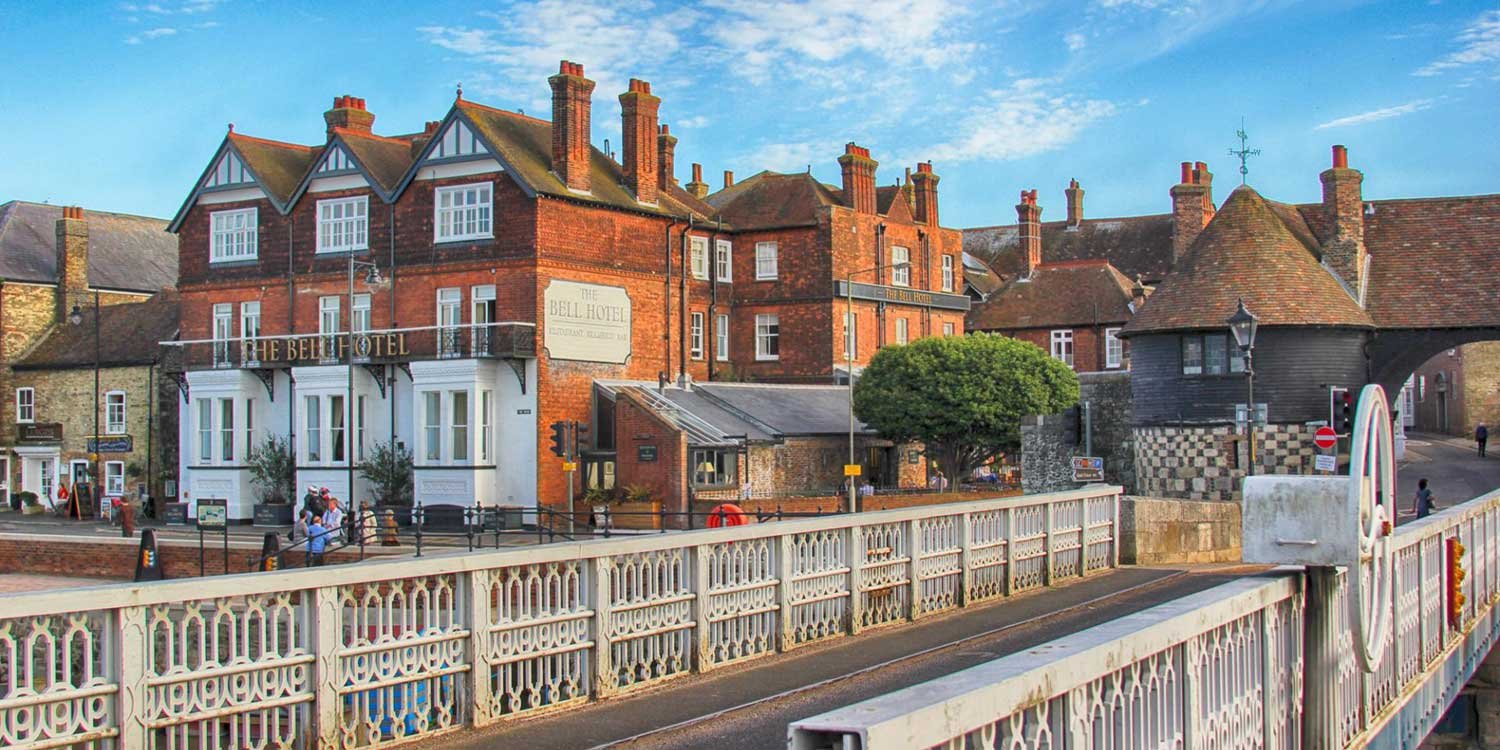
Image copyright SandwichIsOpen
Sandwich is one of the best-preserved medieval towns in Kent and one of the original Cinque Ports. Once a major trading harbour, it stood directly on the sea before the coastline gradually shifted. Today the River Stour winds quietly through the town, bordered by timber-framed houses, ancient gates and brick façades that feel largely unchanged for centuries.
The historic core is compact and atmospheric. Narrow streets lead to hidden courtyards, medieval churches and remnants of the old town walls. Unlike busier seaside resorts, Sandwich feels inward-looking and reflective — a place where the architecture tells the story.
Exceptionally well-preserved medieval street plan
Strong Cinque Ports and maritime heritage
Easy access to Sandwich Bay and coastal walking
What to See & Do
Wander through the historic centre around the Guildhall and St Peter’s Church, exploring narrow lanes lined with timber-framed buildings. Look out for Fisher Gate, one of the surviving medieval gateways.
Visit the Sandwich Guildhall Museum, housed in a 16th-century building, to understand the town’s role in trade, maritime defence and local industry. Step inside St. Peter's Church to see Norman and Gothic architectural features, medieval monuments and stained glass.
Walk along Sandwich Quay beside the River Stour, where boats still moor and the landscape opens towards the marshes. Boat trips occasionally operate along the river in season.
Just south of town, explore Sandwich Bay — a wide stretch of coastline backed by dunes and nature reserve. It offers expansive views towards the white cliffs and is popular for walking and birdwatching.
Golf enthusiasts may recognise Royal St. George's Golf Club, one of the world’s most prestigious links courses and host of multiple Open Championships.
If visiting in summer, the Sandwich Festival brings the town to life with live music, food stalls and heritage-themed events.
For longer walks, the Saxon Shore Way and the National Cycle Route 1 pass through the area, linking town, coast and countryside.
-
Location: East Kent, just inland between Ramsgate and Deal
Parking:
Gazen Salts car park (large riverside option)
Guildhall car park (central)
Additional smaller car parks and limited on-street parking (check restrictions)
Parking is generally easier here than in the coastal towns during peak season.
Access:
Compact and walkable historic centre
Mostly flat terrain, suitable for relaxed exploration
Facilities:
Public toilets near the town centre
Independent cafés, tearooms and pubs
Small shops and local businesses rather than large retail chains
Best Time to Visit:
Morning for quieter streets and museum access
Combine with Deal or Dover as part of a full-day exploration
Sandwich works best as a slower, architectural counterpoint to the White Cliffs and coastal fortresses further south — a medieval anchor point before the coastline begins to rise and harden into battlements and chalk cliffs.
How to Spend Half a Day in Sandwich
Perfect for a morning or afternoon visit, Sandwich is best explored on foot — a compact medieval town where timber-framed houses, quiet lanes and riverside paths reveal centuries of maritime history.
Half-Day Plan
- Explore cobbled streets and timber-framed houses
- Visit the Guildhall Museum
- Walk along the River Stour or town walls
- Pause for tea or lunch at a traditional café or pub
Highlights include King Street, Church Street and Potter Street — some of the most photogenic corners of the town.
Heritage Walking Route
- Distance: ~1 mile circular loop
- Time: 60–90 minutes
- Start: Guildhall Car Park or Sandwich Station
This short self-guided route explores the best-preserved medieval streets, timber-framed buildings and historic landmarks in Sandwich.
What Makes Sandwich Special
- Remarkably preserved medieval town centre
- Narrow lanes and timber-framed buildings
- Historic port and trading heritage
- Quiet, atmospheric and easy to explore
1–2. Guildhall & King Street
- Start at the 16th-century Guildhall Museum
- Explore courtroom, Mayor’s Parlour and artefacts
- Walk along King Street’s timber-framed houses
- Look for jettied upper floors and carved beams
3–4. Strand Street & St Peter’s
- Strand Street — long stretch of medieval houses
- Buildings over 600 years old
- Continue via Potter Street to St Peter’s Church
- Optional tower climb for town views
5. Barbican Gate & Walls
- Historic gateway into Sandwich
- Walk sections of old town walls
- Views across the River Stour
- Finish near the Quay or town centre
From Sandwich to Deal
Leaving Sandwich, the road gradually returns you to the sea. Medieval brick and timber give way to open marshland, low skies and glimpses of distant coastline. The landscape flattens as you pass through countryside that once formed part of the town’s original harbour approach.
Within a few miles, the character shifts again. The inland quiet of Sandwich gives way to a linear seafront and wide shingle beach. Where Sandwich feels enclosed and historic, Deal feels open and outward-facing — its long promenade running parallel to the Channel, its Georgian terraces aligned confidently along the shoreline.
The transition is subtle but distinct. You move from medieval Cinque Port to coastal defence and Regency elegance. By the time you reach Deal’s seafront, the mood has changed from river quays and town gates to sea walls, artillery forts and uninterrupted views across the water.
Deal marks the point where the Kent coast begins to feel more strategic — a prelude to the White Cliffs rising further south.
Deal - Georgian Seafront, Tudor Castles & Unspoilt Coastal Character
Deal stretches along a wide shingle shoreline facing the Channel, its elegant Georgian terraces aligned confidently along the sea. Unlike larger resort towns, Deal feels refined and lived-in — a place where fishing boats still rest on the beach and the promenade remains the focal point rather than arcades or amusements.
Historically, Deal was a key defensive and maritime centre. Its position along the Cinque Ports coastline made it strategically important, and Henry VIII’s coastal fortifications still anchor the shoreline. Today, the town blends architecture, maritime heritage and independent character with open coastal views.
Long, uninterrupted seafront promenade and historic pier
Henry VIII’s Deal Castle and nearby Walmer Castle
Independent High Street with strong local identity
What to See & Do
Walk the length of Deal’s seafront promenade for expansive views across the Channel. On clear days you can see along the coast towards the White Cliffs. Stroll out along Deal Pier — one of the UK’s oldest surviving pleasure piers — for panoramic coastal views and a different perspective back towards the town.
Visit Deal Castle (see below), a striking Tudor artillery fort built in the 16th century as part of Henry VIII’s defensive chain. Continue south to Walmer Castle, once the residence of the Lord Warden of the Cinque Ports, with formal gardens softening its military architecture.
Wander Deal’s High Street, lined with historic buildings, antique shops, art galleries, traditional bakeries and independent cafés. The town rewards slow browsing rather than rushing between attractions.
Explore the Deal Maritime and Local History Museumto learn about fishing, smuggling and naval warfare, or visit the Deal Timeball Tower Museum, an important 19th-century maritime navigation landmark.
For outdoor exploration, follow sections of the Saxon Shore Way or the Viking Coastal Trail which pass through Deal and link it to neighbouring towns. Golfers may recognise Royal Cinque Ports Golf Club and Prince’s Golf Club — both renowned links courses with tournament history.
Visit the Deal Timeball Tower Museum, housed in a historic maritime tower dating back to 1820. Learn about the town's maritime history and the role of the timeball tower in maritime navigation.
Throughout the year, Deal hosts events including the Deal Festival of Music and the Artsand the annual Deal Carnival, adding cultural depth beyond its seafront setting.
-
Location: East Kent coast, between Sandwich and Dover
Parking:
Middle Street car park (central)
Deal Castle car park (close to seafront and castle)
South Street car park
Limited on-street parking (check restrictions)
Parking can be busy during summer and event weekends but is generally manageable outside peak periods.
Access:
Flat promenade suitable for easy walking
Shingle beach — sturdy footwear recommended if walking on the beach
Facilities:
Public toilets near the seafront
Wide range of independent cafés, pubs and restaurants
Shops concentrated along High Street
Best Time to Visit:
Clear days for uninterrupted Channel views
Late afternoon for softer light along the promenade
Check local events calendar if visiting in festival season
Deal works as a balanced coastal stop — offering architecture, fortifications, maritime heritage and simple seafront walking — before the coastline rises more dramatically towards Dover and the White Cliffs.
How to Spend Time in Deal
Deal blends Tudor defence, Georgian architecture and open seafront walking — a compact coastal town where history and harbour life sit side by side.
Deal Walking Tour
Castles, Clifftops & Coastal Charm
- Distance: ~1.5 miles (2.4 km)
- Time: 1.5–2 hours
- Start: Deal Castle or Middle Street
Route Highlights:
- Deal Castle — Tudor fortress with bastions and tunnels
- Seafront promenade — fishing boats and Channel views
- Deal Pier — café at the end with panoramic views
- Beach Street — Georgian seafront terraces
- High Street & Queen Street — independent shops and galleries
- Timeball Tower Museum (optional)
- Middle Street — narrow lanes, smugglers’ houses and historic cottages
Optional extension: continue south along the promenade to Walmer Castle or inland to Victoria Park.
Long-Distance Coastal Routes
Saxon Shore Way
- Saxon Shore Way
- Approx. 163 miles long-distance trail
- North: flat marshland towards Sandwich
- South: rising cliffs towards Dover and the White Cliffs
Viking Coastal Trail
- Viking Coastal Trail
- Approx. 32 miles (51 km) circular route
- Mostly flat and well signposted
- Suitable for cycling and shorter coastal sections
- Links Ramsgate, Broadstairs, Margate and Sandwich
Choosing Your Route
- Clifftop drama & history: Saxon Shore Way (south)
- Gentler estuary walking: Saxon Shore Way (north)
- Flexible cycling or coastal sections: Viking Coastal Trail
Deal sits at a natural junction between marshland, cliffs and peninsula — making it a strong base for extending your coastal exploration.
How to Spend Half a Day
History & Harbourfront Charm
- Start at Deal Castle (allow 1–1.5 hours)
- Walk the seafront promenade towards Deal Pier
- Pause for coffee at the pier café
- Browse Middle Street and the High Street
- Finish with lunch or a drink at a local pub or café

Image copyright English Heritage
Deal Castle - Henry VIII’s Tudor Coastal Fortress
Deal Castle is one of the finest surviving Tudor artillery forts in England. Built in 1539 on the order of Henry VIII, it formed part of a chain of coastal defences designed to protect England from invasion by France and the Holy Roman Empire.
Its distinctive circular design — with a central keep surrounded by concentric defensive walls and gun platforms — was built specifically to mount heavy cannon facing the Channel. Unlike many ruined coastal forts, Deal Castle remains remarkably intact, allowing visitors to explore multiple levels and understand how it functioned as a working fortress.
History & Background
Deal Castle was built in 1539–1540 by order of Henry VIII as part of the Device Forts — a chain of coastal defences designed to protect England from invasion by France and the Holy Roman Empire.
Its distinctive rose-shaped design was built low and wide to withstand cannon fire, with multiple tiers of gun ports facing both land and sea. It remains one of the best-preserved Tudor artillery castles in England.
What Makes It Unique
- Central keep surrounded by six rounded bastions
- Multi-level gun platforms facing the Channel
- Part of a wider defensive system with Walmer and Sandown
- Used from the Tudor period through to WWII
Though it never saw a major battle, it remained in active military use for centuries.
What to See & Do
- Explore the central keep and bastions
- Walk the gun platforms with sea views
- Descend into underground tunnels and galleries
- Discover exhibits on Henry VIII and coastal defence
- Enjoy panoramic views from the ramparts
Visitor Info
- Open daily spring–autumn (typically 10am–5pm)
- Reduced hours in winter
- Tickets: ~£8–10 adults
- Children free with adult ticket
- Free for English Heritage members
Accessibility
- Some wheelchair access at ground level
- Tunnels and upper levels involve steps
- Uneven surfaces in parts
- Accessible toilets available
Tips for Visiting
- Allow 1–1.5 hours to explore
- Combine with a walk to Walmer Castle (~30 mins)
- Bring a light for the tunnels
- Great for families and history-focused visits
From Deal to the White Cliffs
Leaving Deal, the coastline gradually begins to rise. The long, level promenade gives way to a more exposed shoreline, and the sense of open sea becomes stronger. The road south follows the Channel closely, passing quieter stretches of beach before the land ahead begins to lift.
The change is unmistakable. What has been a horizontal coastline starts to tilt upward. Chalk becomes more visible. The air feels sharper, the views wider. This is the point where the Kent coast stops being simply scenic and becomes iconic.
The White Cliffs rise ahead — bright, sheer and unmistakable.
The White Cliffs of Dover - National Icon, Chalk Headland & Channel Views
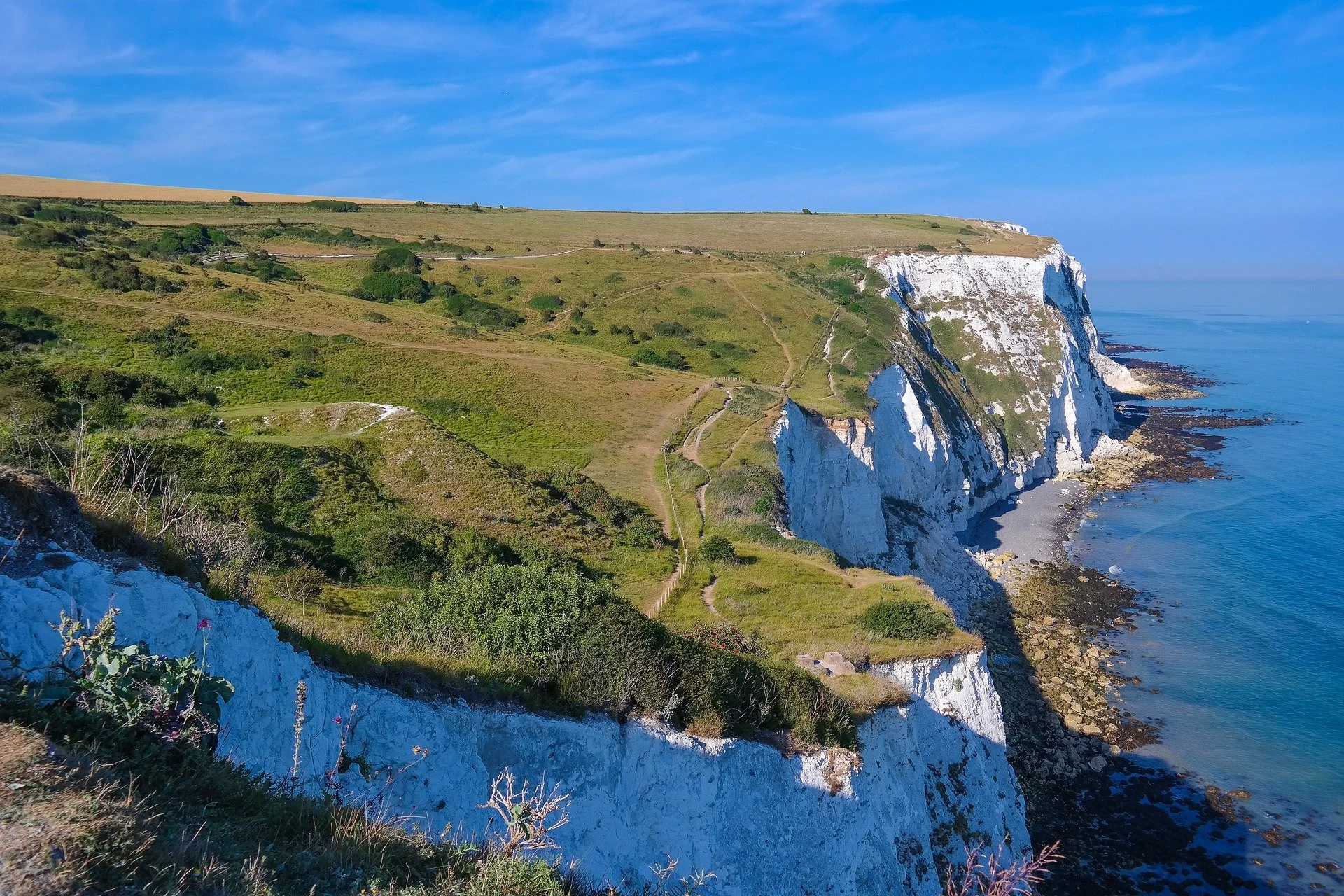
The White Cliffs of Dover are more than a postcard image. Rising dramatically above the Channel, they form one of Britain’s most symbolic landscapes — a place of arrival, departure and defence for centuries.
The best way to experience them is not from a roadside pull-in, but on foot. The drama lies in walking the cliff-top paths, feeling the wind off the sea, and looking across the world’s busiest shipping lane towards France on clear days.
What to See & Do
Start at Langdon Cliffs Visitor Centre
Begin at the White Cliffs of Dover Visitor Centre on Langdon Cliffs. This is the main access point and the ideal place to orient yourself. From here, wide clifftop paths stretch east and west, with panoramic views over the English Channel.
Spend time simply watching the ferry and cargo traffic below — Dover’s strategic importance becomes immediately obvious.
Walk to South Foreland Lighthouse
Follow the clifftop path east towards South Foreland Lighthouse. The walk is one of the most rewarding stretches on the Kent coast.
The lighthouse itself is notable for being the first in the world to use electric light and for its role in early radio navigation experiments by Guglielmo Marconi. Visitors can climb the tower (seasonal opening) and enjoy tea in the cliff-top garden café.
Allow 60–90 minutes return walking time, longer if you stop frequently for views.
Visit the Fan Bay Deep Shelter
A short detour along the path leads to the Fan Bay Deep Shelter (seasonal opening). Guided tours take you down into a network of WWII tunnels carved directly into the chalk. Inside, bunks and interpretation panels tell the story of soldiers stationed beneath the cliffs during wartime.
This adds depth to the visit — transforming the cliffs from scenery into strategic defence.
Optional Detour: Samphire Hoe
For a completely different perspective, drive to Samphire Hoe, a nature reserve created from Channel Tunnel excavation spoil. Here you walk at sea level, looking up at the towering white cliffs from below.
It is flatter, quieter and more sheltered — ideal if the cliff-top winds are strong.
-
Main Access:
White Cliffs Visitor Centre (Langdon Cliffs)Parking:
National Trust car park (charges apply for non-members)
Parking fills quickly in summer and at weekends — arrive early
Terrain:
Well-maintained cliff-top paths
Some uneven surfaces and exposed edges
Not fully pushchair-friendly
Facilities:
Visitor centre café
Toilets
Gift shop
Time Needed:
Minimum: 1 hour
Ideal visit: 2–3 hours including lighthouse walk
Add 45–60 minutes if visiting Fan Bay ShelterSafety:
Stay well back from cliff edges. Chalk cliffs are unstable and subject to erosion.
From the White Cliffs into Dover
Leaving the open headland, the path and road begin to descend. The wide horizon narrows, the wind softens, and Dover town gradually comes into view below. From the cliff edge, the harbour appears first — ferries moving in and out, cranes and breakwaters shaping the shoreline.
Then, above it all, Dover Castle dominates the skyline.
Where the White Cliffs represent natural defence, Dover Castle represents engineered power. The transition feels intentional: from raw chalk escarpment to one of England’s most important fortresses. You move from symbolic landscape to strategic stronghold within a matter of minutes.
The cliffs give you perspective. Dover gives you context. Together, they explain why this stretch of coast has mattered for centuries.
Dover - White Cliffs, Wartime Tunnels & England’s Strategic Frontier
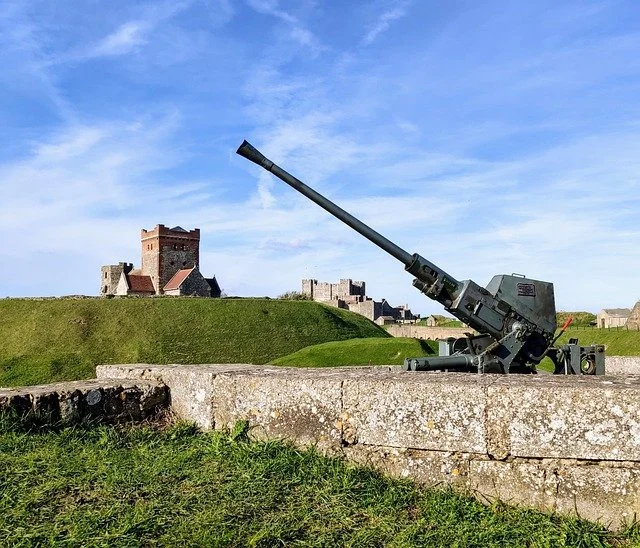
Dover is far more than a ferry port. For over two millennia it has stood as Britain’s front line — a place of arrival, invasion, defence and departure. From Roman armies landing on its shores to medieval kings fortifying its heights, from Napoleonic anxieties to the evacuation of Dunkirk, Dover’s position facing continental Europe has shaped its identity at every stage of history.
Chalk cliffs rise sharply above the harbour, their brightness visible for miles out at sea. Above them, fortifications crown the hills — Dover Castle dominating the skyline, Western Heights stretching along the ridge, and hidden tunnels running beneath the chalk. The town below reflects this layered past, with Roman remains, medieval buildings and wartime infrastructure woven into its streets.
Whether you have a few hours or a full day, Dover rewards structured exploration rather than casual wandering. The key is to think in layers: begin with the cliffs for perspective, move to the castle for power and strategy, explore the town for Roman and civic history, and finish with the Western Heights for panoramic context. Seen this way, Dover is not just a stop on the coast — it is the strategic heart of the Kent shoreline.
What To See & Do
Dover works best when approached in zones rather than rushing between sites.
Clifftop & Strategic Views - (See above) Experience the headland first — either before or after the castle — to understand Dover’s geographic importance.
Dover Castle (See Below) - Dover Castle deserves dedicated time. It contains, The Great Tower (medieval royal keep), Roman lighthouse (one of the oldest in Britain), Napoleonic tunnels, Wartime Tunnels Collection (Dunkirk evacuation operations) and PWRR & Queen’s Regiment Museum. Allow 2–4 hours minimum.
Roman & Medieval Dover - After the castle, walk into town to explore deeper history.
Roman Painted House - A remarkably preserved 3rd-century Roman building, believed to have served elite travellers arriving from the Continent.
Dover Museum - Home to the internationally significant Bronze Age Boat and artefacts spanning prehistoric to medieval Dover.
Maison Dieu Hall - Originally a medieval pilgrim hostel, later a Royal Navy victualling yard, now Dover’s civic hall — architecturally striking and historically layered.
Western Heights Fortifications - For those wanting fewer crowds and dramatic views:
Western Heights of Dover - These 18th–19th century defences were built to deter Napoleonic invasion. Explore moats, bastions and the Drop Redoubt while enjoying sweeping views over the port.
Further Interest (If You Have More Time)
Dover Transport Museum – nostalgic vintage vehicles and recreated streets
Kent Battle of Britain Museum Trust – world’s largest Battle of Britain collection
-
Location: South-east Kent, directly on the A2 with strong road links from London and Canterbury
Parking
Dover is easier for parking than Thanet’s coastal towns, but planning ahead is useful, especially in summer.
For Dover Castle:
Dedicated Dover Castle car park (signposted from A2)
This is the most convenient option if visiting the castle first.
For White Cliffs (Langdon Cliffs):
National Trust car park (charges apply for non-members)
Arrive early in peak season — it fills quickly.
For Dover Town Centre & Museums:
Pencester Road car park
Bench Street car park
Marine Parade (near harbour)
For Western Heights:
Small roadside and Drop Redoubt car parks (limited capacity)
Getting Around
The castle and Western Heights are uphill from the town centre
White Cliffs access requires driving out of town
Walking between sites is possible but involves steep climbs
Many visitors choose to drive between the Cliffs, Castle and Western Heights rather than walk.
Suggested Visit Timing
Minimum: 3–4 hours
Ideal: Half to full dayDover works best when structured into zones — Cliffs, Castle, Town, Western Heights — rather than attempting everything in quick succession.
Dover — White Cliffs, Fortress History & England’s Gateway
Dover is defined by its position — the closest point to continental Europe and one of the most strategically important locations in England. From Roman harbour to medieval stronghold, Civil War battleground and wartime command centre, it has long served as the country’s frontline.
The White Cliffs provide the natural defence, while Dover Castle represents centuries of engineered power above the Channel. Together, they explain why this stretch of coast has carried such weight in Britain’s history.
Today, Dover combines fortress-scale heritage with iconic coastal walking. Whether you focus on the castle or the cliffs, this is a place where landscape and history are inseparable.
Half Day
Castle & Cliffs (Choose One Focus)
Option 1: Dover Castle Focus
- Allow 2–3 hours to explore the castle
- Visit the medieval Great Tower and Roman Lighthouse
- Explore the Secret Wartime Tunnels beneath the cliffs
- Take in sweeping views across the Channel
- Finish with a café stop within the castle grounds
Option 2: White Cliffs & Walk
- Start at the White Cliffs Visitor Centre
- Walk a section of the National Trust clifftop path
- Optional visit to Fan Bay Deep Shelter (pre-book if open)
- Watch ferries moving through the Channel below
- Pause at viewpoints or continue towards South Foreland
This option works best when you choose one main highlight rather than trying to combine both in a short visit.
Full Day
History & Coastal Walking
Morning:
- Arrive early at Dover Castle (allow 3+ hours)
- Explore the Great Tower, Roman Lighthouse and tunnels
- Views across the Channel towards France on clear days
Lunch:
- Castle café or head into town
- Options include Il Rustico, The White Horse or Marine Court
Afternoon:
- Head to the White Cliffs Visitor Centre
- Walk towards South Foreland Lighthouse or St Margaret’s Bay
- Optional stop at Fan Bay Deep Shelter
Evening (optional):
- Sunset from the cliffs
- Drinks along Dover Marina
Dover is where England meets the continent — a place shaped by cliffs, crossings and centuries of defence.
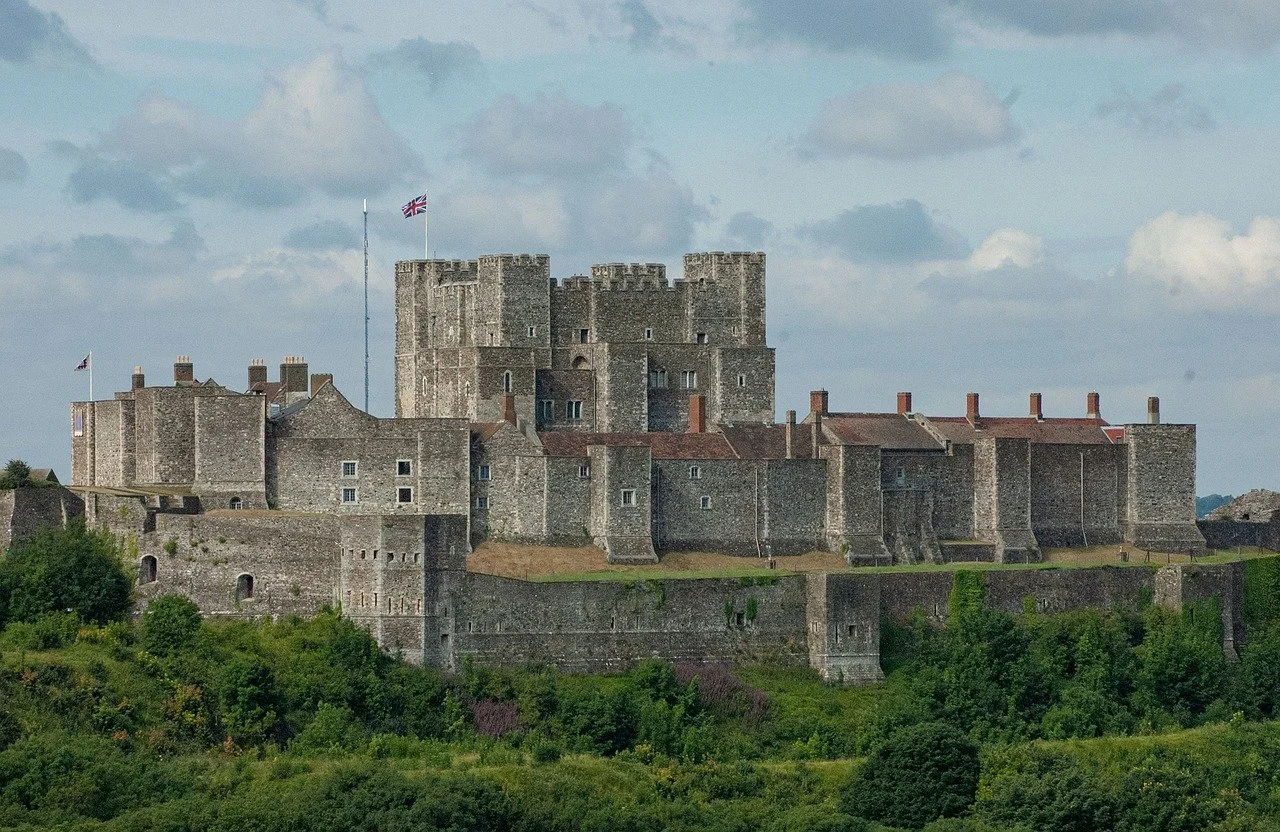
Dover Castle - Visiting the “Key to England”
Perched high above the White Cliffs with commanding views over the English Channel, Dover Castle is one of the most important and complete fortresses in England. Often called the “Key to England,” it has guarded this narrow stretch of sea for over 900 years — though the site itself has been defended for nearly two millennia.
The castle is not a single building but a vast complex. At its heart stands the Great Tower, a mighty Norman keep built for Henry II in the 12th century. Around it lie medieval curtain walls, gun batteries, underground tunnels, and even a Roman lighthouse — one of the oldest surviving in Britain.
What makes Dover Castle exceptional is the layering. You can walk through Roman history, medieval power, Napoleonic military planning and World War II command operations in one continuous visit. Beneath the castle, the Wartime Tunnels reveal how the site served as a military command centre during the Dunkirk evacuation and throughout the Second World War.
This is not a quick photo stop. Dover Castle demands time. The grounds are expansive, the interiors immersive, and the views across the Channel are as much part of the experience as the stone walls themselves.
Allow at least 2–3 hours for a meaningful visit — longer if you wish to explore the tunnels, museums and defensive earthworks fully.
Dover Castle is the strategic and architectural climax of the Kent Coast Road Trip — where natural defence meets engineered power, and centuries of history stand visibly layered above the sea.
History of Dover Castle
Dover Castle stands as one of the most important fortresses in England, guarding the narrowest point of the Channel for nearly 1,000 years. Its position earned it the title “The Key to England.”
Built soon after 1066 and expanded by Henry II, the castle combines defensive strength with royal symbolism. Beneath and around it lie traces of Roman and Saxon occupation.
Changing Through Time
- 11th century origins following the Norman Conquest
- 12th century Great Tower built by Henry II
- Napoleonic tunnels cut into the cliffs for defence
- WWII command centre for Operation Dynamo
Each phase reflects how the castle adapted to new military threats.
What to See & Do
- Explore the medieval Great Tower
- Descend into Napoleonic and WWII tunnels
- Walk the battlements with Channel views
- Visit the Roman lighthouse and Saxon church
- Discover exhibitions and live events
The Great Tower
The heart of the castle, this Norman keep was designed as both fortress and palace. Rooms are furnished to reflect life in Henry II’s court, bringing the 12th century vividly to life.
Secret Wartime Tunnels
- Napoleonic tunnels for troop accommodation
- WWII command centre and hospital
- Immersive displays recreating wartime planning
Views & Landmarks
- Panoramic Channel views from the walls
- Roman Pharos (one of Britain’s oldest structures)
- St Mary in Castro Saxon church
Visiting Dover Castle
- Location: Castle Hill Road, Dover CT16 1HU
- Managed by English Heritage
- Open daily (typically 10am–5pm, seasonal variations)
- Ticketed entry – members go free
- Café, shop, toilets and picnic areas on site
- Parking available (charges may apply)
- Allow at least 2–3 hours to explore fully
The site is large with uneven terrain and steps in places, though accessible routes are available.
Dover & the White Cliffs: England’s Most Iconic Castle
This section of the journey centres on Dover — home to one of the largest and most historically important castles in England, overlooking the White Cliffs and the English Channel.
Dover Castle alone typically costs £25+ per person, with its medieval fortress, wartime tunnels and panoramic coastal views.
Adding nearby sites such as Richborough Roman Fort makes membership one of the most cost-effective ways to explore this part of Kent.
Annual membership starts from £53 — with 15% off using code AFFEH1526 until 31.12.2026.
Membership often pays for itself in just 2–3 visits.
Get 15% Off MembershipFrom Dover to St Margaret’s Bay
Leaving Dover, the road climbs once more. Harbour cranes and ferry terminals fall behind, and the landscape opens back out into chalk headland and rolling coastal downs. The sense of urban defence softens, replaced by open grassland and quieter lanes winding along the cliff edge.
Within a short distance, the scale changes again. The fortress dominance of Dover gives way to something more secluded. The cliffs remain high, the sea just as close, but the atmosphere becomes calmer and more residential. St Margaret’s Bay sits tucked into a natural curve of the coastline, sheltered beneath steep chalk slopes and reached by a narrow descent towards the shore.
Where Dover feels strategic and monumental, St Margaret’s feels intimate. It is still part of the same dramatic chalk coastline, but here the emphasis shifts from battlements and battalions to quiet shoreline, sea views and a gentler pace.
This short stretch marks a subtle but important shift — from national symbol to hidden coastal cove — before the journey continues west towards Folkestone and, eventually, the wide shingle expanse of Dungeness.
St Margaret’s Bay - Sheltered Cove Beneath the White Cliffs

St. Margaret’s Bay sits quietly between Dover and Folkestone, tucked into a natural curve of chalk cliffs just below South Foreland. Smaller and more secluded than the White Cliffs viewpoint, it offers a gentler perspective on this dramatic coastline — less symbolic, more personal.
The bay has long attracted writers, artists and high-profile residents seeking privacy and inspiration. During World War II it was known as “Hellfire Corner” because of its proximity to the Channel front line. Among its most famous former residents was Ian Fleming, creator of James Bond, who lived nearby and drew inspiration from the coastal setting.
St Margaret’s is not about grand landmarks. It is about atmosphere — chalk slopes rising behind you, sea stretching ahead, and a sense of being slightly removed from the busier world above.
Sheltered pebble bay beneath high chalk cliffs
Direct access to dramatic clifftop walking
Strong wartime and literary connections
What to See & Do
Walk along the pebble shoreline and take in views across the Channel — on clear days, the French coastline is visible. The setting feels enclosed yet expansive, with chalk cliffs framing both sides of the bay.
Climb or follow the paths towards the clifftops, where you can join the coastal trail linking back towards the White Cliffs or onward to South Foreland. The headland walks here are some of the most dramatic on the Kent coast, with open skies and constant sea views.
Visit St Margaret’s Museum (small but worthwhile), with displays on local history and the area’s links to notable residents including Ian Fleming and Noël Coward.
Look out for remnants of wartime defences scattered along the cliffs — quiet reminders of the area’s frontline role during World War II.
Above the bay stands South Foreland Lighthouse — the first lighthouse in the world to use electric light and an important site in early radio transmission experiments by Marconi. The lighthouse offers guided tours (seasonal) and a tearoom with cliff-edge views.
-
By Car
St Margaret’s Bay is just 10–15 minutes from Dover by car via the A258, a winding coastal road that offers glimpses of countryside and sea along the way. If you're travelling from Deal, the bay is about 20 minutes away via the same route in the opposite direction.
The final approach is a steep descent into the bay area—take care, especially in wet weather.
By Bus
Regular Stagecoach bus services run between Dover and Deal, stopping at St Margaret’s at Cliffe village. From there, it’s a 15–20-minute downhill walk to the bay.
Buses such as the 80 and 81 operate most days, though timetables may vary on weekends and holidays.
Be prepared for an uphill return walk or time your visit with return bus services.
On Foot
For keen walkers, St Margaret’s Bay is accessible via the White Cliffs walking trail from Dover or South Foreland Lighthouse.
The coastal walk from Dover takes about 1.5 to 2 hours, passing dramatic chalk cliffs and sea views along the way.
From South Foreland Lighthouse, it’s a 15–20-minute walk down into the bay via a steep footpath.
By Bike
Cyclists can reach the bay from either Dover or Deal via local roads and lanes, though the final descent is steep. It’s a popular stop on longer cycling routes along the Kent coast or National Cycle Network paths.
-
Practical Information for Visiting
Location: East of Dover, between Dover and Folkestone
Parking:
St Margaret’s Bay car park (National Trust)
Limited roadside parking in the village (check restrictions)
Parking is limited and fills quickly in summer.
Access:
Steep road descent into the bay
Pebble beach — sturdy footwear recommended
Cliff paths exposed in windy conditions
Facilities:
Public toilets (seasonal)
Beach café (seasonal opening)
Additional facilities in nearby Dover
Best Time to Visit:
Clear days for Channel views
Quieter mornings or late afternoons
St Margaret’s Bay works best as a slower, atmospheric pause after Dover’s scale and symbolism — a sheltered cove that brings the dramatic chalk coastline down to human level before the journey continues towards Folkestone and the wide horizons beyond.
From St Margaret’s Bay to Folkestone
Leaving St Margaret’s Bay, the road climbs steadily back onto the chalk ridge. The enclosed cove disappears behind you, replaced once again by open headland and long Channel views. This stretch feels less fortified than Dover and less secluded than St Margaret’s — the coastline begins to broaden, and the sense of exposure softens.
As you continue west, the cliffs gradually lower and the landscape shifts from raw chalk to a more settled coastal edge. Housing appears along the slopes, the seafront widens, and Folkestone begins to take shape ahead — its harbour arm projecting into the sea.
Where St Margaret’s feels tucked away and reflective, Folkestone feels outward-looking and re-energised. The mood transitions from wartime memory and hidden bays to creative revival and contemporary coastal life.
This short drive marks another subtle evolution along the Kent coast — from defensive headland to working harbour reinvented for a new era.
Folkestone - Harbour Arm Revival, Creative Quarter & Channel Views

-
Folkestone is easy to explore and works well for a half-day or full-day stop. The town is built across two levels — with The Leas and clifftop promenade above, and the harbour, beach and Creative Quarter below — so expect some short but steep walking routes between areas.
Most key sights are within walking distance of each other, particularly once you reach the seafront or Old High Street.
Getting Around
Walking is the best way to explore the town centre, harbour and Creative Quarter
Zig-zag paths and steps connect the clifftop (The Leas) to the seafront
The Harbour Arm, Sunny Sands and Old High Street are all closely linked
Parking in Folkestone
Folkestone has several convenient car parks near the town centre, seafront and key attractions.
Best Car Parks
Leas Cliff Hall Car Park (CT20 2DZ)
Ideal for The Leas Promenade, Lower Leas Coastal Park and clifftop viewsHarbour Arm Car Park (CT20 1QH)
Closest to the Harbour, Sunny Sands Beach and Harbour Arm dining areaPayers Park (CT20 1BT)
Central location for the Creative Quarter, High Street and Folkestone MuseumPleydell Gardens Car Park (CT20 2DN)
Quieter option within a short walk of the town centreAdditional Parking Notes
Blue Badge spaces are available in all council-run car parks
On-street pay-and-display is available near The Leas and Creative Quarter
Spaces near the harbour and seafront fill quickly in summer and weekends — arriving earlier in the day makes a noticeable difference
Practical Tips
Combine upper (The Leas) and lower (harbour) areas for the best experience
Allow time for both walking and stopping — this is a place to explore rather than rush
The Harbour Arm is particularly good for food, events and atmosphere later in the day
Seafront Strolls & Coastal Views
Start with a walk along The Leas Promenade, a sweeping clifftop path offering panoramic views over the English Channel. Designed in the mid-1800s by Decimus Burton, this elegant promenade is perfect for a relaxed stroll, with plenty of benches and gardens along the way.
Just below, the Lower Leas Coastal Park offers a lush, family-friendly retreat featuring landscaped gardens, a café, picnic spots, and the southeast’s largest free adventure playground. Public art installations and coastal trails make it a peaceful yet playful place to explore.
For more natural beauty, head to The Warren, a dramatic coastal nature reserve of chalk cliffs, woodlands, and secluded beaches. It’s a haven for walkers, birdwatchers, and those looking to escape into nature just minutes from the town.
Beaches & Water Activities
Sunny Sands Beach is Folkestone’s popular town beach, ideal for families and sunseekers. Located near the harbour, it’s one of the few sandy beaches in the area and is backed by cafés, shops, pubs, and convenient facilities—making it a great spot for a full beach day.
Adventure seekers can try kayaking, paddleboarding, or cycling along the scenic coastal trails, with equipment hire and guided tours available locally.
Harbour Life & The Harbour Arm
Folkestone Harbour has been transformed from a historic ferry port into a charming marina and cultural destination. Stroll along the waterfront to see moored boats and watch the tide ebb and flow.
Don’t miss the Harbour Arm, a vibrant hub of converted railway buildings now home to independent eateries, bars, pop-ups, and event spaces. Once the departure point for soldiers heading to the Western Front during WWI, the Arm is now a place to enjoy street food, live music, and sunsets over the sea.
The Creative Quarter & Arts Scene
Folkestone is known for its artistic energy, best experienced in the Creative Quarter, a lively neighbourhood of colourful shopfronts, studios, and galleries. Browse independent boutiques, discover local makers, and take in the town’s quirky, imaginative atmosphere.
Visit the Folkestone Creative Foundation to see contemporary exhibitions and learn about the town’s ambitious arts initiatives. If you're in town during the Folkestone Triennial, look out for large-scale public art installations and sculptures scattered across parks, buildings, and even the beach.
History & Heritage
Dive into Folkestone’s past at the Folkestone Museum, located in the former town hall. Through interactive exhibits and fascinating artefacts, you’ll discover the town’s evolution from a humble fishing village to a strategic coastal town during World War II.
History & Overview
Folkestone sits on the English Channel just west of Dover, with a history stretching back to Roman times. It developed through Saxon and medieval periods as a port and pilgrimage destination linked to Saint Eanswythe.
By the 18th and 19th centuries, it had become a fashionable seaside resort, attracting wealthy visitors and even royal attention. Elegant hotels, bathing culture and coastal leisure defined the town’s character.
Although its fortunes shifted over time — including heavy bombing during the Second World War — Folkestone has since reinvented itself, blending harbour heritage with a strong creative identity.
How to Spend a Half Day
Harbour, Coast & Creative Quarter
- Start at The Leas Promenade for wide Channel views
- Descend into Lower Leas Coastal Park for gardens and coastal paths
- Stroll to the Harbour and Harbour Arm for food or coffee
- Explore the Creative Quarter and Old High Street
- Optional: relax at Sunny Sands Beach or finish with ice cream by the sea
Folkestone Walking Tour
Distance: ~2 miles (3.2 km) Duration: 1.5–2 hours Best for: First-time visitors, casual walkers, photographers and art lovers
Route Overview
Start: The Leas Promenade
- Begin on this elegant Victorian promenade designed by Decimus Burton
- Benches, gardens and sweeping views across the English Channel
Lower Leas Coastal Park
- Descend via zig-zag paths into landscaped gardens
- Seaside café, coastal paths and relaxed walking
Sunny Sands Beach
- Follow the seafront to Folkestone’s main sandy beach
- Good for photos, paddling and harbour views
Harbour & Harbour Arm
- Walk through the marina and out along the Harbour Arm
- Street food, bars, pop-ups and converted railway spaces
- Look out for murals, installations and live events
Creative Quarter
- Climb to Tontine Street and Old High Street
- Independent galleries, studios, shops and cafés
Optional Finish: Folkestone Museum
- Explore local history, fishing heritage and wartime stories
Battle of Britain Memorial — Clifftop Tribute Above the Channel
Located at Capel-le-Ferne just outside Folkestone, the Battle of Britain Memorial stands high on the white cliffs overlooking the English Channel — marking one of the most strategically important stretches of coastline during 1940.
From here, RAF pilots flew daily to defend Britain during the Battle of Britain — one of the defining air campaigns of the Second World War. At the centre sits a striking statue of a seated pilot, gazing out across the sea towards France.
This is not a conventional museum. It is a place of reflection — where landscape, horizon and atmosphere all form part of the experience.
What Makes It Special
- Dramatic clifftop setting with wide Channel views
- Tribute to “The Few” who defended Britain in 1940
- Memorial gardens and interpretation spaces
- Atmospheric, reflective experience
Visiting Tips
- Allow 45 minutes to 1.5 hours
- Combine with Folkestone or Dover
- Best experienced in clear weather for Channel views
- Strong contrast to the more built-up historic sites nearby
Practical Information
Location: Capel-le-Ferne, between Folkestone and Dover
Parking
- Dedicated on-site car park
- Free (donations encouraged)
Access
- Mostly flat memorial grounds
- Cliff-edge paths — exposed in strong winds
Facilities
- Visitor centre and exhibition space
- Café (seasonal opening)
- Toilets on site
From Folkestone to Dungeness
Leaving Folkestone, the coastline begins to open and flatten. The chalk cliffs that have dominated the horizon for miles gradually lower, and the landscape shifts from headland and harbour to wide, exposed shoreline. The road turns west, following the edge of Romney Marsh — a broad, low-lying expanse that feels markedly different from the fortified heights of Dover.
This stretch of the journey is quieter and more spacious. The sea remains constant, but the scenery becomes more elemental. Fewer terraces cling to the cliffs, fewer fortifications crown the hills. Instead, long horizons and open skies take over.
As you approach Dungeness, the transformation is complete. The dramatic white cliffs of east Kent give way to one of the most unusual coastal landscapes in Britain — a vast shingle headland scattered with fishing boats, lighthouses and weathered cottages. The scale feels horizontal rather than vertical, stark rather than grand.
Where Dover represented strategic dominance and Folkestone creative revival, Dungeness offers something entirely different: space, silence and the raw edge of land meeting sea.
Dungeness - Shingle Headland, Lighthouses & England’s Strangest Shoreline
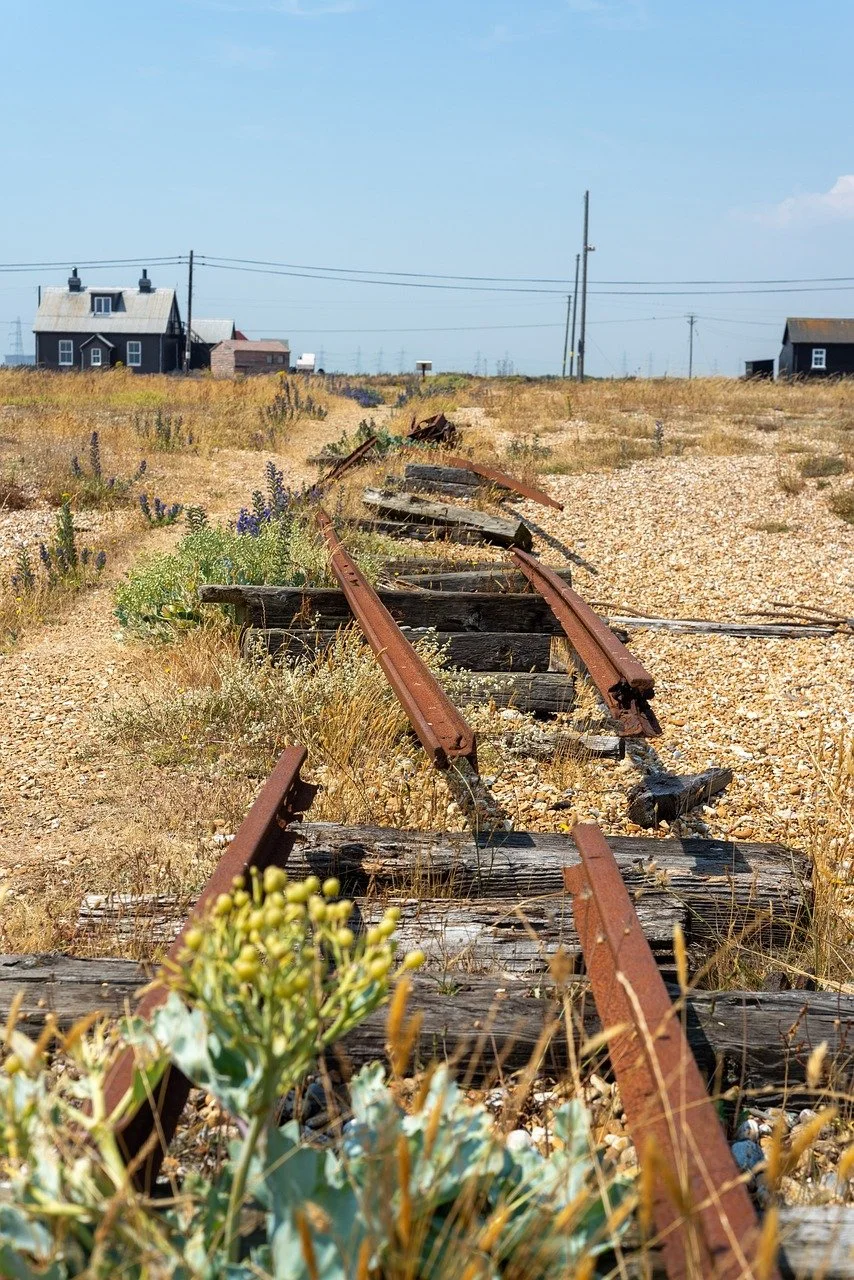
Dungeness does not feel like the rest of the Kent coast. After cliffs, castles and harbour towns, the land suddenly flattens into a vast, exposed shingle headland stretching out into the Channel. Bleak and beautiful in equal measure, it feels elemental — shaped by wind, tide and time rather than terraces or battlements.
This is one of the largest expanses of shingle in Europe. Fishing boats sit tilted on the stones, rusted winches rest where they were last hauled, and weathered wooden sheds punctuate the horizon. The light here is different — sharper, wider, cinematic. It is a landscape that has long attracted artists, photographers and writers seeking something raw and unfiltered.
In the distance, the stark silhouette of Dungeness Power Station rises above the shingle — a powerful industrial presence that defines the skyline and heightens the landscape’s strange, cinematic character.
Vast shingle shoreline unlike anywhere else in England
Historic lighthouse and panoramic Channel views
Unique blend of nature reserve, fishing community and industrial backdrop
What to See & Do
Walk across the shingle beach and absorb the scale of the landscape. The sea feels both close and distant, with long uninterrupted horizons. Beachcombers and photographers will find endless textures — driftwood, fishing gear, wildflowers pushing through stone.
Climb the 1904 Dungeness Lighthouse (seasonal opening) for panoramic views across the English Channel, the Romney Marsh and the stark silhouettes of the power stations that define the skyline.
Explore the Dungeness Nature Reserve, an internationally important habitat of shingle ridges, freshwater pools and salt marsh. Boardwalks and paths lead through an unusual ecosystem home to rare birds and hardy coastal plants.
Visit Prospect Cottage, former home of filmmaker and artist Derek Jarman. The black-painted cottage with yellow window frames and sculptural driftwood garden remains one of Dungeness’s most photographed landmarks (viewable from the lane; not open to the public).
Ride or visit the terminus of the Romney, Hythe & Dymchurch Railway a miniature steam railway linking Dungeness to the marshland towns beyond.
Dungeness Sound Mirrors — Hidden on the edge of Romney Marsh, these vast concrete acoustic mirrors were built in the 1920s as early-warning devices to detect incoming aircraft before the invention of radar. Stark, sculptural and slightly surreal, they sit in open grassland not far from the shingle headland. Access is by guided tour only, which adds to their intrigue. They are one of the most unusual and photogenic pieces of pre-radar military engineering in Britain.
For food, the Dungeness Snack Shack offers fresh crab rolls, lobster and seafood eaten at simple picnic tables, while The Pilot Inn provides a more traditional pub setting.
-
Practical Information for Visiting
Location: Southern Kent coast, at the edge of Romney Marsh
Parking:
Multiple informal roadside parking areas along the shingle road
Lighthouse car park (seasonal charges may apply)
Parking near the railway station and nature reserve
Spaces are generally easier to find than at other Kent coastal hotspots.
Access:
Mostly flat terrain
Shingle surface can be uneven — sturdy footwear recommended
Exposed to wind in all seasons
Facilities:
Lighthouse (seasonal opening)
Snack Shack and The Pilot Inn
Limited public toilets (check seasonal availability)
Best Time to Visit:
Clear days for expansive Channel views
Late afternoon for dramatic light
Quieter weekdays for a more atmospheric experience
Dungeness closes the Kent Coast Road Trip with something entirely different from what came before. After fortified cliffs and historic towns, this is open horizon and raw coastline — a place where nature, industry and art coexist in one of the most distinctive landscapes in England.
Walking Tour
Distance: ~1.5 miles (2.4 km) loop
Duration: 1.5–2 hours at a slow pace
Best for: Nature lovers, photographers, and those seeking a truly unusual coastal walk
Route Overview
Dungeness Old Lighthouse
- Climb to the top for 360° views across the shingle landscape, sea and power station
Shingle Beach & Coastline
- Walk across the expansive shingle shoreline
- Old boats, fishermen’s huts and scattered coastal objects create a distinctive landscape
Prospect Cottage
- View Derek Jarman’s iconic black cottage and garden from the lane
Dungeness Nature Reserve
- Follow marked trails into the RSPB reserve
- Look for birdlife, rare plants and wide saltmarsh views
Return via The Pilot Inn
- Stop for lunch or visit the Snack Shack for fresh seafood
Dungeness Railway Station
- End at the Romney, Hythe & Dymchurch Railway terminus
- Optional miniature steam train ride or photo stop
How to Spend Half a Day
Essential Dungeness Experience
- Climb the Dungeness Lighthouse for panoramic views
- Take a short walk across the beach and shingle landscape
- Visit Prospect Cottage and explore the surrounding area
- Stop for seafood at the Snack Shack or lunch at The Pilot Inn
- Finish at the railway station for photos or a short ride
How to Spend a Full Day
Morning
- Start at the Old Lighthouse and explore the surrounding coast
- Walk to Prospect Cottage and photograph the landscape
- Explore the RSPB Nature Reserve and bird hides
Lunch
- Fresh seafood from the Snack Shack or a meal at The Pilot Inn
Afternoon
- Visit the railway station and take a miniature steam train ride
- Explore further into the reserve or along the shoreline
- Discover scattered boats, structures and coastal textures
Evening
- Stay for sunset — the light and silhouettes are particularly striking
- Views of the power station add to the distinctive atmosphere
End of Chapter — White Cliffs, Castles & the Cinque Ports
This final stretch of the Kent Coast road trip brings together everything that has defined the journey so far — maritime power, shifting geography and landscapes shaped by defence.
From the medieval street plan of Sandwich to the artillery forts of Deal, from the monumental scale of Dover Castle to the exposed chalk headlands at St Margaret’s, this chapter has traced England’s historic frontline. These were not simply seaside settlements. They were fortified ports, naval providers and guardians of the narrowest crossing to continental Europe.
The coastline gradually softened as the journey moved west — from battlements and battlegrounds to harbour revival in Folkestone — before dissolving into the raw openness of Dungeness. The cliffs gave way to shingle. The vertical drama of chalk became the horizontal vastness of Romney Marsh. Power shifted from fortress to horizon.
Together, this chapter completes the historic and geographical arc of the Kent coast.
End of Road Trip — The Kent Coast
This road trip began in Canterbury, where pilgrimage, cathedral authority and medieval streets shaped the identity of the county. It followed the oyster shores of Whitstable, the creative revival of Margate, the cliff-framed bays of Broadstairs and Ramsgate, and then turned towards England’s defensive heartland.
What makes the Kent Coast distinctive is not simply its scenery, but its strategic position. For centuries this was the threshold between England and the Continent — a coastline of arrival, invasion, defence and departure. The Cinque Ports, the White Cliffs, the castle at Dover and the wartime memorials all speak to that role.
And yet the journey ends not with a fortress, but with open space.
At Dungeness, the landscape becomes elemental. Sea, sky and shingle stretch outward without walls or towers. It is a fitting conclusion — the coast laid bare, shaped by time rather than conflict.
From cathedral city to coastal headland, from oyster beds to nuclear skyline, this route reveals Kent as both gateway and frontier.
The Kent Coast is not a single seaside story.
It is England’s edge — layered, resilient and constantly changing.
Extending the Journey — Continue into Sussex
If you’re not ready to finish at Dungeness, the coastline continues seamlessly into Sussex — and the landscape changes once again.
Just beyond the Kent border lies Rye, one of the most atmospheric Cinque Port towns. From there, the coast begins to rise dramatically towards Hastings and the chalk headlands of Beachy Head.
Our Sussex Coast Road Trip picks up where Kent leaves off. Add to your account here.
While the Kent route is defined by naval power, fortifications and shifting medieval harbours, Sussex tells a broader coastal story — from Norman conquest and battlefield history to Regency elegance and open South Downs landscapes.
The Sussex Coast road trip covers approximately 140 miles (225 km) and unfolds in three distinct stages:
1066 Coast & Seven Sisters — medieval streets, battlefield heritage and bold white cliffs
Brighton & the South Downs — Regency architecture, river valleys and castle skylines
Chichester Harbour & The Witterings — tidal creeks, saltmarsh and wide sandy beaches
Where Kent feels like England’s defensive edge, Sussex feels more expansive and varied — dramatic cliffs giving way to cultured seafront towns and calmer western shores.
Together, the Kent and Sussex routes create one of the most coherent coastal journeys in southern England.
From Canterbury to West Wittering, you follow a continuous story of invasion, trade, seaside reinvention and landscape change — a coastline shaped as much by history as by tide.
Kent Coast Last updated: 30 April 2026
Some links may earn Uncover Britain a small commission at no extra cost to you. This helps support the ongoing creation, review and presentation of our road trip guides.
Route information and listings are provided for general guidance only. Always use your preferred navigation system and check official websites to confirm suitability, opening times and the latest details before travelling.
Our guides are reviewed regularly and supported by a mix of editorial research and digital tools to help keep content clear and up to date. If you spot anything that needs updating, we’re always glad to hear from you.