Viewing as a member
Kent Coast Road Trip: White Cliffs & Cinque Ports
This linear coastal route is around 93 miles (149 km) with a drive time of 4 hours 10 minutes. The recommended time for this trip is 5-7 days but can be adjusted to suit longer if needed.
Kent’s coastline is more varied than its proximity to London might suggest. Within a relatively compact stretch of shoreline, medieval cathedral cities give way to oyster harbours, chalk cliffs rise above sandy bays, Tudor castles guard quiet seafronts and the White Cliffs stand as one of Britain’s most recognisable natural landmarks. The beauty of exploring the Kent coast by car is not scale — it is contrast. In a single day you can move from pilgrimage history to seafood shacks, from art-led seaside towns to windswept cliff paths overlooking the Channel.
This road trip is designed around three distinct sections, each revealing a different character of the county. Together, they create a balanced journey that moves from heritage to coastline, from classic seaside to defensive fortresses, from lively harbour fronts to the stark, otherworldly landscape of Dungeness.
1. Canterbury & the Oyster Coast
The journey begins inland before meeting the sea. Canterbury sets the tone with its medieval streets and the extraordinary presence of Canterbury Cathedral, a UNESCO World Heritage Site that has shaped the county’s story for centuries. From here, the road turns north toward Whitstable, where working harbour life and a long tradition of oyster farming create a very different atmosphere.
This opening section blends cathedral city grandeur with relaxed coastal character. It introduces Kent as both historic and lived-in — a place of pilgrimage, trade and tidal rhythms.
Canterbury > Canterbury Cathedral > Whitstable Harbour > Saxon Shore Way > Tankerton Slopes > (Optional) Herne Bay
Approx. 13 miles (21 km) with a drive time of around 45 minutes
2. Thanet Cliffs, Viking Bay & Botany Bay
Heading east, the coastline curves around the Isle of Thanet and the mood shifts again. Margate brings creative energy and sea air in equal measure, while Broadstairs centres around the classic crescent of Viking Bay. Beyond the towns, chalk stacks and cliff-top paths at Botany Bay and Kingsgate Bay provide some of the most photogenic scenery on the Kent coast.
Ramsgate’s Royal Harbour completes the sweep of the peninsula, adding maritime heritage and Georgian architecture to the mix. This section captures Kent’s seaside evolution — from Victorian resort to contemporary revival, framed by dramatic cliffs.
Margate > Botany Bay > Kingsgate Bay > Broadstairs (Viking Bay) > Ramsgate
with highlight: Thanet Coastal Path
22 miles (35 km) with a drive time of approx. 1 hour 10 mins from Herne Bay
3. White Cliffs, Castles & the Cinque Ports
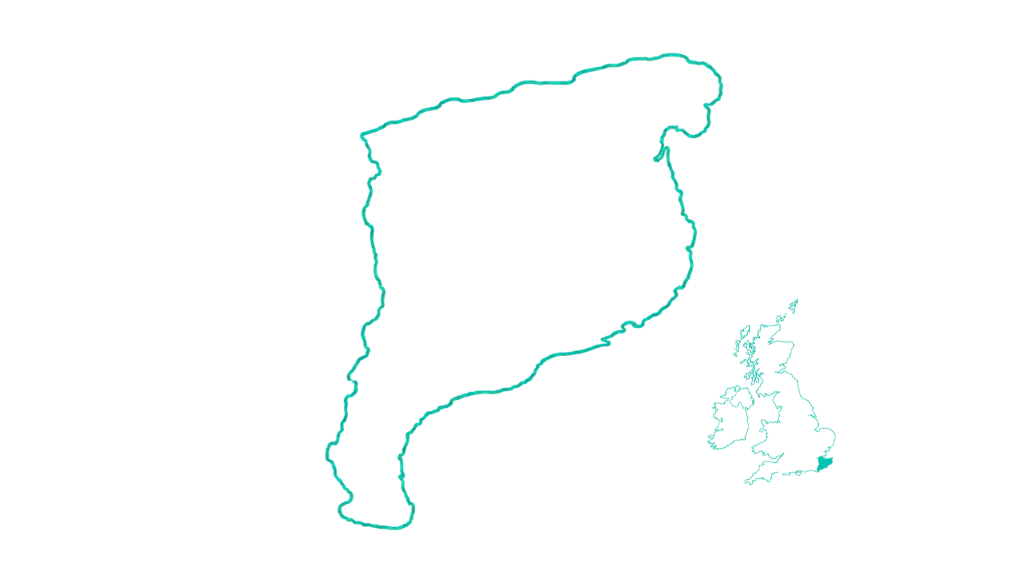
South of Thanet, the journey becomes more historic and elemental. Medieval Sandwich and the seafront at Deal reflect the legacy of the Cinque Ports, once vital to England’s coastal defence. Deal Castle and Walmer Castle anchor this stretch before the road reaches Dover, where the White Cliffs of Dover rise above the Channel.
From here, Folkestone’s Harbour Arm introduces a modern coastal revival, and the route concludes at Dungeness — a vast shingle landscape of lighthouses, fishing boats and open skies that feels unlike anywhere else in England.
Sandwich > Deal > Dover > Dover Castle > White Cliffs > St Margaret’s Bay > Folkestone Harbour Arm > Dungeness
Approx. 58 miles (93 km) with drive time approx. 2 hours 15 mins from Ramsgate
How the Sections Work Together
The three parts are not simply geographical divisions — they are stages in a broader coastal story:
Canterbury & Whitstable introduce heritage and tradition.
Thanet delivers classic seaside and cliff-top drama.
The White Cliffs and Cinque Ports add defence, identity and wide horizons.
Because the distances are manageable, you can explore one section per day without rushing. Follow them in sequence for a natural progression around Kent’s coastline, or focus on individual sections depending on your interests.
Together, they create a complete portrait of the Kent coast — not just the landmarks that draw visitors, but the layered character that has shaped this edge of England for centuries.
How to Get There
Whether you’re travelling from within the UK or arriving from abroad, Canterbury is easy to reach thanks to its excellent transport links. High-speed rail from London, direct road access via major motorways, and proximity to key airports and ferry terminals all make this historic cathedral city a convenient starting point for exploring the Kent Coast and beyond.
-
From London:
Drive via the M2 or A2 in around 1.5 to 2 hours (approx. 60 miles).From Southampton, Birmingham & Manchester:
Southampton: Around 2.5 to 3 hours via the M3, M25, and M2.
Birmingham: Around 3.5 hours via the M40, M25, and M2.
Manchester: Around 4.5 to 5 hours via the M6, M1, and M20 or M2, depending on traffic.
-
Canterbury offers multiple parking options, including central car parks and a convenient Park & Ride system:
Park & Ride Sites:
Located at Wincheap, New Dover Road, and Sturry Road, all with regular bus links into the city centre.Central Car Parks:
Whitefriars – large and close to shops
Castle Street and Watling Street – ideal for the historic centre
Canterbury West Station – convenient for rail travellers
Most car parks accept card or app payments, and several offer electric vehicle charging.
-
From London:
Southeastern’s high-speed trains from London St Pancras reach Canterbury West in just 50 minutes. Trains from London Victoria arrive at Canterbury East in around 90 minutes.From Southampton, Birmingham & Manchester:
From Southampton, travel via London Waterloo, then transfer to St Pancras or Victoria.
From Birmingham, trains typically run via London Euston, with onward connections from St Pancras or Victoria. Total travel time is around 3 to 3.5 hours.
From Manchester, journey times are around 4 to 4.5 hours, with a change at London Euston, then a short transfer to St Pancras.
From Abroad (via Eurostar):
Eurostar services from Paris, Brussels, and Amsterdam reach Ashford International, just 30 minutes by local train from Canterbury.Trainline makes train and coach travel across the UK easy. Get the app to book tickets and get:
· Live times and disruptions info
· Split tickets price alerts for the cheapest tickets
· You won’t find cheaper same-day tickets than on our app or get the difference refunded.
-
From London:
National Express coaches from Victoria Coach Station to Canterbury take 2 to 3 hours, depending on traffic.From Southampton, Birmingham & Manchester:
Long-distance coach services like National Express connect Canterbury with major cities.From Southampton: Typically 4–5 hours.
From Birmingham: Approx. 5–6 hours, usually with a change in London.
From Manchester: Approx. 6–7 hours, with a connection in London.
-
Nearest Airports:
London Gatwick: Direct train to Canterbury via Ashford International.
Heathrow & London City Airport: Travel into central London, then continue by train.
From Southampton Airport:
Connect via London Waterloo, then onward from St Pancras or Victoria.From Manchester Airport:
Take a direct train to London Euston, then transfer to St Pancras for Canterbury-bound services. Journey time: 4.5 to 5.5 hours total.
-
From Europe:
Arrive at Dover by ferry or Folkestone via the Eurotunnel. From both locations, Canterbury is about 30 minutes by car or train.
How to Spend Your Time – The Complete Kent Coast Route
The Kent coast stretches for just over 90 miles, but like many of England’s best coastal drives, it rewards patience rather than speed. Cathedrals demand unhurried exploration, harbour towns are best experienced at mealtime or low tide, and cliff-top sections deserve time on foot rather than viewed from a car window. Although you could technically drive the full route in a single long day, doing so would miss the depth that gives this coastline its character.
This itinerary combines three contrasting regions — Canterbury & the Oyster Coast, Thanet Cliffs & Viking Bay, and the White Cliffs & Cinque Ports Coast. Together, they form a coherent east–south journey that moves from pilgrimage heritage to seaside revival, and from Tudor defensive forts to the stark, open horizon of Dungeness.
The key is pacing. Kent may be compact, but its coastal story unfolds in layers.
At a Glance
Driving time (without stops): approx. 4 hours 10 minutes
Total distance: around 93 miles (149 km)
Recommended time: 5–7 days
Best for: historic towns, coastal walks, chalk cliffs, seaside character, castles, photography and short scenic drives
-
This is the highlights version — focused, efficient and balanced.
Day 1 – Cathedral & Harbour
Begin in Canterbury, allowing proper time inside the cathedral precinct and medieval lanes before heading north to Whitstable for late-afternoon sea air and harbour views. End the day by the water.Day 2 – Thanet Peninsula
Dedicate a full day to the curve of the Thanet coast: sandy bays, chalk stacks and classic seaside crescents. Walk part of the coastal path, explore harbour fronts and linger on clifftop viewpoints rather than rushing between towns.Day 3 – Castles & Cliffs
Follow the Cinque Ports south through medieval streets and Tudor forts before reaching Dover’s White Cliffs. Finish at Dungeness for a dramatic, open-skied finale that feels entirely different from the rest of the route.Three days works — but it is selective. You will see the range, though not explore it deeply.
-
This is the most natural rhythm for the route.
Day 1 – Canterbury in Depth
Spend real time in the cathedral city before moving toward the coast.Day 2 – The Oyster Coast
Explore harbour culture, shoreline paths and smaller north-coast stops without pressure.Day 3 – Thanet Cliffs & Bays
Walk the clifftops, linger in crescent-shaped beaches and absorb the changing character between towns.Day 4 – The Cinque Ports
Medieval centres, defensive architecture and seafront promenades deserve slow wandering.Day 5 – White Cliffs to Dungeness
Clifftop paths in the morning, coastal revival towns in the afternoon, and a vast shingle horizon to close the journey.This pacing allows you to experience the shifts in atmosphere that define the Kent coast — heritage to harbour, resort to fortification, chalk to marsh.
-
With a full week, the journey becomes more than a drive.
You can:
Walk longer sections of the Saxon Shore Way or Thanet Coastal Path
Add extended time inside castles and fortifications
Explore harbour culture beyond the promenade
Build in beach time or slower lunches
Allow weather to shape your days — cliffs in clear light, harbours on softer afternoons
A week gives Kent space to feel less like a series of stops and more like a continuous coastal landscape.
-
1. Reculver Towers & Herne Bay
Best For: Coastal walks, Roman ruins, family cycling
Highlights: Explore the dramatic cliff-top Reculver Towers, the remains of a Roman fort and medieval church. Walk or cycle the Oyster Bay Trail to Herne Bay, a classic Victorian seaside town with arcades and fish & chips on the promenade.
2. Samphire Hoe & Western Heights
Best For: Wild nature and off-the-beaten-path walks
Highlights: Visit the reclaimed nature reserve of Samphire Hoe, tucked below the White Cliffs, followed by a walk to Dover’s Western Heights, a vast Napoleonic fortification with panoramic views over the Channel.
3. Romney Marsh Churches & Dymchurch Light Railway
Best For: Photography, quiet countryside, and quirky heritage
Highlights: Discover the haunting beauty of Romney Marsh, dotted with ancient, isolated churches like St Thomas Becket in Fairfield. Combine with a ride on the Romney, Hythe and Dymchurch Railway—a miniature steam railway along the coast.
4. Elham Valley & Wye Downs
Best For: Countryside charm, scenic driving, quiet villages
Highlights: Head inland for a leisurely drive through the Elham Valley, stopping at pretty villages like Elham, Barham, and Wye. Enjoy countryside pubs, sweeping views, and gentle walks along the North Downs Way.
5. Faversham & Oare Marshes
Best For: Historic towns, real ale, and birdwatching
Highlights: Visit Faversham, one of Kent’s best-preserved market towns, home to Shepherd Neame—Britain’s oldest brewery. Stroll the medieval streets or head to nearby Oare Marshes Nature Reserve for a peaceful waterside walk.
6. Minster-in-Thanet & Richborough Roman Fort
Best For: Ancient history and tranquil towns
Highlights: Explore Minster Abbey, one of the oldest inhabited buildings in the country, then take a short drive to Richborough Roman Fort, once the gateway to Roman Britain.
Uncover More: Hidden Histories, Coastal Paths & Curious Tales
Beyond the cathedral towers and coastal highlights, Kent offers a rich tapestry of stories waiting to be discovered. Follow in the footsteps of ancient invaders and traders along the Saxon Shore Way, a long-distance path tracing Roman forts and crumbling cliffs. Step back into Britain’s wartime past at World War II sites, from secret tunnels beneath Dover Castle to radar stations that once guarded the skies. Or dive into the county’s more mysterious side—with Folklore, myths and legends. This is Kent beneath the surface—layered with folklore, myth, and moments that shaped the nation.
-
The Saxon Shore Way is a captivating long-distance footpath that traces the historic coastline of Kent, England, stretching from Gravesend in the northwest to Hastings in the southeast. Covering approximately 153 miles, this scenic trail follows the route of an ancient Roman defensive shoreline, known as the Saxon Shore forts, which once protected the southeastern coast of Roman Britain.
Along the Saxon Shore Way, hikers are treated to a diverse landscape of marshes, cliffs, estuaries, and quaint coastal towns, offering stunning views of the English Channel and the surrounding countryside. The trail passes through several Areas of Outstanding Natural Beauty, including the Kent Downs and the Romney Marsh, providing ample opportunities to explore the region's rich natural and cultural heritage.
History enthusiasts will delight in discovering the remnants of Roman forts, medieval castles, and historic churches that dot the coastline, offering glimpses into the area's fascinating past. Additionally, charming seaside villages, bustling fishing harbours, and traditional pubs beckon weary walkers with their warm hospitality and local charm.
The Saxon Shore Way is divided into manageable sections, allowing hikers to tailor their journey to their preferences and abilities. Whether you're seeking a leisurely stroll along the shoreline or a challenging multi-day trek through rugged terrain, the Saxon Shore Way offers an unforgettable outdoor adventure filled with history, natural beauty, and coastal splendour.
-
Kent's coastline is rich with World War II heritage, featuring numerous sites that played significant roles during the conflict. Visiting these World War II sites along the Kent coast offers a poignant opportunity to learn about the region's wartime history and the sacrifices made by those who served and protected the country during the conflict. Many of these sites offer informative exhibits, guided tours, and interpretive displays to educate visitors about their significance. Here are some notable World War II sites along the Kent coast:
Dover Castle’s Secret Wartime Tunnels Collection: Situated atop the White Cliffs of Dover, Dover Castle served as a crucial defensive stronghold during World War II. The castle's wartime tunnels, including the Secret Wartime Tunnels and the Underground Hospital, were used as command centres, barracks, and hospitals during the war.
The Channel Dash Memorial: Located at the Dover seafront, the Channel Dash Memorial commemorates Operation Fuller, also known as the Channel Dash, during which German warships attempted to break through the English Channel in 1942. The memorial honours the British sailors who lost their lives during the operation.
Ramsgate Tunnels: The Ramsgate Tunnels served as air raid shelters during World War II, providing refuge for thousands of residents during bombing raids. Today, visitors can explore these underground tunnels and learn about their role in protecting the local community during the war.
Lympne Airfield: Lympne Airfield, near Hythe, was an important Royal Air Force (RAF) base during World War II. The airfield played a key role in defending the Kent coast against enemy aircraft and was used for both fighter and reconnaissance missions.
RAF Manston Museum: RAF Manston, located near Ramsgate, was one of the busiest RAF stations during World War II. The airfield played a vital role in the Battle of Britain and served as a base for fighter squadrons and bomber command. The RAF Manston Museum preserves the history of the airfield and its contributions to the war effort.
Pillboxes and Coastal Defences: Throughout the Kent coastline, remnants of coastal defences, including pillboxes, gun emplacements, and tank traps, can still be found. These structures were built to defend against potential enemy invasions and are a tangible reminder of the region's wartime history.
Dungeness Sound Mirrors: Dungeness is home to several large concrete structures known as sound mirrors, which were used as early warning devices to detect approaching enemy aircraft. Although the technology became obsolete with the advent of radar, the sound mirrors remain unique relics of World War II.
Folkestone Harbour: Folkestone Harbour played a significant role in supporting the evacuation efforts during the Dunkirk evacuation in 1940. The town served as a departure point for many of the small boats that participated in the rescue of British and Allied troops from the beaches of Dunkirk.
Battle of Britain Memorial: The Battle of Britain Memorial in Capel-le-Ferne, Folkestone, pays tribute to the brave RAF pilots of World War II. Perched on the iconic white cliffs overlooking the English Channel, it stands as a solemn reminder of their courage and sacrifice during the pivotal Battle of Britain in 1940, symbolised by its poignant statue of a pilot gazing towards the sea.
Fan Bay Deep Shelter: Experience a remarkable network of tunnels built during the early years of WWII under the artillery battery hidden beneath The White Cliffs of Dover at the Fan Bay Deep Shelter.
-
The Kent Coast are rich in folklore, myths, and legends, with tales passed down through generations. Here are some notable examples:
The Haunting of Dover Castle: Dover Castle, with its long history of military significance, has its share of ghostly tales. One famous legend is that of the ghost of a drummer boy who was bricked up alive within the castle walls. His ghost is said to haunt the castle, and his drumming can be heard echoing through the tunnels.
The Devil's Jumps: The Devil's Jumps are a series of prehistoric burial mounds located near the village of Chillenden in the Kent Downs. According to folklore, these mounds were created when the devil leapt across the landscape, dropping piles of earth from his pockets as he went.
The Legend of St. Eanswythe: St. Eanswythe was a medieval princess who lived in Folkestone in the 7th century. According to legend, she performed miracles and founded a nunnery in the town. Her relics were said to have miraculous powers, and her cult attracted pilgrims to Folkestone for centuries.
These are just a few examples of the rich folklore, myths, and legends associated with the Kent Coast and South Downs. These tales offer a fascinating glimpse into the history and culture of the region, blending elements of the supernatural with local traditions and beliefs.
Kent Coast Last updated: 21 February 2026
Some links may earn Uncover Britain a small commission at no extra cost to you. This helps support the ongoing creation, review and presentation of our road trip guides.
Route information and listings are provided for general guidance only. Always use your preferred navigation system and check official websites to confirm suitability, opening times and the latest details before travelling.
Our guides are reviewed regularly and supported by a mix of editorial research and digital tools to help keep content clear and up to date. If you spot anything that needs updating, we’re always glad to hear from you.