


Canterbury & the Oyster Coast
The journey begins inland, where Kent’s identity was first shaped. Canterbury rises from the River Stour with cathedral towers, medieval lanes and centuries of pilgrimage history woven into its streets. This is not coastal Kent yet — it is spiritual, architectural and rooted in English history.
From here, the road drifts north towards Whitstable, and the atmosphere softens. Cathedral stone gives way to working harbour life, fishing boats and long-standing oyster beds. Tankerton’s open shoreline and low-key beach huts introduce the sea gently, without drama.
This opening section establishes Kent as layered rather than linear — part cathedral city, part tidal harbour, part quiet shoreline. It sets the tone for a journey that moves steadily from heritage to horizon.
How to Spend Your Time — Canterbury & the Oyster Coast
This opening section sets the tone for the Kent journey, beginning in Canterbury before drifting north towards Whitstable Harbour and the open estuary.
It’s a subtle transition — from cathedral city and medieval streets to shoreline, coastal walking and relaxed harbour life. Distances are short, but the experience rewards slowing down.
Half Day
Cathedral & Coast
- Start in Canterbury
- Explore cathedral precincts and medieval streets
- Drive to Whitstable Harbour
- Short coastal walk and relaxed lunch
- Finish at Tankerton Slopes
Full Day
Pilgrims & Oysters
- Morning in Canterbury
- Cathedral, riverside walks and shops
- Midday at Whitstable
- Harbour, seafood stalls and beach
- Afternoon walk along Saxon Shore Way
Extra Time
Gentle Exploration
- Explore smaller museums in Canterbury
- Longer coastal walks between towns
- Visit Herne Bay
- Slow pace with cafés and local food
Days Out
Experiences
- Cathedral and historic streets in Canterbury
- Harbour wandering in Whitstable
- Walking along the Saxon Shore Way
- Estuary views from Tankerton Slopes
Scenic Route
Short Coastal Drive
- Canterbury → Whitstable → Tankerton → Herne Bay
- Approx 45 minutes driving
- Best enjoyed slowly with stops
Planning Tip
Start Slowly
- Allow extra time in Canterbury
- Keep driving minimal
- Focus on walking and atmosphere
- Ideal gentle start to the Kent coast
A calm and balanced introduction to the Kent coast — where cathedral heritage, coastal walking and harbour life set the tone for the journey ahead.
Canterbury - Cathedral City of Pilgrimage, Power & Medieval Streets
Canterbury stands at the heart of Kent’s story — a city shaped by faith, authority and centuries of movement. Rising above the River Stour, its cathedral has drawn pilgrims for generations, while its streets reflect layers of medieval, Tudor and Georgian life woven closely together.
This is a place where history is not confined to a single landmark. The cathedral may define Canterbury’s skyline, but the experience extends into narrow lanes, timber-framed buildings, city walls and quiet riverside paths that reveal how the city functioned as both spiritual centre and seat of power.
The atmosphere is both intimate and significant. Distances are short, but the sense of depth is strong — every turn offering a glimpse into a different period of English history, from pilgrimage routes and monastic life to market trade and civic authority.
As the starting point for this journey, Canterbury sets a deliberate tone. It introduces Kent not as a simple coastal destination, but as a region where heritage runs deep before the landscape opens towards the sea.

Things to See and Do in Canterbury
Canterbury is one of England’s most historic and characterful cities, combining world-class heritage with riverside walks, medieval streets, museums, gardens, and lively modern culture. It’s compact, walkable, and rewards both a short visit and a slower, more in-depth stay.
World-Class Heritage & Ancient Canterbury
Your visit will naturally revolve around Canterbury Cathedral (read more below), one of the most important religious buildings in the world and a UNESCO World Heritage Site. Its full story, architecture, and visiting details are covered in a dedicated section below.
Just as important to Canterbury’s origins is St. Augustine's Abbey, another UNESCO World Heritage Site and one of the most significant monastic sites in England. These atmospheric ruins mark the birthplace of Christianity in England and include the burial places of early archbishops.
Nearby, St Martin’s Church — the oldest church in continuous use in the English-speaking world — completes the UNESCO World Heritage trio and is often overlooked by visitors.
For a deeper dive into the city’s earliest history, Canterbury Roman Museum reveals the remains of a Roman townhouse and marketplace beneath the modern streets, with mosaics, artefacts, and immersive displays bringing Roman Canterbury to life.
Medieval City, Walls & Views
Walk the line of Canterbury’s ancient defences and explore the Westgate Towers, the largest surviving medieval gateway in England. You can climb to the top for panoramic views across the city and cathedral skyline, and visit the small museum inside to learn about Canterbury’s military and civic past.
You can still trace fragments of the Canterbury City Walls around the city, providing a pleasant historical walking route that links several key sights.
Museums, Culture & Curiosities
At the heart of the city, Beaney House of Art and Knowledge combines museum, art gallery, and library, with collections ranging from local history and natural history to fine and decorative art.
Fans of literary history may also want to look out for the Canterbury Tales attraction, which brings Chaucer’s stories and medieval Canterbury to life in an interactive way right in the city centre.
River Stour, Gardens & Relaxing Walks
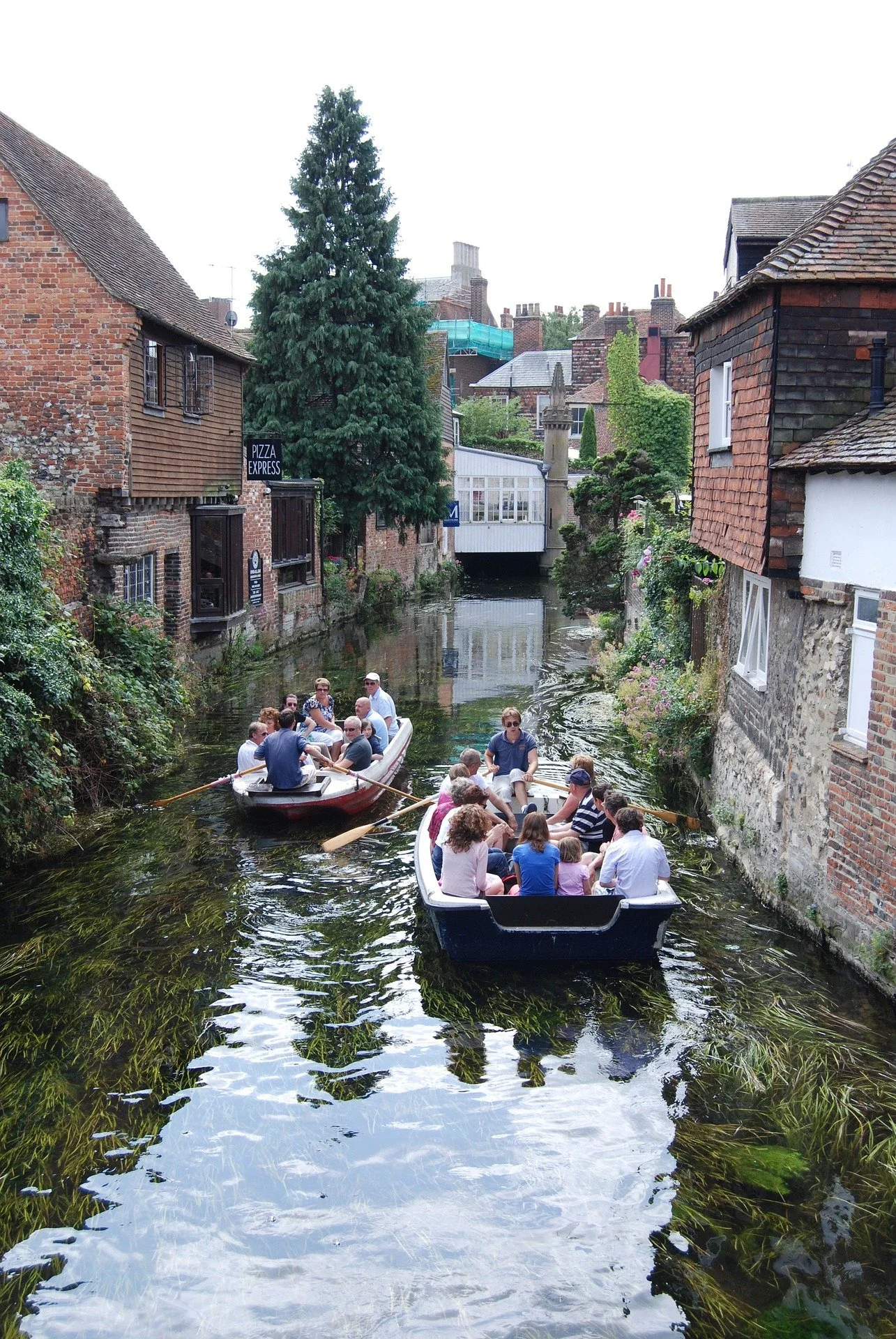
Canterbury’s river is one of its great pleasures. A guided boat trip with Canterbury Historic River Tours is one of the most relaxing ways to see the city, gliding past medieval buildings such as the Old Weavers' House and the former Dominican Priory.
You can also enjoy a traditional punt along the River Stour, offering a quieter, more intimate way to explore the waterways and historic backdrops.
For green space, stroll through Westgate Gardens, one of the city’s most beautiful riverside parks, or climb up to Dane John Gardens, which sit on an old Roman mound and offer excellent views back over the rooftops and cathedral.
Streets, Shopping & Food
Wander through Canterbury’s charming medieval streets and timber-framed lanes, especially around the King’s Mile and the area between the cathedral and the river. You’ll find a lively mix of independent shops, boutiques, bookshops, and cafés alongside historic pubs.
Food-wise, Canterbury is an excellent place to sample Kent produce — from traditional fish and chips to local cheeses and Kentish ales — with plenty of atmospheric places to eat and drink throughout the city centre.
-
Location: Central Kent, easily reached from the A2 and A28
Canterbury is compact and largely walkable once you are inside the city walls. Traffic can be slow in peak periods, particularly in summer and at weekends, so planning parking in advance makes the visit much smoother.
Parking Options
Canterbury offers multiple parking options, including central car parks and a convenient Park & Ride system.
Park & Ride
Recommended for stress-free access during busy periods.
Sites located at:
Wincheap
New Dover Road
Sturry Road
All operate regular bus services into the city centre. Buses run frequently throughout the day and stop close to the historic core.
This is often the easiest option if you are staying several hours or visiting in peak season.
Central Car Parks
If you prefer to park within walking distance of the cathedral and shops:
Whitefriars – large, central and close to retail and dining
Castle Street – convenient for the historic quarter
Watling Street – ideal for cathedral access
Canterbury West Station car park – useful if combining rail and city exploration
Most car parks accept card or app payments. Several provide electric vehicle charging points.
Walking & Getting Around
The historic centre is pedestrian-friendly. Once parked, you can comfortably explore the cathedral precincts, medieval streets, riverside paths and independent shops on foot.
Suggested Visit Timing
Allow:
2–3 hours minimum for a focused visit (cathedral + short walk)
Half to full day for a more relaxed experience
Arriving early in the morning or later in the afternoon helps avoid peak tour group congestion around the cathedral.
Canterbury works best when you minimise driving within the city itself. Park once, explore on foot, and then continue north towards Whitstable or east towards the Thanet coast.
Canterbury Half-Day Walking Tour (3.5–4 hours, easy pace) Start: Canterbury West Station or central car parks Distance: ~2 km | Style: history, river, views, gardens, old streets
1. Westgate Towers
- Medieval gateway into the city
- Climb for views over Canterbury and the cathedral
- Small museum inside
2. Westgate Gardens & River Stour
- Peaceful riverside walk
- Historic mills and waterways
- Flat and very photogenic
3. River Tour / Punt
- Boat tour or traditional punt
- Views of medieval Canterbury from the water
- Optional but highly recommended
4. Cathedral Precincts
- Explore cloisters and exterior
- Christchurch Gate and surrounding streets
- Light visit before main cathedral section
5. The Beaney
- Museum and gallery stop
- Good break point
- Cultural contrast to cathedral history
6. King’s Mile & Old Streets
- Mercery Lane & Cathedral Street
- Timber-framed buildings
- Cafés, pubs and shops
History of Canterbury
The history of Canterbury spans over two millennia. The area has been inhabited since prehistoric times, with evidence of Bronze Age and Iron Age settlements, before the Romans established Durovernum Cantiacorum in the 1st century AD — laying the foundations of the modern city.
Canterbury’s defining identity emerged in the 6th century, when St. Augustine arrived as a missionary and became the first Archbishop of Canterbury. His arrival marked the beginning of the city’s role as the centre of Christianity in England.
In 1170, the murder of Archbishop Thomas Becket inside Canterbury Cathedral transformed the city into one of Europe’s most important pilgrimage destinations. This event shaped Canterbury’s medieval prosperity, drawing visitors from across the continent.
The cathedral itself evolved over centuries, becoming one of the finest examples of medieval architecture in England, while the city thrived through trade, religion and its position on key routes.
The Reformation brought major change in the 16th century, with monasteries dissolved and religious structures repurposed. In the centuries that followed, Canterbury adapted through periods of growth, decline and rebuilding, particularly after World War II.
Today, Canterbury remains a city defined by its layered past — where Roman origins, medieval streets and religious significance continue to shape its character.
Visiting Canterbury Cathedral: A timeless masterpiece at the heart of English history.
Canterbury Cathedral is one of the oldest and most iconic Christian structures in England—an architectural masterpiece and the spiritual heart of the Anglican Church. Rising above the city skyline, it has been a place of pilgrimage, worship, and power for nearly 1,400 years, and remains one of the most important religious buildings in the English-speaking world. Whether you come to admire its soaring Gothic arches, explore its ancient crypts, or understand its dramatic role in the story of Thomas Becket, a visit here feels both monumental and deeply atmospheric.
Beyond its sheer scale and beauty, the cathedral is a place where England’s religious, political, and cultural history intersect. From exquisite medieval stained glass and richly decorated chapels to quiet cloisters and hidden corners, every part of the complex tells a story. Even a short visit leaves a lasting impression, while a longer one reveals why Canterbury Cathedral has been a UNESCO World Heritage Site and a destination for pilgrims and travellers for centuries.
-
Opening Times:
Typically open Monday–Saturday: 9am–5pm (last entry 4pm)
Sunday: open for worship only (no sightseeing)
(Check the official website before visiting, as hours may vary during special services or events.)
Tickets:
Adults: around £17 (includes precinct entry)
Seniors & Students: discounts available
Children under 17: free with a paying adult
Entry is free for worshippers, but sightseeing access requires a ticket.
Book online for discounts or to avoid queues during busy periods:
Canterbury Cathedral website
-
The Nave and Quire
Marvel at the Gothic vaulting, stained glass windows, and grandeur of the nave.
The quire features intricate choir stalls and was rebuilt after a fire in the 12th century.
Shrine of Thomas Becket
Once the most famous pilgrimage site in medieval England.
Learn about the dramatic 1170 martyrdom of Archbishop Thomas Becket.
Though the shrine itself was destroyed during the Reformation, a modern candle marks the spot where he died.
The Crypt
The oldest part of the cathedral (11th century), filled with stunning Romanesque architecture.
A peaceful, shadowy space for quiet reflection and a glimpse into the cathedral’s early history.
The Cloisters and Precincts
Stroll through the Cloisters, which once connected monks to every part of cathedral life.
Enjoy the Cathedral Gardens, ruins of the Norman Chapter House, and views of the King’s School.
Stained Glass Windows
Some date back to the 12th century, telling biblical stories and honouring pilgrims.
Look out for the Miracle Windows, which show stories of healing linked to Becket’s shrine.
-
Allow at least 1.5 to 2 hours to explore fully (more if you're a history or architecture fan).
Join a guided tour or pick up an audio guide—it brings the centuries of history vividly to life.
For quiet moments, visit early morning or later in the afternoon to avoid peak times.
Attend Evensong for a moving choral experience (free entry for worship).
The Cathedral Shop and Café are located just outside the main entrance—ideal for a reflective pause post-visit.
Geoffrey Chaucer’s "The Canterbury Tales"
Geoffrey Chaucer’s The Canterbury Tales is closely associated with Canterbury, not as a description of the cathedral itself, but through its setting as a pilgrimage destination. The story follows a group of travellers from different social backgrounds who gather at the Tabard Inn in Southwark and set out together on a journey to Canterbury.
Their destination is the shrine of Thomas Becket at Canterbury Cathedral, one of the most important pilgrimage sites in medieval Europe. The route they follow — often referred to as the Pilgrims’ Way — connects London to Canterbury and reflects historic patterns of travel, trade and devotion.
The journey itself forms the structure of the work. As the pilgrims travel, they tell stories to pass the time, each tale revealing something about the teller’s character, beliefs and place in society. Through this, Chaucer explores themes of social satire, morality and human behaviour across medieval England.
The cathedral remains the symbolic endpoint of the journey. Following the murder of Archbishop Thomas Becket in 1170, Canterbury became a centre of pilgrimage, drawing visitors seeking healing, forgiveness or spiritual connection. This context underpins the entire narrative.
In this way, The Canterbury Tales reflects Canterbury not just as a place, but as an idea — a destination that brings together different people, stories and perspectives along the road.
From Cathedral City to Oyster Coast
Leaving Canterbury, the landscape begins to open almost immediately. Cathedral towers and medieval stone give way to farmland and wide Kentish skies as the road gently drifts north towards the sea. The change is subtle rather than dramatic — a gradual easing from enclosed city streets to open estuary light.
The route follows the direction of old trade and tidal routes that once linked inland wealth with coastal enterprise. Where Canterbury’s identity was shaped by pilgrimage and power, Whitstable’s story grew from working harbour life and oyster beds. The distance is short — barely a pause in driving terms — but the shift in atmosphere is noticeable.
As you approach Whitstable, the air feels lighter and salt-edged. Boats begin to appear beyond rooftops. The horizon flattens. Instead of towers and timber-framed streets, you find low cottages, shingle shoreline and fishing vessels resting at the harbour wall.
This transition works best when you allow it to feel unhurried. There is no need to rush between stops. Canterbury rewards depth; Whitstable rewards simplicity. Together they introduce Kent as both historic and coastal — two identities connected by just a few easy miles of road.
By the time you reach the harbour, the rhythm of the journey has softened. It is here that the coast properly begins.
Whitstable – Oyster Coast, Working Harbour & Coastal Calm
Whitstable sits where Kent’s landscape meets the sea in its most understated form — a town shaped by working harbour life, long-established oyster beds and a steady rhythm of tides rather than dramatic coastline.
Its identity is rooted in trade and tradition. For centuries, Whitstable’s oysters were exported across the country and beyond, linking this small coastal town to wider networks of commerce and culture. Today, that heritage still defines the harbour, where fishing boats, sheds and seafood stalls maintain a sense of continuity.
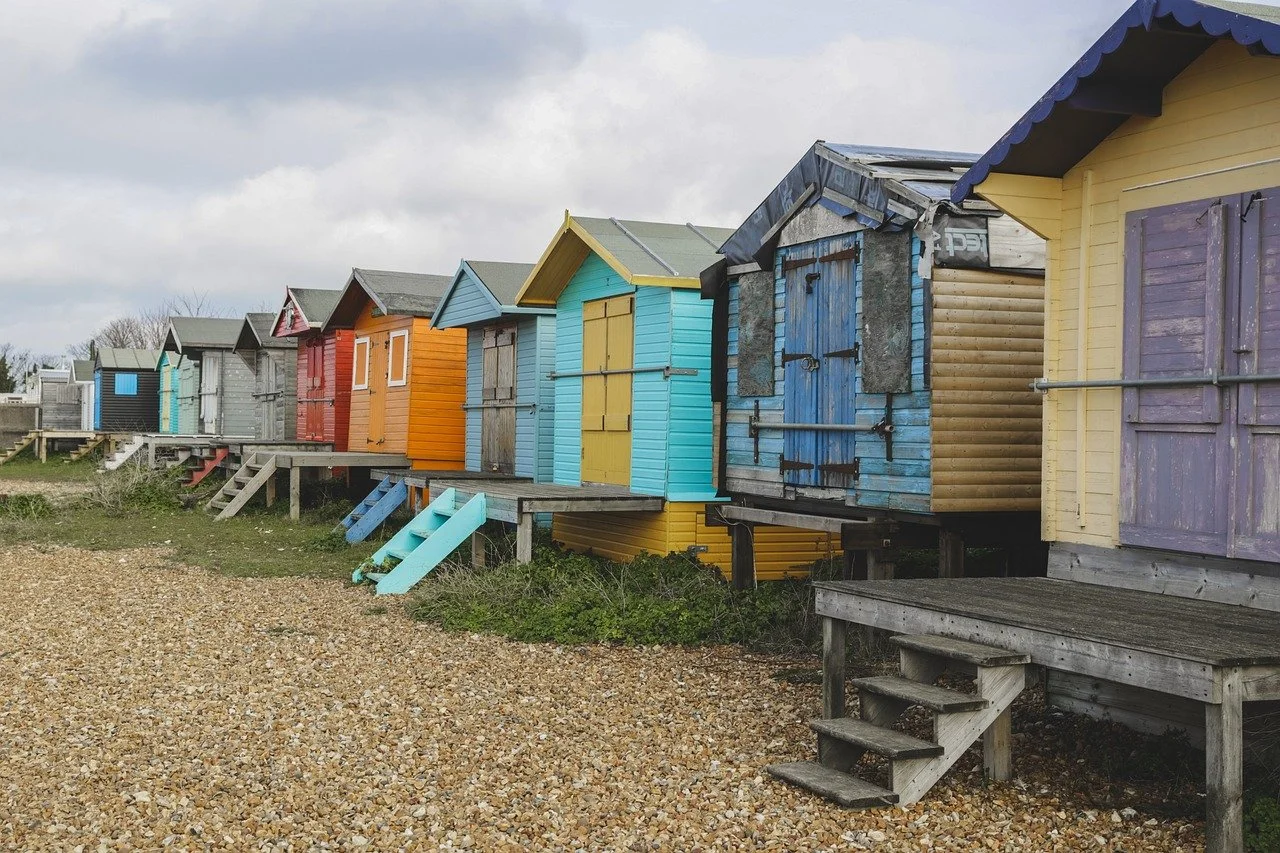
The atmosphere is relaxed and unhurried. Low cottages, beach huts and shingle shoreline replace the structure and scale of inland towns, while Tankerton’s open seafront offers wide skies and space rather than crowds or spectacle.
Whitstable is best experienced slowly — walking the harbour, following the shoreline and settling into its cafés and waterfront views. It marks a clear shift in the journey, where Kent’s historic depth gives way to coastal simplicity.
Here, the pace changes. The focus moves from landmarks to atmosphere, from streets to shoreline — introducing the coast not as a destination to rush through, but as a place to pause.
Things to See and Do in Whitstable
Whitstable is one of Kent’s most characterful seaside towns, famous for its oysters, working harbour, and creative, slightly bohemian atmosphere. It combines a traditional fishing town feel with independent shops, galleries, coastal walks, and some of the best seafood in the southeast, making it an ideal place for both relaxed wandering and active coastal exploration.
Whitstable Castle & Gardens
A short walk inland, Whitstable Castle and Gardens is one of the town’s most attractive and relaxing spots. This elegant Victorian building is set in beautifully maintained grounds and offers a quieter, greener side to Whitstable away from the busy seafront.
Visitors can enjoy a gentle stroll around the landscaped gardens, relax on the lawns, or stop for tea and cake in the castle tearoom. The castle also hosts exhibitions and events throughout the year, making it well worth including in a longer visit or a slower-paced day in the town.
Harbour, Beach & Classic Seaside Atmosphere
The heart of the town is Whitstable's historic harbour where fishing boats and yachts still come and go, giving the place a genuine working-coast feel. Stroll along the harbour wall, watch fishermen at work, admire the colourful beach huts, and enjoy wide views across the Thames Estuary towards the Isle of Sheppey.
Right beside it, Whitstable Beach stretches away as a long sweep of shingle and sand, backed by those iconic huts. It’s perfect for paddling, beach walks, and quiet sitting with fish and chips, and is especially atmospheric at sunset.
On weekends and bank holidays, Whitstable Harbour Market brings extra life to the harbour with stalls selling local crafts, artwork, clothing, street food, and gifts — a great place to find something distinctive to take home.
Food, Oysters & Seafood Culture
Whitstable is synonymous with oysters, and food is a huge part of the town’s appeal. You’ll find everything from simple harbour-front oyster stalls to excellent seafood restaurants serving freshly shucked oysters, fish and chips, mussels, and other locally landed seafood.
The town’s long oyster-fishing tradition is one of the oldest in Europe, and even if you’re not an oyster lover, the overall food scene — cafés, bakeries, and independent eateries — is a major part of the experience.
Arts, Culture & Local Character
Whitstable has a strong arts scene. Around the town you’ll find independent galleries, studios, and small shops showcasing contemporary art, ceramics, prints, and crafts by local artists.
For history, Whitstable Museum and Gallery tells the story of the town’s maritime past, oyster industry, and development as a seaside resort, with engaging and well-curated displays.
Coastal Walks, Cycling & Outdoor Exploring
Whitstable is superb for walking and cycling. The Saxon Shore Way (see more below) follows the coastline and links a series of historic coastal landscapes, while the Crab and Winkle Way is one of Kent’s best-known routes.
The Crab and Winkle Way runs for about 7.6 miles between Canterbury and Whitstable, following the route of one of the world’s earliest passenger railways. It passes through ancient woodland, quiet countryside, and small villages before emerging dramatically at Whitstable’s harbour — a brilliant and very scenic day out on foot or by bike.
Watersports & On-the-Water Activities
For more active visitors, Whitstable offers a range of watersports including windsurfing, kitesurfing, paddleboarding, sailing, and kayaking. You can also take gentle boat trips along the coast, giving you a different perspective on the shoreline and harbour.
Events & Festivals
Whitstable has a lively events calendar, with the highlight being the Whitstable Oyster Festival in July — a colourful celebration of the town’s maritime heritage featuring parades, live music, food stalls, and oyster-eating competitions. Throughout the year there are also art events, food-focused weekends, and seasonal markets that add extra energy to the town.

-
Whitstable is a compact seaside town, easy to explore on foot, with most of its highlights clustered around the harbour, beach and Harbour Street. Distances are short and the town is largely flat, making it well suited to a relaxed, walk-based visit.
Orientation
Whitstable’s centre is focused around the harbour and Harbour Street, where you’ll find shops, cafés, galleries and access to the beach. From here, the town stretches east towards Tankerton, where the coastline opens out into wider views, grassy slopes and quieter shoreline.
Most places of interest sit within a 10–15 minute walk, so once you’ve parked, you’re unlikely to need the car again during your visit.
Best Time to Visit
Whitstable is popular, particularly in good weather, so timing can make a big difference to your experience.
Weekdays and early mornings are the best times to enjoy the town at a slower pace, especially around the harbour and shops. Spring and early autumn offer a strong balance of good weather and fewer crowds.
Summer weekends, bank holidays and oyster festivals bring a lively atmosphere but can feel busy, particularly around midday. If visiting at these times, arriving early is recommended.
Evenings are often calmer, with a softer atmosphere along the seafront — especially around sunset.
Getting There
Whitstable is easily reached from Canterbury in around 20 minutes by car, making it a natural extension of a visit to the city.
There are also regular train services from London St Pancras and London Victoria, typically via Faversham or Canterbury. Whitstable Station sits around a 15–20 minute walk from the harbour.
Parking in Whitstable
Whitstable is a compact town, and parking can be limited — especially on sunny weekends and during oyster festivals — so arriving early is recommended. There is a mix of pay-and-display car parks, free on-street parking, and limited disabled bays across town.
Central Car Parks (Closest to Harbour & Shops)
Gorrell Tank Car Park (Westgate Terrace, CT5 1DD)
A large, central car park located right by the harbour. This is one of the best options for easy access to the beach, harbour market and Harbour Street shops. It operates on a pay-and-display basis, with card and app payments available. It can fill quickly on weekends and holidays.Harbour Street Car Park (CT5 1NX)
A smaller car park, but very convenient for short visits. It sits close to cafés, galleries and Whitstable Castle.Near the Beach & Tankerton Slopes
Keams Yard Car Park (Island Wall, CT5 1EP)
A small car park tucked close to the beach. It’s ideal for beach walks or quick stops, though the entrance is narrow and better suited to smaller vehicles.Tankerton Road Car Park (CT5 2AH)
Located around a 10–15 minute walk from Whitstable Harbour. This is often a good option during busy periods, with easier access to spaces. It’s particularly useful if you’re heading towards Tankerton Slopes or planning a coastal walk along the Saxon Shore Way.Free or Residential On-Street Parking
Limited free parking is available on some residential streets further from the centre, including parts of Nelson Road, Northwood Road and Borstal Hill.
Restrictions vary, so it’s important to check local signage carefully, particularly for permit zones and time limits.
Disabled Parking
Blue Badge spaces are available at Gorrell Tank, Harbour Street and Keams Yard car parks.
On-street Blue Badge holders may also be able to use certain time-limited bays, depending on local restrictions.Final Tips
Whitstable works best when approached at a relaxed pace. If central parking is full, it’s often easier to park slightly outside the centre and walk in. The harbour area is busiest from late morning through mid-afternoon, while evenings tend to feel quieter and more atmospheric.
How to Spend a Day in Whitstable
Whether you're drawn to its salty air, shingle beaches, or famous oysters, Whitstable blends maritime tradition with modern charm. Here are two ways to make the most of a day in this Kent seaside town.
Option 1: Seaside Highlights & Seafood Fix
Morning:
- Start at the Harbour Market, browsing handmade crafts and local produce
- Watch the fishing boats and explore the working fish market
- Coffee and pastry at Blueprint or a beachside café
Midday:
- Seafood lunch at Lobster Shack or Wheelers Oyster Bar
- Photo stop at the pastel-pink shopfront
Afternoon:
- Walk the Saxon Shore Way to Tankerton Slopes
- Browse Harbour Street shops and galleries
Evening (optional):
- Sunset drinks at The Old Neptune
- Fish and chips or wood-fired pizza by the sea
Option 2: Slow Strolls & Local Living
Late Morning:
- Coffee at Farm & Harper or Tea & Times
- Browse Harbour Books, antiques and galleries
Midday:
- Picnic from a deli on the beach or Tankerton slopes
- Or a long lunch at Samphire
Afternoon:
- Visit Whitstable Museum and Gallery
- Explore harbour wall and fishing activity
Evening (optional):
- Relax with ice cream or a local gin by the sea
- Dinner at Pearson’s Arms if staying overnight
Walking the Saxon Shore Way: Canterbury to Whitstable
The Saxon Shore Way is a long-distance coastal path tracing the line of Roman defences along England’s southeast coast. Between Canterbury and Whitstable, it offers one of the most rewarding and accessible sections — combining riverside walking, open countryside and a gentle arrival at the sea.
The Route
- Approx. 10–12 miles (16–19 km)
- Canterbury → Whitstable
- Follows the River Stour before reaching the coast
- Mostly flat and well waymarked
What to Expect
- Riverside paths, orchards and open countryside
- Quiet villages and wide Kent landscapes
- Gradual transition from inland to coastal scenery
- Shingle beaches and estuary views near Whitstable
How to Walk It
- Full day walk (4–5 hours at a steady pace)
- Or split into two shorter half-day sections
- Train back from Whitstable to Canterbury
- Works well as part of a road trip stop
Arriving in Whitstable
- Follow the shoreline into the harbour
- Views across the Thames Estuary
- Tankerton beach huts and open coastal views
- Wide skies and relaxed seafront atmosphere
Where to Stop
- Harbour Street cafés and galleries
- Fresh oysters at the harbour
- Tankerton Slopes for a picnic
- Beachfront pubs and restaurants
Why Include It
- Connects Canterbury and Whitstable naturally
- Blends Roman history with coastal scenery
- Flexible — walk part or all of the route
- Adds a slower, more immersive experience to your trip
Canterbury & Thanet: Roman Forts & Early English Heritage
This part of the Kent coast traces the early history of England — from the arrival of Christianity in Canterbury to Roman coastal defences along the Thanet shoreline.
These sites are easy to combine with coastal stops around Whitstable, Herne Bay and Margate, adding historical depth to a relaxed seaside section of the journey.
Membership starts from £53 and can quickly become worthwhile when visiting multiple sites across the route.
Get 15% Off MembershipTankerton Slopes & Tankerton Beach - Wide Horizons, Colourful Huts & Classic Coast
Tankerton Slopes form one of the most distinctive stretches of shoreline on the north Kent coast, just east of Whitstable. A broad grassy promenade rises gently above the beach, offering uninterrupted views across the Thames Estuary towards Essex on clear days. Below, beach huts line the shingle and sand, and at low tide a long natural shingle bank known as “The Street” emerges, stretching out into the water.
Less busy than central Whitstable Harbour yet close enough to combine easily, Tankerton feels open and unhurried. It’s a place for walking, pausing and watching the tide move rather than chasing attractions.
Expansive sea views across the Thames Estuary
One of the best sunset spots on the north Kent coast
Direct access to Whitstable coastal path walks
What to See & Do
Walk along the grassy slopes for elevated coastal views, especially on clear days when the light across the estuary is particularly striking. Follow the seafront west towards Whitstable Harbour or east towards Swalecliffe for quieter stretches of shoreline.
At low tide, walk out onto “The Street” — the natural shingle bank that creates a tidal walkway into the sea. It’s a simple but memorable experience, particularly for families.
Bring a picnic and use the wide open green space for a slower stop between sightseeing in Whitstable and Canterbury. On warmer days, the beach huts and shoreline give the area a relaxed, classic British seaside feel.
-
Location: Tankerton, just west of Whitstable town centre
Parking: On-street parking available along Marine Parade and nearby residential roads (check local restrictions)
Facilities: Toilets and seasonal cafés nearby; more extensive facilities in Whitstable
Best Time to Visit: Low tide for walking out onto The Street; late afternoon for softer light and sunsets
Walking Links: Direct connection to the Whitstable coastal path and harbourTankerton Slopes work well as a short coastal pause or a longer seafront walk, offering space, sea air and a quieter contrast to Whitstable’s busier harbour area.
From Tankerton Slopes to Herne Bay
Leaving Tankerton Slopes, the coast stretches out in a long, gentle curve. The grassy promenade gives way to quieter shoreline as the road continues east, tracking the edge of the Thames Estuary. Beach huts thin out, the sea wall becomes simpler, and the horizon feels broader.
This is one of the most open stretches of the north Kent coast. There are no dramatic cliffs here — just sky, shingle and wide water. The drive is short and easy, often accompanied by glimpses of the sea between houses and low coastal vegetation.
As you approach Herne Bay, the Victorian character begins to reappear. The seafront becomes more defined, the pier comes into view, and the promenade widens again. Compared with Whitstable’s working harbour atmosphere, Herne Bay feels more traditionally resort-like — calmer, more spacious, less tightly clustered.
It is a subtle transition rather than a shift in scale. Tankerton offers elevated views and estuary calm; Herne Bay brings a longer promenade and a clearer sense of open shoreline. Together they create a relaxed coastal progression before the landscape becomes more animated further east around Thanet.
Herne Bay - Victorian Seafront, Open Skies & Reculver’s Twin Towers
Herne Bay sits quietly between Whitstable and the Isle of Thanet, offering a broad promenade, traditional pier views and a stretch of coastline that feels spacious rather than showy. Historically a Victorian seaside resort, it retains a classic character — bandstands, gardens and a long, open seafront — without the busier energy of larger Kent resorts.
What makes Herne Bay distinctive is not spectacle but scale. The sky feels wide here, the shoreline expansive, and just to the east the dramatic twin towers of Reculver rise above the coast, marking one of north Kent’s most recognisable silhouettes.
Wide, open promenade ideal for coastal walking
Historic pier setting with classic seaside atmosphere
Easy access to Reculver Towers and coastal trails
What to See & Do
Stroll along Herne Bay’s seafront promenade, taking in views across the Thames Estuary. The central pier provides a focal point and a good vantage spot for photographs, particularly on bright, breezy days.
Head east along the coastal path towards Reculver Country Park, where the remains of Reculver Towers stand dramatically against the skyline. The walk is flat and exposed, offering big skies and uninterrupted sea views.
Pause in the seafront gardens or enjoy a simple café stop before continuing your journey towards Margate or back towards Whitstable. Herne Bay works best as a relaxed coastal interlude rather than a full-day destination.
-
Location: North Kent coast, between Whitstable and Margate
Parking: Several seafront car parks and on-street options near the promenade
Facilities: Toilets, cafés and seasonal kiosks along the seafront
Best Time to Visit: Clear days for wide estuary views; late afternoon for softer coastal light
Walking Links: Direct coastal path to Reculver and west towards WhitstableHerne Bay suits travellers looking for space, sea air and a quieter stop between Kent’s larger coastal highlights.
End of Chapter Summary – Canterbury & the Oyster Coast
This opening stretch of the Kent Coast Road Trip eases you in gently. It begins with cathedral towers, medieval streets and centuries of layered history, then gradually softens into harbour life, open estuary views and relaxed shoreline walking.
Canterbury provides depth and architectural presence. Whitstable adds working harbour character and seafood tradition. Tankerton and Herne Bay widen the horizon, offering sea air and space before the coastline begins to change more dramatically.
Together, these stops establish the rhythm of the journey: compact distances, distinct atmospheres and a steady movement from inland heritage to coastal identity. The pace here is unhurried. It is about transition — from stone to shingle, from pilgrimage routes to tidal paths.
From this point onward, the coast becomes more expressive.
Next Chapter – Thanet Cliffs, Viking Bay & Botany Bay
Beyond Herne Bay, the shoreline begins to curve around the Isle of Thanet. The landscape shifts from flat estuary coast to rising chalk cliffs, sandy bays and exposed headlands. The sea feels closer, the light brighter, the atmosphere more traditionally seaside.
This next section brings together creative revival in Margate, the crescent sands of Viking Bay in Broadstairs, the sculpted chalk stacks of Botany Bay and the harbour architecture of Ramsgate. It is Kent at its most recognisable coastal form — bays, cliffs and big skies replacing the quieter estuary edge you have just left behind.
The journey moves from gentle introduction to coastal drama, setting the stage for the White Cliffs and castles that follow.
Kent Coast Last updated: 30 April 2026
Some links may earn Uncover Britain a small commission at no extra cost to you. This helps support the ongoing creation, review and presentation of our road trip guides.
Route information and listings are provided for general guidance only. Always use your preferred navigation system and check official websites to confirm suitability, opening times and the latest details before travelling.
Our guides are reviewed regularly and supported by a mix of editorial research and digital tools to help keep content clear and up to date. If you spot anything that needs updating, we’re always glad to hear from you.