

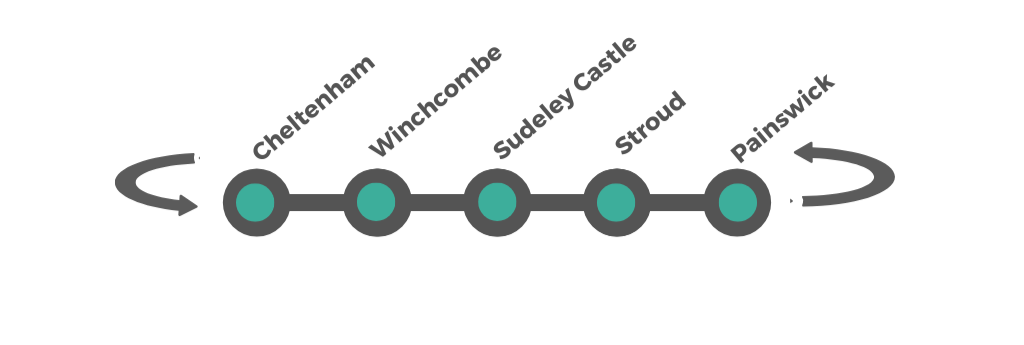
Cotswolds Regency & Hidden Valleys Loop
47 miles / 76 km, 2 hours’ drive time
Cheltenham > Winchcombe > Sudeley Castle > Stroud > Painswick
Cheltenham
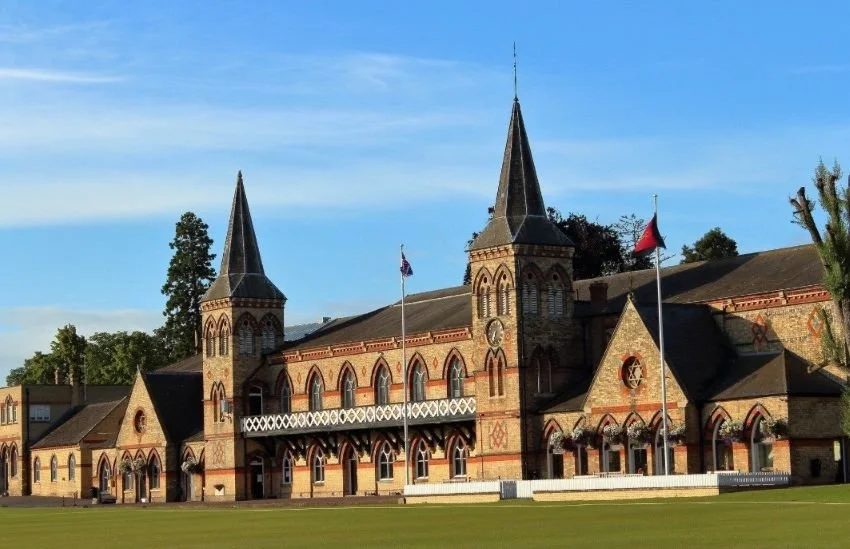
Cheltenham is known for its Regency buildings and is the most complete Regency town in the UK. Take a wander around the upper-class Montpellier District, the southern part of Cheltenham’s town centre. Known for its shopping and dining, enjoy independent designer shops, antique dealers, boutiques, and elegant facades.
Visit the Montpellier Arcade, one of the UK’s oldest shopping galleries. For a picnic or just to relax and watch the world go by, Imperial Gardens and Montpellier Gardens are both worth a visit.
Keen shoppers may continue enjoying all that is on offer by wandering along The Promenade, a tree-lined avenue now home to popular brands and upmarket shops.
Enjoy a visit to The Wilson – Cheltenham Art Gallery & Museum for an extensive display of the Arts and Crafts collection, including textiles, ceramics, paintings, leatherwork, items of furniture, wood carvings, silverwork, and jewellery. The Edward Wilson Gallery is a space dedicated to the Cheltenham-born explorer who died on Captain Scott’s ill-fated South Pole expedition in 1912. Learn about Gustav Holst, English composer, and music teacher, at the Holst Victorian House where he was born in 1874. The house is a time capsule of 19th-century life.
Take a stroll around Pitville Park, an 81-acre park with an aviary, boating lake, boathouse, and café plus boats for hire. Within the park, find the grand Pitville Pump Room where therapeutic waters were taken. Sandford Parks Lido, a Grade II listed heated outdoor swimming pool is great for a cooling dip.
-
Gloucestershire and Warwickshire Steam Railway run steam locomotives with historic carriages for a 28-mile round trip from here to Broadway. Take in scenic Cotswolds' countryside.
-
Cheltenham is a food lover's paradise. Browse the Visit Cheltenham website for more details. The Foodworks Cookery School at Colesbourne Park Estate offers a variety of courses.
-
St. James Street (GL52 2SH), 200 spaces, Cheltenham Walk (GL50 3PR), 212 spaces, and Bath Terrace (GL50 2BA), 204 spaces, are all large, Pay & Display with no height restrictions.
Parking at Cheltenham Park & Ride
Cheltenham’s Park & Ride facilities provide a convenient and stress-free way to park and explore the town centre without worrying about city centre parking or traffic.
Locations & Access
There are two main Park & Ride sites serving Cheltenham:
Cheltenham Racecourse Park & Ride – Located just off the A40 near the Racecourse, this site is one of the largest and most frequently used.
Arle Court Park & Ride – Situated on the A40 Gloucester Road, offering easy access from the west and south.
Both sites are well signposted on the main roads into Cheltenham, making them easy to reach from the M5 (J10, J11) and A40.
How It Works
Park your car in the dedicated Park & Ride car park. Charges are typically more economical than city centre parking.
Catch the shuttle bus into town — buses run regularly (often every 10–20 minutes) throughout the day.
The Park & Ride buses drop you close to the centre of Cheltenham, near shops, cafés, and the Promenade, allowing easy access on foot.
Opening Hours & Charges
The Park & Ride sites usually operate daily, with extended service during special events.
Charges are competitive and include both the parking fee and the shuttle bus service.
Contactless or pay-as-you-go payment is usually available.
-
Cheltenham is a city well known for its festivals. including the Cheltenham Festivals – Jazz, Science, Music, and Literature and The Cheltenham Festival and Gold Cup.
Winchcombe
Here at Winchcombe, you can experience the Golden Age of Steam, with a memorable journey on the GWSR railway from Winchcombe (situated in Greet about 1 mile outside) or nearby Toddington with a shop, tearoom and the GWSR's locomotive department and sheds. Travel to Cheltenham Racecourse in one direction, or Broadway in the other. For a special treat, visit the buffet car to try the very popular locally brewed "Rail Ale" from Donnington Brewery.
Winchcombe Tourist Information Centre is found in Winchcombe Library, which provides information on local attractions and walks. Winchcombe Museum tells the story of the historical heritage of Winchcombe. St. Peter's Church dates back to the 1450s. Here the stone coffins are said to contain the bodies of King Kenulf and his son, and the altar is made of 14th-century vestments stitched by Catherine of Aragon.
There are more Royal connections at nearby Sudeley Castle where Henry VIII’s sixth wife Catherine Parr, spent the last few months of her life. Treasures include Charles I’s own beer jugs, lacework made by Anne Boleyn, and Aubusson bed hangings woven for Marie Antoinette. See more below.
Nearby, Hailes Abbey stands as tranquil ruins in a unique historic setting. Stanway House & Fountain is a Jacobean manor with a gatehouse, tithe barn, and church plus a water garden with a fountain 300 feet high.
Cleeve Hill is the highest point of the Cotswolds hills at 1,083 feet and features Belas Knap, a Neolithic long barrow, with a false entrance and side chambers.
-
inchcombe is “the walking capital of the Cotswolds” and was the first town in the Cotswolds to gain Walkers are Welcome status. The group ensures that footpaths and facilities for walkers are well maintained. Winchcombe Welcomes Walkers offer self-guided walks with many under 5 miles and a range of 5-10 miles, including Stanway Viaduct to Winchcombe, Sudeley Valley Walk, Winchcombe to Sudeley Castle, Gotherington Halt to Winchcombe Station and Cleeve Hill to Winchcombe.
-
Go gargoyle spotting at St. Peter's Church where there are around 40 carvings, depicting demonic creatures, believed to be the caricatures of important locals.
-
The Lion Inn is a 15th-century coaching inn serving British food and local ales. The White Hart Inn in the High Street is committed to using seasonal and local produce. Nearby, at Guiting Power, The Hollow Bottom is a historic 17th-century building with log fires.
-
Back Lane Car and Coach Park (GL54 5PZ) with 104 spaces and Bull Lane Car Park (GL54 5HX) with 41 spaces are pay and display with no height restrictions.
Sudeley Castle
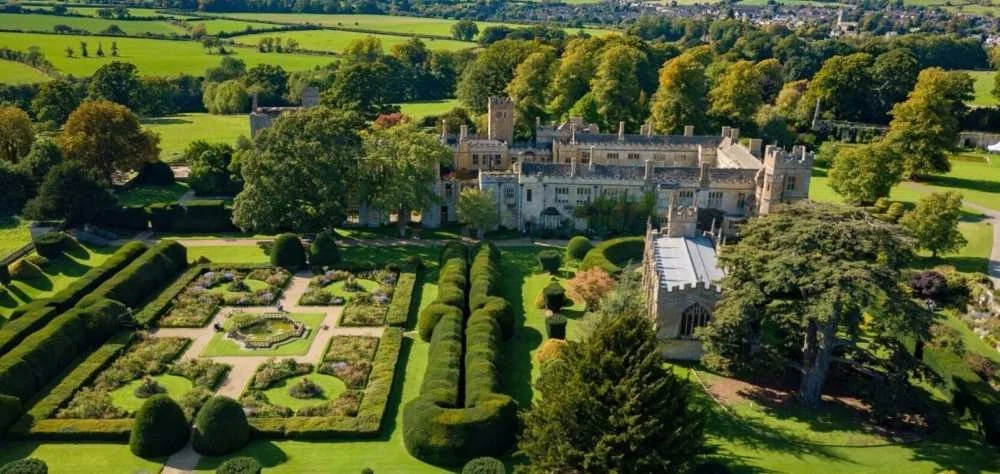
Sudeley Castle is a historic castle located in the Cotswolds near the town of Winchcombe. It is renowned for its rich history, stunning gardens, and royal connections.
Sudeley Castle has a history dating back over 1,000 years. It was originally built in the 10th century as a medieval castle and was later rebuilt and expanded during the Tudor period. The castle has been the residence of numerous royal figures throughout its history, including Queen Catherine Parr, the sixth wife of King Henry VIII.
The Castle is perhaps best known for its association with Queen Catherine Parr, who lived at the castle following her marriage to Sir Thomas Seymour in 1547. Catherine Parr was the only one of Henry VIII's wives to survive him and was buried at Sudeley Castle after her death in 1548. Her tomb can still be seen in the castle's chapel.
Sudeley Castle is surrounded by beautiful gardens and grounds, which have been carefully landscaped over the centuries. The gardens feature a variety of flowers, plants, and trees, as well as ornamental ponds, statues, and fountains. Highlights include the Queen's Garden, Knot Garden, and Secret Garden.
Visitors to Sudeley Castle can explore the castle's historic rooms, including the medieval Great Hall, Tudor Staterooms, and Victorian Library. The castle's interior is filled with period furnishings, artwork, and artefacts, offering a glimpse into its illustrious past.
Image copyright: Sudeley Castle
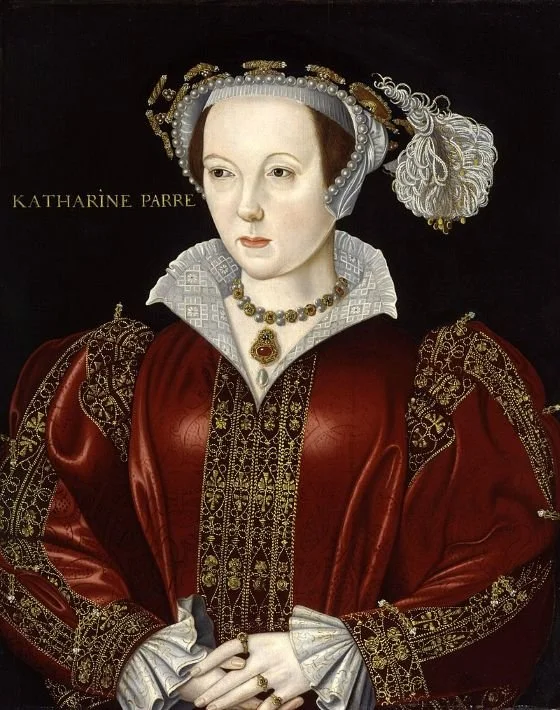
Image copyright: National Portrait Gallery
Stroud – Creative Energy, Market Town Character & The Gateway to the Valleys
Stroud sits at the meeting point of the Cotswolds’ famous Five Valleys, offering a completely different feel to the classic village route. Known for its independent spirit, café culture and strong arts scene, it blends historic market town character with a more modern, creative energy.
It’s also the natural gateway to the western Cotswolds — where the landscape becomes steeper, greener and more dramatic, with winding roads and hidden valley routes waiting just beyond the town.
A lively market town with a strong independent and creative scene
A gateway to the scenic Five Valleys and western Cotswolds
A contrast to traditional villages, with more depth and variety
What to See & Do
Stroud Farmers’ Market (Sat) – One of the best in the UK, known for local produce and artisan food
High Street & Independent Shops – Cafés, bakeries, galleries and local businesses
Stratford Park & Museum in the Park – Open green space with views and local history
Canal Walks – Sections of the Thames & Severn Canal offering peaceful, flat walking routes
Nearby Painswick – A short drive to one of the prettiest villages in the western Cotswolds
Practical Information for Visiting
Stroud is located south of Cheltenham and west of Cirencester, making it a key stop on the Cotswolds Regency & Hidden Valleys loop.
Parking is available in town, with a mix of short and longer stay options. The town centre is walkable, though some streets are steep.
Stroud has a full range of facilities including cafés, restaurants and shops, making it a good place to pause, eat or base yourself before exploring the surrounding valleys.
Optional Detour – Slad Valley & “Cider with Rosie” Route
Slad Valley – Literary Landscapes, Quiet Lanes & One of the Most Scenic Valley Drives
Tucked between Stroud and Painswick, the Slad Valley offers one of the most peaceful and characterful detours in the Cotswolds. Made famous by Cider with Rosie, this small valley feels almost unchanged — a mix of winding lanes, open views and timeless countryside.
It’s a short but rewarding diversion, ideal for slowing the pace and experiencing a more intimate side of the western Cotswolds.
A quiet, lesser-known valley with strong literary connections
One of the most scenic short drives in the Stroud area
A perfect contrast to the busier main route
The Route: Stroud → Slad → Painswick. Distance: approx. 8 miles / 13 km. Drive time: around 25–30 minutes (without stops)
What to See & Do
The Woolpack Inn – A traditional hillside pub with sweeping valley views and strong links to Laurie Lee
Slad Village & Valley Views – A small, peaceful settlement surrounded by rolling countryside
Scenic Valley Drive – Narrow, winding roads with constantly changing views
Walking Opportunities – Footpaths through the valley for a longer stop if time allows
Painswick – Hilltop Views, Stone Streets & The Queen of the Cotswolds
Painswick is often called the “Queen of the Cotswolds”, and it’s easy to see why. Set high above the surrounding valleys, this elegant village combines honey-coloured stone buildings with sweeping views across the western Cotswolds.
Unlike busier destinations, Painswick feels more refined and peaceful, with narrow streets, historic houses and a strong sense of place. It’s also perfectly positioned along the Stroud valleys, making it one of the most scenic and rewarding stops on this side of the route.
A quieter, more elegant alternative to busier Cotswolds villages
Elevated position with far-reaching views across the valleys
One of the most complete and well-preserved village settings in the region
What to See & Do
St Mary’s Church & Yew Trees – Famous for its churchyard lined with 99 clipped yew trees, creating one of the most distinctive and photographed scenes in the Cotswolds
Painswick Rococo Garden – A unique 18th-century garden set in a hidden valley, with seasonal displays and winding paths
Village Streets & Architecture – Explore narrow lanes, stone houses and historic buildings throughout the village
Panoramic Viewpoints – Elevated spots around the village offering views across the Stroud valleys and surrounding countryside
Walking Routes – Access to nearby footpaths and sections of the Cotswold Way
Practical Information for Visiting
Painswick is located between Stroud and Gloucester, and is best reached via the scenic valley roads from Stroud.
Parking is available near the village centre, though spaces can be limited during busy periods. The village is compact and best explored on foot, with some steep sections due to its hillside setting.
Facilities include cafés, pubs and small local shops, making it a good stop for a relaxed break.
Painswick works particularly well when combined with Stroud and the surrounding valleys, forming one of the most scenic and distinctive sections of the Cotswolds road trip.
Driving the Stroud Valleys – Winding Roads, Hidden Views & A Different Cotswolds
Beyond Stroud, the landscape quickly changes. The Five Valleys open out into a network of narrow, winding roads that climb, dip and curve through wooded slopes, small villages and open viewpoints.
Driving here is slower and more immersive than the main spine — with constant shifts in scenery, from enclosed lanes to sudden wide views across the valleys.
A more rugged, less polished side of the Cotswolds
Quiet roads with minimal traffic compared to main routes
Constantly changing scenery, ideal for a slower, scenic drive
What to Expect
Narrow Valley Roads – Single-track or tight lanes in places, requiring careful driving
Painswick Valley Route – One of the most scenic drives, linking Stroud to Painswick with elevated views
Hilltop Views – Frequent pull-ins and viewpoints overlooking the valleys
Hidden Villages – Small settlements tucked into hillsides and valleys
Woodland & Open Slopes – A mix of enclosed green lanes and open landscapes
How to Experience It
The Stroud valleys are best explored as part of the Regency & Hidden Valleys loop, linking Stroud with Painswick, Cheltenham and Sudeley Castle.
Allow extra time here — distances are short, but the roads encourage a slower pace. This is less about ticking off stops and more about enjoying the drive itself.
It’s one of the most rewarding sections of the route if you’re looking to go beyond the classic Cotswolds and experience something quieter, more varied and less expected.
Uncover More Map
The Uncover More map highlights key points of interest, scenic viewpoints, hidden gems, and much more along the recommended route. To make the most of it, use the map in conjunction with the destination information, and explore additional options in the area you’re visiting to discover even more experiences.
If your iPhone doesn’t load via the Google Map App via the button, check out the Help page for how to update your phone or copy and paste the link into your browser: https://bit.ly/cotswold-uncover
Classic Cotswolds Last updated: 20 March 2026
Some links may earn Uncover Britain a small commission at no extra cost to you. This helps support the ongoing creation, review and presentation of our road trip guides.
Route information and listings are provided for general guidance only. Always use your preferred navigation system and check official websites to confirm suitability, opening times and the latest details before travelling.
Our guides are reviewed regularly and supported by a mix of editorial research and digital tools to help keep content clear and up to date. If you spot anything that needs updating, we’re always glad to hear from you.