


Customisable and Live Navigation via Google Maps –
click here:
Or use the links to jump to the destinations in the guide below
Isle of Mull →
Craignure →
Tobermory →
Ardnamurchan
Including Mull, cross-island driving, and Ardnamurchan Peninsula Approx distance: 110 miles (176 km), Approx drive time: 6 hours 15 mins (not including ferry waiting times)
Chapter 2: Mull & Ardnamurchan — Islands, Peninsulas & the Broken Coast
Beyond Oban, the west coast stops behaving like a single, continuous line and begins to break apart into islands, peninsulas and sea channels.
This chapter is where the journey turns outward and slower, and where travel becomes more deliberate. Ferries replace bridges. Roads lead to single destinations. Detours are no longer distractions, but the point.
The Isle of Mull feels wide and open, with big skies, long empty stretches of road, white beaches and wildlife-rich waters. Tobermory’s colourful harbour marks one edge of the island, but much of Mull is defined by space, light and a strong sense of distance from the mainland.
Across the water, Ardnamurchan is even quieter and more elemental — a long, tapering peninsula of single-track roads, remote bays and scattered settlements, reaching out towards the Atlantic. It feels less like a place you pass through and more like a place you commit to.
Together, Mull and Ardnamurchan form the most exploratory part of the journey: a landscape of dead ends and far horizons, where progress is measured not in miles, but in how far the modern world seems to fall away.
How to Get There
Reaching the Isle of Mull typically involves travelling to Oban—whether by road, train, or coach—then catching the CalMac ferry to Craignure. Travellers coming from abroad usually fly into Glasgow or Edinburgh, with the option to hire a car or use public transport onward. Adventurous drivers may prefer the scenic alternative ferry routes via Lochaline or Kilchoan. Once on Mull, local buses, taxis, or rental cars provide access to highlights such as Tobermory, Fionnphort (for Iona), and the island’s stunning coastal and inland scenery. Whichever route you choose, planning ahead for ferries and overnight stays ensures a smoother journey to this beautiful Hebridean island.
-
From Glasgow or Edinburgh
Route: Take the M8 (from Glasgow) or M9 (from Edinburgh) toward Stirling. From Glasgow, follow signs for the A82 north. From Edinburgh, connect to the A84 / A85 via Stirling to reach Oban.
Journey Times: Approximately 2.5 hours from Glasgow and 3 hours from Edinburgh to Oban, depending on traffic.
Ferry: The main ferry crossing for Mull is from Oban to Craignure (45 minutes), operated by CalMac Ferries. Book in advance during peak season.
Alternative Ferry Routes by Road
Lochaline to Fishnish: If coming via the Corran Ferry (south of Fort William), you can drive to Lochaline on the Morvern Peninsula and take a short ferry to Fishnish on Mull.
Kilchoan to Tobermory: Another scenic option from the Ardnamurchan Peninsula. This route is more remote, with single-track roads and spectacular scenery.
Parking
Mull’s roads are often single-track with passing places, especially on the west coast. Take care when driving, and know that parking in villages like Tobermory or Craignure can be limited in peak season.
-
Glasgow to Oban
Service: ScotRail runs a scenic route from Glasgow Queen Street to Oban (around 3 hours).
Connection to Mull: From Oban station, it’s a short walk to the ferry terminal for the crossing to Craignure.
Highlights: The journey passes Loch Lomond, the Arrochar Alps, and follows the shores of Loch Etive—one of the most beautiful train trips in Scotland.
Edinburgh to Oban
Often requires a change in Glasgow Queen Street, so plan an extra connection time.
-
Citylink Coaches
Glasgow to Oban: Scottish Citylink operates frequent services (route 915/916/976), taking around 3 hours.
Edinburgh to Oban: Often involves a change in Glasgow.
Arrival: The Oban bus stance is near the ferry terminal, making it easy to transfer onto the Mull ferry.
Local Buses on Mull
Once on Mull, local buses connect Craignure, Tobermory, Fionnphort, and other key points. Check West Coast Motors or local schedules for the latest timetables.
-
Nearest Airports
Glasgow Airport (GLA): Major international connections; around 2.5 hours by road to Oban.
Edinburgh Airport (EDI): Also offers global routes; around 3 hours by road to Oban.
Oban Airport (Connel): Very limited scheduled services—mainly small planes or private charters, not typically used for direct Mull travel.
Transfer from Airports
Car Rental: Both Glasgow and Edinburgh airports have a range of hire car options. Drive to Oban for the ferry.
Public Transport: Bus or train connections run from the city centers (Glasgow or Edinburgh) to Oban.
-
Flying into Scotland or England
Scotland: Most international flights land in Glasgow or Edinburgh, the quickest gateways to the West Coast.
England: If arriving via London (Heathrow or Gatwick) or Manchester, you can catch a domestic flight to Glasgow/Edinburgh or use trains/long-distance coaches to reach Oban.
Route Planning
After landing, decide between hiring a car, taking a train, or boarding a coach to Oban. Always check ferry times so you don’t miss the crossing.
Travel Documents & Logistics
Ensure your passport and any required visas for the UK are valid. Book tickets for the ferry and any connecting transport in advance if traveling in summer, as routes can be busy.
How to Spend Your Time on the Isle of Mull
The Isle of Mull is one of Scotland’s most captivating islands, blessed with rugged coastlines, serene beaches, and a wealth of wildlife—from soaring sea eagles to curious puffins. Whether you only have a single day to explore or a full week to immerse yourself in island life, Mull offers a diverse range of experiences—from the iconic colourful harbour at Tobermory to the spiritual tranquillity of Iona and the striking sea cliffs around Staffa. Each itinerary below highlights the best of Mull’s natural and cultural treasures, helping you make the most of your time on this enchanting Inner Hebridean gem.
-
Morning: Oban → Mull Ferry & Duart Castle
Ferry to Craignure: Take an early ferry from Oban to Craignure (about 45 minutes).
Duart Castle: Drive or catch a local bus (approx. 10–15 minutes) to explore the ancestral home of Clan Maclean. Tour the castle, stroll the grounds, and enjoy coastal views over the Sound of Mull.
Afternoon: Tobermory
Drive North: Travel along the scenic road from Craignure to Tobermory (about 35–40 minutes).
Harbourfront Lunch: Sample local seafood while admiring the colourful buildings.
Tobermory Distillery (optional): Pop in for a whisky tasting or short tour if time allows.
Evening: Return to Oban
Head back to Craignure for a late afternoon/evening ferry. If scheduling permits, browse Craignure shops briefly before departure.
Tip: This whirlwind trip offers only a taste of Mull. Plan carefully around ferry times to ensure enough sightseeing time.
-
Day 1: Craignure → Duart Castle & Tobermory
Morning: Catch a morning ferry from Oban to Craignure. Explore Duart Castle as outlined in the 1-day itinerary.
Afternoon: Drive to Tobermory and wander the harbourfront, enjoying lunch. Visit Tobermory Distillery or browse local shops.
Evening: Stay overnight in Tobermory (or nearby), enjoying a relaxed evening in town.
Day 2: Scenic Drives & Calgary Bay
Morning: Drive west from Tobermory toward Calgary Bay, known for its pristine white sand beach. Enjoy a beach walk or picnic.
Afternoon: Optionally continue south on the circular route past Dervaig. Explore scenic viewpoints, lochs, and maybe stop at Lip na Cloiche garden or the Isle of Mull Cheese farm shop.
Evening: Return to Tobermory or Craignure for an evening ferry back to Oban (if returning to the mainland), or stay a second night on Mull.
-OR-
2-Day Itinerary
Day 1
Morning Ferry to Craignure
Quick stop at Duart Castle or drive on if you want to prioritize the west side.
Afternoon: Tobermory
Explore the colourful harbour, grab lunch.
If time allows, visit the Tobermory Distillery.
Evening
Overnight in or near Tobermory to position yourself for day two adventures.
Day 2
Option A: West Coast Highlights
Eas Fors Waterfall: From Tobermory, head south on the A848 and then cut across via the B8035. Stop at Eas Fors for picturesque cascades into Loch na Keal.
MacKinnon’s Cave (tide & weather permitting): Further along the west coast near Gribun. Park carefully and walk the rough path to the cave entrance.
Return to Craignure for an evening ferry or stay another night if schedules allow.
Option B: Cleared Villages
Focus on central/southern Mull. Some remnants of cleared villages lie near Lochbuie, Scalasdale, or along the back roads of Mull. Bring a detailed map or local guidance.
Ferry back late afternoon/evening.
Note: Fitting both Eas Fors and MacKinnon’s Cave plus cleared villages into 2 days is quite tight. Choose 1–2 highlights to avoid excessive driving.
-
Day 1: Craignure → Tobermory
Morning: Arrive via ferry and, if desired, stop at Duart Castle.
Afternoon: Continue to Tobermory; explore the harbour, distillery, local shops.
Evening: Overnight in Tobermory.
Day 2: West Coast (Eas Fors & MacKinnon’s Cave)
Morning: Drive the A848 south to Salen, then follow the scenic B8035 along Loch na Keal.
Eas Fors Waterfall: Short walk from the roadside; be cautious of uneven ground.
Afternoon: Continue further west/southwest to the Gribun area for MacKinnon’s Cave.
Check tide times; the short but rugged walk demands sturdy footwear.
Evening: Head back to the north side for an overnight near Dervaig or return to Tobermory.
Day 3: Cleared Villages or Iona/Staffa Option
Option A: Cleared Villages
Drive toward Lochbuie (south Mull), where old ruins and standing stones lie. Explore the cleared villages for a poignant glimpse into Mull’s past.
Option B: Iona/Staffa Boat Trip
If you prefer a boat excursion, head to Fionnphort for Iona Abbey or a Staffa/Treshnish Isles tour.
Evening Ferry: Return to Oban or overnight if you choose.
-
Day 1: Arrival & East Coast
Ferry to Craignure: Arrive with enough daylight to explore the Duart Castle area or short local walks.
Settle in Craignure: Stock up on any essentials. Overnight in Craignure or Lochdon.
Day 2: Lochbuie & South Mull
Morning: Scenic drive toward Lochbuie, possibly spotting wildlife like eagles or otters en route.
Afternoon: Visit Lochbuie Standing Stones, walk to Moy Castle. Head to Fionnphort if staying in the south to access Iona or boat trips next day.
Evening: Overnight near Fionnphort.
Day 3: Iona or Boat Tour to Staffa & Treshnish Isles
All Day: Catch the ferry to Iona for the abbey and its serene atmosphere. Alternatively, choose a Staffa/Treshnish Isles boat excursion (book in advance). Look out for puffins (in season, typically April–August).
Evening: Return to the Fionnphort area or drive northward to a new base, such as Salen or Tobermory.
Day 4: Tobermory & Northwest Exploration
Morning: Enjoy Tobermory—colourful harbour, local shops, possible distillery tour.
Afternoon: Head to Calgary Bay for beach time or walk around Dervaig.
Evening: Stay in Tobermory or a nearby B&B.
Day 5: Central Mull & Departure
Morning: Explore any missed spots like the Aros Park near Tobermory or short forest walks.
Afternoon: Return to Craignure, possibly revisiting scenic stops along the way. Catch a ferry to Oban.
Evening: End your 5-day Mull adventure.
-
Day 1: Craignure & Duart Castle
Morning: Arrive, settle in Craignure/Lochdon. Visit Duart Castle and its grounds.
Afternoon: Explore local walks near Lochdon or Salen. Overnight in Craignure area.
Day 2: Tobermory & Aros Park
Morning: Drive to Tobermory; harbour exploration, café, distillery.
Afternoon: Short hike in Aros Park for woodland trails and waterfall glimpses.
Evening: Overnight in Tobermory or Dervaig.
Day 3: Calgary Bay & West Coast
Morning: Beach time at Calgary Bay, possibly the Calgary Art in Nature trail.
Afternoon: Continue west/south along the B8035. Spot eagles or otters near Loch na Keal.
Evening: Overnight near Ulva Ferry or Salen.
Day 4: Eas Fors & MacKinnon’s Cave
Morning: Head to Eas Fors Waterfall. Enjoy the triple-cascade spectacle.
Afternoon: Visit MacKinnon’s Cave near Gribun (watch tide schedules and be prepared for a rugged walk).
Evening: Return to base or move southward to the Ross of Mull region.
Day 5: Cleared Villages & Lochbuie
Morning: Travel to Lochbuie or other areas (Scalasdale, Glen More) known for cleared villages. Explore the haunting remains and reflect on Highland history.
Afternoon: Visit the Lochbuie Standing Stones or Moy Castle ruins.
Evening: Overnight near Lochbuie or continue to Fionnphort.
Day 6: Iona or Staffa/Treshnish Isles
All Day: Base yourself in Fionnphort.
Iona: Wander the Abbey, St. Oran’s Chapel, and idyllic beaches.
Staffa & Treshnish: Boat tours to Fingal’s Cave and puffin colonies (seasonal).
Evening: Stay again in Fionnphort or drive closer to Craignure.
Day 7: Farewell Mull
Morning: Leisurely drive back to Craignure, checking out any final viewpoints or a last short walk.
Afternoon: Ferry to Oban, concluding your 7-day exploration.
Useful Information for Visitors
Mull is not just an island you drive across — it’s an island you experience in layers, through light, weather, wildlife, night skies and slow travel.
Some of what makes Mull special happens between the places on the map: standing on a dark beach under the stars, watching an eagle ride the wind, taking a boat out into open water, or settling into the rhythm of single-track roads and quiet evenings.
The sections below cover some of the most rewarding ways to experience Mull beyond its towns, beaches and landmarks — from stargazing and wildlife watching to practical advice for travelling well on the island.
-
Ferries:
The Oban–Craignure ferry should be booked well in advance in peak season, especially if travelling with a vehicle. The Tobermory–Kilchoan ferry is also popular and can fill up.Driving:
Many roads on Mull are single-track with passing places. Drive slowly, use passing places considerately, and expect journeys to take longer than the map suggests.Accommodation:
The main bases are Tobermory, Craignure and Fionnphort, but options across the island are limited and book up early in busy periods.Weather:
Conditions can change quickly in the Hebrides. Bring layers and waterproofs, even in summer.Wildlife & Boat Trips:
Bring binoculars if wildlife interests you. Trips to Staffa and the Treshnish Isles are seasonal (puffins usually April–August). Ferries to Iona run frequently but can have reduced services in winter. -
With its remote setting and extremely low levels of light pollution, Mull is one of the best places in Scotland for stargazing on clear nights. Away from towns and main roads, the sky opens up to reveal dense star fields, bright constellations, and frequent meteor activity. On particularly dark, clear nights, there is even a chance of spotting the Northern Lights.
Good locations include Calgary Bay, Lochbuie, Fionnphort, and areas around Salen, where horizons are open and artificial light is minimal. Even around Tobermory, darker spots outside the main harbour can offer surprisingly good views. For the best experience, allow your eyes time to adjust, check cloud cover and moon phases in advance, and choose an exposed coastal or elevated spot away from direct light sources.
-
Mull is a wonderful island for campervan and motorhome travel, but it is also small, fragile, and very busy in peak season. Campsites and designated overnight areas are limited, and demand is high, so it is essential to book ahead wherever possible.
Wild camping beside vehicles or staying overnight in lay-bys is not permitted unless you have explicit permission from the landowner. Planning ahead and using proper sites helps protect the island’s environment and ensures a better experience for everyone. If you travel considerately and stick to official facilities, Mull is a rewarding and memorable island for slow, scenic campervan travel.
-
Mull is one of the best wildlife-watching destinations in the UK. The island is especially famous for its white-tailed eagles and golden eagles, and it is often described as the best place in Britain to see these birds in the wild.
In addition to eagles, you may spot otters, seals, dolphins, porpoises, and occasionally whales, as well as puffins and many other seabirds in season. Boat trips and guided wildlife tours greatly increase your chances of good sightings, and organisations such as the Mull Eagle Watch project help protect and monitor the island’s eagle populations. Even without a tour, simply driving and walking slowly with binoculars can lead to unforgettable encounters.
Leaving the Mainland: Crossing to Mull
Oban is where the road finally gives way to the sea.
The ferry crossing to Craignure is not long, but it marks a clear psychological shift in the journey. Behind you are the connected roads and easy continuations of the mainland. Ahead is a different kind of travel — one shaped by crossings, weather, and places that do not sit neatly on the way to anywhere else.
As the mainland fades and the hills of Mull rise ahead, the journey changes character. Distances begin to feel longer. Detours become commitments. And the idea of simply “passing through” quietly disappears. From this point on, the route is no longer about moving forward quickly, but about choosing where to go, and why.
Arriving at Craignure, the road opens into an island that feels vast, open and lightly inhabited — a place of long sightlines, changing light, and a strong sense of space. This is the threshold to the broken coast.
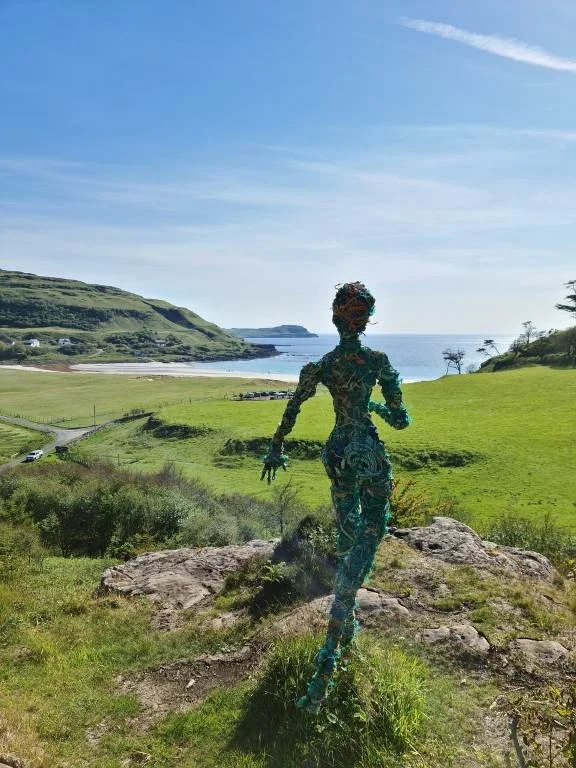
Isle of Mull - Big Skies, Long Distances & Atlantic Light
Mull is one of Scotland’s largest and most varied islands, and it feels it. This is not a place of quick hops between sights, but of long, quiet drives, shifting light, wide open spaces and a strong sense of distance from the mainland.
Arriving at Craignure, the island doesn’t immediately reveal itself. Instead, it slowly opens out as you travel north and west — moorland, sea lochs, scattered settlements and long empty roads, punctuated by moments of colour and drama. Mull is defined less by a single centre and more by space, weather, and the feeling of being properly away.
Craignure - Arrival Point to the Island
Craignure is the main ferry port and the natural gateway to Mull. Most visitors arrive here from Oban, and while the village itself is small and functional, the sense of arrival is significant: this is where the journey becomes an island journey.
From Craignure, roads spread out across the island — north towards Tobermory, west towards beaches and Iona, and south into quieter corners of Mull.
Why Stop in Craignure
Main arrival and departure point for Mull
Good place to get your bearings
Starting point for Duart Castle and the cross-island drive
Useful for supplies and basic services
What to See & Do
Craignure Waterfront – Simple coastal walks and views back towards the mainland.
Craignure to Salen Drive – One of the island’s main scenic spines, crossing the heart of Mull.
Isle of Mull Golf Club - This scenic 9-hole course offers stunning views across the Sound of Mull and provides a unique golfing experience
Scallastle Forest - is nearby, perfect for hiking and wildlife spotting
Craignure, a small village on the Isle of Mull, serves as the main gateway for visitors arriving by ferry from the mainland. While often considered a transit point.
Duart Castle - The Sea Gate of Mull
Standing dramatically on a rocky promontory overlooking the Sound of Mull, Duart Castle is one of the most powerful and memorable sights on the island.
This is the ancestral stronghold of Clan Maclean, and for many travellers it feels like the ceremonial gateway to Mull — a castle that announces you have properly arrived in the Hebrides.
Why Stop at Duart Castle
One of the most dramatic castle settings in Scotland
Deeply tied to clan history and Highland conflict
Short, easy detour from Craignure
Huge views across the sea and back to the mainland
What to See & Do
The Castle Interior – Restored rooms, clan history and exhibitions.
The Battlements & Views – Sweeping views over the Sound of Mull.
Coastal Walks – Short walks around the headland and shoreline.
-
Duart Castle is located a short drive from Craignure ferry terminal, making it one of the easiest major sights to visit on Mull. There is a visitor car park near the entrance, and a short walk leads up to the castle itself.
The castle is seasonally open, generally from spring to autumn, with opening days and hours varying through the year, so it’s best to check ahead. Inside visits are self-guided, with interpretation throughout, and there is also a small shop and café on site.
Allow 1.5 to 2 hours to explore the castle, including time to walk the battlements and enjoy the views over the Sound of Mull. Even if you don’t go inside, the exterior and setting alone are worth the stop.
-
Duart Castle is the ancestral home of Clan Maclean, one of the great clans of the western Highlands and islands. For centuries, the Macleans were a major sea power in this region, controlling territory across Mull and the surrounding waters.
The castle’s position on a rocky headland was no accident — it commanded the sea routes of the Sound of Mull and symbolised both military strength and clan authority. Over time, the Macleans were drawn into long and often bitter conflicts, particularly with Clan Campbell, whose rising power eventually eclipsed them.
Duart Castle fell into ruin before being restored in the early 20th century, and today it stands not just as a dramatic landmark, but as a powerful reminder of the clan-based world that once dominated the west coast of Scotland.
Crossing Mull: From Duart Castle to Tobermory
The Heart of the Island
Leaving Duart Castle, the road turns inland and begins the long, quiet crossing of Mull.
This is where the scale of the island really becomes clear. The route runs north-west through open moorland, long glens and wide, lightly inhabited landscapes, with few settlements and long stretches where the road seems to exist entirely for its own sake. The hills are not dramatic in a single, iconic way — instead, they form a broad, empty interior that feels spacious, remote and subtly powerful.
If you’re curious about Mull’s deeper past, a small group of prehistoric standing stones near Gruline (see accordion below) lies just off the main Craignure–Salen road. They’re easy to miss and lightly signposted, but they offer a quiet and very real connection to the island’s ancient history, tucked into an otherwise empty-feeling landscape.
Passing through Salen, a small village near the geographical heart of the island, you are roughly halfway across Mull. From here, the land begins to open out again, and the sense of the sea slowly returns. It’s a practical village that feels like a pause point in the long crossing of the island. It’s not a place of big sights or dramatic landmarks, but it plays an important role as a human anchor in a landscape that is otherwise wide, open and lightly inhabited.
For travellers, Salen is a good place to stop for fuel, food, or a short break, and to reset before continuing north or west. More than that, its very modesty helps underline the scale and quiet of Mull itself — this is the closest thing the island has to an inland centre, and even here, the landscape still dominates.
This crossing is not about ticking off sights. It is about feeling the distance, understanding why Mull feels big and lightly populated, and experiencing the quiet that defines so much of the island. By the time the road finally drops down towards the Sound of Mull and the coloured houses of Tobermory appear ahead, the contrast feels earned.
Distance: approx 35 miles / 56 km
Driving time: about 1.5 hours (without stops — and you will want to stop)
-
Much of the wide, empty feeling of Mull is not accidental. Like many parts of the Highlands and islands, the island was profoundly reshaped by the Highland Clearances in the late 18th and 19th centuries, when thousands of people were forced from their homes to make way for large-scale sheep farming and “improvements” to estates.
Before this, Mull supported a far larger population, living in small townships scattered across glens and coastal margins. Today, many of those settlements survive only as low stone ruins, field lines and place names, often barely visible in the landscape.
As you cross the island, the long distances between villages, the empty glens and the sense of space are part of this story. The landscape you see is not just wild — it is also a cultural landscape shaped by loss, displacement and radical change.
-
Mull is scattered with traces of very ancient settlement, though they are far quieter and less monumental than the famous sites of Lewis or Orkney. Across the island — particularly around Lochbuie, Gruline and the Ross of Mull — you can still find standing stones, small stone circles, burial cairns and rock carvings, often in beautiful and remote settings.
One of the best-known examples is the Lochbuie Stone Circle, set in a dramatic landscape beneath the hills, while smaller groups of stones near Gruline lie close to the main cross-island route. These sites are usually un-signposted and lightly interpreted, which makes visiting them feel more like discovery than sightseeing.
You don’t need to build your journey around them — but knowing they are there adds a powerful sense of deep time to the landscapes you cross.
Where the Standing Stones on Mull Actually Are
Mull’s main prehistoric sites are mostly:
In the south and south-west of the island
And around Lochbuie, Gruline, and the Ross of Mull
The best-known visitable examples are:
Lochbuie Stone Circle (near Lochbuie & Moy Castle)
One of the clearest stone circles on Mull
In a dramatic landscape beneath Ben Buie
Reachable by minor roads and a short walk
Often completely empty and very atmospheric
Gruline Standing Stones (near the Craignure–Salen road)
Small group of stones near Gruline (on the main crossing route)
Easy to combine with the cross-island drive
Subtle, but genuinely ancient
Burg / Torloisk area stones (north-west Mull)
Scattered single stones and small groups
Much less formal, but part of the same prehistoric landscape
For more details, visit The Isle of Mull's guide to standing stones.
Tobermory - Harbour, Colour & Island Life

Tobermory is the main town and emotional heart of Mull, and for many visitors it is the moment when the island finally feels alive. Set around a wide, sheltered bay, the town is instantly recognisable for its row of brightly coloured houses lining the harbour — one of the most photographed views in the Hebrides.
But Tobermory is more than a postcard. It is a working harbour, a supply hub for the island, a base for wildlife trips, and the place where you’ll find the best concentration of cafés, shops, places to eat and places to stay on Mull. After the long, quiet crossing of the island interior, arriving here feels like returning briefly to civilisation — though the sea, the hills and the sense of remoteness are never far away.
It is also a key junction in the journey: Tobermory is where you leave Mull if you are continuing on to the Ardnamurchan Peninsula.
The main town and service centre on Mull
One of the most distinctive and photogenic harbours in Scotland
Good choice of cafés, restaurants, shops and accommodation
Base for boat trips and wildlife watching
Home to Tobermory Distillery
Departure point for the ferry to Kilchoan (Ardnamurchan)
What to See & Do
Tobermory Harbour – The colourful waterfront is the heart of the town, perfect for walking, photography, sitting with a coffee, or watching boats come and go.
Tobermory Distillery – One of Scotland’s best-known island distilleries, producing Tobermory and Ledaig whiskies. Tours are popular and usually need booking ahead.
Boat Trips & Wildlife Tours – Many trips depart from the harbour, offering chances to see seals, dolphins, seabirds and sometimes whales, as well as dramatic coastal scenery.
Coastal Walks – Easy walks around the bay and along nearby cliffs offer great views back over the town and out to sea.
Shops, Cafés & Galleries – Tobermory has the best selection of places to eat and browse on the island, making it a good place to restock and slow down for a while. Visit Mull Museum to learn about local history or enjoy exhibitions and music events at the An Tobar Arts Centre.
-
Tobermory was founded in the late 18th century as a planned fishing and trading port, and its name comes from the Gaelic Tobar Mhoire, meaning “Mary’s Well”. Over time it grew into Mull’s main harbour and commercial centre, serving fishing, trade and later tourism. The town has also been associated with smuggling and maritime trade, and today it remains the island’s most important port and service centre.
-
Parking:
Public parking areas are available around the harbour and on the edges of the town, but spaces can be limited in busy summer months.Time Needed:
Allow at least half a day to explore the town, or longer if you are taking a boat trip or visiting the distillery.Facilities:
Good range of cafés, restaurants, shops, small supermarkets, accommodation and visitor services.Ferry:
The Tobermory–Kilchoan ferry to Ardnamurchan runs regularly but is small and can be busy in peak season, so timing and planning matter. -
Tobermory is compact and easy to explore on foot, with most of its character concentrated around the harbour and the slopes rising behind it. A simple walking route can link the colourful waterfront, the upper town, and the surrounding viewpoints into a relaxed half-day exploration.
Start along the harbour front, walking past the famous painted houses and out towards the far end of the bay for views back across the town. From here, paths and quiet streets lead up into the upper town, where you’ll find good vantage points looking down over the harbour and out to the Sound of Mull.
If you want to extend the walk, continue along the coast towards Aros Park or follow short trails into the wooded hills behind the town. It’s an easy, rewarding way to understand Tobermory’s setting, scale and relationship with the sea.
More Time on Mull? Two detours to add to your plan:
1) A Detour to Calgary Bay
If you have extra time on Mull, it’s well worth making a detour west from Tobermory to visit Calgary Bay, one of the island’s most beautiful and atmospheric beaches.
The drive takes you away from the harbour and into a quieter, more open landscape before suddenly opening out onto a wide sweep of white sand, pale turquoise water and big Atlantic sky. It’s an ideal place for a long walk, a picnic, or simply sitting and watching the light change across the water.
After visiting Calgary Bay, return to Tobermory to continue the journey by ferry to Kilchoan and the Ardnamurchan Peninsula — carrying the sense of space and west-coast light with you into the next chapter.
2) A Detour to Iona via Fionnphort
If you have an extra day to spare, one of the most powerful side journeys in the entire trip is the drive to Fionnphort and the short ferry crossing to Iona.
The drive itself takes you across some of Mull’s quietest and most open landscapes, before reaching the small harbour of Fionnphort at the island’s south-west tip. From here, a short passenger ferry crosses to Iona, one of the most important spiritual sites in Scottish history and the cradle of early Christianity in Scotland.
Visiting Iona is not a quick stop — it’s a full-day commitment — but it offers a completely different emotional and historical experience to the rest of Mull. After returning to Mull, you continue back across the island and north towards Tobermory, ready to leave the island for Ardnamurchan.
Leaving Mull: The Crossing to Ardnamurchan
From Tobermory, the journey continues not back to the mainland roads, but further out into the broken coast.
The small ferry crossing to Kilchoan is short, but it feels like another step away from the connected world. As Mull’s coloured harbour fades behind you and the long, low outline of Ardnamurchan appears ahead, the landscape changes again — less settled, less shaped, and more elemental.
This is not a return to normal travel. It is a transition from island to peninsula wilderness, from open spaces to places that feel quietly at the end of the map. From here on, roads narrow, distances feel longer, and the journey becomes even more about commitment than convenience.
Ardnamurchan is not somewhere you pass through on the way to somewhere else, it is somewhere you go to.
Kilchoan- Gateway to the Ardnamurchan Peninsula
Arriving at Kilchoan by ferry from Tobermory feels like stepping off the edge of the map.
This small, scattered village sits at the western end of Loch Sunart and marks the quiet entry point to the Ardnamurchan Peninsula, one of the most remote and least populated parts of mainland Britain. There is no real town centre here — just a handful of buildings, a jetty, and a road that disappears into a landscape of single-track lanes, open moorland and long, empty horizons.
Kilchoan is not a destination in the usual sense. It is a threshold — the place where you leave the island world behind and enter a peninsula that feels even wilder, more elemental, and more committed. From here on, travel becomes slower, more deliberate, and more about the journey than the distance covered.
Ardnamurchan Peninsula - The End of the Road, the Edge of the Map
The Ardnamurchan Peninsula is one of the wildest and least populated parts of mainland Britain. Long, narrow and tapering westwards into the Atlantic, it feels less like a place you pass through and more like a place you commit to.
This is a landscape of single-track roads, scattered crofts, remote bays and big, empty horizons. There are no towns here in the usual sense, no quick routes across, and very little sense of hurry. Instead, Ardnamurchan offers a rare kind of travel: slow, quiet, and deeply shaped by land, sea and weather.
From Kilchoan, the road threads west and north through a peninsula that feels more like an island than part of the mainland — a place defined by distance, light and the feeling of being properly away.
Time for a Detour? Sanna Bay- White Sand, Turquoise Water & Atlantic Light
On the north coast of the peninsula, Sanna Bay is one of the great surprises of Ardnamurchan — a wide, beautiful sweep of white sand and clear, turquoise water, framed by low dunes and open hills.
It feels almost unreal in good light, with a sense of space and calm that’s rare even in the Highlands. This is not a resort beach — there are no facilities and no crowds — just sand, sky, sea and wind.
It’s an ideal place to walk, breathe, and slow the pace completely and is one of the most beautiful beaches in western Scotland.
Big skies, white sand and open Atlantic light
Quiet, unspoilt and rarely busy
Perfect for walking, photography and simple stillness
What to See & Do
Beach Walks – Long, open walks along the shore with constantly changing light.
Views to the Small Isles – Particularly beautiful towards Eigg and Rum.
Photography & Picnics – One of the best places on the peninsula to simply stop and stay a while.
Ardnamurchan Lighthouse - The Most Westerly Point of Mainland Britain
Standing at the very tip of the peninsula, Ardnamurchan Lighthouse marks the most westerly point of mainland Britain.
The drive out here is part of the experience: narrow roads, open moorland, and a growing sense of exposure as the land thins and the sea begins to dominate. The lighthouse itself sits on a rocky headland, with wide views across the Atlantic, the Small Isles and towards Skye on clear days.
It’s a place of wind, space and big horizons — and a powerful geographical moment in the journey, where you can quite literally go no further west without leaving the mainland.
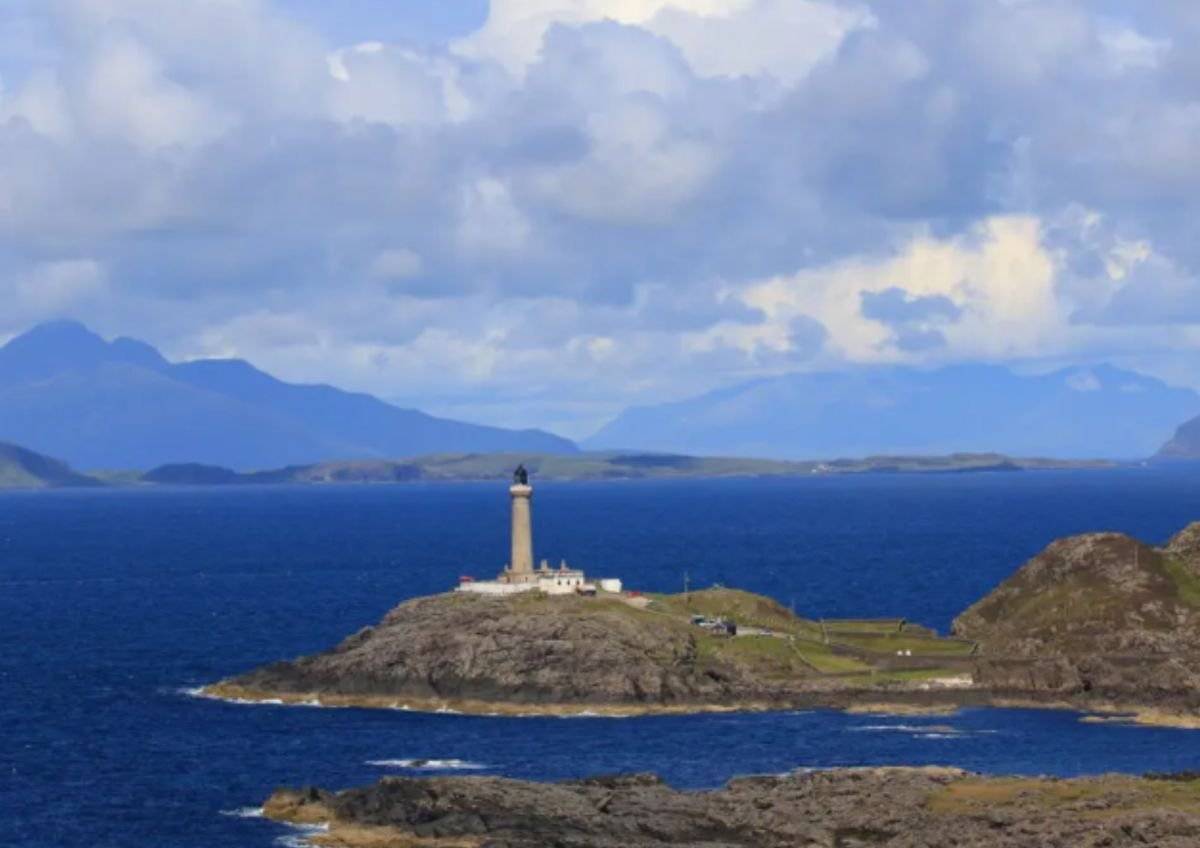
The westernmost point of mainland Britain
Dramatic Atlantic headland with huge views
A strong sense of edge, exposure and distance
One of the most remote-feeling points of the entire route
What to See & Do
The Lighthouse & Headland Walks – Short walks around the headland offer constantly changing views across sea and islands.
Views to the Small Isles & Skye – On clear days, you can see Eigg, Rum, Muck and Skye.
Wildlife Watching – Seals, seabirds and occasionally dolphins are often seen offshore.
Castle Tioram - A Tidal Fortress at the Head of Loch Moidart
Standing on a rocky tidal island at the head of Loch Moidart, Castle Tioram is one of the most dramatic and evocative ruins in the western Highlands.
Linked to the mainland by a causeway at low tide, the castle occupies a superb strategic position, commanding both the loch and the approaches from the sea. It was once a stronghold of Clanranald, a branch of Clan Donald, and played an important role in the turbulent clan politics and rebellions of the west Highlands.
Although the castle is now a roofless ruin, its setting is extraordinary. With mountains behind, water on all sides and the vast, empty landscape of Ardnamurchan stretching away around it, Tioram feels less like a sightseeing stop and more like a place where history and landscape are inseparable.
One of the most atmospheric castle ruins in western Scotland
Dramatic tidal island setting at the head of Loch Moidart
Strong links to Clan Donald and Highland clan history
A powerful sense of isolation, conflict and lost power
Excellent short walks and photography opportunities
What to See & Do
The Castle Ruins – Explore the exterior and lower areas of the castle (access inside is restricted for safety), and walk around the island at low tide.
The Tidal Causeway – Crossing to the island at low tide is part of the experience and gives a real sense of the castle’s defensive position.
Views Across Loch Moidart – The surrounding landscape is wide, quiet and dramatic, with constantly changing light and reflections.
-
Castle Tioram was the main seat of Clanranald, a branch of the powerful Clan Donald, and was one of the most important strongholds in this part of the west Highlands. It played a role in the Jacobite era and was deliberately damaged in the early 18th century to prevent its use during rebellion. Since then, it has remained a romantic ruin, slowly weathering into the landscape, but still powerfully evocative of the clan-based world that once dominated this coast.
-
Access:
The castle stands on a tidal island. You can walk across the causeway at low tide, but should always check tide times and avoid getting cut off.Parking:
There is a small parking area near the road, with a short walk to the shore.Safety:
The interior is largely closed for safety reasons, but the exterior and surroundings are fully accessible and well worth exploring.Time Needed:
Allow 45 minutes to 1.5 hours, depending on how much you walk and how long you spend exploring the shoreline.
Driving Ardnamurchan - Single-Track Roads & the Art of Going Slowly
Driving on Ardnamurchan is not about covering distance — it’s about accepting the pace of the place.
Most roads are single-track with passing places, and journeys take much longer than the map suggests. But this is part of the peninsula’s character: you are not here to hurry, and the landscape rewards those who travel slowly.
The routes link Kilchoan, Sanna Bay, the lighthouse and scattered settlements, always with the sea or open hills in view. Every journey feels like a small expedition rather than a transfer.
What Makes the Drive Special
Narrow, quiet roads through remote landscapes
Constantly changing views of sea, islands and hills
A strong sense of being at the edge of the mainland
Travel that feels deliberate, not rushed
Leaving Ardnamurchan, the journey gradually reconnects with the mainland road network and begins to turn back towards the great mountain landscapes of the West Highlands, with Fort William and Glencoe waiting further north. Click here for the next part: Skye & West Highlands.
Uncover More Map
The Uncover More map highlights key points of interest, scenic viewpoints, hidden gems, and much more along the recommended route. To make the most of it, use the map in conjunction with the destination information, and explore additional options in the area you’re visiting to discover even more experiences.
If your iPhone doesn’t load via the Google Map App via the button, check out the Help page for how to update your phone or copy and paste the link into your browser: https://bit.ly/WCScotland-uncover
West Coast of Scotland Last updated: 26 January 2026
Some links may earn Uncover Britain a small commission at no extra cost to you. This helps support the ongoing creation, review and presentation of our road trip guides.
Route information and listings are provided for general guidance only. Always use your preferred navigation system and check official websites to confirm suitability, opening times and the latest details before travelling.
Our guides are reviewed regularly and supported by a mix of editorial research and digital tools to help keep content clear and up to date. If you spot anything that needs updating, we’re always glad to hear from you.