

A Coast Shaped by Sea, Stone and Distance
What ties this entire route together is the long relationship between this coastline and movement — of boats and ferries, of traders and travellers, of communities shaped by isolation, weather and the open sea.
Everywhere you go, you’ll see how the coast has dictated where people could live, how they travelled, and how they survived — and how, in turn, people have left their mark on one of the most dramatic and fragmented coastlines in Europe.
This is a journey shaped not by speed, but by distance, exposure and scale.
The West Coast of Scotland
Sea Lochs, Islands & the Highland Coast
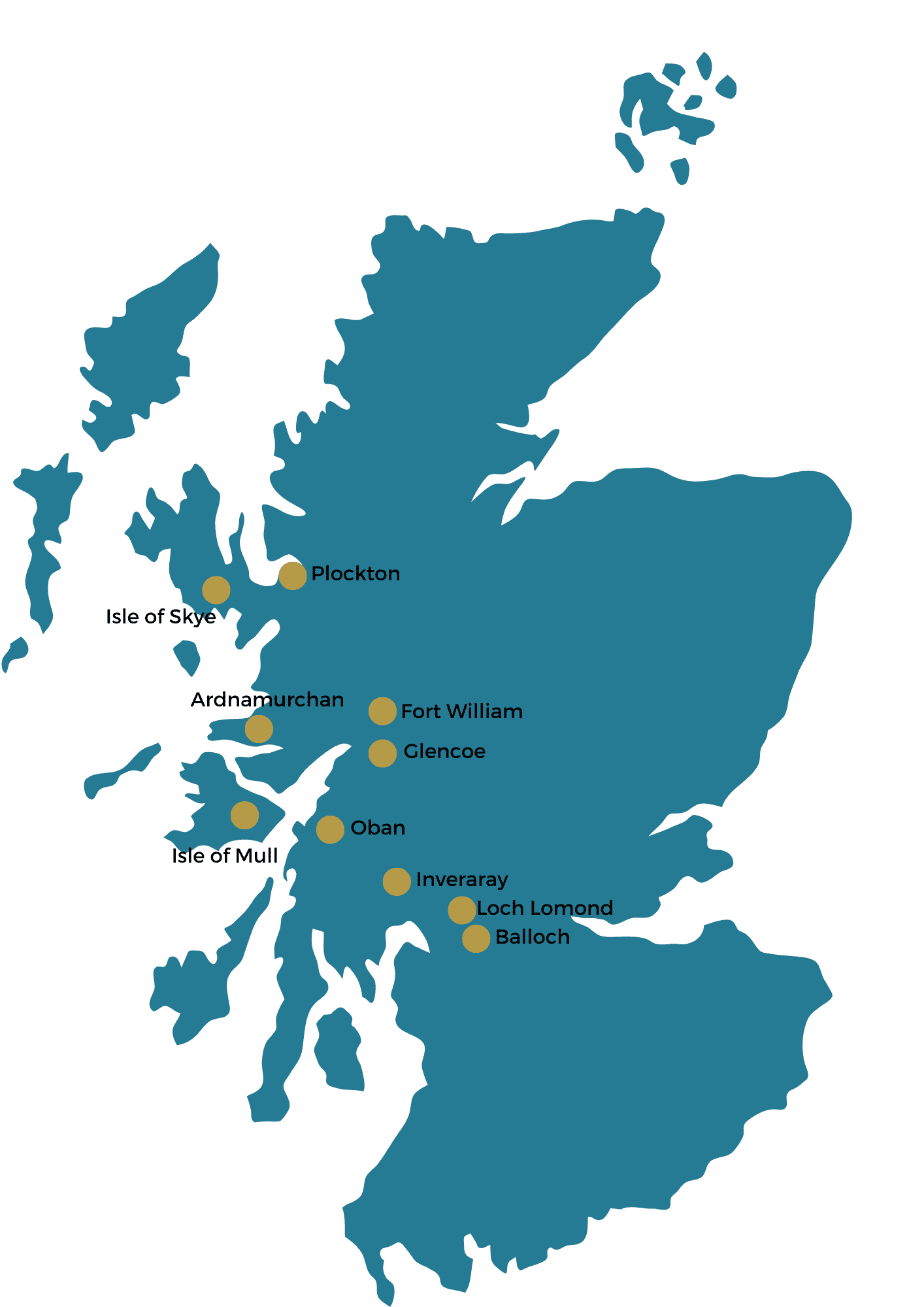
This is a journey along one of the most complex and beautiful coastlines in Britain — shaped by sea lochs, islands and distance rather than a single continuous shoreline.
From the sheltered waters of Argyll to the fractured island landscapes of Mull and Ardnamurchan, and on to the dramatic Atlantic-facing mountains of Skye, each section feels like a different world.
How to Use This Road Trip
Drivetime (mainland route only): approx 11 to 12½ hours
Approx length: approx 297 miles (479 km)
Do it in 5–7 days for a highlights version
Stretch it to 8–10 days for a relaxed pace
Or slow right down to 10–14 days for island time, walking and unhurried exploration

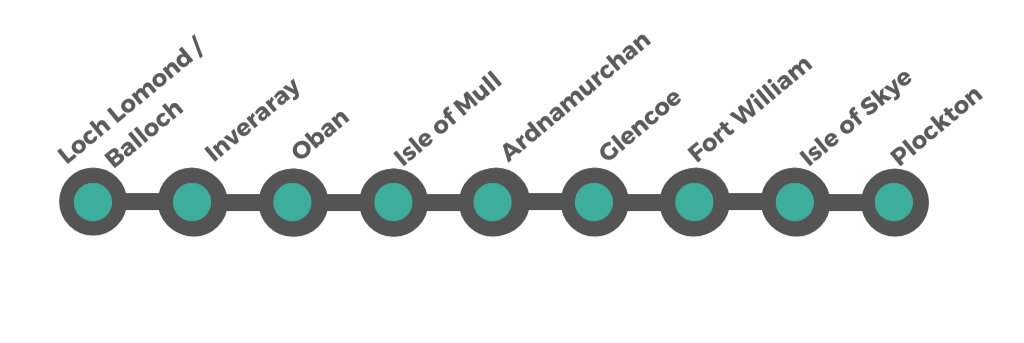
1. Argyll & the Sea Lochs
The gateway to the Highlands — long sea lochs, wooded hills and historic coastal towns leading to Oban.

2. Mull & Ardnamurchan
A fragmented coastline of ferries, islands and remote peninsulas where travel slows and the landscape becomes wilder.

3. Skye & the Far Northwest
The most dramatic stage — mountains, cliffs and Atlantic landscapes that define Scotland’s wild west.
How to Get There
This west coast road trip begins around Loch Lomond and Balloch, the southern gateway to the Highlands. It’s easily reached from Glasgow, Edinburgh and across the UK, making it one of the most accessible starting points for a Scottish road trip.
By Road – Driving to Loch Lomond
Glasgow (~30–40 mins)
A82 north to Balloch — the main southern gateway
Edinburgh (~1.5 hrs)
M8 → Erskine Bridge → A82
Manchester (~4.5 hrs)
M6 → M74 → M8 → A82
Birmingham (~5.5 hrs)
M6 → M74 → M8 → A82
London (~7.5 hrs)
M6 / M40 → M74 → M8 → A82
Tip: Loch Lomond is a great first overnight stop before continuing north into Argyll.
By Train
Glasgow → Balloch (~50 mins)
Direct ScotRail services from Glasgow Queen Street
Edinburgh → Glasgow (~50 mins)
Frequent direct trains, then connect to Balloch
Manchester (~4.5–5 hrs)
Train to Glasgow, then onward to Balloch
London (~6.5–7 hrs)
Direct to Glasgow or Caledonian Sleeper, then connect
Balloch station is within walking distance of Loch Lomond and ideal for starting your journey.
By Bus
From Glasgow
First Bus Service 1 to Balloch (~50 mins)
Scottish Citylink
Routes 915/916 serve Tarbet, Ardlui and western Loch Lomond
From across the UK
National Express and Megabus to Glasgow or Stirling
Local buses around Loch Lomond offer scenic journeys along the loch’s western and northern shores.
By Air
Glasgow Airport (~30 mins)
Closest airport — car hire, taxi or bus to Loch Lomond
Edinburgh Airport (~1 hr 15)
More international routes, then drive or train via Glasgow
From the UK & overseas
Fly into Glasgow for the easiest access
Hiring a car from Glasgow Airport is the most flexible way to begin your west coast journey.
Uncover Scotland’s West Coast
The West Coast of Scotland is a treasure trove of rich history, vibrant Gaelic heritage, breathtaking beaches, and captivating stories. From ancient castles and mythical legends to stunning landscapes featured in iconic films, this region offers an unforgettable journey into Scotland’s cultural and natural beauty. Whether you’re drawn to its historic landmarks, the rhythmic allure of traditional Gaelic music, or the golden sands of its coastline, the West Coast is a destination that promises both adventure and enchantment.
-
Rich History and Heritage of the West Coast of Scotland
The West Coast of Scotland is steeped in history, offering visitors a chance to explore centuries of fascinating stories, iconic landmarks, and ancient sites that showcase the region’s cultural and historical significance.
1. Castles: Guardians of the Past
The West Coast is home to numerous historic castles, each with its own unique story:
Inveraray Castle: Situated on the shores of Loch Fyne, this iconic castle is the ancestral home of the Duke of Argyll, the head of Clan Campbell. With its grand turrets and stunning interiors, Inveraray Castle offers a glimpse into Scotland’s aristocratic past, along with beautifully landscaped gardens.
Eilean Donan Castle: Perched on a small tidal island where three lochs meet, Eilean Donan is one of Scotland’s most photographed castles. It was originally built in the 13th century as a defense against Viking invasions and later played a key role in the Jacobite risings.
Duart Castle: Located on the Isle of Mull, Duart Castle is the ancestral seat of Clan Maclean. Its commanding position on a rocky outcrop overlooking the Sound of Mull makes it a must-visit destination for history buffs and photography enthusiasts alike.
These castles not only serve as architectural marvels but also as symbols of Scotland’s rich clan heritage and feudal history.
2. Jacobite History: A Legacy of Rebellion
The West Coast is deeply connected to the Jacobite risings, a series of 17th and 18th-century uprisings aimed at restoring the Stuart monarchy to the throne. Key sites include:
Glenfinnan Viaduct and Monument: Glenfinnan is where Bonnie Prince Charlie famously raised his standard in 1745, marking the beginning of the Jacobite rebellion. The monument at Glenfinnan commemorates this pivotal moment in Scotland’s history, while the nearby viaduct has become world-famous thanks to the Harry Potter films.
Culloden Battlefield (near Inverness): While not on the West Coast, Culloden is closely tied to Jacobite history, being the site of their final, tragic defeat in 1746.
Visiting these landmarks offers insight into the bravery, struggle, and determination of those who fought for Scotland’s independence and identity.
3. Ancient Sites: Echoes of Prehistoric Scotland
The West Coast is dotted with prehistoric landmarks that predate written history, showcasing the ingenuity and spirituality of ancient Scottish communities:
Standing Stones of Callanish (Isle of Lewis): These Neolithic stones, arranged in a cross-shaped pattern, are among Scotland’s most significant ancient monuments. Thought to have been erected over 5,000 years ago, they were likely used for ceremonial or astronomical purposes.
Kilmartin Glen: This area in Argyll boasts one of the richest concentrations of prehistoric monuments in Scotland, including standing stones, burial cairns, and rock carvings. It provides a fascinating glimpse into the lives of Scotland’s earliest inhabitants.
Dunadd Fort: Also in Argyll, this Iron Age fort is believed to have been a royal center of the ancient kingdom of Dál Riata. Visitors can see carved footprints thought to be part of ancient inauguration ceremonies for kings.
-
Gaelic Culture on the West Coast of Scotland
The West Coast of Scotland is a heartland of Gaelic heritage, offering visitors a unique opportunity to experience one of the oldest living cultures in Europe. The traditions, language, and music of Gaelic Scotland are deeply rooted in the history and daily life of the region, providing an authentic cultural experience that connects the past to the present.
1. Gaelic Language: A Living Legacy
Gaelic, known as Gàidhlig in Scotland, has been spoken on the West Coast for over 1,500 years. While the number of fluent speakers has declined over the centuries, the region remains a stronghold of the language, particularly in areas like the Inner Hebrides, Outer Hebrides, and parts of Argyll. Road signs in the Highlands and islands often appear in both English and Gaelic, reflecting the region’s bilingual identity.
Efforts to preserve and promote the language include:
Community Classes and Schools: Gaelic-medium education is widely available, teaching younger generations to keep the language alive.
Radio and Television: Stations like BBC Alba and Radio nan Gàidheal broadcast in Gaelic, celebrating the language through news, storytelling, and music.
2. Traditional Gaelic Music and Dance
Music is at the heart of Gaelic culture, and the West Coast is renowned for its rich musical traditions, including:
Traditional Songs: Many of the songs celebrate local history, legends, and the natural beauty of the landscape.
Instruments: The clàrsach (Celtic harp), bagpipes, and fiddle are central to Gaelic music, often played at ceilidhs (social gatherings featuring music and dancing).
Festivals: Events like the Hebridean Celtic Festival on the Isle of Lewis and Mull Music Festival showcase the best of Gaelic music and culture.
3. Gaelic Festivals and Customs
The West Coast hosts a variety of festivals and events that celebrate Gaelic culture:
Royal National Mòd: Scotland’s premier Gaelic cultural festival, held annually, features competitions in Gaelic song, poetry, and storytelling.
Beltane and Samhain Celebrations: These ancient Celtic festivals, marking the start of summer and winter respectively, are still observed in some communities with traditional rituals and gatherings.
Local Highland Games: Events often incorporate Gaelic song and dance alongside traditional sports like caber tossing and tug-of-war.
4. Connection to the Land and Sea
Gaelic culture is deeply intertwined with the natural environment of the West Coast, reflected in its folklore and way of life. Many place names in the region are derived from Gaelic, providing insight into the geography and history of the land. For example:
Ben Nevis (Beinn Nibheis) translates to “mountain with its head in the clouds.”
Loch Lomond (Loch Laomainn) means “loch of the elm trees.”
Fishing, crofting, and storytelling have long been integral to life here, embodying the Gaelic community’s resilience and resourcefulness.
-
Famous Film Locations on the West Coast of Scotland
The West Coast of Scotland has provided the backdrop for numerous films and TV shows, thanks to its breathtaking scenery, historic landmarks, and atmospheric landscapes. Here's an expanded look at some of the most iconic filming locations:
1. Glenfinnan Viaduct (Harry Potter Series)
The Glenfinnan Viaduct, located near the shores of Loch Shiel, is one of the most recognizable landmarks in the Harry Potter series. It features prominently as the route of the Hogwarts Express, with the steam train crossing the viaduct on its way to Hogwarts. Visitors can experience the magic in person by taking a ride on the Jacobite Steam Train, which travels the same route between Fort William and Mallaig.
Nearby Attractions: The Glenfinnan Monument and Loch Shiel, also featured as the Black Lake in the films.
2. Glen Coe (Skyfall and Others)
The dramatic glens and rugged peaks of Glen Coe have appeared in several blockbusters. In the James Bond film Skyfall, it serves as the setting for Bond’s ancestral home, surrounded by the imposing mountains and hauntingly beautiful landscape. Glen Coe also features in Harry Potter and the Prisoner of Azkaban, with its otherworldly terrain doubling as parts of the wizarding world.
Experience It: Hike through Glen Coe or drive along the A82 for iconic views.
3. Doune Castle (Outlander and Monty Python)
Located near Stirling but often considered part of Scotland’s West Coast cinematic heritage, Doune Castle stands in for Castle Leoch in the popular TV series Outlander. The castle’s unique architecture and medieval atmosphere also made it a key location in the classic comedy Monty Python and the Holy Grail.
Visitor Highlight: Explore the castle’s interior with audio tours narrated by Monty Python’s Terry Jones.
4. Isle of Skye (Prometheus and The BFG)
The Isle of Skye is a haven for filmmakers seeking otherworldly landscapes. Ridley Scott’s Prometheus used the Quiraing and the Old Man of Storr as alien landscapes. Steven Spielberg’s The BFG also captured the dramatic scenery of Skye to create the magical land of giants.
Don’t Miss: The Fairy Pools, Kilt Rock, and Neist Point Lighthouse are equally cinematic.
5. Loch Ness (The Water Horse and Others)
Loch Ness, famous for its legendary monster, has been the setting for various films, including The Water Horse, which tells the story of a boy discovering a mythical creature. The loch’s mysterious allure makes it a favorite for filmmakers.
What to Do: Take a boat tour on Loch Ness or visit Urquhart Castle for panoramic views.
6. Ardnamurchan Peninsula (The Eagle)
The remote Ardnamurchan Peninsula provided a rugged backdrop for the historical epic The Eagle, which follows a Roman soldier’s quest to recover his father’s lost legion. The wild beauty of this area perfectly captures the untamed spirit of ancient Scotland.
Visit: Ardnamurchan Lighthouse and Sanna Bay for unspoiled landscapes.
7. Eilean Donan Castle (Highlander and The World Is Not Enough)
One of Scotland’s most iconic castles, Eilean Donan, has appeared in numerous films. It’s most famously featured in Highlander, as the home of the immortals, and in the James Bond movie The World Is Not Enough, showcasing its romantic and dramatic setting.
Travel Tip: The castle is a short drive from Kyle of Lochalsh and offers guided tours.
-
The west coast of Scotland is steeped in myths, legends, and folklore, adding to its mystical allure and captivating charm. Tales of ancient clans, mystical creatures, and legendary heroes echo through the rugged landscapes and picturesque lochs of this region.
One of the most famous legends is that of the Loch Ness Monster, said to inhabit the deep waters of Loch Ness in the Scottish Highlands. Known affectionately as "Nessie," sightings of this elusive creature have sparked curiosity and fascination for centuries, drawing visitors from around the world in search of the elusive monster.
In addition to Nessie, the West Coast is home to a rich tapestry of folklore featuring mythical creatures such as selkies, kelpies, and fairy folk. These fantastical beings are said to roam the mist-shrouded glens and rocky shores, weaving enchanting tales of magic and mystery.
Legends of ancient battles, heroic warriors, and romantic tragedies abound in the West Coast's history, adding depth and intrigue to its storied past. From the legendary exploits of Scottish freedom fighter William Wallace to the tragic tale of the doomed lovers of Glencoe, these stories capture the imagination and spirit of Scotland's rugged landscapes.
Whether exploring ancient castles, wandering through picturesque villages, or simply soaking in the breathtaking scenery, visitors to Scotland's west coast are sure to encounter the rich tapestry of myths, legends, and folklore that make this region truly magical.
-
The west coast of Scotland is blessed with numerous stunning beaches, each offering its unique charm and beauty, from pristine sandy shores to rugged coastlines. Check out the beaches below, and locate them using the Uncover More map.
These are just a few of the many beautiful beaches that grace the west coast of Scotland, offering visitors the opportunity to unwind and connect with nature in one of the country's most scenic regions.
Loch Lomond Shores, located in Balloch, is a vibrant tourist destination offering a blend of distinctive independent shops, dining options, and captivating nature walks. Visitors can explore attractions such as the sea life aquarium and enjoy leisure activities like bike rentals, pedal boats, Segway tours, and canoeing along the beachfront. With ample parking nearby, Loch Lomond Shores is easily accessible, making it an ideal destination for families looking for a day of fun and adventure.
Traigh Mhor, Arisaig: Located near the village of Arisaig, Traigh Mhor is a picturesque beach known for its golden sands and crystal-clear waters. It's a popular spot for swimming, kayaking, and wildlife watching, with views of the Small Isles on the horizon.
Calgary Bay, Isle of Mull: Nestled on the northwestern coast of the Isle of Mull, Calgary Bay is famous for its stunning scenery and tranquil atmosphere. Visitors can enjoy walks along the beach, explore the nearby woodlands, and admire views of the surrounding mountains.
Ganavan Sands, an impressive beach near Oban, features pristine soft white sand, convenient parking, and breathtaking panoramic vistas of nearby islands such as Mull, Lismore, and Morven. Situated just 2 miles from Oban, it's a favoured destination among locals. A charming stroll along Ganavan Bay in Oban offers picturesque views and leads to smaller, more secluded beaches along the way.
Caol Beach, situated near Fort William, offers breathtaking views of the surrounding landscape, making it an ideal spot for a leisurely stroll with your furry companion. Take a walk along the shoreline and onto the Caledonian Canal embankment to enjoy stunning vistas of Fort William and the majestic Ben Nevis.
Luss Beach: During the warmer months of Summer and Spring, visitors flock to Luss from all corners of Scotland to bask in its breathtaking panoramic views, beautiful beaches, and serene atmosphere. As one of the most beloved villages within Loch Lomond & The Trossachs National Park, Luss is perfect for a family day trip from Oban. Explore its charming streets lined with independent shops, enjoy a leisurely meal at one of its cosy cafes, and let the kids play to their hearts' content in the nearby children's park.
Loch Linnhe Beach: Nestled in the scenic town of Fort William, along the shores of Loch Linnhe and at the base of Scotland's tallest munro, Ben Nevis, you'll find the quaint shingle Loch Linnhe Beach. Offering stunning vistas of the loch and surrounding hills, this spot is favoured by locals for various activities, including wild water swimming, fishing, diving, snorkelling, and rock pooling.
Sanna Bay, Ardnamurchan: Situated on the Ardnamurchan Peninsula, Sanna Bay is renowned for its stunning vistas and unspoiled natural beauty. Visitors can enjoy long walks along the sandy shores and marvel at views of the Small Isles and Isle of Skye.
Camusdarach Beach, Morar: Featured in the movie "Local Hero," Camusdarach Beach is known for its dramatic scenery and soft white sands. It's a popular spot for sunbathing, beachcombing, and enjoying panoramic views of the surrounding coastline.
Smirisary Beach beckons with its pristine turquoise waters, inviting visitors to take a refreshing swim. Settle in and relax as you keep an eye out for the breathtaking local wildlife, including seals, otters, and majestic raptors. The rocky surroundings provide an ideal spot for a leisurely picnic, completing the perfect day by the sea.
West Coast of Scotland Last updated: 24 March 2026
Some links may earn Uncover Britain a small commission at no extra cost to you. This helps support the ongoing creation, review and presentation of our road trip guides.
Route information and listings are provided for general guidance only. Always use your preferred navigation system and check official websites to confirm suitability, opening times and the latest details before travelling.
Our guides are reviewed regularly and supported by a mix of editorial research and digital tools to help keep content clear and up to date. If you spot anything that needs updating, we’re always glad to hear from you.