

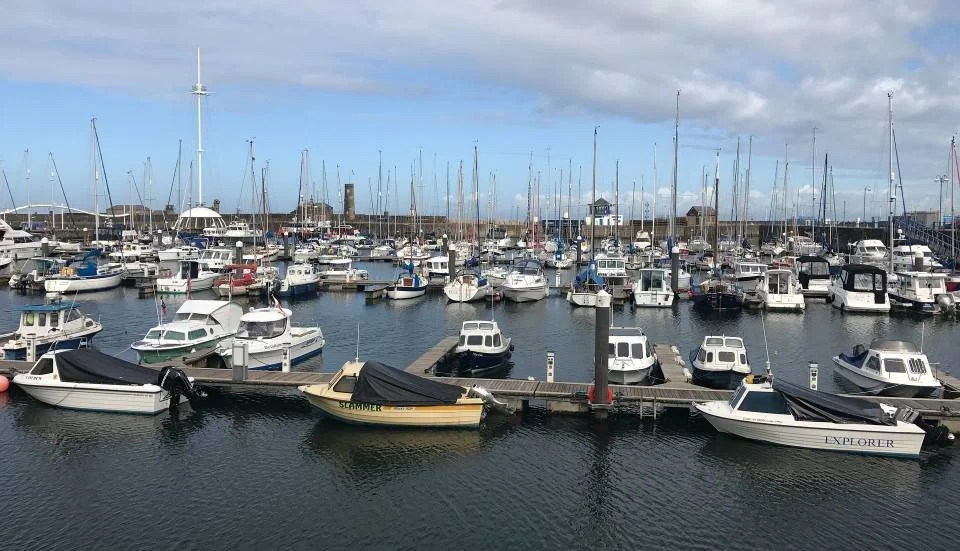
Travel smarter. Plan better. Enjoy more.
Cumbria Coast Road Trip: Morecambe Bay, Furness Peninsula, St Bees & Solway Coast
• A complete Cumbria coastal road trip of around 173 miles (278 km), following the western shoreline through estuaries, cliffs, beaches and the Roman frontier
• Structured into five sections — Morecambe Bay, Furness Peninsula, West Cumbria & St Bees Head, the Solway Coast, and Carlisle & Hadrian’s Wall
• Designed for real-world planning, with clear routes, coastal drives and practical guidance, combining well-known stops with quieter stretches of the Cumbrian coast
Experience the Cumbria Coast
Estuaries, Industrial Heritage & Wild Northern Shores
The Cumbria coast is one of England’s least explored coastal regions — a place where wide estuaries, working harbours, hidden peninsulas and exposed cliffs create a constantly changing landscape.
Unlike more familiar coastal routes, this is not a single continuous shoreline. Instead, it unfolds in stages — from the tidal flats and historic villages of Morecambe Bay, to the maritime and industrial edge of the Furness Peninsula, before reaching the dramatic cliffs of St Bees Head and the open, remote coastline of the Solway Firth.
This road trip has been shaped in part by the Cumbria Coastal Route (CCR200), bringing these contrasting landscapes together into one coherent journey. It follows the full sweep of Cumbria’s western edge, finishing at Carlisle and Hadrian’s Wall, where the coastline meets the northern frontier of Roman Britain.
How the Cumbria Coast Journey is Structured
Morecambe Bay & Southern Estuaries — Tidal Landscapes & Coastal Villages
A gentler introduction to the route, with wide estuary views, historic settlements and food-led destinations set along the edge of Morecambe Bay.
Furness Peninsula & Island Coast — Industry, islands and the coastal edge
This is where the route starts to feel more exposed. Barrow’s shipbuilding past sits alongside quieter coastal roads, with short crossings out to Roa and Piel, and the open stretches of Walney Island offering something very different from the bay.
West Cumbria & St Bees Head — Cliffs and open coastline
The feel of the coast changes again here. The land rises into the red sandstone cliffs at St Bees Head, and the views open out in both directions. It’s one of those stretches where the coastline really stands out — more rugged, more exposed, and harder to rush through.
Solway Coast & Northern Shores — Wide beaches and open space
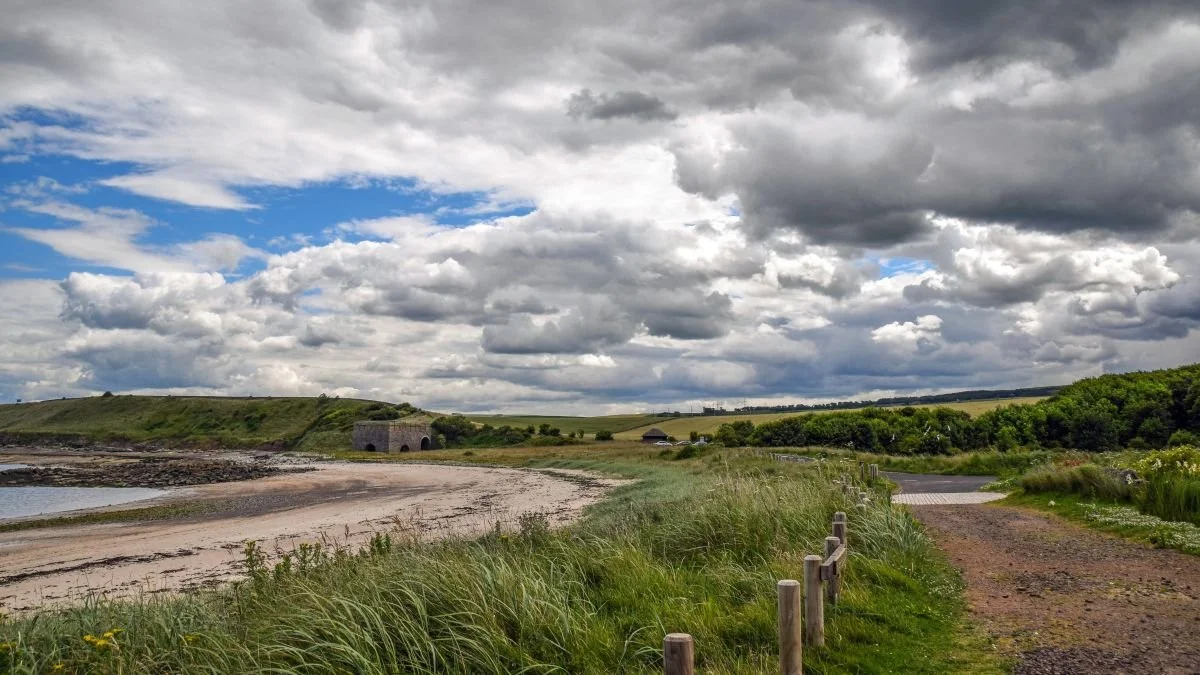
Beyond Whitehaven, everything softens and spreads out. The coastline becomes flatter, with long beaches and fewer towns. It’s quieter here, with wide views across the Solway and a slower, more spacious feel.
Carlisle & Hadrian’s Wall — From coast to frontier
The route turns inland for its final stretch. The sea drops away and the focus shifts to Carlisle and the western end of Hadrian’s Wall — a landscape shaped by history rather than the coastline
What You’ll Experience Along the Way
Morecambe Bay – Wide estuaries, coastal towns and villages shaped by the shifting shoreline
Furness Peninsula – Barrow’s industrial past, island crossings and the exposed coast around Walney
St Bees Head – Red sandstone cliffs and one of the most memorable stretches of coastline in Cumbria
Ravenglass & the West Coast – Where rivers meet the sea, with Roman links and a quieter pace
Solway Coast – Long beaches, open skies and a sense of space that feels far removed from busier routes
Carlisle & Hadrian’s Wall – Roman history, city streets and the meeting point of coast and frontier
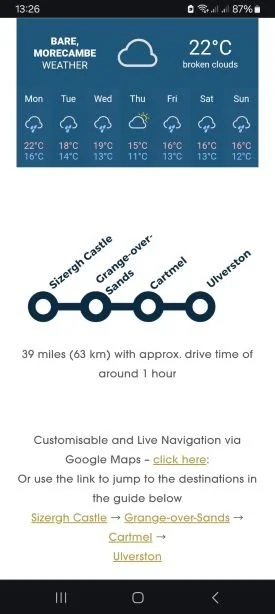


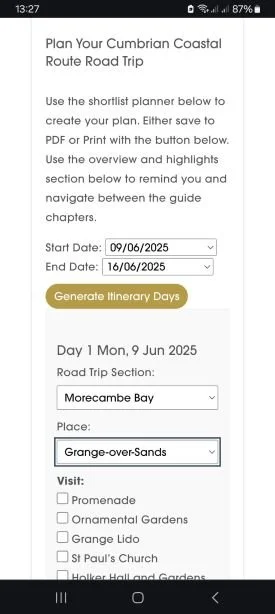
Must-see highlights included in this Cumbrian Coast travel guide
-
![Hadrian’s Wall, Cumbria road trip]()
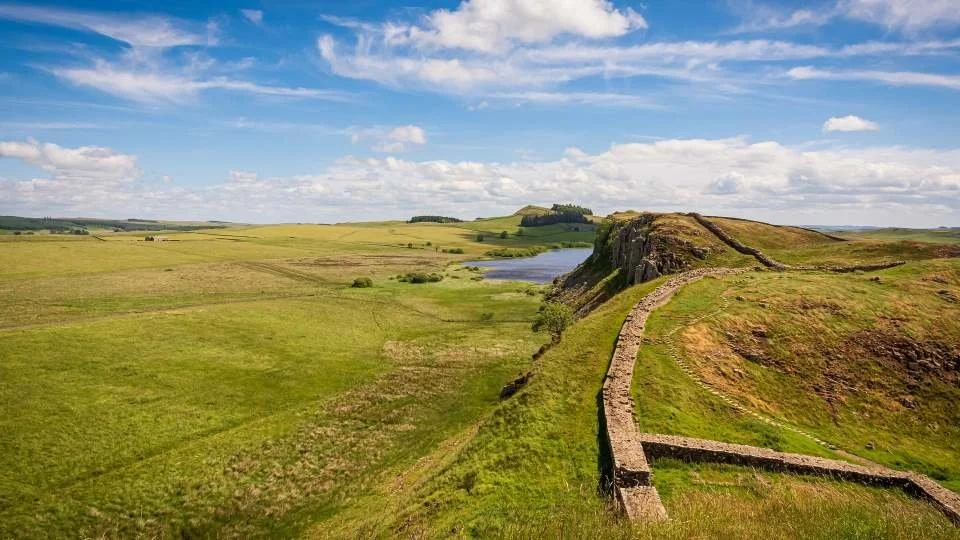
Hadrian’s Wall & Roman Frontier — History at the coast’s edge
At the northern end of the Cumbria coast road trip, Hadrian’s Wall marks the western frontier of the Roman Empire. This UNESCO World Heritage Site combines Roman forts, accessible walking routes and wide open countryside, making it one of the most significant historical attractions in England. Easily reached from Carlisle, it adds depth to the journey, connecting the coastal drive with one of Britain’s most important archaeological landscapes.
-
![Coastal Drives & Scenic Routes — One of England’s quietest drives]()
Coastal Drives & Scenic Routes — One of England’s quietest drives
The Cumbria coast road trip is defined as much by the drive as the destinations. Following roads such as the A595, the route offers one of England’s quietest coastal driving experiences, with changing landscapes and regular viewpoints along the way. Unlike more crowded scenic routes, this journey feels a lot more open and more varied, making it ideal for those looking for a relaxed, exploratory road trip along the Cumbrian coast.
-
![St Bees Head & Heritage Coast — This is Cumbria’s dramatic cliffs at their best]()
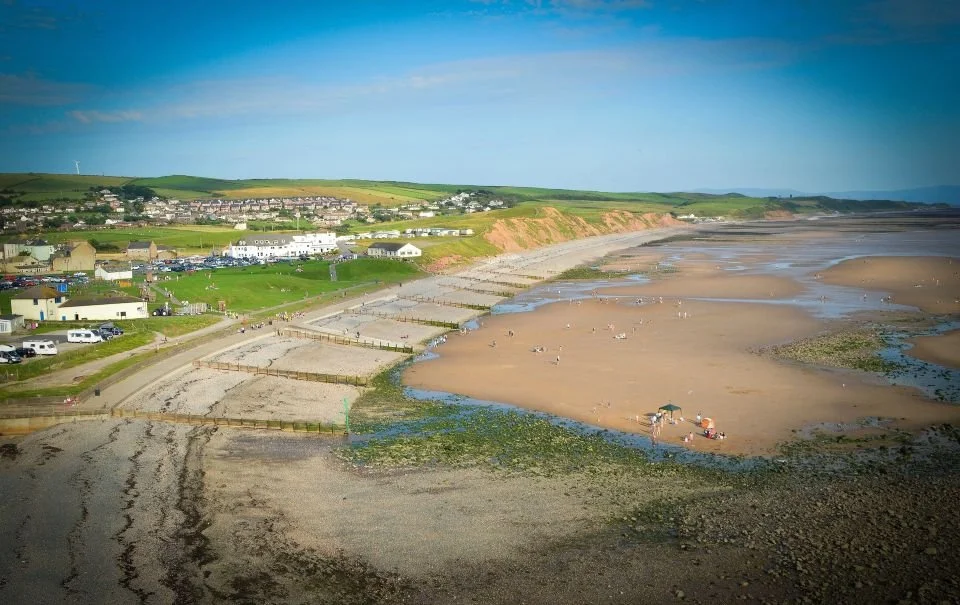
St Bees Head & Heritage Coast — This is Cumbria’s dramatic cliffs at their best
A recommended highlight - St Bees Head - the most striking stretch of the Cumbria coast, where you'll find red sandstone cliffs rise above the Irish Sea. This is England’s only designated Heritage Coast in the region. This is a key highlight of any Cumbria coast road trip, offering some of the best coastal walking in northern England. The clifftop path forms part of both the England Coast Path and the Coast to Coast Walk, with seabird colonies, lighthouse views and long, uninterrupted coastal scenery.
-
![Whitehaven Harbour — The Georgian port and maritime history part]()
Whitehaven Harbour — The Georgian port and maritime history part
You'll see why Whitehaven stands out along the Cumbria coast for its planned, because of its Georgian harbour and strong maritime heritage. Once a major trading port, the town’s docks, marina and historic streets illustrate its importance in Britain’s industrial past. Today, it offers a compact and walkable stop with museums, harbour views and a clear sense of place, providing a contrast to the more natural stretches of coastline either side.
-
![Carlisle, Cumbria road trip]()
Carlisle, Cumbria
Adding Carlisle to your road trip itinerary will offer a fascinating glimpse into both ancient and modern history. Explore the city's rich heritage, from its Roman roots to its medieval architecture and vibrant cultural scene. With its blend of ancient history, cultural attractions, and modern amenities, Carlisle is a captivating destination that offers something for everyone to enjoy on their road trip through Cumbria.
-
![Morecambe Bay — Coastal villages, food and estuary landscapes]()
Morecambe Bay — Coastal villages, food and estuary landscapes
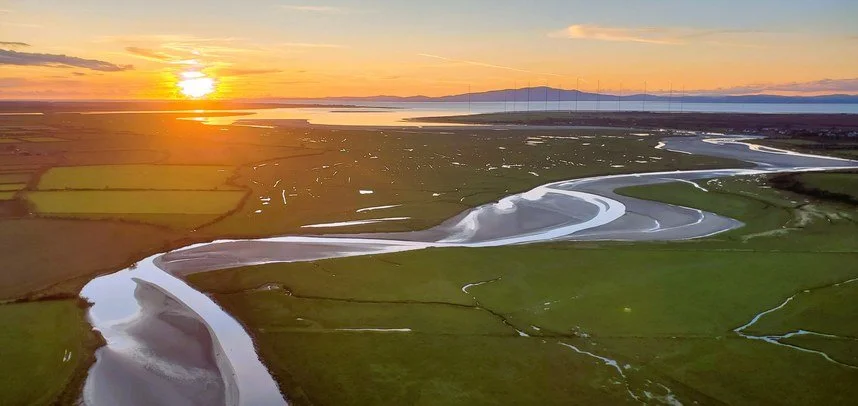
Morecambe Bay forms a gentle and scenic introduction to the Cumbria coast, known for its wide tidal estuaries, coastal towns and food-led destinations. Places such as Grange-over-Sands, Cartmel and Ulverston combine historic streets with strong local identity, while the changing shoreline creates expansive views across the bay. It’s one of the most searched and accessible parts of the Cumbrian coast, offering a balance of scenery, heritage and places to stop.
-
![Furness Peninsula & Piel Island — The hidden coast and island escape part]()
Furness Peninsula & Piel Island — The hidden coast and island escape part
You will find that the Furness Peninsula offers a quieter, more distinctive side of the Cumbria coast. It's here that industrial heritage meets island landscapes and exposed shoreline. From Barrow-in-Furness, the route extends out to Roa Island and across to Piel Island, known for its castle and unique setting. If you want wide beaches, nearby Walney Island provides, plus nature reserves to! This lesser-known stretch is ideal for those seeking a more remote coastal experience away from busier destinations.
-
![Walney Island — Wildlife, dunes and open coastline]()
Walney Island — Wildlife, dunes and open coastline
Walney Island is one of the most important nature and wildlife areas along the Cumbria coast, known for its sand dunes, nature reserves and long, exposed beaches. South Walney Nature Reserve is particularly popular for birdwatching and seal sightings, while the island’s coastal paths offer quieter walking routes. It’s a key stop for those interested in nature, photography and experiencing a less developed stretch of the Cumbrian coast.
-
![Cumbria Coastal Path Walks — Walk a bit of the England Coast Path & Coast to Coast]()
Cumbria Coastal Path Walks — Walk a bit of the England Coast Path & Coast to Coast
If walking is your thing, then walking is a major draw along the Cumbria coast, with sections of the England Coast Path and the famous Coast to Coast Walk which both pass through key locations such as St Bees. You'll be spoiled for choice with several routes offering coastal walks with views across cliffs, estuaries and open shoreline. For those planning a Cumbria coast itinerary, even short sections of these paths provide a memorable way to experience the landscape.
-
![Solway Coast & Silloth — For remote beaches and big skies]()
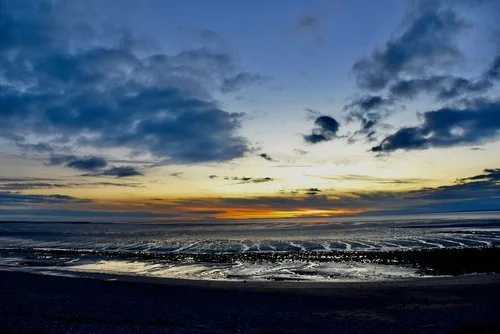
Solway Coast & Silloth — For remote beaches and big skies
If you're looking for open beaches and the least crowded coast, the Solway Coast delivers, alongside salt marshes and long views across the Solway Firth to Scotland. Along this stretch, places like Silloth and Allonby provide a quieter alternative to busier seaside destinations, which make perfect for relaxing space and slower travel. Plus, it’s an essential part of the Cumbria coast road trip for its sense of scale and calm.
-
![Duddon Estuary & Millom — Quiet landscapes and hidden views]()
Duddon Estuary & Millom — Quiet landscapes and hidden views
The Duddon Estuary is one of the most understated but rewarding parts of the Cumbria coast, with wide tidal flats, changing light and views toward the Lake District fells. Around Millom and Haverigg, the landscape feels quieter and less visited, offering space and slower travel. It’s a strong addition to the route for those seeking hidden viewpoints, coastal walking and a more reflective experience away from busier areas.
-
![Ravenglass & Eskdale — Coast meets the Lake District]()
Ravenglass & Eskdale — Coast meets the Lake District
Ravenglass is one of the most unique points on the Cumbria coast, where rivers, estuary and sea meet at the edge of the Lake District. It’s the only coastal village within the national park boundary, making it a key link between coastal and inland landscapes. With Roman history, heritage railways and access to Eskdale, it attracts visitors looking to combine coastal scenery with Lake District experiences on a single road trip.
-
![Discover Industrial Heritage of the Cumbrian Coast — from shipbuilding to mining]()
Discover Industrial Heritage of the Cumbrian Coast — from shipbuilding to mining
Find out more about the Cumbria coast's link to industry past with its industrial heritage storytelling. From Barrow’s shipbuilding history to the mining legacy around Millom and Hodbarrow, this is a coastline shaped as much by industry as by nature. Keep your eyes peeled for historic sites, museums and preserved structures provide insight into how the region developed, offering a different perspective from more traditional coastal destinations.

Cumbrian Coast Road Trip - £10.99
Cumbrian Coast Road Trip


West Coast Horizons - £19.99
Cumbria Coastal Route + West Coast of Scotland + Isle of Skye
A Complete Journey Along England’s Western Edge
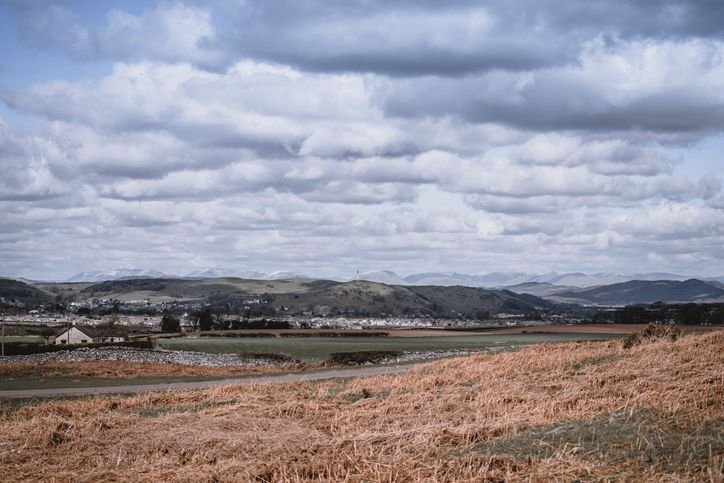
The Cumbria coast is shaped by water, industry and distance — a coastline that rarely runs in a straight line. Estuaries cut inland, peninsulas reach out into the Irish Sea, and long stretches of quiet shoreline sit between working towns, historic harbours and exposed cliffs.
It’s not a coast that reveals itself quickly.
Instead, it unfolds in stages — from the wide tidal landscapes of Morecambe Bay, to the outward edge of the Furness Peninsula, through the red sandstone cliffs of St Bees Head, and into the open, remote shoreline of the Solway Firth.
This Cumbria coast road trip follows that full progression. Inspired in part by the Cumbria Coastal Route (CCR200), it brings the entire western edge together into one clear, structured journey — connecting places that are often visited in isolation. This is a complete driving route along the Cumbrian coast, designed to help you plan and navigate one of England’s most varied coastal journeys.
A Coast That Changes Constantly
Unlike more familiar coastal drives, Cumbria’s shoreline does not offer a single continuous experience.
Here, the character shifts repeatedly.
Wide estuaries give way to enclosed harbours.
Industrial docklands sit just minutes from empty beaches.
Cliffs rise suddenly from otherwise gentle coastline.
Some stretches feel open and expansive. Others feel contained, shaped by rivers, valleys and the land behind them.
This constant change is what makes this coastal route so engaging — and why it benefits from being understood as a complete journey rather than a series of individual stops.
Why This Road Trip Works So Well
What makes this journey stand out is not just the quality of individual places, but how they contrast and connect.
You begin in a softer, more settled landscape around Morecambe Bay — villages, estuaries and a slower introduction to the coast.
From there, the route pushes outward onto the Furness Peninsula, where the feel becomes more exposed and maritime, with islands, causeways and a stronger sense of the sea.
The journey then builds to its most dramatic point at St Bees Head, where the coastline rises into cliffs and the scale of the landscape becomes more obvious.
Beyond this, everything opens out again along the Solway Coast — wider, quieter and less visited — before turning inland to Carlisle and Hadrian’s Wall, where the journey ends not at the sea, but at the edge of the Roman frontier.
Each stage feels different. Each transition has a purpose.
Not a Tourist Coast — Something More Varied
This is not a classic “tourist coast”.
The Cumbria coast is quieter, less developed than many better-known UK coastal routes. It does not rely on a single headline destination or a continuous string of attractions.
Instead, it offers something more layered.
Industrial history sits alongside nature reserves.
Working harbours give way to empty shoreline.
Well-known locations are balanced by places most visitors pass straight through.
Travel here is less about ticking off landmarks and more about understanding the landscape — how it changes, how it opens and closes, and how each section leads naturally into the next.
A Journey Defined by Pace and Space
Progress along this coast is not measured purely in miles.
Short distances can feel slower, shaped by detours, viewpoints and the natural pull of the landscape. Some sections invite you to stop often — others are about simply following the line of the coast and letting it unfold.
There are moments of detail and moments of scale.
A harbour, a village, a stretch of beach — followed by wider views, open water and long, quiet roads.
This rhythm is what gives the journey its character.
How Long You Need — And Why It’s Flexible
One of the strengths of this route is how easily it adapts:
In 2–3 days, it works as a highlights journey, focusing on key sections such as Morecambe Bay and St Bees Head
In 3–5 days, it becomes a balanced Cumbria coast road trip, allowing time across all five sections
In 5+ days, it opens up into a slower journey, with space for walking, detours and the quieter stretches of the Solway Coast
The guide is designed to help you scale the experience without losing the structure of the route.
What This Guide Actually Gives You
The Cumbria Coast Road Trip guide is not a list of places.
It is a structured journey that:
• Connects the full western coastline into one logical route
• Shows how each section fits together
• Helps you pace the journey properly
• Highlights places you would otherwise miss — from small coastal stops to key viewpoints and walks
It allows you to understand the route before you travel — and then adapt it to your own pace.
Who This Is Really For
This route is for travellers who want:
• A complete journey, not just individual stops
• To understand how the Cumbria coast fits together
• A mix of scenery, history and quieter places
• A road trip that feels varied, not repetitive
If you enjoy landscapes that change, routes that unfold gradually, and journeys that feel connected from start to finish, this is one of the most rewarding road trips along the Cumbria coast.
Every great road trip begins with an idea — a place that pulls you in, a view you can’t stop thinking about, or simply the urge to get out on the open road. You can dip into fresh inspiration, find experiences to excite you, look for the kind of vehicle that suits your style of travelling, and get practical road trip planning tips to make planning simple rather than stressful. However you like to explore, you’ll find everything you need to start turning your trip into something memorable.
Home > Road Trip Guides > Cumbria Coastal Route

Road Trips in England

Scotland's best road trips

Wales' best road trips

Isles and Island Trips

Road Trip Inspiration