

North Coast of Scotland – The Northern Highlands & Atlantic Coast
Epic Landscapes, Remote Coastlines & One of Britain’s Greatest Drives
The North Coast 500 is more than a route — it’s a journey through the Highlands at their most dramatic. Starting in Inverness, the route unfolds through historic coastlines, vast open landscapes and some of Europe’s most spectacular coastal scenery.
Across roughly 450 miles, the journey naturally breaks into three core sections — followed by an optional return leg — each revealing a different side of the Highlands, from gentle east coast beginnings to the wild Atlantic edge.
How the Journey Works
Rather than feeling like a single, unbroken loop, the NC500 naturally unfolds as four chapters:
Great Glen & Far Northeast – Inverness to John O’Groats introduces you to the Highlands through history, castles, fishing villages and wide coastal views.
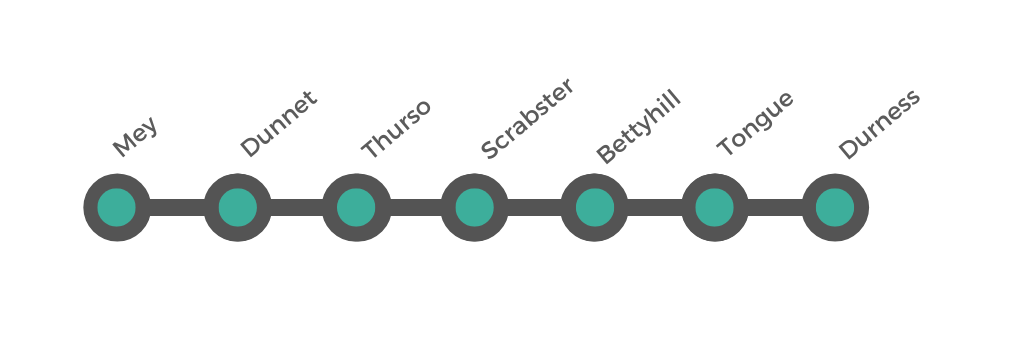
The Empty North – John O’Groats to Durness strips everything back to big skies, peatlands, cliffs and raw Atlantic coastline.
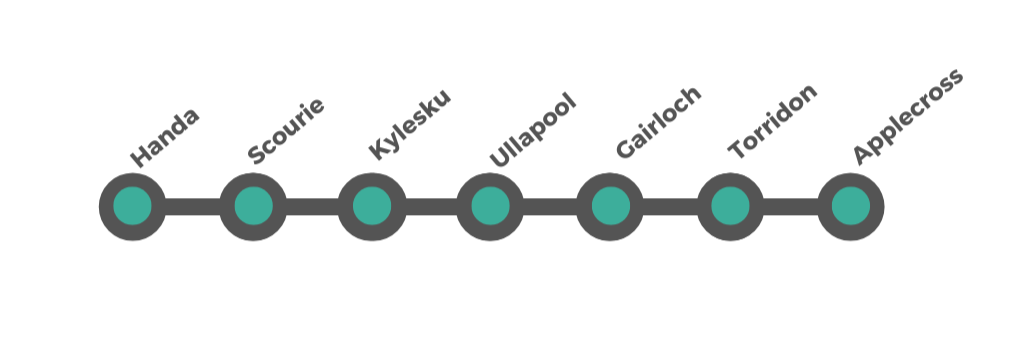
The Atlantic Edge – Durness to Applecross delivers the grand finale: mountains rising straight from the sea, legendary passes, white beaches and some of the most spectacular driving in Britain.
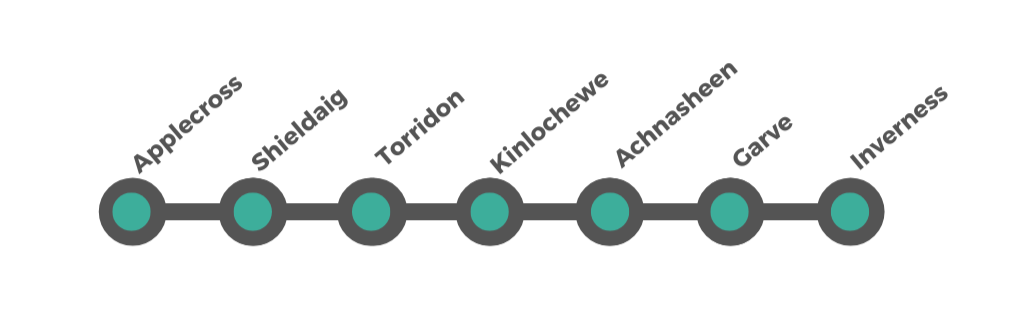
The Long Way Home – An optional extra for those wishing to close the loop with a return journey back to Inverness.
Practical Starting Point
Inverness is the natural gateway to the route and the most practical starting point, with good road, rail and air connections. Most people begin and end their journey here, whether completing the full circuit or just one section.
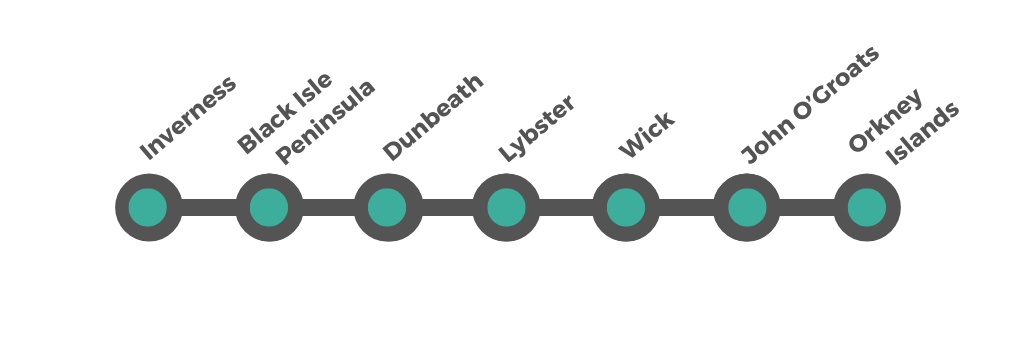
1. Great Glen & Far Northeast
How to Get There
The North Coast 500 begins in Inverness, the gateway to the Scottish Highlands. Whether you’re travelling by car, train or plane, getting here is straightforward — and part of the journey itself.
By Road – Driving to Inverness
Edinburgh (~3.5 hrs)
A9 north through the Cairngorms
Glasgow (~3.5 hrs)
A82 via Loch Lomond and Fort William (more scenic)
Aberdeen (~2.5 hrs)
A96 direct to Inverness
England (~6–10 hrs+)
M6 / A74(M) → A9 via Perth
Tip: Many travellers break the journey with an overnight stop in the Cairngorms or Loch Lomond.
By Train
Edinburgh / Glasgow (~3.5 hrs)
Direct ScotRail services
Aberdeen (~2 hrs 15 mins)
Direct services
London (~8 hrs or overnight)
Direct trains or Caledonian Sleeper
Inverness station is centrally located — ideal for collecting a hire car or starting your journey.
By Bus
From Edinburgh / Glasgow
Regular long-distance coach services
From across the UK
National Express and Scottish Citylink routes
Bus travel is slower but can be a cost-effective option.
From Outside the UK
Fly to Inverness
Direct UK and limited international flights
Fly to Edinburgh or Glasgow
More international options, then drive or take train (3.5–4 hrs)
Car or Campervan Hire
Available in all three cities
Flying into Scotland’s central belt and driving north is often the most flexible option.
Scottish Distilleries
Visiting a Scottish distillery offers a unique and immersive experience that allows you to learn about whisky or gin production, explore whisky heritage in particular, and taste unique whiskies.
Distillery tours provide insight into the entire whisky-making process, from mashing and fermentation to distillation and maturation. You'll gain a deeper understanding of how whisky is made, including the role of ingredients, equipment, and techniques. Many Scottish distilleries have rich histories dating back centuries. Visiting a distillery allows you to learn about its heritage, traditions, and contributions to Scotland's whisky industry. You'll discover the stories behind famous distilleries and the people who shaped their legacies.
Distillery tours typically include tastings of the distillery's whiskies, allowing you to sample a range of expressions and flavours. Visiting a distillery contributes to the local economy and supports the communities where whisky production is a vital part of the heritage and culture. Many distilleries also offer opportunities to purchase whisky and other merchandise, providing a tangible way to support the local economy.
-
There are many whisky and gin distilleries located in the Highlands. Use the map to locate distilleries along the route. Here is our pick of a few options along the route:
Tomatin Distillery (Tomatin, Inverness-shire): Tomatin Distillery, located near Inverness, offers guided tours that delve into its whisky-making heritage, from mashing and fermentation to maturation and bottling. Visitors can enjoy tastings of Tomatin's smooth and well-balanced single malts.
Glen Ord Distillery (Singleton) (Muir of Ord, Ross-shire): Glen Ord Distillery, also known as "The Singleton of Glen Ord," offers guided tours that showcase its traditional distillation methods and scenic surroundings. Visitors can sample The Singleton's rich and fruity single malt whiskies.
Dalmore Distillery (Alness, Ross-shire): Situated on the banks of the Cromarty Firth, Dalmore Distillery offers guided tours that explore its historic distillery and showcase its iconic copper pot stills. Visitors can sample a selection of Dalmore's rich and complex single malts.
Glenmorangie Distillery (Tain, Ross-shire): Known for its elegant single malt whiskies, Glenmorangie Distillery offers guided tours that provide insight into its whisky-making process, including a visit to the tallest stills in Scotland. The distillery is set against the backdrop of the picturesque Dornoch Firth.
Balblair Distillery (Edderton, Ross-shire): Balblair Distillery is renowned for its vintage single malt whiskies, which are aged in traditional dunnage warehouses. Guided tours provide an intimate look at the distillery's production process and culminate in a tasting of Balblair's unique expressions.
Dunnet Bay Distillery (Caithness): Dunnet Bay Distillery is renowned for its award-winning Rock Rose Gin, crafted with locally foraged botanicals and distilled in small batches using traditional methods.
Continuing Your Journey
If this road trip has left you wanting to explore more of Scotland, there are several natural ways to continue and add more trips to your account.
From Torridon, Gairloch, or Kinlochewe, you can easily connect into:
The Isle of Skye Road Trip — via Lochcarron and the Skye Bridge - with an indepth road trip around the Trotternish & Cuillin Loop and the Sleat Peninsula.
The West Coast of Scotland — through Argyll & Sea Lochs, Isle of Mull, bief introduction to Skye and then onto the Western Highlands
If you’re travelling south or east instead, Edinburgh & the Borders offers a softer, more historical journey through castles, abbeys, rolling hills and some of Scotland’s most story-rich landscapes. And if you’re returning down the east coast, the Kingdom of Fife makes a beautiful final chapter — a coastline of fishing villages, golf links, beaches and historic towns, crowned by the old royal capital of St Andrews.
Together, these routes let you explore Scotland not as a checklist, but as a series of journeys — each with its own character, rhythm and sense of place.
On Your Way To or From Scotland
If you’re building a longer journey from England, several routes connect beautifully into this west coast adventure:
Northumberland Castles & Coast — A dramatic frontier coastline of castles, wide beaches and big skies
North Yorkshire Moors & Coast — Moorland landscapes, steam railways and classic seaside towns
Yorkshire Dales & West Yorkshire — Limestone valleys, Pennine hills, literary towns, industrial heritage and big, open moorland landscapes
Peak District — England’s first national park, with dales, ridges, caves and historic villages
Cumbria Coast — A quieter, wilder edge of England with sea views and industrial heritage
Lake District — Britain’s most famous mountain landscape of lakes, passes and valleys
Together, these routes let you explore Britain not as a checklist, but as a series of connected journeys — each with its own character, rhythm and sense of place.
North Coast 500 (Scotland) Last updated: 17 March 2026
Some links may earn Uncover Britain a small commission at no extra cost to you. This helps support the ongoing creation, review and presentation of our road trip guides.
Route information and listings are provided for general guidance only. Always use your preferred navigation system and check official websites to confirm suitability, opening times and the latest details before travelling.
Our guides are reviewed regularly and supported by a mix of editorial research and digital tools to help keep content clear and up to date. If you spot anything that needs updating, we’re always glad to hear from you.