


How to Spend Your Time — Black & White Trail
A slower-paced journey through Herefordshire’s most timeless villages, cathedral cities and countryside. From the Mappa Mundi in Hereford to the timber-framed charm of Pembridge, Weobley and Eardisland, this route blends heritage, scenery and relaxed exploration.
1 Day
Quick Highlights
- Leominster → Eardisland → Pembridge
- Lunch stop by the River Arrow
- Weobley Heritage Trail
- Alt: Hereford Cathedral + Mappa Mundi
3 Days
Villages & Cathedral
- Day 1: Hereford + Mappa Mundi
- Day 2: Weobley → Pembridge → Eardisland
- Day 3: Leominster + Berrington Hall
- Optional: Monkland Cheese Dairy
5 Days
Markets, Cider & Heritage
- Day 1: Hereford + riverside
- Day 2: Weobley + Arrow Valley → Pembridge
- Day 3: Westons Cider + Eardisland
- Day 4: Leominster antiques
- Day 5: Worcester Cathedral + Civil War sites
7 Days
Full Trail Experience
- Hereford + cathedral treasures
- Weobley + countryside walks
- Pembridge + Eardisland
- Cider tours + countryside estates
- Leominster + Bromyard
- Finale in Worcester
Days Out
Experiences
- Westons Cider tours & tastings
- Arrow Valley walks & riverside trails
- Monkland Cheese Dairy visits
- Blackfriars Garden & Waterworks Museum
Scenic Drive
Half-Day Loop
- Leominster → Eardisland
- Pembridge → Weobley
- Monkland Cheese stop
- Timber villages + riverside views
A slower, more intimate road trip — combining historic villages, cathedral cities, and countryside experiences across one of England’s most characterful regions.
Hereford — Cathedral City & Riverside Heritage
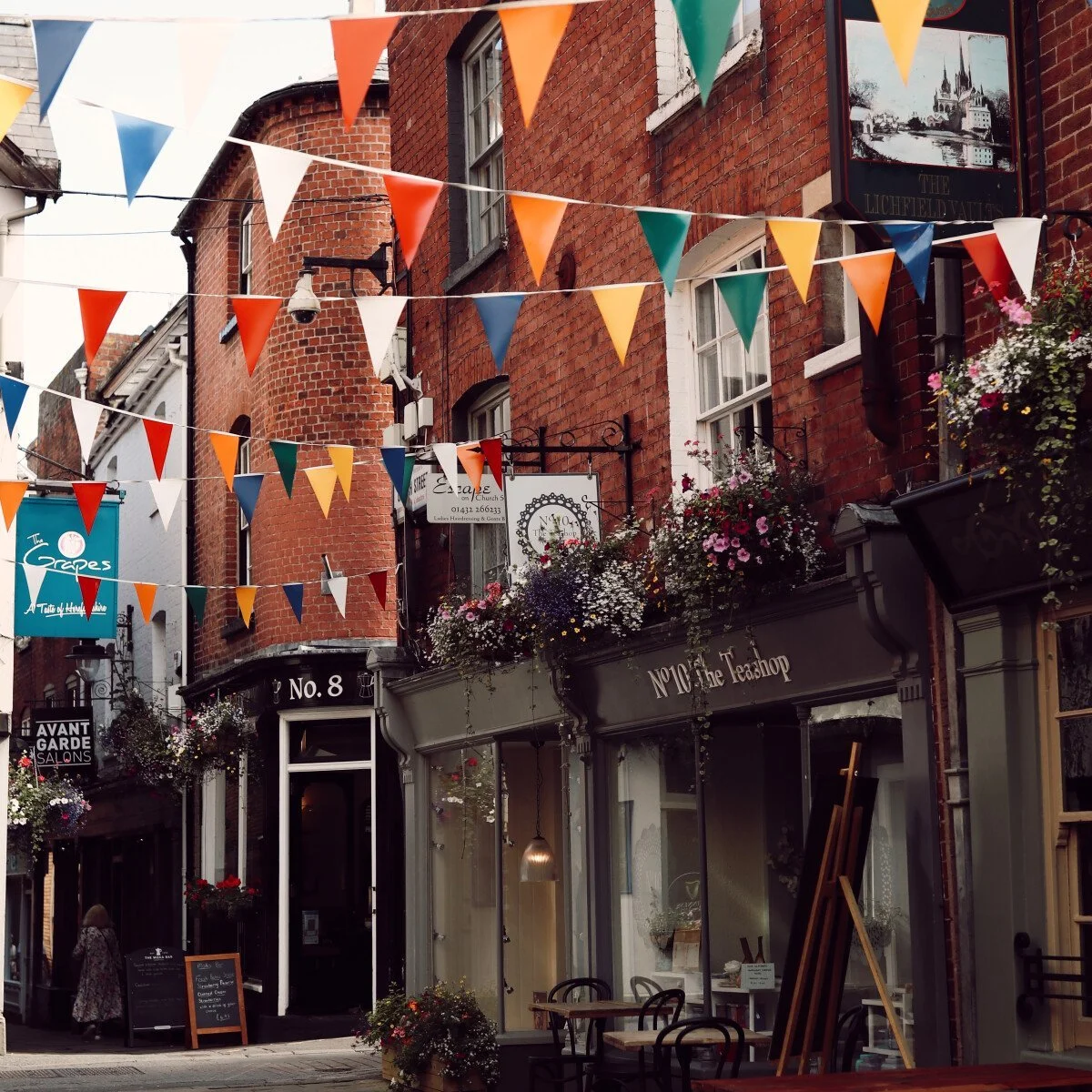
Image Copyright: Visit Herefordshire: Church Street, Hereford
Hereford may be compact, but it’s packed with personality. With over a thousand years of history, a riverside setting and a thriving independent spirit, the city offers a rich mix of culture, heritage and quiet discovery. It’s a place that reveals itself gradually, where historic streets, markets and green spaces sit comfortably side by side.
At its heart stands Hereford Cathedral, anchoring the city both physically and culturally. From here, narrow lanes lead into a lively market centre, while the River Wye provides a softer, slower counterpoint just a short walk away. Whether you’re exploring mediaeval treasures, browsing independent shops or simply enjoying the rhythm of the city, Hereford offers a well-balanced and rewarding stop.
Home to Hereford Cathedral, the Mappa Mundi and one of the UK’s most unique historic collections
A lively market city with independent shops, historic streets and strong local character
Riverside setting along the River Wye, offering calm walks alongside a compact historic centre.
What to See & Do
Hereford Cathedral – A striking blend of Norman and Gothic architecture, home to the world-famous Mappa Mundi and the atmospheric Chained Library.
Cathedral Close – A peaceful green space surrounding the cathedral, ideal for a quiet walk or pause before exploring the city.
Church Street – A narrow, cobbled lane linking the cathedral to the market square, lined with independent shops, cafés and bookshops.
Old House Museum – A beautifully preserved black-and-white timbered Jacobean house offering insight into 17th-century life.
Hereford Market Square – The historic centre of city life, hosting regular open-air markets with local produce, crafts and street food.
Hereford Butter Market – A vibrant indoor market hall dating back to 1860, home to a mix of independent traders and local produce.
River Wye & Victoria Footbridge – Scenic riverside walks with classic views back towards the cathedral, perfect for a slower pace.
Blackfriars Rose Garden – A hidden, tranquil garden set within the ruins of a mediaeval friary.
Waterworks Museum – A hands-on attraction showcasing historic water engineering with interactive exhibits.
Street Art & Sculpture Trail – Subtle creative touches scattered throughout the city, adding a contemporary layer to its historic setting.
-
Hereford’s story begins over a thousand years ago, with its origins tracing back to the 7th century when it was established as a Saxon settlement beside a shallow crossing on the River Wye. Its name—believed to mean “army ford”—hints at its earliest role as a strategic stronghold. By the time of the Norman Conquest, Hereford had become a centre of power on the volatile borderlands between England and Wales, known as the Welsh Marches. This frontier status shaped much of the city’s identity, bringing both prosperity and conflict over the centuries.
The construction of Hereford Cathedral in the 11th century anchored the city's significance, not only as a religious centre but as a place of learning and influence. Pilgrims and scholars arrived alongside merchants and craftsmen, and a flourishing medieval community took root. The cathedral close became the city’s sacred heart, while markets, guilds and civic life developed around it.
Remnants of Hereford’s defensive past still linger. The old city walls once wrapped protectively around its medieval core, and while much of the stonework has disappeared, the shape of the historic city can still be traced in its narrow lanes and radial street pattern. Architectural survivors from across the centuries stand shoulder to shoulder—from timber-framed townhouses with jettied upper floors to Georgian façades and Victorian civic buildings.
What sets Hereford apart is its quiet authenticity. Unlike cities that shout about their heritage, Hereford lets its layers unfold gently. There’s a sense of time suspended here—found in the uneven flagstones, the mellow stone of the cathedral, the echo of footsteps down cobbled alleys, and the calm, constant flow of the river. Its long story isn’t frozen in the past—it’s woven into the present, giving the city a grounded, enduring charm that continues to evolve without ever losing its roots.
-
The Cathedral and Mappa Mundi
At the very heart of Hereford, both geographically and spiritually, stands its magnificent cathedral—one of the great Norman foundations of England. Constructed from warm red sandstone, the building has watched over the city for nearly a thousand years, its soaring nave and ancient cloisters offering a timeless sense of peace and permanence.
While the cathedral is a marvel in its own right—with finely carved stonework, delicate medieval windows, and a beautifully restored Chapter House—it’s also home to two extraordinary treasures that place Hereford on the world stage. The Mappa Mundi, a 13th-century map of the known world, is the largest and most elaborate of its kind to survive. Drawn on a single sheet of calfskin parchment, it blends geography, theology and mythology in ways that reveal not just how people saw the world, but how they understood their place in it.
Housed in a purpose-built exhibition space beside the cathedral, the Mappa Mundi is paired with the Chained Library—a hauntingly atmospheric collection of ancient books, still secured to their shelves with iron chains. Walking into the library feels like stepping into another century, a rare and tangible link to the scholarly life of medieval England.
Yet the cathedral isn’t only a museum of the past—it remains a living space for worship, music, and community life. On any given day, you might hear the soaring harmonies of evensong or see artists sketching in the cloisters. Its close, bordered by manicured lawns and historic trees, is a peaceful place to pause, sit, and take in the quiet gravity of centuries past.
Hereford Cathedral is the final resting place of several notable historical figures, reflecting its long religious and political significance. Here's a closer look at who is buried in the cathedral, with a focus on its most important and interesting burials:
Saint Thomas of Hereford (St Thomas de Cantilupe)
The cathedral's most famous burial is St Thomas de Cantilupe, Bishop of Hereford from 1275 until his death in 1282. A respected scholar, diplomat, and church reformer, Thomas was canonised in 1320 after numerous miracles were attributed to his intercession—many of them connected to his shrine at Hereford.
His shrine, located near the high altar, became one of the most important pilgrimage sites in medieval England. Although it was dismantled during the Reformation, a modern shrine now marks the spot, and the original 14th-century tomb chest and effigy remain a powerful draw for visitors. He is the only English saint whose remains have stayed in a working cathedral church throughout the Reformation.
Bishop Peter of Aigueblanche
A 13th-century Bishop of Hereford, Peter of Aigueblanche was originally from Savoy and served as a royal diplomat under Henry III. His elaborate effigy lies in the south choir aisle. Though not as widely known today, his tomb is one of the finest medieval examples in the cathedral.
Bishop Richard Mayew (d. 1516)
A respected Renaissance-era bishop and academic, Mayew served as both President of Magdalen College, Oxford and later Bishop of Hereford. His tomb is found in the cathedral and reflects the transition from late medieval to early modern religious thought.
Other Bishops and Clergy
Many former bishops of Hereford and high-ranking clergy are buried throughout the cathedral. Some lie beneath elaborate effigies, while others are marked more modestly with inscribed slabs or wall plaques.
War Memorials and Cenotaphs
While not technically burials, the cathedral also houses several significant memorials, including:
The Herefordshire Regiment memorial to those lost in WWI and WWII
Personal tributes to soldiers, poets, and community figures whose lives were tied to the cathedral and the county
How to Visit Hereford Cathedral and the Mappa Mundi
Visiting Hereford Cathedral is a memorable and accessible experience for anyone interested in history, architecture, spirituality, or simply a moment of quiet reflection in one of England’s most atmospheric buildings. Entry to the cathedral itself is free, though donations are warmly encouraged to support its upkeep.
The main entrance is through the West Front on Cathedral Close, just off Broad Street. As you step through the doors, you’re immediately immersed in over 900 years of sacred heritage—from soaring Gothic arches to intricate stone carvings and richly coloured stained glass.
The Mappa Mundi and Chained Library Exhibition is located in a separate, modern building just beside the cathedral, on the south side. This space houses both the medieval map and the extraordinary library, along with interactive displays that help bring their stories to life. There is an entry fee for this part of the visit—which also helps support the conservation of these national treasures. Tickets can be purchased on the day at the entrance to the exhibition, and combo tickets often include guided tours or access to temporary exhibitions.
Hereford Cathedral is generally open Monday to Saturday from 10am to 5pm and on Sundays for worship, with limited access to certain parts during services and events. The Mappa Mundi Exhibition has slightly shorter opening hours, typically closing around 4pm, so it’s wise to check the cathedral’s official website for up-to-date times before your visit.
The grounds themselves are well worth lingering in. Cathedral Close is a peaceful, green enclave in the city centre—ideal for a picnic lunch or simply soaking up the atmosphere beneath ancient trees. On-site, you’ll also find a gift shop, a heritage café, and regular seasonal events ranging from organ recitals to craft markets.
The cathedral is fully accessible to wheelchair users, with ramps and disabled toilets available. Guided tours run at set times and can add valuable context to the architecture and artefacts, though it’s equally rewarding to explore at your own pace with one of the free floorplans available at the welcome desk.
-
While Hereford’s cathedral rightly claims centre stage, some of the city’s most enchanting experiences are quietly nestled just beyond the well-trodden paths. To truly appreciate its character, you need to slow your pace, turn into the quieter corners, and let the city reveal itself.
One of the loveliest discoveries begins with a gentle wander down Church Street. This narrow, cobbled lane stretches from Cathedral Close to High Town, and walking it feels like slipping back in time. Independent bookshops, art galleries, florists, and artisan cafes line the route, their colourful façades tucked into ancient stone and timber-framed buildings. Lanterns hang above the alley, and flower boxes spill over window sills in summer. It's a place to browse slowly, pop into a gallery, or simply pause for coffee in a courtyard café where conversations float lazily on the breeze.
A short walk north leads to the Blackfriars Rose Garden, one of Hereford’s most quietly magical places. Hidden within the surviving remains of a 14th-century Dominican friary, the garden blooms in a riot of colour each summer. Stone pathways meander among hundreds of rose bushes, while medieval ruins frame the scene in poetic contrast. It’s peaceful and often empty—a perfect spot to sit, breathe, and listen to the hum of bees among the petals.
To the west, just beyond the city centre, the Waterworks Museum offers an unexpected delight. Housed in a Victorian pumping station, the museum is dedicated to the story of public water supply—perhaps not a subject you’d think of exploring, but it’s full of charm. Children can interact with hands-on displays, and steam days bring the old machinery to life with hiss, heat, and movement. The collection of engines is beautifully preserved and surprisingly captivating.
-
Getting your bearings – Hereford is compact and easy to explore on foot. Start at the Cathedral, then follow Church Street into the market area before heading down towards the River Wye for a slower-paced walk.
Parking
Castle Green Car Park – Ideal for cathedral and riverside access
Wye Street Car Park – Great for walks along the Wye and Victoria Footbridge
Berrington Street Car Park – Convenient for central shopping and High Town
Maylord Orchards Car Park – Close to independent shops and indoor mall
On-street Pay & Display – Available in various locations around the city centre
Best place to start – Begin at Hereford Cathedral to anchor your visit, then explore outward into the historic streets and market square.
Market days – The city centre comes to life during regular market days, with local produce, crafts and street food adding to the atmosphere.
Riverside walks – The River Wye is just a short walk from the centre and offers a quieter, scenic contrast to the historic core.
Mappa Mundi — Medieval World Map & Historic Treasure

Image copyright: Visit Herefordshire
The Hereford Mappa Mundi is the largest known medieval map of the world, created around 1300. It’s drawn on a single sheet of calfskin and measures over 5 feet high and 4 feet wide. More than just a geographical tool, it offers a medieval worldview, blending Biblical events, history, mythology, and classical knowledge — with Jerusalem at its centre and strange creatures like unicorns and dog-headed men at its edges.
The map is as much a theological document as it is a cartographic one, showing how people in the Middle Ages understood their place in a divinely ordered universe.
Why It’s Significant
It’s a unique historical artefact, both visually striking and intellectually revealing.
Offers rare insight into medieval knowledge, belief, and imagination.
Recognised as a UNESCO Memory of the World item due to its exceptional cultural importance.
It remains intact and in its original home — a rare survival in the world of ancient maps.
The Mappa Mundi is housed at Hereford Cathedral, alongside the Chained Library (a collection of ancient books still secured with chains to the shelves). The exhibition includes interactive displays and background on the map’s creation and meaning.
Weobley — Black & White Village & Timeless Herefordshire Charm

Image copyright: Visit Herefordshire
Weobley (pronounced Web-lee) is one of the most picturesque and well-preserved villages along Herefordshire’s Black and White Trail. With its timber-framed buildings, quiet lanes and strong sense of continuity, it feels largely untouched by time. Rather than headline attractions, it offers atmosphere — a place to slow down, wander and absorb the details.
Once an important mediaeval market town, Weobley still reflects that heritage in its layout and architecture. Today, it’s best enjoyed at an unhurried pace, whether following a heritage trail, exploring historic buildings or simply pausing for a drink or bite to eat in a setting that feels distinctly local and authentic.
One of the finest collections of black-and-white timber-framed buildings in Herefordshire
Peaceful, unspoilt setting ideal for a slower, more reflective stop
Strong sense of history, from medieval market town roots to present-day village life
What to See & Do
Weobley Heritage Trail – A short, self-guided walk through the village highlighting historic buildings and hidden corners, offering insight into centuries of local life.
Church of St. Peter and St. Paul – A striking and unexpectedly grand church, with a tall spire, peaceful churchyard and beautiful stained glass.
Weobley Museum & History Centre – A small, volunteer-run museum telling the story of the village’s past, from its market town days to rural traditions.
Village Streets & Timber-Framed Buildings – Wander through the heart of the village to admire medieval cottages, coaching inns and preserved shopfronts.
Local Cafés & Pubs – A handful of welcoming spots to pause, offering a relaxed way to experience the village atmosphere.
-
Weobley is known for its striking timber-framed buildings, some dating back to the 14th and 15th centuries. Many line the central village square and surrounding lanes. Look out for:
The Old Grammar School (1570) – a classic black-and-white building with a steep gabled roof.
The Throne – one of the oldest houses in the village with beautifully preserved timberwork.
Ye Olde Salutation Inn – a fine example of traditional architecture, now a cosy pub.
The Rose and Crown – another atmospheric building with great food and local ales.
-
And when you’re ready to sit back and soak up the atmosphere, Weobley doesn’t disappoint. The Gables Tea Rooms is perfect for a cream tea or slice of homemade cake, while the Salutation Inn, set in one of the village’s most characterful old buildings, is a welcoming spot for a drink or hearty lunch.
-
During the English Civil War, Weobley’s strategic location made it a site of passing military interest. While it saw no major battles, both Royalist and Parliamentarian forces moved through the area, and local buildings likely housed troops or supplies. Subtle traces of this turbulent period linger in the village’s architecture and records. Check out the Themed section for more Civil War context.
-
Getting your bearings – Weobley is compact and easy to explore on foot. The main village square forms a natural starting point, with key sights within a short walking distance.
Parking – Limited but convenient parking is available around the village centre and nearby streets. Spaces are generally easy to find outside peak times, but arrive earlier on busy weekends.
Best place to start – Begin in the village centre, then follow the Heritage Trail to guide your route through the most characterful streets and buildings.
Time to visit – Weobley works best as a short stop of 1–2 hours, ideal as part of a wider Black and White Trail route.
Atmosphere – This is a quiet, lived-in village rather than a busy tourist hub, so expect a slower pace and limited facilities — part of its appeal.
Pembridge — Black & White Village & Market Hall Charm

Image Copyright: Visit Herefordshire
Pembridge is one of the most photogenic villages on the Black and White Trail, known for its beautifully preserved timber-framed buildings and tranquil rural setting. Once an important market town, it still feels like a step back in time, with a wide main street lined with mediaeval and Tudor houses, traditional pubs and inviting tea rooms.
Despite its peaceful feel, Pembridge has a strong sense of place and history. The village layout, historic buildings and surrounding countryside all contribute to an atmosphere that’s both timeless and quietly characterful — ideal for a slower stop as you explore this part of Herefordshire.
One of the finest black-and-white villages on the trail, with striking timber-framed architecture
Historic market town setting with a wide, characterful main street
Easy access to countryside walks and scenic drives through the Arrow Valley
What to See & Do
Church of St. Mary – A grand 13th-century church with a rare detached bell tower, one of the oldest and largest in England.
Old Market Hall – A charming historic structure at the heart of the village, perfect for photos and a focal point of Pembridge’s past.
Village Streets & Heritage Trail – Wander through mediaeval streets lined with black-and-white houses, independent shops and craft stores.
Local Pubs & Tearooms – Ideal for a relaxed lunch or coffee stop in a traditional setting.
Westonbury Mill Gardens (nearby) – Creative gardens featuring natural springs, colourful planting and quirky follies including a water tower and bottle house. Open April–September.
Dunkertons Cider Barn & Mill (nearby) – A historic cider site offering a glimpse into Herefordshire’s cider-making heritage.
-
Getting your bearings – The village centres around its wide main street, with key sights such as the church and market hall all within a short walking distance.
Parking – Limited parking is available along the main street and nearby village areas. Spaces are generally easy to find, though busier during weekends and peak travel months.
Best place to start – Begin at the Old Market Hall, then explore the church before wandering the main street and surrounding lanes.
Time to visit – Allow 1–2 hours to explore at a relaxed pace, longer if combining with nearby gardens or countryside walks.
Nearby connections – Easily combined with Weobley, Eardisland and Leominster as part of the Black and White Trail route.
-
Start/End Point: Pembridge village centre
Duration: ~45–60 minutes at a gentle paceBegin your walk in the heart of Pembridge, near the Market Hall or St. Mary’s Church. Follow the signs out of the village along Bearwood Road, a quiet country lane edged with hedgerows and views over the Arrow Valley. After around 20 minutes, you’ll reach Dunkertons Cider Mill, a family-run traditional cider producer (please note that cider production may have moved—check local listings for current activity or products available). Enjoy a look around and, if open, sample or pick up a bottle of local cider.
Return to Pembridge via the same route, or continue on a short loop past farm tracks and fields for a gentle countryside circuit.
-
Start/End Point: Pembridge village centre
Duration: ~60–75 minutesSet off west from Pembridge along Bridge Street, crossing the River Arrow. You’ll soon be walking quiet country lanes and field-edge paths toward Westonbury Mill Water Gardens, a delightful garden attraction famed for its unique follies, water features, and sustainable design. It’s open seasonally (usually April–September), and there’s a small café on site for refreshments. Find more at westonburymillwatergardens.com.
Loop back through farmland and leafy lanes to rejoin the village, or take your time exploring the gardens before returning the same way.
-
From the village, you can enjoy a variety of short countryside walks that take you alongside or near the River Arrow. These walks are ideal for those wanting to soak up rural Herefordshire — gentle rolling fields, hedgerows, grazing livestock, and peaceful lanes. You’ll also pass orchards and views of classic black-and-white timbered farmhouses.
Some routes to consider:
Pembridge to Eardisland (approx. 4.5 miles / 7.2 km one way):
A rewarding walk following country lanes and footpaths through the Arrow Valley, connecting two of the Black and White Trail’s prettiest villages.Pembridge Circular Walk (various lengths):
Local walking leaflets or OS maps (e.g. Explorer 201) show loops around Pembridge that cross the river and include woodland edges and valley views.Riverside strolls near Westonbury Mill Water Gardens:
Located just over a mile west of Pembridge, this area gives you more lush garden and stream-side walking, with paths and minor roads running along the Arrow.
You won’t find a single signed “Arrow Valley Way” from Pembridge, but the surrounding public footpaths and quiet lanes make it very easy to explore the landscape at your own pace.
Eardisland — Riverside Village & Black-and-White Charm
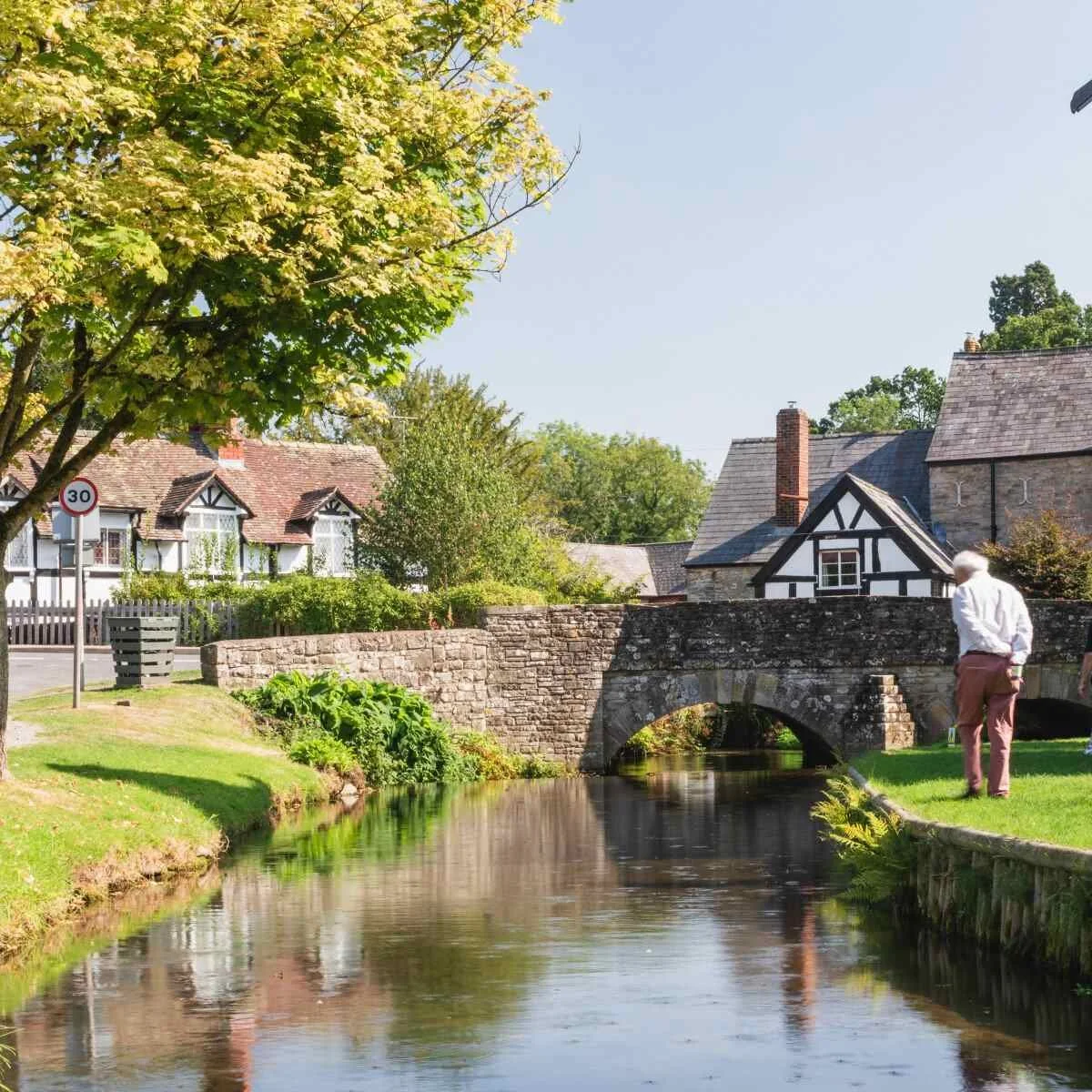
Set on the banks of the River Arrow, Eardisland is one of the prettiest villages along Herefordshire’s Black and White Trail. With its riverside setting, 14th-century bridge, and rows of immaculately preserved timber-framed houses, it offers a peaceful slice of old-world England.
The village green is a perfect place for a relaxed picnic or riverside wander. Don’t miss the 14th-century dovecote, now housing a small community-run heritage centre with local information and crafts. The Church of St. Mary the Virgin, with its Norman tower, adds to the village’s historic charm.
For refreshments, Eardisland has a traditional tearoom and a village pub. The Community Shop, located inside the restored dovecote, is well stocked with local produce, gifts, and trail guides — a lovely example of local pride and sustainability.
Leominster — Historic Market Town & Antiques Hub
-
Leominster (pronounced Lem-ster) has a rich history stretching back over 1,000 years. Founded as an Anglo-Saxon religious settlement in the 7th century, the town grew in importance with the establishment of a Benedictine priory in the 12th century — today’s Leominster Priory Church. In medieval times, Leominster thrived as a market town and wool-trading centre, benefiting from its location on key trade routes.
The town was also closely linked to the Mortimer family, powerful Marcher Lords with strongholds across the Welsh borderlands. Traces of this prosperous past can still be seen in Leominster’s timber-framed buildings, coaching inns, and market squares.
Today, Leominster blends historic charm with modern creativity, known especially for its antiques trade, heritage architecture, and friendly, local vibe.
-
Getting your bearings – The town centre is compact and walkable, with the Priory Church acting as a natural focal point. Most key sights, shops and cafés are within easy reach on foot.
Parking
Etnam Street Car Park – Close to the high street and shops
Broad Street Car Park – Convenient for the Priory Church and Grange Court
Dishley Street Car Park – Larger car park with easy walking access to the town centre
All car parks are pay-and-display, offering both short- and long-stay options. Parking is generally affordable, with good availability outside peak weekend hours. There are also some free on-street parking spaces with time restrictions.
Best place to start – Begin at Leominster Priory Church, then follow the Heritage Trail to explore the town’s historic streets and key landmarks.
Time to visit – Allow 1–3 hours depending on your interest in antiques, museums and browsing local shops.
Atmosphere – A working market town with a strong local identity, offering a relaxed and authentic alternative to busier tourist destinations.
Set at the confluence of the River Lugg and River Kenwater, Leominster (pronounced Lem-ster) is one of Herefordshire’s oldest towns, with roots stretching back to the 7th century. Known for its rich ecclesiastical heritage, thriving antiques scene and characterful streets, it offers a rewarding mix of history, culture and relaxed exploration.
Despite its long history, Leominster feels lived-in rather than preserved — a place where mediaeval buildings, independent shops and local markets continue to shape daily life. Whether you’re drawn by heritage, browsing antiques or simply enjoying a slower pace, it’s an engaging and worthwhile stop along the Black and White Trail.
One of Herefordshire’s oldest towns with strong medieval and ecclesiastical roots
Renowned antiques centres and auction houses
Characterful streets with timber-framed buildings and a strong sense of local life
What to See & Do
Leominster Priory Church – A magnificent 12th-century church with Norman stonework, medieval tombs and the rare surviving ducking stool.
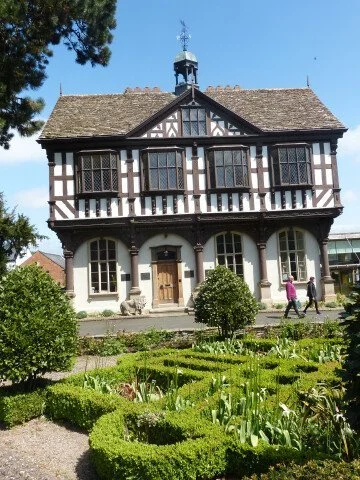
Grange Court – A beautifully restored Jacobean timber-framed building, now a community space with heritage displays, gardens and a café.
Leominster Heritage Trail – A self-guided walk through cobbled streets, historic buildings and former coaching inns.
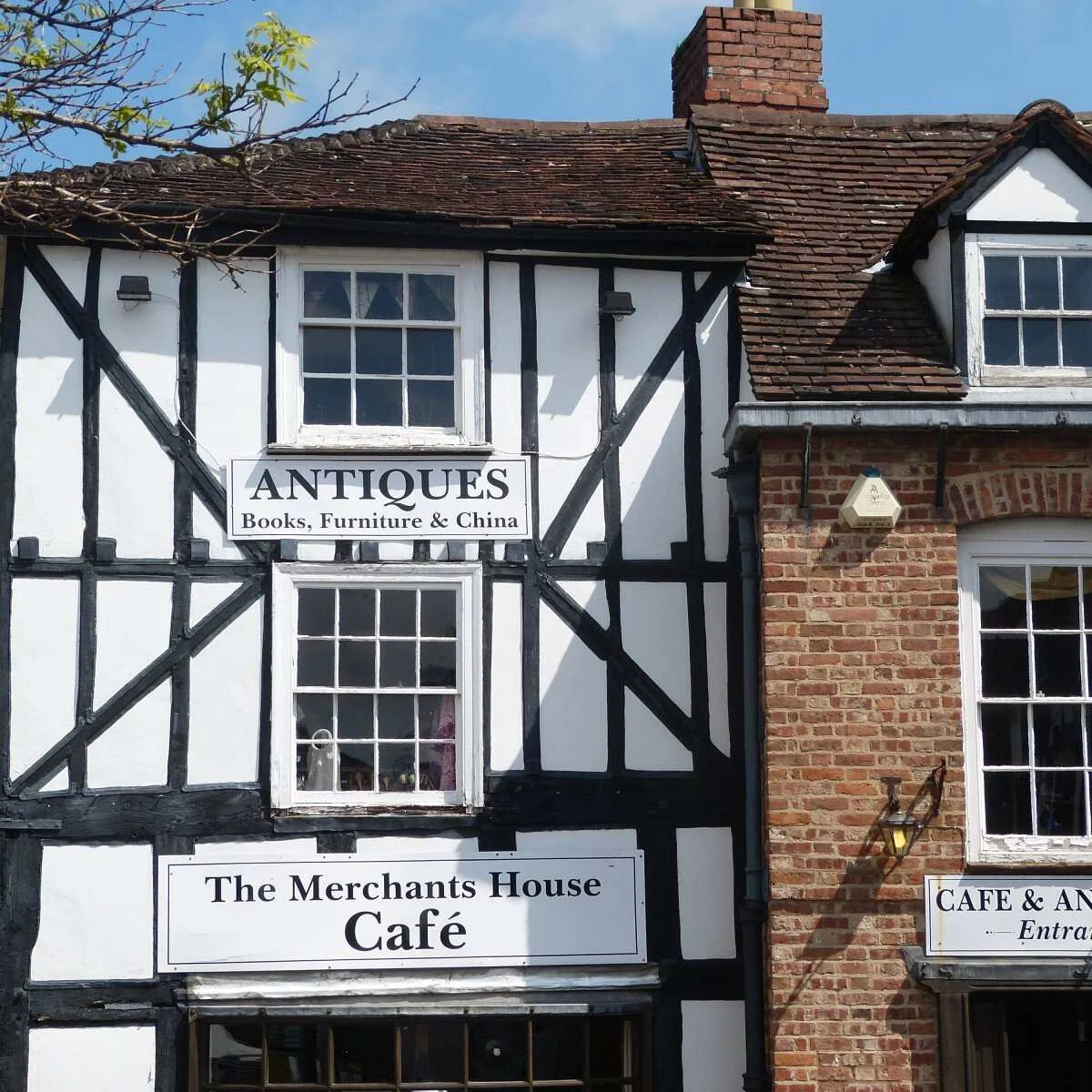
Leominster Antique Market and Brightwells Auction Rooms – Large antiques centres offering everything from furniture and jewellery to vintage collectables.
Leominster Museum – A small but engaging museum exploring the town’s agricultural, civic and industrial past.
The Lion Ballroom – An atmospheric 18th-century concert venue hosting classical performances and local events.
Images copyright: Visit Herefordshire
Nearby
A short drive west of Leominster brings you to two standout stops for lovers of food, history, and countryside charm.
Just 2.5 miles from town, the Monkland Cheese Dairy offers a deliciously authentic taste of Herefordshire. This working dairy specialises in handmade cheeses using traditional methods and milk from local farms. Visitors can take a behind-the-scenes tour to see the cheesemaking process in action, sample a range of award-winning cheeses, and enjoy light bites in the on-site café — a relaxed spot for a country lunch.

Cider Circuits at Newton Court
Explore the Herefordshire countryside on foot or by bike while discovering the region’s rich cider-making heritage. Waymarked trails lead through orchards, farmland, and quiet rural lanes.
Routes start and finish at Newton Court Cider, where you can relax at the café and bar or sample award-winning ciders and perries after your walk or ride.

Hampton Gardens
A magnificent castellated country house dating back to 1427, set within extensive landscaped gardens and parkland.
Visit Hampton Gardens to explore historic interiors, peaceful grounds, and one of Herefordshire’s most impressive heritage estates.
Bromyard — Black & White Market Town & Folk Heritage
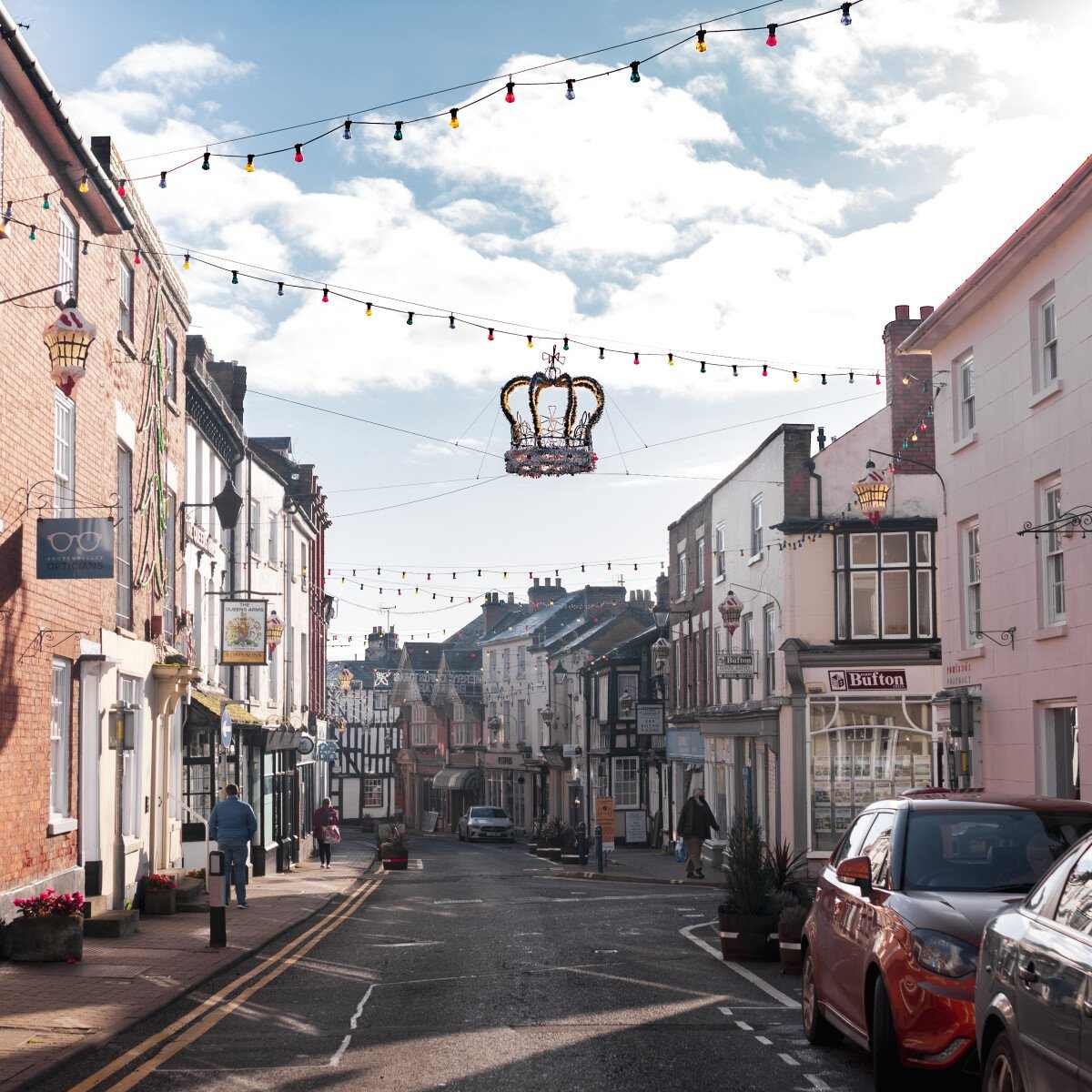
Tucked between Hereford and Worcester, Bromyard is a small but characterful market town rich in mediaeval charm, black-and-white architecture and a strong sense of local culture. Less well known than its neighbours, it rewards those who take the time to stop, offering a quieter and more intimate glimpse into Herefordshire life.
Its historic centre feels largely unchanged, with timber-framed buildings lining High Street and Broad Street, while a mix of heritage, community spaces and seasonal events keeps the town lively and engaging. Bromyard is best explored at a relaxed pace, where the details — architecture, stories and local character — gradually reveal themselves.
A lesser-known Black and White Trail stop with strong local character
Well-preserved timber-framed buildings and medieval street layout
Home to one of the UK’s leading folk festivals
Images copyright: Visit Herefordshire
What to See & Do
High Street & Broad Street – Wander through the town’s historic core, lined with black-and-white buildings, traditional shops and cottages.
Falcon Hotel – A striking 16th-century coaching inn and one of Bromyard’s most recognisable landmarks.
Town Council Offices – A classic half-timbered building showcasing the town’s architectural heritage.
St. Peter’s Church – A Norman-era church with a sturdy tower, stained glass and a peaceful churchyard.
Bromyard Local & Family History Centre – A small but insightful museum housed in a former Victorian school, exploring local life and heritage.
Bromyard Folk Festival – Held each September, this well-known event brings music, dance and community celebrations to the town.
-
Getting your bearings – The town centre is compact and centred around High Street and Broad Street, making it easy to explore on foot.
Parking – Several small car parks and on-street parking options are available close to the town centre, generally with good availability outside peak events.
Best place to start – Begin near the Falcon Hotel, then walk along High Street and Broad Street, taking in the key buildings before heading to St. Peter’s Church.
Time to visit – Allow 1–2 hours for a relaxed visit, longer if attending events or exploring local history in more depth.
Atmosphere – A quiet, authentic market town with a strong community feel, particularly lively during festival periods.
Nearby
Just a few miles outside Bromyard lies one of Herefordshire’s most atmospheric historic sites — the Brockhampton Estate. This moated medieval manor house, managed by the National Trust, is nestled among rolling parkland and ancient orchards. Visitors can explore the timber-framed hall, enjoy family-friendly trails through the woods, or simply soak up the peace and quiet of this beautifully preserved rural retreat.
For a taste of the region’s culinary heritage, head to Legges of Bromyard — a much-loved farm shop, butchery, and deli just outside the town. Known for its locally sourced meats, cheeses, and ready-to-eat meals, Legges is a perfect stop for picnic supplies or a hearty takeaway lunch. Their shop also stocks local cider, artisan products, and seasonal treats, making it a real showcase of Herefordshire’s food scene.
Worcester — Cathedral City & Civil War Heritage
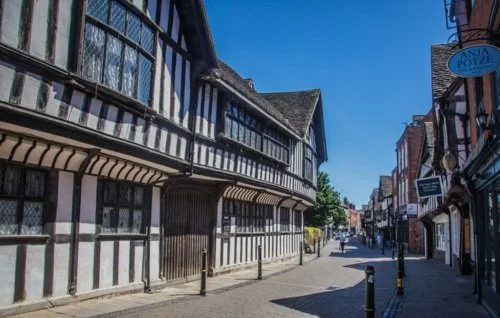
Worcester is a historic cathedral city set along the banks of the River Severn, known for its rich heritage, striking architecture and strong cultural identity. From its commanding cathedral to its elegant streets and riverside setting, the city offers a well-balanced mix of history, atmosphere and everyday life.
Beyond its historic core, Worcester is also associated with some of the county’s most recognisable names — from Royal Worcester porcelain to Worcestershire sauce — alongside a thriving cultural scene and one of England’s most picturesque cricket grounds. It’s a place where heritage and local character come together in a setting that’s both engaging and easy to explore.
Home to one of England’s most impressive cathedrals, set dramatically above the River Severn
Strong Civil War history, including key sites from the Battle of Worcester
A blend of heritage, culture and well-known local traditions
What to See & Do
Worcester Cathedral – A magnificent Anglican cathedral overlooking the River Severn, with a rich history and impressive architecture. Read more below.
The Commandery – A Grade I listed building with over 800 years of history, famously used as Royalist headquarters during the Battle of Worcester in 1651.
The Guildhall – A striking Grade I listed building on the High Street, showcasing Worcester’s civic heritage.
Friar Street – One of the city’s most characterful streets, lined with black-and-white timber-framed buildings.
Greyfriars’ House & Garden – A National Trust property offering a glimpse into historic domestic life within a peaceful garden setting.
Tudor House Museum – A 16th-century timber-framed house with hands-on exhibits exploring everyday life in Tudor Worcester.
The Museum of Royal Worcester – Located on the former factory site, telling the story of the city’s world-renowned Worcester porcelain industry.
Worcester City Art Gallery – A Victorian building housing fine art, local history collections and exhibitions.
Worcestershire County Cricket Ground. – One of England’s most scenic cricket venues, set beside the River Severn.
-
Getting your bearings – The city centre is compact and centred around the Cathedral and High Street, with most key attractions within easy walking distance.
Parking
City centre council-run car parks
St Martins Gate Car Park – Very popular and usually has plenty of spaces; within walking distance of the High Street and cathedral
CrownGate Car Park – Large multi-storey at the Crowngate Shopping Centre; central and good for shopping and dining
Croft Road Car Park Worcester – Slightly cheaper council surface lot, with good access to the city centre and nearby Queen’s Gardens
Copenhagen Street Car Park – Another useful central council car park, close to Deansway and the cathedral
Cornmarket Car Park – Central surface car park near key shopping streets
Pitchcroft Car Park – Large area a short walk from the centre; a good option for longer stays
King Street (Sidbury) Car Park – Reasonable council car park close to city centre walking routes
Waterworks Road Car Park – Smaller but well-rated; slightly quieter option close to the centre
Newport Street Car Park Worcester – Additional centrally located council parking
Silver Street Car Park and Clare Street Car Park – Smaller lots within easy walking distance of shops and dining
Best place to start – Begin at Worcester Cathedral, then explore the High Street and Friar Street before visiting key historic sites such as The Commandery.
Time to visit – Allow 2–4 hours for a general visit, or longer if including museums, riverside walks or a full day exploring the city.
Atmosphere – A lively but manageable city with a strong sense of history, combining cultural attractions with riverside relaxation.
-
Half-Day Walking Tour of Worcester (3–4 hours)
Start point: Worcester Cathedral
Finish: City centre (High Street / Crowngate area)
Walking time: Around 1.5–2 hours, plus sightseeing time1. Worcester Cathedral (45–60 minutes)
Begin at Worcester Cathedral, one of England’s most impressive historic cathedrals, set beside the River Severn. Highlights include the medieval cloisters, the Chapter House, and the tomb of King John. Take time to explore both the interior and the cathedral grounds, which offer excellent views over the river.
2. Riverside Walk to Diglis Bridge (20–30 minutes)
From the cathedral, follow the riverside path south along the River Severn. This is one of the most attractive walks in the city and gives you fine views back towards the cathedral and across the river. Walk as far as Diglis Bridge, then cross back towards the city.
3. Greyfriars House and Friar Street (15 minutes)
Head back into the historic centre via Friar Street, one of Worcester’s best-preserved historic streets. Visit Greyfriars’ House, a Tudor merchant’s house with a small garden courtyard. Even if you do not go inside, the street itself is worth seeing for its historic character.
4. The Commandery (30 minutes)
Walk a short distance to The Commandery, one of Worcester’s most important historic buildings. It served as Charles II’s headquarters during the Battle of Worcester in 1651. Today it is a museum explaining the city’s role in the English Civil War and the building’s long history.
5. High Street, The Cross and the Guildhall (20–30 minutes)
Return towards the centre of the city and walk along the High Street to The Cross, the historic heart of Worcester. Visit the Guildhall, one of the finest town halls in England, with a richly decorated interior if it is open.
6. Tudor House Museum and Cathedral Quarter (20 minutes)
Finish your walk by visiting the Tudor House Museum, a well-preserved timber-framed house with connections to the English Civil War. The surrounding Cathedral Quarter is also worth a short wander to see more of Worcester’s historic streets and buildings.
Practical Notes
The route is mostly flat and easy to walk.
Allow extra time if you plan to visit the museums in more detail.
The walk can easily be shortened or extended depending on how much time you have.
Worcester Cathedral — Riverside Landmark & Historic Heart
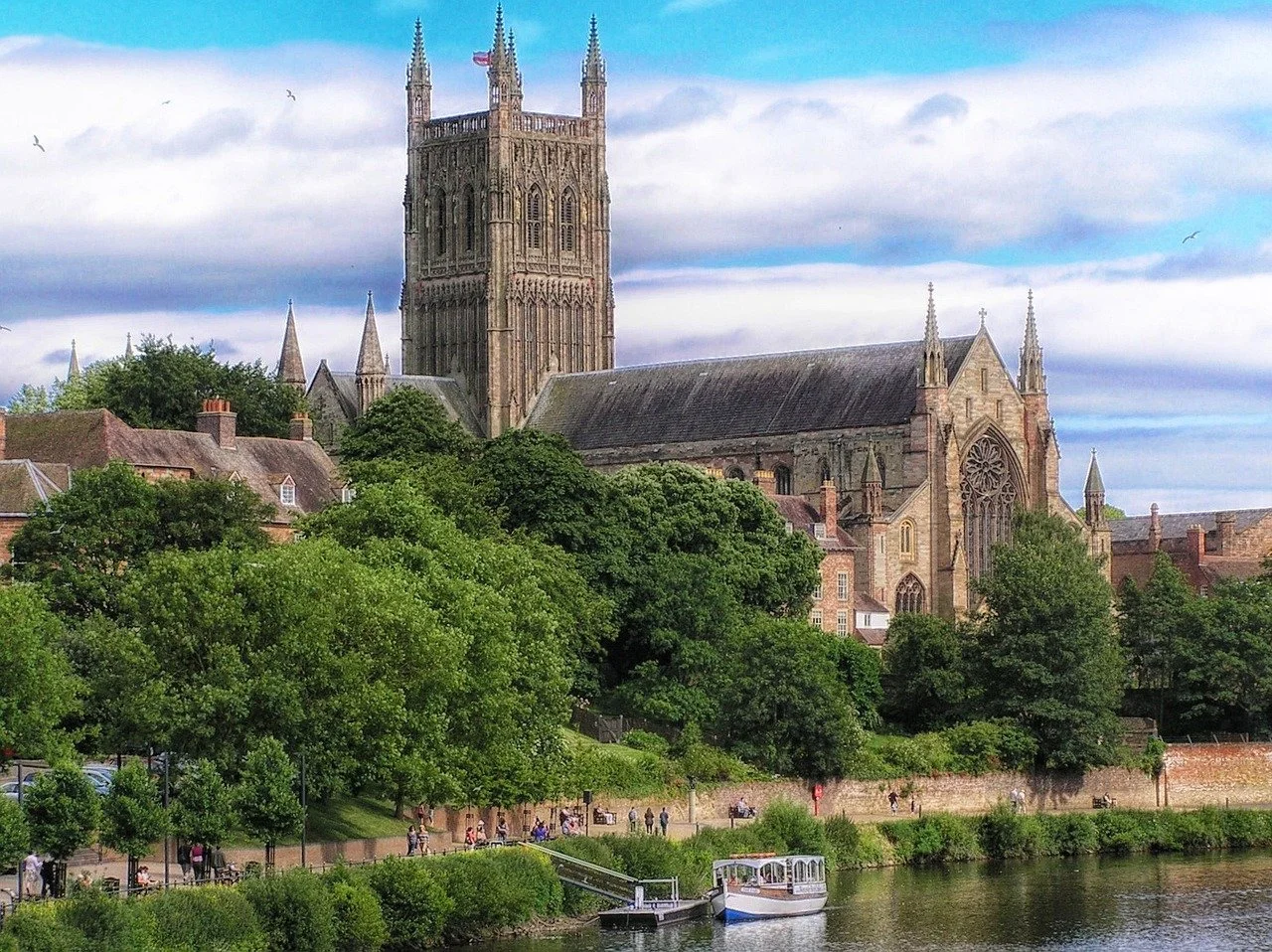
Rising above the banks of the River Severn, Worcester Cathedral is one of the most magnificent and historically significant cathedrals in England. A place of worship for over 1,300 years, it showcases an extraordinary blend of architectural styles, from Norman Romanesque to exquisite Gothic.
Founded in 680 AD, the current structure dates largely from the 11th to 14th centuries, with stunning 12th-century crypts, a soaring Perpendicular tower, and richly detailed cloisters. The cathedral has played a key role in English history — both spiritual and political — and continues to be a centre of community life today.
-
King John’s Tomb – One of the cathedral’s most famous features, the tomb of King John (of Magna Carta fame) lies before the high altar. He specifically requested burial here in 1216.
Prince Arthur’s Chantry – The beautifully carved chantry chapel holds the tomb of Prince Arthur, elder brother of Henry VIII. His early death dramatically changed the course of English history.
The Crypt and Chapter House – The Norman crypt, one of the oldest parts of the building, is a peaceful and atmospheric space. The octagonal chapter house, dating from the 12th century, is the oldest of its kind in England.
Stained Glass & The Great West Window – Vibrant Victorian and medieval stained glass windows fill the cathedral with colour and light. Look out for the Great West Window, which is particularly impressive.
The Cloisters – These serene walkways have featured in films and offer quiet reflection beneath the ancient vaulted ceilings.
Tower Climb – For those wanting a panoramic view of Worcester and the surrounding countryside, you can climb the tower’s 235 steps on guided tours (check availability in advance).
Cathedral Café and Shop – Relax in the on-site Café in the Cloisters and browse a charming shop filled with books, gifts, and local crafts.
-
King John (d. 1216) – Best known for signing the Magna Carta.
Prince Arthur, Prince of Wales (d. 1502) – The older brother of Henry VIII and first husband of Catherine of Aragon.
Numerous bishops, monks, and notable figures from medieval and Tudor England.
-
Location: 8 College Yard, Worcester WR1 2LA
Opening Hours: Daily, generally 7:30am–6pm (touring hours vary)
Admission: Free (donations welcome); charges may apply for tower climbs or events
More Info: www.worcestercathedral.org.ukWorcester Cathedral is easily walkable from the city centre and train station, making it a perfect stop for day visitors or part of a longer itinerary exploring Worcestershire.
A Historic Trip Through Herefordshire & Worcestershire
This section of the route is best known for its black and white villages and rural landscapes, but a couple of standout historic sites sit just beyond the main route.
These are not concentrated along the route, but both offer worthwhile detours — from the grand ruins of Witley Court to one of England’s best-preserved medieval manor houses at Stokesay.
Annual membership starts from £53 — with 15% off using code AFFEH1526.
Even one or two visits can add value, especially when combined with other routes across England.
Get 15% Off MembershipMalvern Hills and Black & White Trail Last updated: 25 April 2026
Some links may earn Uncover Britain a small commission at no extra cost to you. This helps support the ongoing creation, review and presentation of our road trip guides.
Route information and listings are provided for general guidance only. Always use your preferred navigation system and check official websites to confirm suitability, opening times and the latest details before travelling.
Our guides are reviewed regularly and supported by a mix of editorial research and digital tools to help keep content clear and up to date. If you spot anything that needs updating, we’re always glad to hear from you.