

 East Wemyss
Kirkcaldy
Aberdour
Dalgety Bay
Forth Bridge
Culross
Dunfermline
East Wemyss
Kirkcaldy
Aberdour
Dalgety Bay
Forth Bridge
Culross
Dunfermline
44 miles (71 km) with drive time approx. 1 hour 45 minutes
From Kellie Castle, from North East section, 59 miles (95 km) with drive time approx. 2 hours 15 minutes
East Wemyss > Aberdour > Dalgety Bay > Forth Bridge > Culross > Dunfermline
Historic Fife & the Forth: Crossings, Kingdoms & Industrial Shores
This part of the journey follows the Firth of Forth through one of the most historically important corridors in Scotland. Here, the coastline is less about beaches and harbours and more about how people moved, traded and ruled for over a thousand years.
Beginning at East Wemyss with its Pictish caves and castle ruins, the route traces a shoreline shaped by coal ports, medieval strongholds and royal burghs. At Aberdour and Culross, castles, churches and merchant houses show how power and wealth once gathered along this coast, long before modern transport changed how Scotland connected north and south.
The arrival at the Forth Bridges marks a dramatic moment in the story. Seen from the Fife side, they are not just engineering landmarks but the modern continuation of an ancient crossing point that has always defined this stretch of land.
The section concludes at Dunfermline, once the capital of Scotland, where abbey, palace and royal history bring the story of crossings and kingdoms to a natural close.
Taken together, this is not a series of stops but a connected narrative — a journey through the places that helped shape Scotland’s political, industrial and royal past.
How to Spend Your Time in South & West Fife
South & West Fife is a captivating blend of regal history, industrial heritage, and coastal charm. From the ancient capital of Dunfermline and the picture-perfect 17th-century village of Culross to seaside gems like Aberdour and East Wemyss, there’s much to discover in this corner of Scotland. Whether you’re drawn by iconic engineering marvels such as the Forth Bridge or prefer the calm waters and scenic walks along the coast, our itineraries will help you make the most of your visit—no matter how much time you have to spend.
-
Morning: Dunfermline
Dunfermline Abbey and Palace: Start your day at the ancient capital of Scotland. Visit the Abbey—final resting place of Robert the Bruce—and explore the adjacent palace ruins.
Pittencrieff Park (“The Glen”): Enjoy a quick walk through the beautiful gardens and woodlands gifted by philanthropist Andrew Carnegie.
Midday: Culross
Lunch in Culross: Drive 20 minutes from Dunfermline to the 17th-century village of Culross. Choose a local café or pub for lunch.
Culross Palace and Streets: Stroll the cobbled lanes, admire the restored houses, and learn about the village’s role in Scotland’s industrial past (and its film/TV appearances).
Afternoon: Forth Bridge & Coastal View
Forth Bridge Viewpoint: Head toward North Queensferry (approx. 20 minutes) or stop at Dalgety Bay for panoramic views of the iconic Forth Bridge.
Optional Detour—Aberdour: If time allows, swing by Aberdour Castle (one of Scotland’s oldest) and the beach for a quick scenic stop.
Evening: Kirkcaldy
Sunset Stroll: Drive about 25 minutes to Kirkcaldy. Walk the esplanade overlooking the Firth of Forth or explore the town center shops.
Dinner: Choose from local restaurants for a final taste of Fife before concluding your day.
-
Day 1: Dunfermline & Culross
Morning: Explore Dunfermline Abbey and Palace, then wander through Pittencrieff Park.
Afternoon: Drive to Culross for lunch. Tour Culross Palace, stroll the historic streets, and learn about the village’s significance in Scottish history.
Evening: Return to Dunfermline or stay in Culross, sampling pub fare and a relaxed evening atmosphere.
Day 2: Kirkcaldy & East Wemyss
Morning: Head to Kirkcaldy. Visit Kirkcaldy Galleries to see local art and artifacts, then take a walk along the esplanade.
Afternoon: Drive 15 minutes up the coast to East Wemyss. If open, explore the Wemyss Caves (noted for Pictish carvings). Otherwise, enjoy a coastal walk and views over the Firth of Forth.
Evening: Stay in Kirkcaldy or East Wemyss; dine at a local restaurant featuring fresh seafood or classic Scottish dishes.
Day 3: Aberdour, Dalgety Bay & Forth Bridge
Morning: Travel to Aberdour. Tour Aberdour Castle, one of Scotland’s oldest stone castles, and take a stroll at the nearby Silver Sands Beach.
Afternoon: Head toward Dalgety Bay for coastal views and a vantage point of the Forth Bridge.
Evening: Enjoy dinner in North Queensferry or Inverkeithing to toast the end of your 3-day South & West Fife adventure.
-
Day 1: Dunfermline
Dunfermline Abbey & Palace: Dive into royal history in the ancient capital.
Andrew Carnegie Birthplace Museum: Learn about the life of one of the world’s greatest philanthropists.
Pittencrieff Park: Enjoy an afternoon walk.
Day 2: Culross
Morning: Stroll the 17th-century streets; visit Culross Palace.
Afternoon: Relax over lunch at a local eatery and explore hidden corners like the Town House or West Kirk ruins.
Evening: Stay overnight for a quieter experience after day-trippers leave.
Day 3: Kirkcaldy
Morning: Drive to Kirkcaldy (about 30 minutes from Culross). Visit the Kirkcaldy Galleries (art, local history), then enjoy the esplanade.
Afternoon: Sample local cuisine at a town-center restaurant; explore shops or the local park.
Evening: Catch the sunset along the waterfront.
Day 4: East Wemyss & Aberdour
Morning: Head north to East Wemyss. If possible, book a tour of the Wemyss Caves.
Afternoon: Drive south to Aberdour, stopping at Aberdour Castle and the Silver Sands Beach.
Evening: Overnight in Aberdour or nearby; enjoy dinner with coastal views.
Day 5: Dalgety Bay & Forth Bridge
Morning: Short drive to Dalgety Bay. Walk the coastal path for scenic views of the Forth Bridges.
Afternoon: Cross into North Queensferry if time allows, or drive under the iconic rail bridge for photos.
Evening: Wrap up your trip with a final meal in the area or travel onward.
-
Day 1: Dunfermline – Royal Roots
Morning: Explore Dunfermline Abbey & Palace in-depth.
Afternoon: Visit the Andrew Carnegie Birthplace Museum. Wander Pittencrieff Park (“The Glen”).
Evening: Enjoy dinner in Dunfermline town center.
Day 2: Culross – 17th-Century Step Back in Time
Morning: Immerse yourself in Culross Palace and the restored historical streets.
Afternoon: Stroll down to the harbour and Town House area. Consider a short hike along the coastal path to enjoy Forth views.
Evening: Stay overnight for a quieter atmosphere after visitors depart.
Day 3: Kirkcaldy – Art & Seafront
Morning: Drive 30 minutes to Kirkcaldy. Visit Kirkcaldy Galleries (art, local artifacts).
Afternoon: Walk the esplanade, have lunch at a waterfront café.
Evening: Spend a second night in Kirkcaldy or nearby, enjoying the local dining scene.
Day 4: East Wemyss – Coastal Explorations
Morning: Head to East Wemyss, known for the Wemyss Caves with Pictish carvings (check tour availability).
Afternoon: Explore the coastline, snap photos, or take a gentle walk above the cliffs.
Evening: Return to Kirkcaldy or opt for a local B&B if you prefer a new base.
Day 5: Aberdour – Castle & Beach
Morning: Travel south to Aberdour Castle, one of Scotland’s oldest surviving stone castles.
Afternoon: Relax on Silver Sands Beach or grab lunch in the village.
Evening: Enjoy the coastal serenity with a leisurely evening stroll before dinner.
Day 6: Dalgety Bay & Forth Bridge
Morning: Short drive or bus ride to Dalgety Bay. Walk the coastal path with views of the iconic Forth Bridge.
Afternoon: Cross to North Queensferry if you like, or spend time photographing the rail bridge from various viewpoints.
Evening: Enjoy a meal overlooking the bridges or head back toward Dunfermline for more dining options.
Day 7: Relaxation & Farewell
Morning: Revisit any favorite spots or enjoy a relaxed final day.
Afternoon: Pick up souvenirs from local shops, or take a final scenic drive along the coast.
Evening: Depart South & West Fife, carrying memories of its royal heritage, coastal charm, and iconic bridges.
The Fife Coastal Path along Historic Fife & the Forth
The Fife Coastal Path continues to be a quiet companion in this part of the journey, but its character changes. Here, the path is less about fishing villages and more about cliffs, castles, woodland edges and views towards the great crossings of the Forth.
You still don’t need to “walk the path” in any formal sense. In this section, it simply offers a series of short, rewarding stretches that add context, scenery and breathing space between some of Fife’s most historic places.
Below are the points where the path is most rewarding to dip into as you travel this route.
East Wemyss — Caves, cliffs and ancient shoreline
Best stretch: Wemyss Caves to MacDuff’s Castle
Character: Clifftop path, sea caves, ruins and wide Forth views
Ideal for: A short historic coastal wander before continuing west
This is one of the most atmospheric sections of the entire route, where Pictish carvings, castle ruins and sea views all sit within a few minutes’ walk of each other.
Aberdour — Woodland, beach and castle views
Best stretch: Aberdour Harbour through woodland to Silver Sands
Character: Trees, sand, shoreline paths and castle backdrop
Ideal for: A relaxed 30–45 minute coastal walk
This is one of the most varied and enjoyable walking sections on the Forth, combining beach, forest edge and historic setting.
Dalgety Bay — Shoreline and first bridge views
Best stretch: St Bridget’s Kirk along the coast path towards Inverkeithing
Character: Quiet shoreline, ruins and distant bridge views
Ideal for: A short scenic pause rather than a full walk
Here the path begins to frame views of the Forth Bridges and the crossing ahead.
North Queensferry — Beneath the Bridges
Best stretch: Harbour paths and shoreline viewpoints
Character: Dramatic engineering views from sea level
Ideal for: A short wander for photographs and perspective
This is where the path meets one of Scotland’s most iconic skylines.
Culross — Coastal edge below the village
Best stretch: Shoreline path below Culross towards the old harbour
Character: Mudflats, estuary views and historic shoreline
Ideal for: A gentle extension after exploring the village streets
This section shows how Culross once functioned as a working port on the Forth.
How to use this
As with the East Neuk, these are not hikes. They are well-chosen places where stepping onto the path for 20–40 minutes adds atmosphere and understanding to the journey between castles, towns and bridges.
After Kellie Castle, the road no longer follows the sea. You cut across the middle of Fife through farmland and small lanes, leaving behind the fishing villages and harbour rhythm of the East Neuk. When the coast reappears at East Wemyss, it feels very different. This is not a place of colourful boats and galleries. It is older, quieter and far more ancient in feel — a shoreline marked by caves, ruins and the traces of early settlement.
This is where the story of Historic Fife & the Forth properly begins.
East Wemyss — Pictish Caves, Castle Ruins & Industrial Shoreline
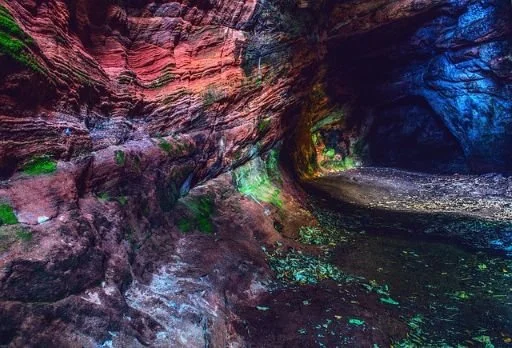
East Wemyss sits on a rugged stretch of coast where the layers of Fife’s history are unusually visible. Sea caves carved into the cliffs hold some of the most important Pictish carvings in Scotland. Nearby, the ruins of MacDuff’s Castle stand above the shoreline, while the village itself reflects a later coal-mining past that once powered this part of the coast.
This is a place where you step straight into deep history before the route moves into medieval castles, bridges and royal towns further west.
One of Scotland’s most significant collections of Pictish carvings
Atmospheric castle ruins overlooking the Forth
Strong sense of early settlement and industrial heritage
Excellent short section of the Fife Coastal Path
A dramatic and historic reintroduction to the coastline
What to See & Do
Wemyss Caves — Guided visits to see ancient carvings inside sea caves along the cliffs.
MacDuff's Castle (see below) — Ruined 14th-century castle perched above the shore, linked in folklore to Macbeth.
Coastal Path Walk (see below) — Short clifftop section linking caves and castle with wide views across the Forth.
West Wemyss Harbour — Small, quiet harbour village reflecting the area’s coal port past.
Wemyss Heritage Centre is a tiny museum in the village of Coaltown of Wemyss, run by volunteers and open only a few days a week. Highlights the area's coal mining heritage with artefacts donated by miners and their families. A hidden gem often bypassed by tourists heading to the more popular East Neuk villages.
The Fife Coastal Path at East Wemyss — Caves, Cliffs & Old Coal Shores
Here the Fife Coastal Path feels wilder and more elemental than along the East Neuk. The path runs directly past the sea caves, beneath low cliffs and along rock platforms shaped by centuries of tide and weather. It links the Wemyss Caves, the ruins of MacDuff’s Castle, and the quiet harbours of East and West Wemyss into one atmospheric shoreline walk.
Best stretch: East Wemyss village → Wemyss Caves → MacDuff’s Castle
Character: Raw coastline, Pictish history, ruined castle, big Forth views
Ideal for: A 30–45 minute out-and-back or a slow wander between historic sites
Wemyss Caves — Scotland’s Largest Collection of Pictish Carvings
A line of sea caves at East Wemyss holds Scotland’s largest collection of Pictish carvings. At Wemyss Caves, cut directly into the sandstone are symbols, animals and abstract marks made over a thousand years ago. There’s no glass or gallery here — you see them where they were created, inside caves shaped by the sea. The setting is raw and atmospheric, turning a simple coastal stop into something ancient and memorable.
The most important group of Pictish carvings in Scotland
Symbols viewed in their original location
Dramatic shoreline setting on the Fife Coastal Path
Close to MacDuff’s Castle for a layered historic stop
Practical information
Guided tours only (book ahead with local volunteers)
Uneven, tide-affected ground — wear sturdy footwear
Park in East Wemyss and walk to the meeting point
Allow 60–90 minutes for the visit and coastal walk
Leaving the caves at East Wemyss, the character of the coast changes. The raw cliffs and rock platforms give way to a broader shoreline shaped by industry, trade and long seaside promenades. This is where Fife’s story turns from ancient symbols carved into stone to shipbuilding, coal ports and Victorian seafront towns.
Driving west, you pass through Kirkcaldy, once one of Scotland’s most important linoleum and trading ports. Even a brief pause here makes sense of this stretch of coastline: a walk along the esplanade, views across the Forth, and a sense of how this shore supported working towns rather than fishing villages. Ravenscraig Park is a beautiful green space situated along the coastline, offering scenic views of the Firth of Forth. The park features walking trails, picnic areas, a children's play area, and sports facilities, making it a popular destination for outdoor recreation and relaxation. Kirkcaldy boasts several beautiful beaches, including the Blue Flag-awarded Burntisland Beach and the sandy expanses of Seafield Beach. Visitors can enjoy beachcombing, sunbathing, swimming, and water sports during the warmer months.
Just beyond, set in parkland above the sea, are the ruins of Ravenscraig Castle. It is widely regarded as Scotland’s first true artillery fortification. Built around 1460 for Mary of Guelders, its thick walls, angled forms and gun loops were designed from the outset to withstand cannon fire — a radical shift in castle design at the time. Though now roofless and open to the sky, the surviving façade and towers still show how formidable it once was. The castle soon passed to the Sinclair family, but its defensive design remains its most compelling legacy.
From here, the road continues along the shoreline through Burntisland and Kinghorn before reaching the gentler, more village-like setting of Aberdour.
Aberdour — Castle, Silver Sands & a Norman Kirk Above the Forth
Tucked between wooded headlands on the Firth of Forth, Aberdour is one of those rare stops where history, coastline and village life sit within a few unhurried minutes of each other. You can wander from a medieval castle to a sandy beach, climb to a Norman churchyard with views to Edinburgh, then return for coffee by the harbour — all without moving the car.
A compact village where castle, beach and harbour are easy to link on foot
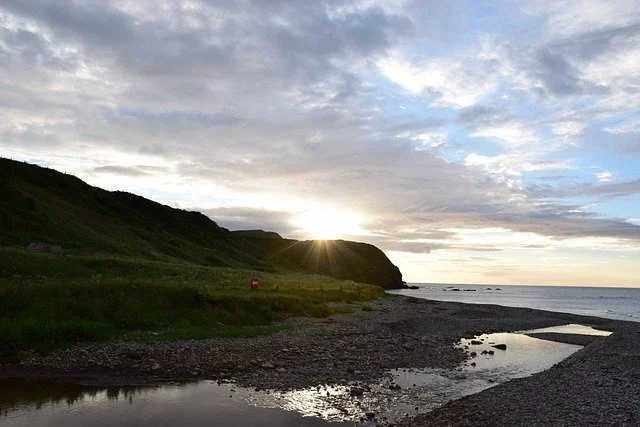
One of Scotland’s finest small beaches at Silver Sands
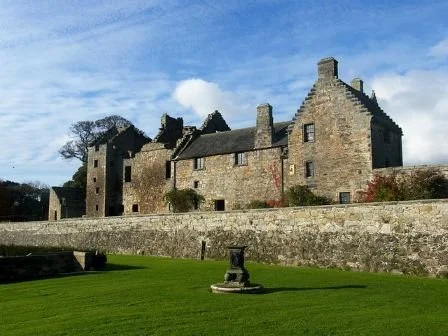
A layered medieval residence at Aberdour Castle with gardens and painted interiors
A beautifully preserved Norman kirk at St Fillan's Church Aberdour overlooking the Forth
What to see & do
Explore Aberdour Castle — 13th-century origins, later extensions, a painted ceiling, long gallery and a walled garden with a distinctive beehive dovecote
Walk down to Silver Sands Beach for wide views across the Forth towards Edinburgh and the Pentlands
Climb up to St. Fillan's Church (1123) and its graveyard for one of the best elevated viewpoints on this coast
Amble through the harbour and village lanes for cafés, pubs and small shops
Join the Fife Coastal Path east or west for an easy shoreline wander through trees and open sea views
-
Aberdour grew where land, shelter and sea routes met. The Douglas family established the original castle in the 1200s, later enlarging it into a comfortable Renaissance residence as fortunes and fashions changed. Above the village, St Fillan’s Church predates much of what you see below — its Norman nave and chancel surviving centuries of alteration, neglect and careful restoration. Together, they show how faith, power and daily life once centred on this small fold in the coastline.
-
Parking: Small car parks near the harbour, Silver Sands, and by the castle entrance
Walking: Everything is within 10–15 minutes on foot; link castle → beach → church as a simple loop
Facilities: Cafés, pubs, toilets in the village; seasonal facilities at Silver Sands
Time needed: 60–90 minutes without rushing; longer if you add a coastal walk
Fife Coastal Path — Aberdour Section
From Aberdour, the Fife Coastal Path is especially easy to dip into without committing to a long walk. Head west from Silver Sands through light woodland for elevated views across the Forth, or go east past the harbour where the path hugs the shoreline between rocks, trees and small coves. In either direction, 20–40 minutes is enough to add sea air, perspective and a sense of connection to the wider coast before returning to the village.
Leaving Aberdour, the road begins to feel closer to the Forth. Woodland and shoreline alternate, and the sense of the estuary widens ahead. This is where the journey subtly shifts from beaches and castles to crossings and horizons. You are not heading into a town next — you are heading to a viewpoint on the edge of the water.
Dalgety Bay — Shoreline Views & First Sight of the Bridges
You do not stop in Dalgety Bay for the town, unless you want to stop for provisions or use facilities. You stop here because this is where the Forth opens out and the bridges first appear properly on the horizon.
Why pause here
Ruins of St. Bridget’s Kirk right on the shoreline
A peaceful woodland stretch of the Fife Coastal Path
Your first clear, memorable views of the Forth Bridges
A natural leg-stretch between historic villages
What to see & do
Walk down to St. Bridget’s Kirk and explore the ivy-clad medieval ruins beside the water
Join the Fife Coastal Path for 20–30 minutes through trees and along the shore
Photograph the bridges from a quieter, less crowded vantage point
Pause on the rocks and simply take in the scale of the estuary
This is a viewpoint stop, not a town stop — a place to breathe, look outward, and understand where you are heading next.
Fife Coastal Path — Dalgety Bay Section
At Dalgety Bay, the Fife Coastal Path becomes quieter, greener and more reflective. This stretch runs through light woodland and along the shoreline, with frequent glimpses out across the Firth of Forth towards Edinburgh and, increasingly, the three great bridges. It’s an easy, level section ideal for a 20–40 minute wander, where the sound of the water and the views ahead do most of the work. This is less about dramatic cliffs or harbours and more about a gentle coastal corridor that prepares you for the historic crossings to come.
Leaving Dalgety Bay, the road begins to feel purposeful. The shoreline path, the woodland, and the glimpses across the water all start to point you in the same direction. Ahead, the bridges rise slowly into view — first as distant shapes on the horizon, then as unmistakable structures dominating the skyline.
This is where the character of the journey changes. You are no longer moving between villages and coastal stops, but towards one of Scotland’s great historic crossings. The landscape opens out, the water widens, and the scale of the Firth of Forth becomes clear as you approach the Forth Bridges.
The Forth Bridge & The Three Crossings
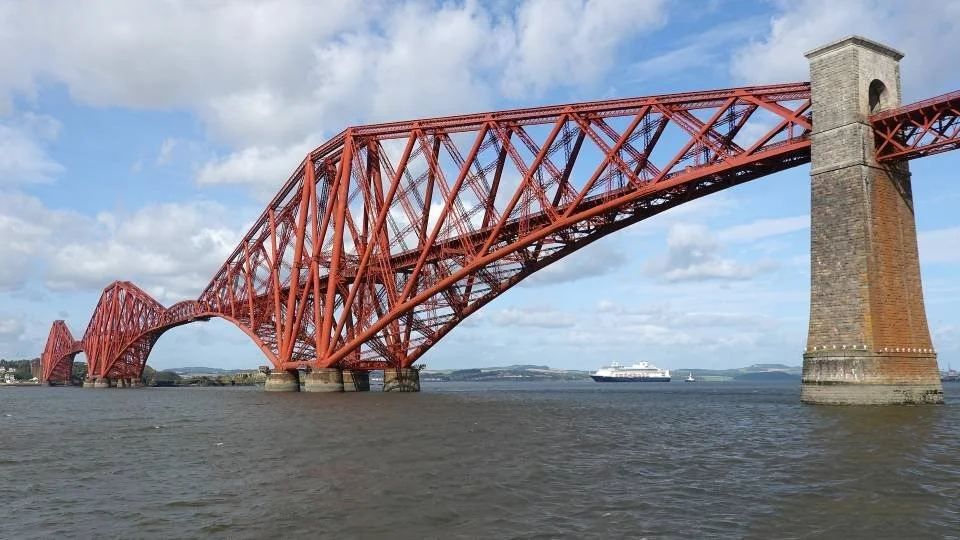
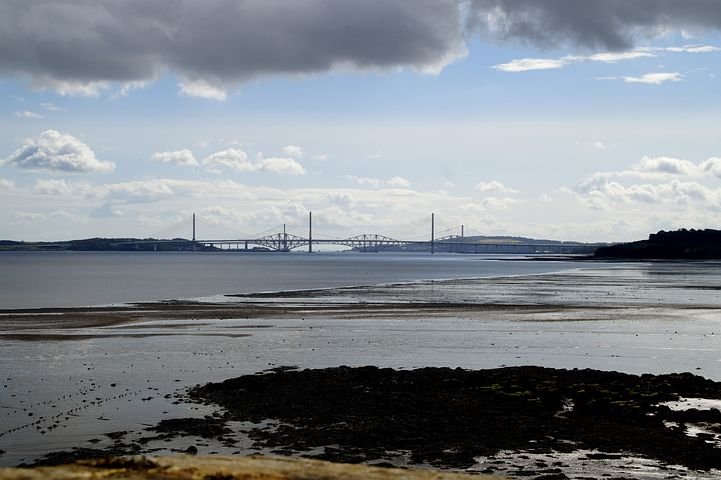
Few places in Scotland show the story of movement and connection as clearly as the Forth at Queensferry. Here, three very different bridges span the same stretch of water, each marking a leap forward in engineering and each changing how Scotland moved between Fife and Edinburgh.
Together, they form one of the most recognisable skylines in the country — not just a landmark, but a visible timeline of how crossings evolved from ferry routes to world-class structures.
Why stop here
A UNESCO-listed icon of Victorian engineering
Three bridges from three eras in one sweeping view
Easy viewpoints on both shores at Queensferry
A powerful sense of scale across the Firth of Forth
A natural pause in the journey before turning inland to Culross and Dunfermline
What to see & do
View the Forth Bridge from South or North Queensferry for classic angles and photographs
Walk or cycle part of the Forth Road Bridge (now traffic-free) for views directly over the water
Discover more about the bridges with the Forth Bridges Trail.
See the sleek lines of the Queensferry Crossing, the modern counterpart to the older spans
Visit the Queensferry Museum to understand how and why these bridges were built
Wander the harbourside streets of South Queensferry for cafés, boat trips and uninterrupted bridge views
-
The original Forth Bridge (opened 1890) was designed by Sir John Fowler and Benjamin Baker using the cantilever principle. Its vast red steel structure, stretching 2.5 km between North Queensferry and South Queensferry, is now recognised worldwide as a masterpiece of engineering and a UNESCO World Heritage Site.
The Forth Road Bridge followed in 1964 as a suspension bridge for vehicles, now repurposed for buses, walkers and cyclists since the opening of the Queensferry Crossing in 2017. The newest bridge, with its three cable-stayed towers, carries modern traffic while sitting respectfully alongside its historic neighbours.
Standing here, you’re looking at more than bridges — you’re seeing how Scotland’s main crossing of the Forth has evolved for over a century, all in one place.
This stretch sits on the Fife Coastal Path between Dalgety Bay and North Queensferry, and it’s one of the most rewarding short sections anywhere on the route because the path runs directly beneath the bridges.
Fife Coastal Path — Dalgety Bay to North Queensferry (The Bridges Section)
Best stretch: From Dalgety Bay sailing club / St Bridget’s Kirk area to North Queensferry
Time: 30–60 minutes out-and-back (you don’t need to do it all)
Character: Woodland, shoreline, then huge open bridge views directly overhead
This is where the Coastal Path becomes dramatic rather than gentle. The woodland section from Dalgety Bay suddenly opens onto the shoreline and you find yourself walking under the vast red structure of the Forth Bridge with the other two crossings layered behind it.
You’re not looking at the bridges from a distance here — you’re inside the scene, at water level, with the scale towering above you.
Why this section is worth dipping into
One of the closest ground-level views of the Forth Bridge
Quiet shoreline paths away from traffic and viewpoints
Woodland-to-open-coast contrast in a short distance
A perspective most visitors never see from the roadside stops
Easy to turn into a short wander rather than a long walk
If you only step onto the Fife Coastal Path once in this chapter, this is the place to do it.
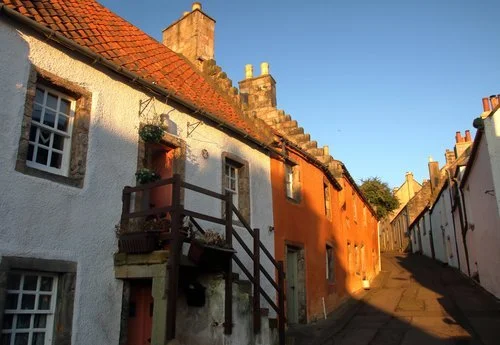
Leaving the bridges behind, the road bends west and the atmosphere changes again.
You move away from steel, scale and engineering spectacle and back into something older, quieter and more human in scale. The shoreline softens, the villages become smaller, and the sense of history shifts from industry and movement to trade, daily life and preservation.
A short drive along the Forth brings you to Culross — a place that feels less like a stop on a road trip and more like stepping directly into the 17th century.
-
Culross was founded as a religious settlement in the early medieval period and grew into a royal burgh and major port by the 1500s. Coal, salt and trade brought wealth, and merchants built the distinctive houses that still line the Back Causeway today. When the harbour silted and trade declined, Culross was left behind by progress — which, centuries later, is exactly why it survives so completely. Careful restoration in the 20th century preserved not just individual buildings, but the entire layout and character of the burgh.
-
Parking: Small car park at the east end of the village (Culross East Car Park) and additional parking near the Community Garden
Best explored on foot: steep cobbles and narrow lanes; allow 60–90 minutes to wander slowly
Culross Palace: typically open April–October; gardens open all year
Toilets & café: seasonal facilities near the palace and village centre
Footwear: cobbles can be uneven and slippery when wet
Culross — Scotland’s Best-Preserved 17th-Century Port
Culross doesn’t feel like a village you arrive at — it feels like a place you step into. Once one of Scotland’s busiest 16th-century ports on the Firth of Forth, it is now the most complete survival of a 17th-century burgh anywhere in the country. Cobbled lanes, pantiled roofs and ochre-washed houses climb the hillside exactly as they did when merchants traded here. There are no modern shopfronts to break the spell, just closes, courtyards and sea views between buildings.
Explore the scenic countryside surrounding Culross on one of the village's many walking trails. Follow paths along the coast, through woodlands, and past historic landmarks, and enjoy panoramic views of the Firth of Forth and the surrounding landscape.
One of the best-preserved 17th-century streetscapes in Scotland
Compact, atmospheric and ideal to explore on foot
Strong mix of merchant wealth, religious history and everyday life
Panoramic views over the Forth from lanes and churchyards
What to See & Do
Culross Palace — richly restored rooms, painted ceilings in the Great Hall, and a hillside garden open year-round
Culross Abbey — Gothic windows, medieval stonework and a peaceful churchyard with views across the estuary
Culross Mercat Cross — the historic heart of markets, proclamations and village life
Culross West Kirk — 16th-century church with a distinctive Dutch-style tower and remarkable setting above the village
The Study (c.1610) — a tall white-harled house linked to Bishop Leighton of Dunblane
Culross Pottery and Gallery — local ceramics inspired by traditional Scottish forms
Culross Community Garden — tucked behind the village with quiet paths and estuary views
Woodland and coastal paths around the village for short scenic walks above the Forth
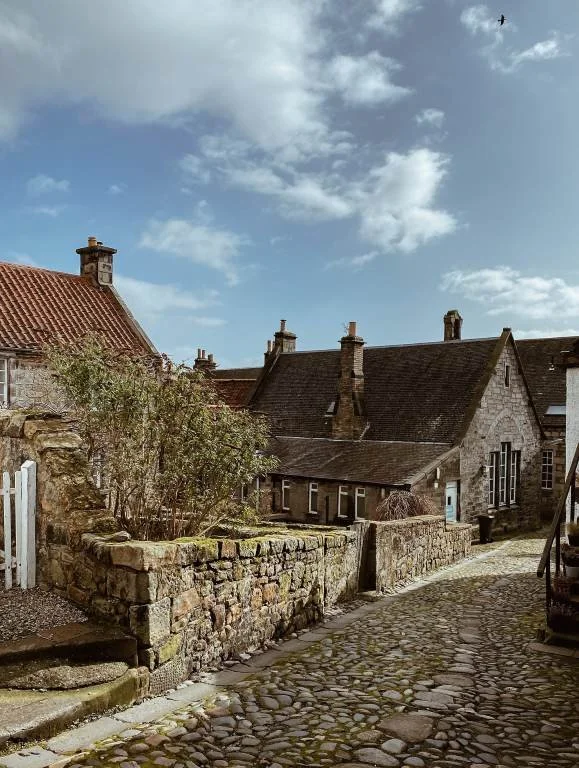
The Fife Coastal Path runs quietly below Culross along the estuary shoreline, offering a gentle, flat walk with wide views across the Forth — a peaceful contrast to the village’s cobbled lanes above.
Leaving Culross, the road turns away from the shoreline and begins to climb gently inland. The wide estuary views fall behind you, replaced by farmland, hedgerows and the sense that you are moving away from ports and crossings into somewhere older and more central to Scotland’s story.
This short stretch is a quiet change of scene before arriving at Dunfermline — once the capital of Scotland, a royal residence, and the place where kings and queens were laid to rest. After coastal villages, industrial shores and merchant towns, Dunfermline feels different again: less about the sea, and more about power, religion and monarchy at the heart of medieval Scotland.
Dunfermline — Scotland’s Ancient Capital
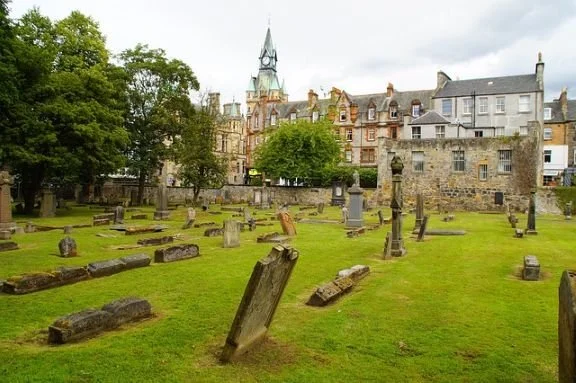
Long before Edinburgh rose to prominence, Dunfermline was the seat of Scottish kings. Set on high ground above the Forth, it became a royal centre in the 11th and 12th centuries where monarchy, religion and power were closely intertwined. This is where Queen Margaret founded her priory, where Malcolm III held court, and where generations of Scottish royalty were buried.
Today, Dunfermline still feels like a place built around its abbey, palace and parkland — a town where medieval Scotland sits comfortably beside Carnegie’s Victorian philanthropy and a modern cultural scene.
Former capital of Scotland and royal burial place
One of the most important abbeys in Scottish history
Palace ruins, parkland and historic streets in one compact centre
Strong Carnegie heritage and excellent museums
Easy to explore on foot with plenty of green space
What to See & Do
Dunfermline Abbey and Palace — Explore the atmospheric ruins where Scottish kings and queens, including Robert the Bruce, were laid to rest, and walk through the remains of the adjoining royal palace where monarchs once lived, ruled and shaped medieval Scotland.
Andrew Carnegie Birthplace Museum — Step inside the modest cottage where Dunfermline’s most famous son was born and discover how a weaver’s child became one of the richest men in the world and a pioneer of global philanthropy.
Pittencrieff Park (The Glen) — Wander through expansive parkland gifted to the town by Carnegie, with woodland paths, formal gardens, Malcolm Canmore’s Tower and peaceful spaces that reveal layers of royal and civic history.
Dunfermline Carnegie Library & Galleries — A striking modern cultural space built around the world’s first Carnegie library, offering exhibitions, archives, local history and rooftop views across the town and abbey.
St Margaret's Cave — Descend to the ancient cave where Queen Margaret is said to have prayed over 900 years ago, an intimate and evocative pilgrimage site hidden beneath the streets (check access before visiting).
-
Dunfermline’s rise began when Malcolm III and Queen Margaret established a royal residence here in the 11th century. Margaret’s Benedictine priory evolved into the great abbey that would become the burial place of kings including Robert the Bruce. David I later reinforced Dunfermline’s royal status, and for centuries this was one of the most important political and religious centres in Scotland.
In the 19th century, industry reshaped the town through linen, coal and manufacturing — and through the philanthropy of Andrew Carnegie, whose libraries, halls and institutions still shape the town today.
-
Central parking available near the abbey, palace and park
All main sights are walkable within a compact historic centre
Combine abbey, palace and park into a relaxed half-day visit
Museums and galleries provide excellent indoor options in poor weather
-
Andrew Carnegie was born in a small weaver’s cottage in Dunfermline in 1835, at a time when the town was shifting from medieval royal centre to industrial community. His family emigrated to America when he was a child, seeking better prospects during the decline of the local weaving trade. What followed is one of the most remarkable rags-to-riches stories in modern history.
Carnegie rose from factory worker to become one of the wealthiest industrialists in the world through the American steel industry. Yet it is not his wealth that defines his legacy, but what he chose to do with it. Carnegie believed strongly that those who became wealthy had a moral duty to give back to society. He spent much of his later life funding libraries, educational institutions, cultural buildings, and public spaces across the world.
Dunfermline benefited enormously from this generosity. Carnegie funded the town’s first public library here in 1883 — the beginning of a programme that would see over 2,500 libraries built worldwide. He also gifted Pittencrieff Park (The Glen) to the people of Dunfermline, transforming former royal land into a public green space for everyone to enjoy.
Today, the Andrew Carnegie Birthplace Museum tells this story in the very cottage where he was born. Visiting it gives context not only to Carnegie himself, but to Dunfermline’s industrial past and its surprising global connections.
Leaving the royal streets and abbey ruins of Dunfermline, the road begins to climb away from the Forth and into open farmland. The coastline and bridges fall behind, replaced by rolling fields and wider horizons. This is where the character of the journey starts to change.
Before you fully commit to the inland landscapes of Kinross and the Lomond Hills, there’s one unexpected stop that belongs to modern Fife rather than medieval Fife.
A short detour brings you to Knockhill Racing Circuit — Scotland’s national motorsport centre, set high in the hills with huge views across the countryside.
Knockhill Racing Circuit (optional stop)
Knockhill Racing Circuit is Scotland's national motorsport centre. You don’t come here for history. You come here for noise, speed and contrast.
Scotland’s national motorsport venue
Track days, race events and driving experiences
Elevated views across rural Fife
Café and viewing areas even when no events are running
Even if you simply pause for 20 minutes, it provides a striking contrast to abbeys, castles and harbours — a reminder that this is a living, working landscape, not just a historic one.
Nearby
If you have time before continuing on to Kinross, there are a few worthwhile stops scattered across this part of inland Fife that add nature, archaeology and coastal history to the day.
Almondell & Calderwood Country Park - Large woodland park with riverside trails and wildlife. Easy walking, picnic spots and open space, and a good leg-stretch after Dunfermline or Knockhill.
Tuilyies Standing Stones - Bronze Age standing stones overlooking the Forth. Cup-marked stone and ancient folklore. Quiet, little-known archaeological site
Rosyth Castle in Rosyth - Ruins of a medieval tower house and courtyard castle. Strong maritime and dockyard setting. An atmospheric reminder of this area’s long coastal and naval importance. Around 3 miles south of Dunfermline
These are not essential stops, but they suit travellers who enjoy mixing nature, archaeology and lesser-known historic sites into the journey before the route opens out towards Kinross and the Lomond Hills.
Transition into the Next Chapter
From here, the road rolls gently north towards Kinross.
The sense of space increases. Villages thin out. The land opens. You begin to see low hills ahead and water appearing in the distance.
You have now left the Forth corridor behind.
You are entering the Heart of Fife & the Lomond Hills — a quieter, greener, more spacious landscape shaped by lochs, farmland, royal hunting grounds and small market towns rather than coastline and crossings.
This is where the journey slows again, in a different way.
Uncover More Map
The Uncover More map highlights key points of interest, scenic viewpoints, hidden gems, and much more along the recommended route. To make the most of it, use the map in conjunction with the destination information, and explore additional options in the area you’re visiting to discover even more experiences.
If your iPhone doesn’t load via the Google Map App via the button, check out the Help page for how to update your phone or copy and paste the link into your browser: bit.ly/Fife-Uncover
Kingdom of Fife Last updated: 25 March 2026
Some links may earn Uncover Britain a small commission at no extra cost to you. This helps support the ongoing creation, review and presentation of our road trip guides.
Route information and listings are provided for general guidance only. Always use your preferred navigation system and check official websites to confirm suitability, opening times and the latest details before travelling.
Our guides are reviewed regularly and supported by a mix of editorial research and digital tools to help keep content clear and up to date. If you spot anything that needs updating, we’re always glad to hear from you.