


12 miles (20km) with drive time approx. 40 mins
Customisable and Live Navigation via Google Maps –
click here:
Or use the link to jump to the destinations in the guide below
Douglas →
Groudle Glen →
Laxey →
Dhoon Glen
Arrival & the Eastern Coast
Beginning in Douglas, the island’s main arrival point, this opening section provides a relaxed introduction to the Isle of Man. Rather than covering distance, the focus here is on easing into the landscape — following the eastern coastline through a series of shorter stops that combine heritage, coastal views and quieter glens.
From the Victorian promenade in Douglas, the route moves north to Groudle Glen before reaching Laxey, home to the iconic Great Laxey Wheel and one of the island’s most recognisable landmarks. The journey then continues to Dhoon Glen, where a short walk leads down through woodland to a more secluded stretch of coastline.
It’s a compact but varied start, designed to set the pace for the journey ahead — unhurried, easy to follow, and shaped as much by what you explore along the way as the drive itself.
Douglas – Seafront Capital & Practical Island Base
Douglas is both the Isle of Man’s capital and its most practical base, combining promenade views, heritage attractions, theatres, railways and easy access to the rest of the island. It works well as both a destination in its own right and as a hub for exploring the east, north and west before returning each evening.
If you are road-tripping, Douglas makes a natural starting point, with ferry arrivals, shops, restaurants and direct access to the eastern coast and TT Mountain Route. If you are not moving accommodation every night, it is also the easiest place to stay while taking day trips across the island by car, bus or heritage rail.
What to Do in Douglas
Classic Douglas: Manx Museum, Douglas promenade, harbour and marina, Douglas Head
Heritage & Railways: Gaiety Theatre, Steam Railway, Villa Marina and arcade gardens
Scenic Walks: Marine Drive, Summerhill Glen and Douglas Beach
Culture & Food: town centre shops, local cafés and seafront restaurants
Leisure: spa time, paddleboarding, kayaking, evening shows and live music
Douglas is easy to dip into in short bursts, but it also rewards slower time spent around the promenade, harbour and heritage sites.
Using Douglas as a Base
East: Groudle Glen, Laxey, the Great Laxey Wheel, Dhoon Glen and Snaefell
North: Maughold, Ramsey, Point of Ayre and Jurby
West & South: Peel, Port Erin, The Sound, Castletown, Port St Mary and Port Soderick
Douglas is the island’s transport hub, so it works especially well if you want to stay in one place while still exploring different regions each day.
The main advantage is simplicity: fewer accommodation changes, strong evening dining options, and straightforward access to buses, heritage railways and major roads.
Douglas – Seafront Capital & Gateway to the Isle of Man

Douglas is the island’s capital, but it feels more like a working coastal town than a formal city. A long promenade curves around the bay, backed by historic buildings, theatres and cafés, while ferries arrive and depart just steps from the centre.
It’s both a destination in its own right and the natural starting point for exploring the island. Whether you’re here for heritage, coastal walks or simply to orient yourself before heading further afield, Douglas sets the tone for the journey.
The island’s main hub for transport, culture and heritage
A mix of promenade views, historic sites and everyday island life
Easy access to the east coast, TT route and wider road network
What to See & Do
Douglas Promenade & Heritage Walk Trail – A 1.5-mile Victorian seafront stretching along Douglas Bay, lined with historic buildings, cafés and viewpoints. The Heritage Walk Trail takes around 30–60 minutes and is one of the best ways to understand the town’s layout and history.
Douglas Beach – A wide sandy beach at the southern end of the bay, right next to the town centre. Ideal for a relaxed walk, sea views or simply pausing along the promenade.

Douglas Head & Coastal Walks – A headland overlooking the town with panoramic views across the bay. From here, you can follow coastal paths or take the longer 5-mile walk towards Port Soderick from Douglas Head for a more rugged stretch of coastline. Explore around Douglas Head Lighthouse.
Manx Museum – The island’s main museum, covering Viking, Celtic and maritime history alongside the story of the TT. A useful starting point for understanding the Isle of Man as a whole.
TT Grandstand and Experience & Motorsport Heritage – The start and finish of the world-famous TT course. Even outside race periods, it gives context to the island’s deep connection with motorsport.
Noble's Park – A large green space close to the centre, with walking paths, open lawns and quieter areas to step away from the seafront.
Villa Marina Gardens – A landscaped garden setting alongside a cultural complex hosting concerts, performances and events throughout the year.
Tynwald (Douglas Chamber) – Part of the island’s ancient parliamentary system, with origins tracing back over 1,000 years. Take a tour or watch a sitting, for an insight into one of the world’s oldest continuous parliaments.
Gaiety Theatre – A restored Victorian theatre and one of the island’s most distinctive cultural venues, with a varied programme of performances throughout the year.
Heritage Transport Connections – Douglas is the hub for the island’s historic railways and transport network, including the Steam Railway, Electric Railway and Horse Tramway. See the Heritage Transport section for full routes, experiences and how to use them.
-
Douglas offers various parking options, including disc zones and pay-and-display car parks. Here's a concise guide to help you navigate parking in the city:
Disc Parking Zones:
Cost: Free, with time restrictions.
How It Works: Display a parking disc set to your arrival time. Discs are available at the Sea Terminal, police stations, or post offices. (visitiom.co.uk)
Time Limits: Typically 2 hours; always check local signage for specific restrictions.
Pay-and-Display Car Parks:
Shaw's Brow Car Park:
Location: City centre.
Rates: Starting at £2.80 for the first hour, up to £9.00 for 12 hours. (douglas.gov.im)
Payment: Ticketless system using automatic number plate recognition; pay at machines or via mobile app.
Bottleneck Car Park:
Location: Near the promenade.
Rates: Similar to Shaw's Brow; offers off-peak rates of £2.00 from 7:00 PM to 7:00 AM. (douglas.gov.im)
Payment: Same ticketless system as Shaw's Brow.
Overnight Parking: Overnight parking is generally free in disc zones and pay-and-display car parks from 6:00 PM to 8:00 AM. Ensure you check specific car park rules and display a valid disc where required. (gov.im)
Additional Tips:
Disabled Parking: Register at the City Hall with your blue badge to receive an additional free hour in council-operated car parks.
Payment Methods: Consider using the Glide mobile app for convenient payment in council-operated car parks. (douglas.gov.im)
Always observe local signage and regulations to avoid fines. For the most current information, refer to the Douglas City Council's official website. (douglas.gov.im)
-
Douglas has an efficient and well-connected public transport network, making it easy to explore both the city and the wider Isle of Man.
1. Buses (Isle of Man Transport)
Main public transport option for getting around Douglas and to other parts of the island.
Frequent services run from Douglas to Ramsey, Peel, Port Erin, Castletown, and Laxey.
Buses depart from Douglas Bus Station on Lord Street.
2. Heritage Railways
Manx Electric Railway – Connects Douglas to Laxey and Ramsey, running along the scenic east coast.
Steam Railway – Runs from Douglas to Castletown, Port Erin, and other southern destinations.
Snaefell Mountain Railway – A historic tram linking Laxey to the island’s highest peak, Snaefell.
Douglas Horse Tramway – A seasonal tram service along Douglas Promenade, offering a nostalgic ride.
3. Taxis & Ride Services
Taxis are available in Douglas at ranks or by phone booking.
No ride-sharing apps (Uber/Lyft), but local taxi firms operate fixed-rate services.
4. Walking & Cycling
Douglas Promenade is pedestrian-friendly, with walking access to key attractions.
Cycle paths and rental options are available for exploring the city and nearby coastal routes.
-
Douglas grew from a small natural harbour into the island’s main town, shaped by its position at the centre of trade routes across the Irish Sea. While the area has been inhabited since prehistoric times, it was during the medieval period that Douglas began to take shape as a working port, supporting fishing, trade and defence.
Its real transformation came in the 18th and 19th centuries, when Douglas became a key hub for shipping, shipbuilding and — famously — smuggling. As trade increased, so did its importance, and the harbour quickly became one of the busiest points on the island.
The Victorian era changed Douglas again, turning it into a seaside destination. The promenade was built, theatres and hotels followed, and the town developed the character you still see today — a mix of working harbour and traditional coastal resort.
In 1869, Douglas officially replaced Castletown as the capital of the Isle of Man, cementing its role as the island’s administrative and cultural centre. Today, it remains the island’s main hub — where ferries arrive, the TT begins, and most journeys naturally start or end.
Douglas Heritage Transport & Unique Ways to Explore
The Isle of Man is one of the few places where transport is part of the experience itself. Historic railways, vintage trams and classic routes offer a slower, more immersive way to explore the island alongside your road trip.
These experiences work best when woven into your journey — breaking up driving days, adding scenic variety and offering a completely different perspective on the landscape.
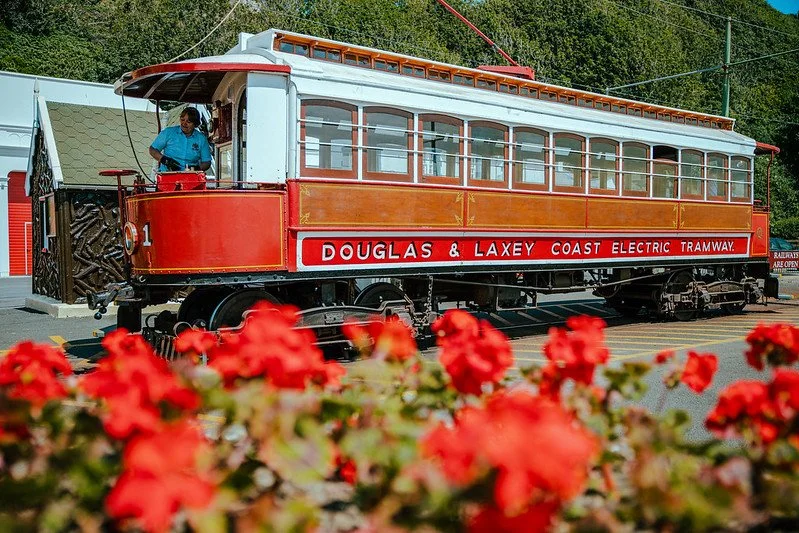

Manx Electric Railway & Museum
Ride one of the world’s oldest electric railways along the island’s east coast, linking Douglas → Laxey → Ramsey with sweeping coastal views and historic stops.
Hop on and off to explore key locations like the Great Laxey Wheel, glens and coastal viewpoints — making it a perfect alternative to driving this section.
The nearby museum adds context, showcasing vintage tramcars and the story behind this iconic railway.
Isle of Man Steam Railway
A classic heritage journey running south from Douglas through countryside and coastal landscapes to Castletown, Port St Mary and Port Erin.
Ideal for replacing a driving section or creating a slower-paced day, with opportunities to stop and explore historic towns along the route.
Douglas Bay Horse Tramway
A short but memorable ride along the promenade, offering a slower, nostalgic way to experience Douglas and its seafront.
Best used as a relaxed break between sightseeing, with uninterrupted views across Douglas Bay.
Murray’s Motor Museum
Located just south of Douglas, this specialist museum explores the island’s deep connection to motorcycling and TT racing.
A strong addition to the TT route or southern section of your trip, with historic bikes and racing heritage displays.
Tower of Refuge
Set on a small rocky islet in Douglas Bay, the Tower of Refuge is one of the Isle of Man’s most distinctive landmarks. Built in 1832 to shelter shipwrecked sailors, it stands just offshore from the promenade as a reminder of the island’s maritime past.
Although you can’t visit the tower itself, it’s one of the most recognisable and photographed sights in Douglas — visible throughout the day as you walk along the seafront.
Historic purpose – Built as a lifesaving refuge for shipwreck survivors on nearby reefs
Iconic landmark – One of the most recognisable features of Douglas Bay
Best views – Easily seen from Douglas Promenade and along the seafront
What to See & Do
View from the Promenade – Walk along Douglas Promenade for uninterrupted views across the bay
Photography spot – Particularly striking at sunrise, sunset or in rough seas
Combine with a coastal walk – Pair with Douglas Head or promenade walks for wider views of the coastline
Douglas to Groudle Glen
Leaving Douglas, the route quickly shifts from promenade and harbour to quieter coastal roads. Within just a few miles, the landscape softens into woodland and cliffside views, offering the first real sense of stepping away from the capital.
Groudle Glen marks this transition — a classic Manx glen where sheltered paths, flowing water and glimpses of the coastline introduce a slower, more relaxed rhythm to the journey. Groudle is a charming coastal area located 2.5 miles northeast of Douglas, that is worth a day visit from Douglas or stopping on route.

Groudle Glen – Woodland Walks, Heritage Railway & Coastal Escape
Just a short distance from Douglas, Groudle Glen is one of the island’s most accessible and rewarding early stops. This Victorian-designed glen combines gentle woodland walking with small-scale heritage features and a quiet coastal setting.
It’s an ideal first pause on the eastern route — easy to reach, but immediately more peaceful and immersive than the town you’ve just left.
First change of pace – A natural transition from Douglas into quieter landscapes
Classic Manx glen – Woodland paths, waterfalls and sheltered scenery
Heritage and coast combined – Railway, viaduct and a hidden bay in one stop
What to See & Do
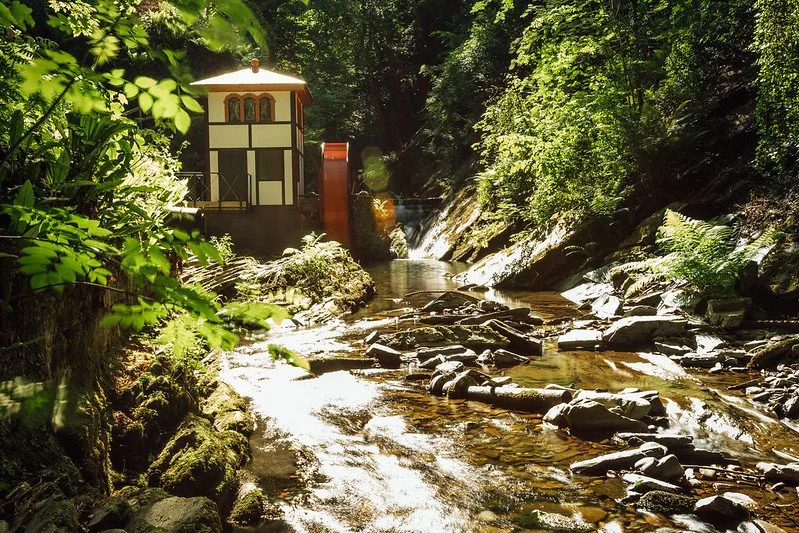
Groudle Glen Walks – Follow shaded paths through woodland, crossing footbridges and passing small waterfalls
Groudle Glen Viaduct – A striking stone viaduct spanning the glen and one of its defining features
Groudle Glen Railway – Ride the narrow-gauge heritage railway through the glen towards the coast
Groudle Glen Water Wheel – A restored reminder of the glen’s Victorian heritage and engineering
Groudle Beach – A small, pebbled bay where the glen meets the sea, offering a quiet coastal viewpoin
Groudle Glen to Laxey – Following the East Coast North
Leaving Groudle Glen, the route continues north along the A2, one of the island’s most scenic coastal roads. The journey is short, but the character begins to shift — woodland gives way to more open views, with glimpses of the coastline, cliffs and the Irish Sea appearing between villages.
This stretch is as much about the journey as the destination, whether you follow the coast directly or take a short detour inland onto the TT Mountain Road for a more elevated perspective before descending into Laxey.
Laxey sits around 8 miles (13 km) north of Douglas, making it one of the easiest and most natural next stops along the eastern route. It’s well connected by road, bus and heritage railway.
By Road from Douglas
A2 Coast Road – The most direct and scenic route via Onchan and Groudle Glen
Distance & time – Around 20 minutes
Alternative – A18 Mountain Road (TT route) with elevated views before descending into Laxey
Parking in Laxey
Laxey Station Car Park – Village centre and railway access
Valley Gardens Car Park – Best for the Laxey Wheel
Promenade Parking – Limited spaces near the coast
By Bus (Douglas → Laxey)
Routes – 3, 3A and 3B (Douglas to Ramsey)
Journey time – 25–30 minutes
Frequency – Every 20–30 minutes at peak times
Depart from Douglas Bus Station (Lord Street) or stops along the A2
Arrive at Laxey Village, close to cafés, shops and the Laxey Wheel
By Manx Electric Railway
Route – Derby Castle (Douglas) to Laxey
Journey time – 30–40 minutes
A scenic coastal journey passing Groudle Glen and Baldrine
The station is centrally located, making it easy to explore on arrival.
You can also connect to the Snaefell Mountain Railway from Laxey.
Laxey & The Valley of Industry and Coast

Laxey is one of the Isle of Man’s most distinctive destinations — where coastal scenery, industrial heritage and village life come together in one place. Set around a steep valley running down to the sea, it’s a place shaped as much by its mining past as by its dramatic setting.
Today, Laxey feels both historic and lived-in. You can move easily between cafés, coastal views, heritage railways and quiet valley walks, making it one of the most rewarding and varied stops on the eastern route.
A unique mix of industrial heritage and coastal scenery
Home to the Great Laxey Wheel, one of the island’s defining landmarks
Easy to explore on foot, with railways, walks and viewpoints all connected
What to See & Do
Great Laxey Wheel (Lady Isabella) – The largest working waterwheel in the world and a striking symbol of the island’s mining history. You can climb above the wheel for wide views across the valley and coastline.
Laxey Mine & Great Laxey Mine Railway – Explore the remains of one of the British Isles’ most important lead mines. The seasonal heritage railway recreates the original industrial route through the valley.
Manx Electric Railway & Snaefell Connection – Laxey sits at the heart of the island’s heritage rail network. Arrive via the electric railway from Douglas, or change here for the Snaefell Mountain Railway.
Laxey Glen Gardens – A peaceful wooded valley with winding paths, streams and shaded picnic spots. A natural contrast to the industrial heritage above.
Laxey Beach & Coastal Walks – A small but scenic bay with views along the east coast. From here, coastal paths extend north and south with elevated sea views.
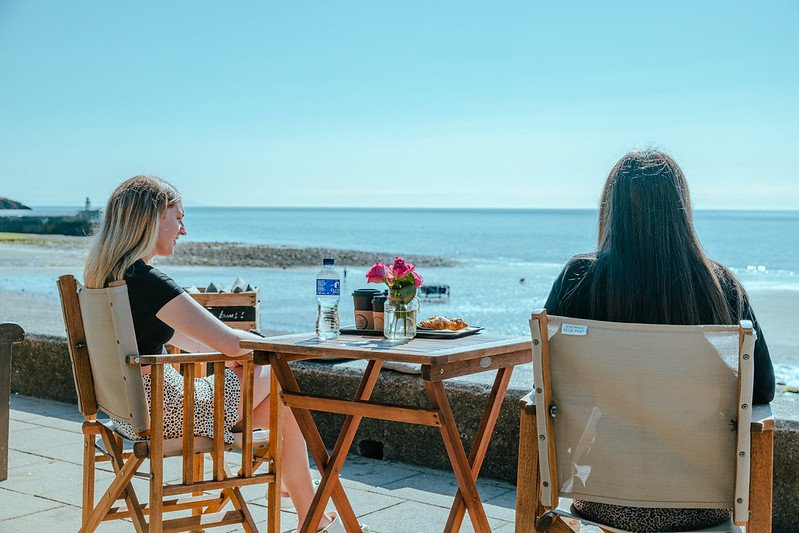
Village Shops & The Shed (Beachside Eatery) – Independent shops, crafts and Manx-made goods line the village. The Shed is a standout stop, set above the bay with views across the water.
Laxey Heritage Trail – A self-guided route linking key historic sites, from the Wheel and mine workings to mills, churches and village buildings that tell the story of Laxey’s development.
King Orry's Grave & Neolithic Triple Spiral Stone – Just beyond the village, explore one of the island’s most significant prehistoric sites, linked to Viking legend and much earlier settlements.
Laxey (Manx: Laksaa), meaning “Salmon River”, is a picturesque village on the east coast where the river flows from the slopes of Snaefell down to the sea.
The area has been inhabited for thousands of years, but Laxey grew significantly in the 19th century with the discovery of lead, zinc and copper, becoming one of the island’s most important industrial centres.
It later developed into a Victorian tourist destination, helped by the arrival of the Manx Electric Railway in 1894 and the creation of landscaped glens and attractions.
Today, Laxey blends heritage, coastal scenery and access to Snaefell, making it one of the most characterful stops on the island.
The Laxey Mine was once one of the largest lead mines in the British Isles, with a vast network of tunnels extending deep into the hillside.
Its most iconic legacy is the Great Laxey Wheel (Lady Isabella), built in 1854 to pump water from the mine. It remains the largest working waterwheel in the world.
Visitors can explore the site, climb the wheel for panoramic views across the valley, and see preserved buildings that bring the island’s industrial past to life.
Although the mine closed in the early 20th century, its legacy continues to define Laxey and its place in Manx history.
From Laxey to Snaefell
Leaving Laxey, the landscape begins to open out as the road and railway climb away from the coast. The wooded valley gives way to exposed hills and moorland, with views widening in every direction.
This is where the Isle of Man shifts again — from coastal village to upland landscape — and where one of the island’s most distinctive experiences begins.
Snaefell Mountain Railway & The Island’s Highest Point
The Snaefell Mountain Railway is one of the Isle of Man’s most unique journeys — a historic route that carries you from sea level to the island’s highest point, high above the surrounding landscape.
Opened in 1895 and electrified in 1904, it remains one of the oldest electric mountain railways in the world. The journey itself is as much a part of the experience as the destination, gradually revealing wider views as you climb from Laxey into open mountain terrain.

At the summit, the perspective changes completely. On clear days, you can see across the Irish Sea to multiple coastlines — a rare moment where the Isle of Man feels both central and remote at the same time.
A unique heritage railway climbing to the island’s highest point
Expansive views across the Isle of Man and beyond
A clear transition from coast → countryside → mountain landscape
What to See & Do
Ride the Snaefell Mountain Railway – Board at Laxey and travel through open countryside and upland scenery to the summit, with views expanding as you climb.
Snaefell Summit Views – At 2,037 ft (621 m), this is the highest point on the island. On a clear day, you can see England, Ireland, Scotland and Wales.
The Bungalow Crossing – A distinctive point where the railway crosses the TT Mountain Road, often used as a viewing spot during TT races.
Walking Routes & Summit Trails – From the top, short walks extend across the summit ridge, while longer routes connect back towards Laxey and surrounding hills.
Combine with Heritage Railways – This is one of the few places where you can link multiple historic routes — arriving via the Manx Electric Railway and continuing up to Snaefell in one continuous journey.
-
From Laxey (most direct)
By train (recommended) – Depart from Laxey Station (same interchange as the Manx Electric Railway)
Journey time: around 30 minutes to the summitOn foot – A moderate hike from Laxey (1.5–2 hours), following valley and upland routes
From Douglas
Heritage route (best experience)
Take the Manx Electric Railway (Douglas → Laxey, 30–40 mins)
→ Transfer to the Snaefell Mountain Railway (30 mins)
Total journey time: approx. 1 hour 15 minutesBy car
Douglas → Laxey via A2 (~20 minutes), then take the railway to the summit
OR
Drive via the A18 Mountain Road (TT course) to Bungalow Station, where you can park and join the railway partway upBy bus + train
Bus 3 / 3A / 3B from Douglas to Laxey (~30 minutes)
→ Transfer to the Snaefell Mountain Railway
On Route – Ancient Sites & Upland View

Between Snaefell and Dhoon Glen, the route passes through a quieter stretch of the island where prehistoric sites, open uplands and broader views begin to take over from the mountain railway and eastern villages.
These stops work best as optional pauses rather than must-sees for everyone — adding archaeology, walking and a stronger sense of the island’s older, more remote landscape
Cashtal yn Ard
One of the Isle of Man’s most significant prehistoric sites, this Neolithic chambered tomb dates to around 2000 BCE. Built from massive stones and earth, it reflects the funerary traditions and technical skill of the island’s earliest farming communities.
Open to the public and protected as a Scheduled Ancient Monument, it offers one of the island’s strongest connections to its ancient past.
Ballafayle Cairn
A lesser-known Neolithic burial site near Maughold, Ballafayle Cairn dates from around 2000–1500 BC. Its wedge-shaped form, cremation evidence and nearby forecourt marked by standing stones make it one of the island’s more intriguing archaeological remains.
It’s a quieter stop than Cashtal yn Ard, but a rewarding one if you are interested in early ritual landscapes.
North Barrule
North Barrule is one of the island’s most prominent hills, with walking routes across heathland and moorland leading to sweeping views over the north of the island.
For walkers, this is the main outdoor detour on this stretch — offering a more rugged landscape and a strong contrast to the coast and glens below.
From Snaefell to Dhoon Glen
Leaving the summit of Snaefell, the route begins its descent from open mountain into greener, more sheltered landscapes. The exposed ridgelines give way to rolling hills and wooded valleys, with the sense of height gradually softening as you return towards the east coast.
This change happens quickly. One moment you’re above the island, looking out across sea and sky — the next, you’re dropping back into quieter terrain where streams, glens and woodland begin to define the landscape again.
Dhoon Glen sits within this transition — a hidden valley where the energy of the mountain gives way to something slower, more enclosed and unexpectedly peaceful.
Dhoon Glen – Waterfalls, Woodland & One of the Island’s Most Dramatic Walks

-
From Snaefell Mountain Railway
By train (recommended)
Take the Snaefell Mountain Railway down to Laxey Station (~30 minutes)
→ Transfer to the Manx Electric Railway (towards Ramsey)
→ Get off at Dhoon Glen Halt (~10 minutes from Laxey)
→ The glen entrance is just a short walk from the stopBy car
Drive from Bungalow Station via the A18 and A2 (~20 minutes)
Parking available at Dhoon Glen Car Park, near the entranceFrom Douglas
By train (heritage route)
Board the Manx Electric Railway at Derby Castle
→ Travel north towards Ramsey (~40 minutes)
→ Get off at Dhoon Glen Halt (direct access to the glen)By bus
Routes 3 / 3A / 3B from Douglas towards Ramsey
→ Get off at Dhoon Glen stop on the A2
→ Short walk to the entranceBy car
Drive north on the A2 Coast Road (~25 minutes)
Parking available at Dhoon Glen Car ParkBest way to visit
✔ For a classic experience – arrive via the Manx Electric Railway
✔ For flexibility – drive the A2 coastal route
✔ For simplicity – use the bus from Douglas
Set along the A2 coastal road between Laxey and Ramsey, Dhoon Glen is one of the Isle of Man’s most atmospheric natural landscapes. Hidden just below the road, it drops steeply through dense woodland towards the sea, creating a sense of depth and enclosure that feels completely different from the open coastline above.
This is one of the island’s most photogenic glens — not just for its waterfall, but for the full experience of descending into the valley, following the stream and emerging again at the shoreline.
One of the island’s most dramatic and steepest glens
A striking waterfall setting within dense woodland
A rewarding walk that contrasts sharply with the open coast
Things to Know Before You Go
Steep terrain – One of the island’s steepest glens, with a long staircase descent and climb back out
Footwear essential – Paths can be uneven, muddy and slippery, especially after rain
Time needed – Allow 45–90 minutes depending on pace
Not fully accessible – Steps and gradients make it unsuitable for pushchairs
Weather matters – Best after rain, but paths will be more slippery
Suggested Route – A Complete Glen Walk
Start from the Dhoon Glen car park or tram halt and follow the path down through woodland into the valley.
The route steepens into steps leading to the Inneen Vooar waterfall, the highlight of the glen.
Continue to the shoreline where the landscape opens out to the coast, before returning the same way.
Allow time for the steady climb back up — this is part of the experience.
What to See & Do
Dhoon Glen Waterfall (Inneen Vooar) – A two-stage waterfall dropping over 40 metres (130 ft), one of the tallest on the island and the focal point of the walk.
The Glen Walk – Follow the historic path (based on an old cart road) as it winds through woodland alongside the stream, gradually descending through the valley.
Woodland & Valley Setting – Dense tree cover, steep slopes and flowing water create a quieter, enclosed landscape that feels very different from the surrounding coast.
Steps to the Shoreline – Continue down to the coast where the glen meets the sea, with views opening out again after the enclosed valley.
Photography & Seasonal Atmosphere – A particularly strong spot for photography, especially after rainfall when the waterfall is at its most powerful.
Uncover More Map
The Uncover More map highlights key points of interest, scenic viewpoints, hidden gems, and much more along the recommended route. To make the most of it, use the map in conjunction with the destination information, and explore additional options in the area you’re visiting to discover even more experiences.
End of Chapter – Eastern Coast & Glens
This section brings together some of the Isle of Man’s most varied landscapes — from Douglas and the eastern coastline to historic villages, heritage railways and deeply cut glens.
It’s a route defined by contrast. Open coastal views give way to sheltered valleys, industrial heritage sits alongside quiet woodland, and short distances reveal a surprising range of experiences.
Whether you’ve followed it as a continuous journey or explored individual stops at your own pace, it offers a strong introduction to the island’s character — shaped by both landscape and history.
Next: North Coast & Open Landscapes
Leaving the wooded glens and sheltered east behind, the route begins to open out as you head to the north coast and open landscapes.
The landscape becomes broader, quieter and more exposed, with longer stretches of coastline, wide skies and fewer interruptions. This next section feels less enclosed and more elemental — where the island’s northern edge reveals a different sense of space and scale.
From historic headlands to remote beaches and windswept viewpoints, the journey continues into one of the Isle of Man’s most open and atmospheric landscapes.
If your iPhone doesn’t load via the Google Map App via the button, check out the Help page for how to update your phone or copy and paste the link into your browser: https://bit.ly/iom-uncover
Isles & Islands > Last updated: 30 March 2026
Some links may earn Uncover Britain a small commission at no extra cost to you. This helps support the ongoing creation, review and presentation of our road trip guides.
Route information and listings are provided for general guidance only. Always use your preferred navigation system and check official websites to confirm suitability, opening times and the latest details before travelling.
Our guides are reviewed regularly and supported by a mix of editorial research and digital tools to help keep content clear and up to date. If you spot anything that needs updating, we’re always glad to hear from you.