

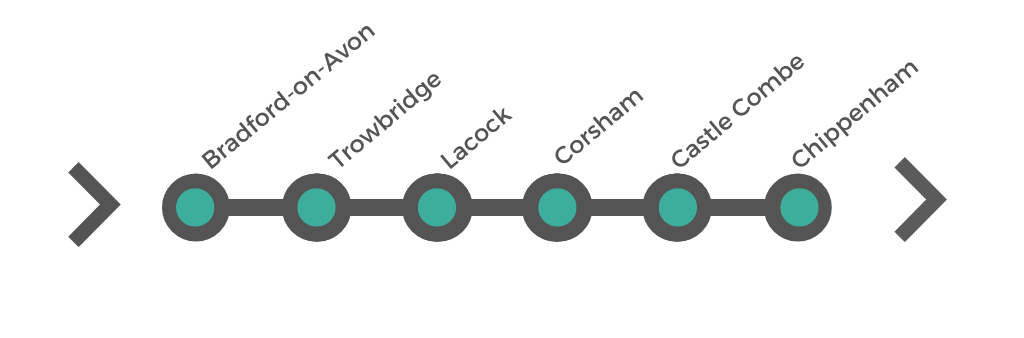
41 miles (65 km) with a drive time of approx. 1 hour 50 minutes
Bradford-upon-Avon > Trowbridge > Lacock > Corsham > Castle Combe > Chippenham > Caen Hill Locks (next chapter)
Part 1 – West Wiltshire: Villages, Abbeys & Market Towns
The West Wiltshire section forms the opening leg of the route, linking historic riverside towns, medieval villages and quiet countryside before the landscape rises into the chalk hills of the North Wessex Downs. This part of the journey can be approached from two natural starting points, depending on where you enter the region.
Travellers coming from the south will usually begin in Bradford-on-Avon, a picturesque riverside town on the Avon with stone bridges, medieval buildings and canal walks along the Kennet & Avon Canal. From here the route moves north through Trowbridge, before reaching the atmospheric cloisters and historic streets surrounding Lacock Abbey.
Continuing north, the route passes through Corsham, known for its historic high street and stone buildings, before arriving at the postcard-perfect village of Castle Combe, often described as one of the most beautiful villages in England. The leg concludes at Chippenham, which acts as a convenient junction point for continuing the road trip.
Alternatively, travellers approaching from the north can start this section at Castle Combe, travelling south through Corsham, Lacock and Bradford-on-Avon and pick up the next section at Devizes.
How to Spend Your Time Here
This section of the road trip takes you through some of Wiltshire’s most picturesque market towns and villages, blending history, culture, and scenic countryside. From the riverside charm of Bradford-on-Avon to the textile heritage of Trowbridge, the timeless beauty of Lacock, the stately elegance of Corsham, and the vibrant market town of Chippenham, this area offers a rich mix of experiences. Whether you have one day or a full week, these itineraries provide the perfect balance of historic landmarks, beautiful landscapes, and leisurely exploration.
-
Ideal for a short but immersive visit, focusing on the key sights.
Morning in Bradford-on-Avon: Walk along the historic bridge, explore the Tithe Barn, and visit the Saxon Church of St Laurence.
Midday in Lacock: Wander through this picturesque village, visit Lacock Abbey, and enjoy lunch in a historic pub.
Afternoon in Corsham: Explore the town’s historic High Street, admire Corsham Court, and spot the roaming peacocks.
For a more relaxed pace, choose two locations and spend more time exploring.
-
Perfect for those wanting to explore at a leisurely pace with more historical and cultural experiences.
Day 1 – Bradford-on-Avon & Trowbridge
Stroll along Bradford-on-Avon’s riverside, visit the Saxon Church of St Laurence, and tour the Tithe Barn.
Enjoy lunch in a riverside café before heading to Trowbridge, where you can visit the Trowbridge Museum and learn about its rich textile history.
Day 2 – Lacock & Corsham
Spend the morning in Lacock, exploring Lacock Abbey, the Fox Talbot Museum, and the village’s historic streets.
Have lunch in Corsham, then visit Corsham Court, its beautiful gardens, and the Almshouses.
Day 3 – Chippenham & Countryside Walks
Discover Chippenham’s historic centre, including the Market Place and Yelde Hall.
Walk along the Monkton Park riverside or take a short drive to Castle Combe, one of England’s prettiest villages.
-
A well-rounded mix of history, nature, and local charm.
Day 1 – Bradford-on-Avon
Explore Bradford-on-Avon’s historic sites, walk along the Kennet & Avon Canal, and enjoy an evening meal by the river.
Day 2 – Trowbridge & Surroundings
Visit Trowbridge Museum, explore the town’s textile heritage, and take a scenic walk to Southwick Country Park.
Day 3 – Lacock & Bowood House
Spend time in Lacock, then take a short drive to Bowood House & Gardens near Chippenham.
Day 4 – Corsham & Chippenham
Explore Corsham Court, wander the historic streets, and visit Chippenham’s Market Place.
Day 5 – Nature & Relaxation
Take a countryside walk along the Ridgeway or Bybrook Valley. Alternatively, spend the day at a spa or historic inn for a relaxed ending to the trip.
-
For those wanting a slow-paced, immersive trip covering all aspects of this region.
Days 1-2 – Bradford-on-Avon & Trowbridge
Walk along the Kennet & Avon Canal, explore Bradford-on-Avon’s Saxon and medieval history, and visit the Tithe Barn.
Spend time in Trowbridge, visiting Trowbridge Museum, exploring the town’s industrial past, and enjoying a nature walk at Southwick Country Park.
Days 3-4 – Lacock & Corsham
Delve into Lacock’s history, explore Lacock Abbey, and enjoy a traditional pub lunch.
Discover Corsham’s High Street, Corsham Court, and the peacocks that roam freely in town.
Days 5-6 – Chippenham & Surroundings
Visit Chippenham’s Market Place, walk through Monkton Park, and explore the Wiltshire & Swindon History Centre.
Take a day trip to Castle Combe or Bowood House & Gardens.
Day 7 – Relaxed Exploration & Farewell
Revisit a favourite spot, enjoy a countryside walk, or take a spa day in a Cotswold manor before heading home.
Bradford-on-Avon – Riverside Heritage, Saxon Roots & Canal Walks
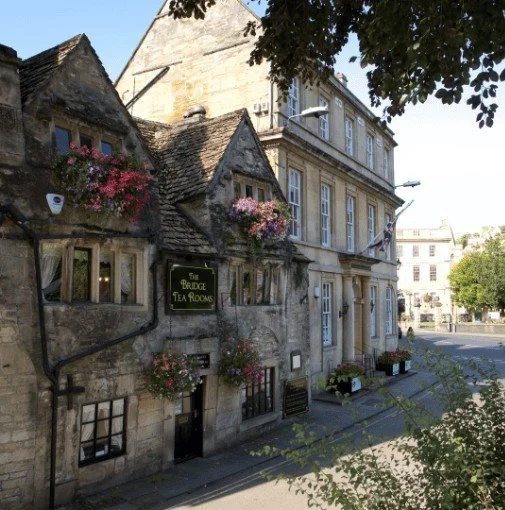
Copyright: Great West Way
Set on a bend in the River Avon, Bradford-on-Avon is one of Wiltshire’s most attractive historic towns. Honey-coloured stone buildings line the riverbanks, medieval streets climb the hillside, and the Kennet & Avon Canal winds quietly through the valley.
The town’s origins stretch back to Roman and Saxon times, but it prospered during the medieval and early industrial periods as a centre for the wool and cloth trade. Much of that history still shapes the town today, from the famous medieval bridge to the remarkable Saxon Church of St Laurence and the enormous 14th-century Tithe Barn. Textile mills and merchants’ houses later transformed Bradford-on-Avon into one of the region’s most important industrial towns, leaving a legacy of grand stone buildings and canal-side warehouses.
Bradford-on-Avon is also one of the prettiest towns along the Kennet & Avon Canal, where narrowboats drift past historic wharves and waterside cafés overlook the towpath.
What to See and Do
• Town Bridge and Lock-Up – the town’s 13th-century bridge is the focal point of Bradford-on-Avon, with a small historic lock-up still standing at one end.
• St Laurence Saxon Church – one of the most complete Saxon churches in England, dating from the 10th or early 11th century.
• Tithe Barn at Barton Farm – a spectacular 14th-century monastic barn measuring over 50 metres long with a dramatic timber cruck roof.
• Kennet & Avon Canal – walk or cycle along the towpath and watch narrowboats passing through the historic locks.
• Bradford-on-Avon Museum – small but fascinating displays covering the town’s wool trade and local history.
• Canal cafés and pubs – waterside stops include The Lock Inn and the Canal Trust Café, popular with walkers and boaters.
• Wiltshire Music Centre – a modern 300-seat concert hall hosting a varied programme of live music.
• The Bridge Tea Rooms – a famous tearoom where staff dress in Victorian costume and serve traditional afternoon tea.
• Barton Farm Country Park – riverside green space with walking paths, wildlife habitats and views of the Tithe Barn.
• Woolley Grange Hotel – a Jacobean manor house on the edge of town known for seasonal cuisine and champagne afternoon teas.
-
How long to visit
Allow 1–2 hours to explore the town centre, riverside and Saxon church. Add extra time if walking along the canal or visiting Barton Farm.Getting there / finding it
Bradford-on-Avon lies around 8 miles south-east of Bath and 20 miles west of Salisbury, just off the A363. The town is also easily reached by train from Bath and Westbury.Parking
• Station Car Park (BA15 1DQ) – convenient for the canal and town centre
• St Margaret’s Street Car Park (BA15 1DE) – close to the bridge and historic centre
• Budbury Place Car Park (BA15 1JA) – good option near shops and cafésParking in the centre is limited during busy weekends, so arriving early or using the railway station car park can be easier.
Nearby – Iford Manor Gardens
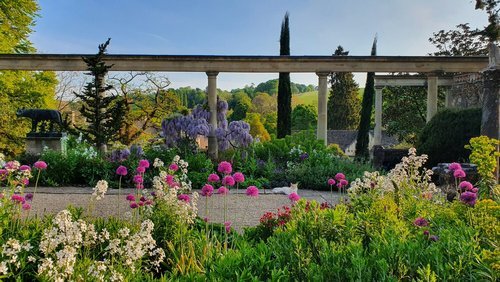
Image copyright: Iford Manor Estate
Just a short drive from Bradford-on-Avon, Iford Manor Estate is one of the most distinctive historic gardens in the region. Set above the River Frome near the village of Iford, the gardens were created by Edwardian architect and designer Harold Peto, who lived at Iford Manor from 1899 until his death in 1933.
Peto drew inspiration from Italian Renaissance and Roman gardens, creating a series of terraces, steps and secluded spaces that climb the hillside behind the house. The result is an atmospheric landscape of stone columns, statues and architectural features woven into the natural valley setting. Steep paths lead through a sequence of garden “rooms”, each revealing new viewpoints over the surrounding countryside.
One of the highlights is The Cloister, a tranquil courtyard enclosed by classical arches, with a historic wellhead brought from Aquileia in northern Italy. Higher terraces offer further surprises, including a peaceful Japanese garden tucked into the hillside.
Iford Manor Gardens make an ideal short detour from Bradford-on-Avon, particularly for visitors interested in garden design, architecture or quiet places away from the busier historic towns nearby.
Distance: around 10 minutes by car from Bradford-on-Avon.
Continuing north from Bradford-on-Avon, the route passes through Trowbridge, the county town of Wiltshire. While less picturesque than some of the surrounding villages, Trowbridge played an important role in the region’s history as a major centre for wool and cloth production during the 18th and 19th centuries.
Today it serves mainly as a practical stop along the route, with shops, cafés and local services if needed. Those interested in the town’s industrial past can visit Trowbridge Museum, which explains how the textile industry helped shape the town and the wider Wiltshire economy.
Trowbridge – Wiltshire’s Historic Market and Mill Town
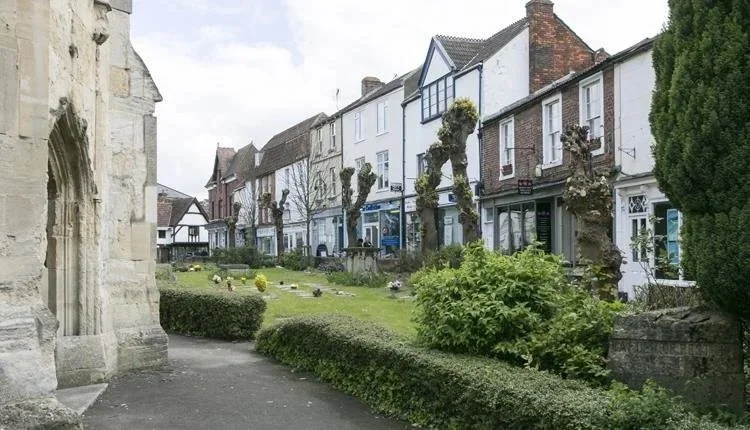
Image copyright: Visit Wiltshire
Trowbridge is the county town of Wiltshire and a historic market town whose origins stretch back more than a thousand years. The name derives from the Saxon “Trowbrigge” or “Tree Bridge”, referring to an early crossing over the River Biss that helped establish the settlement.
The town grew steadily during the medieval period and became particularly important for wool and cloth production. By the 18th and 19th centuries Trowbridge had developed into one of the leading textile centres in south-west England. Today it remains a busy market town and administrative centre for the county, blending its industrial heritage with modern shops, cafés and green spaces.
While less picturesque than some of the surrounding villages, Trowbridge offers an interesting glimpse into the region’s industrial past and serves as a practical stop between Bradford-on-Avon and Lacock.
Trowbridge’s long history can still be seen in its historic church, traditional market roots and surviving mill buildings that reflect the town’s textile heritage.
What to See and Do
• Trowbridge Museum – located in a former textile mill, the museum explores the town’s industrial heritage and the story of the woollen cloth trade.
• St. James Church – a striking 15th-century Grade I listed church at the heart of the town.
• Town Park – a Victorian park with landscaped gardens, a lake and open green space.
• Trowbridge town centre – a mix of historic buildings, cafés, shops and local businesses.
• The Shires Shopping Centre – the town’s main retail hub, built around former mill buildings.
• River Biss Walk – a gentle riverside walk through the town centre and parkland areas.
• Trowbridge Museum – located in the historic Home Mills building, this award-winning museum explores the town’s woollen cloth industry and industrial heritage. Exhibits include rare textile machinery, working looms and one of the few surviving Spinning Jennies in the world, helping tell the story of how Trowbridge became known as the “Manchester of the West.” Read more below.
• Local events – including the Trowbridge Arts Festival, Trowbridge Carnival and food events throughout the year.
-
How long to visit
Allow 45 minutes to 1 hour for a short stop in Trowbridge. Visitors interested in the textile history and museum may wish to allow 1–2 hours.Getting there / finding it
Trowbridge lies about 3 miles north of Bradford-on-Avon and 8 miles south of Chippenham, just off the A361. The town is also well connected by rail, with direct trains from Bath, Bristol, Westbury and Salisbury.Parking
• St Stephen’s Place Car Park (BA14 8AH) – large central car park close to shops, restaurants and the cinema complex.
• Castle Place Car Park (BA14 8AL) – convenient for the town centre and museum.
• Lovemead Car Park (BA14 8ER) – useful for visiting the park and walking along the River Biss.
• The Shires Car Park (BA14 8AT) – located next to the shopping centre and within easy walking distance of the museum.Parking is generally straightforward in Trowbridge compared with nearby historic towns, making it a convenient place to stop briefly for refreshments or supplies along the route.
Trowbridge and The Textile Industry

Image copyright: Trowbridge Museum
Trowbridge’s identity was shaped by the wool and cloth trade that flourished here from the medieval period. By the 14th century the town had become an important centre for producing woollen cloth, and prosperity continued to grow through the Tudor era as English wool exports expanded dramatically.
During the Industrial Revolution, Trowbridge developed into one of the major cloth-making towns of southern England. Numerous mills operated along the River Biss, employing large numbers of local residents and driving the town’s rapid growth throughout the 18th and 19th centuries. This industrial success earned Trowbridge the nickname “The Manchester of the West.”
Although the textile industry declined during the late 20th century, many of the historic mill buildings survive. The final working mill, Salter’s Home Mill, closed in 1982 and now houses Trowbridge Museum and Art Gallery, along with cafés and shops in the Shires Shopping Centre.
The museum tells the story of the town’s transformation from a medieval market town into a thriving industrial centre. Inside visitors can see rare artefacts including a Spinning Jenny, historic looms and other textile machinery used to produce the famous West of England cloth, which was exported around the world.
Nearby stands the unusual Handle House, once used to dry and store teazles – spiky plants used in the finishing process to raise the nap of woollen cloth. It is one of the very few surviving buildings of its kind in Britain.
Nearby and Worth a Detour
Two notable attractions lie within easy reach of Trowbridge. Longleat combines an Elizabethan stately home with one of Britain’s best-known safari parks, while the National Trust estate of Stourhead is famous for its classical landscaped gardens and lakeside walks. Both make excellent additions if you have extra time on this section of the route.
Longleat – Elizabethan House & Britain’s First Safari Park

Located around 5 miles south of Trowbridge (about 15–20 minutes by car), Longleat is one of the best-known historic estates in southern England. The magnificent Elizabethan house, completed around 1580, has been home to the Marquesses of Bath for centuries. The estate was developed by Sir John Thynne, steward to Edward Seymour, 1st Duke of Somerset, whose descendants later became the Marquesses of Bath.
Surrounding the house are extensive parklands landscaped by Capability Brown, forming part of a vast estate that includes thousands of acres of woodland and farmland. Longleat is also famous for its safari park — the first drive-through safari park outside Africa and the first stately home in Britain to open its doors to the public. Today visitors can explore the grand house, landscaped grounds, and wildlife park, making it one of the region’s most popular attractions for families and day visitors.
Image copyright: Longleat
Stourhead – Classical Landscaped Gardens & Palladian Estate
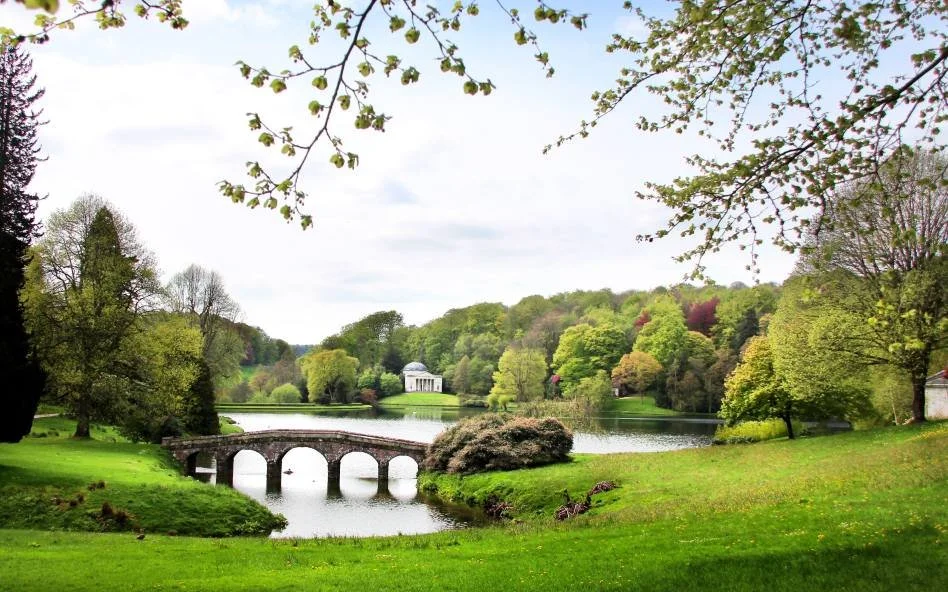
About 25 miles south-west of Trowbridge (around 40–45 minutes by car), Stourhead is one of the most celebrated landscaped gardens in England and a highlight of the National Trust portfolio.
Created in the 18th century by the Hoare family, the estate centres on a tranquil lake surrounded by classical temples, bridges and carefully framed views inspired by the landscapes of classical painting. The Temple of Apollo, Pantheon, and winding woodland paths create one of the most picturesque garden walks in Britain.
The elegant Palladian mansion contains historic interiors and family collections, while the wider estate offers woodland trails and landmarks including King Alfred’s Tower. With its café, shop and extensive grounds, Stourhead makes an excellent half-day or full-day detour from the Wiltshire route.
The route continues north-west through the Wiltshire countryside towards Lacock. The drive to Lacock Abbey is around 7 miles (11 km) and typically takes 15–20 minutes.
The road passes through open farmland and small villages including Shaw and Whitley, offering a gentle transition from the county town into quieter rural landscapes before arriving at the beautifully preserved medieval village of Lacock.
Lacock – Medieval Village, Abbey & Film Locations
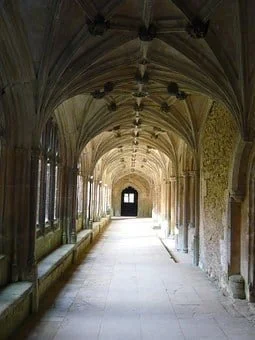
Lacock lies around 3.5 miles (5.6 km) north-west of Trowbridge and just a short drive from Corsham. One of England’s most beautifully preserved historic villages, Lacock retains much of its medieval character, with stone cottages, narrow streets and historic buildings that feel almost untouched by modern development.
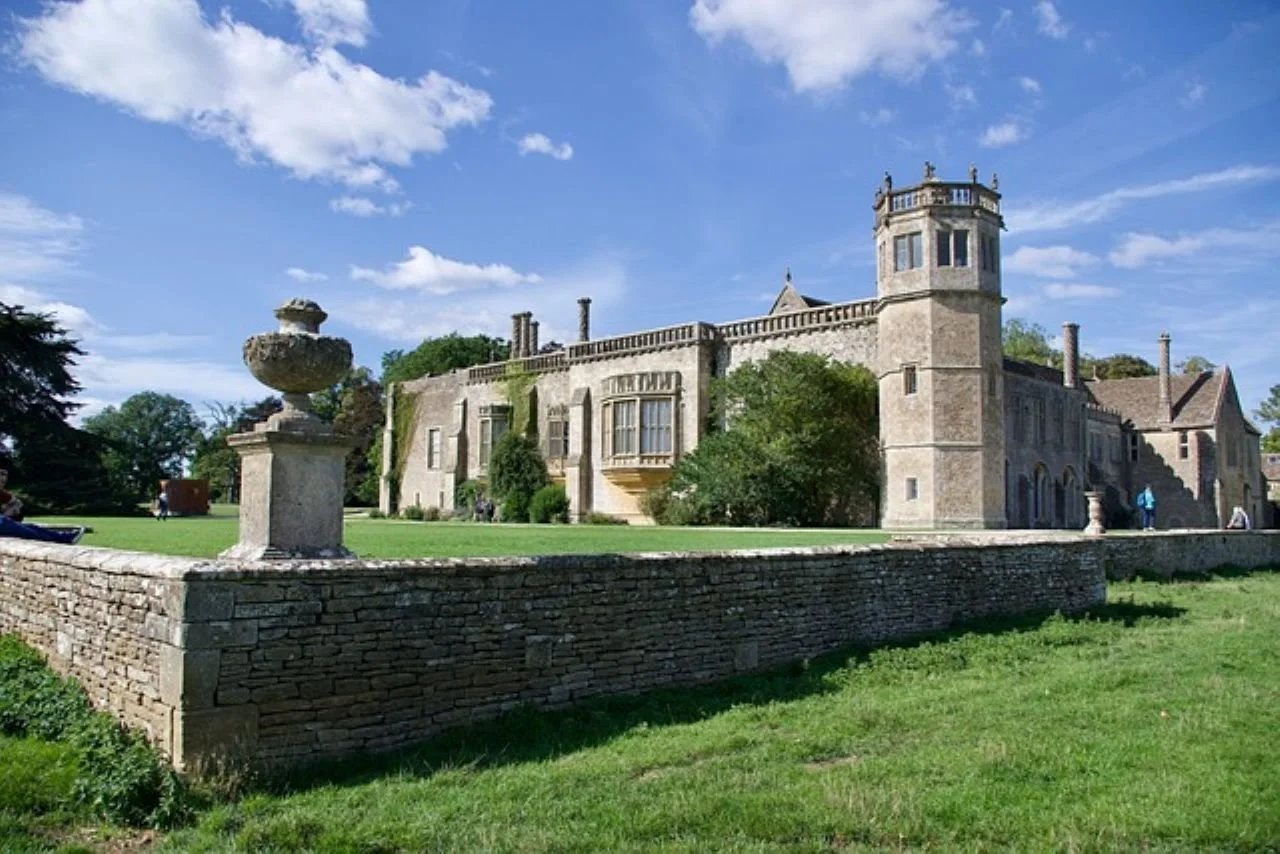
The village dates back to the 13th century and grew around the nearby Lacock Abbey, founded by Ela, Countess of Salisbury. Over the centuries the abbey evolved from a medieval religious house into a country residence, while the surrounding village prospered through the wool and cloth trade during the 18th century. Many of the buildings you see today reflect that period of prosperity.
Today much of the village and the abbey are cared for by the National Trust, helping preserve the atmosphere of this remarkable historic setting. Lacock is also known for its connection to the birth of photography — it was here in 1835 that William Henry Fox Talbot created the world’s first photographic negative.
What to See and Do
• Lacock Abbey – explore the medieval cloisters, historic rooms and peaceful grounds of this former Augustinian abbey turned country house.
• Fox Talbot Museum – located within the abbey, the museum celebrates the invention of photography and the work of William Henry Fox Talbot.
• St. Cyriac's Church – a historic parish church with origins in the 14th century.
• King John’s Hunting Lodge – a historic house on Church Street dating from around 1210, linked to the era of Magna Carta.
• Village streets and historic cottages – wander through the preserved medieval streets lined with traditional stone buildings, shops and tearooms.
• Lacock Abbey grounds and riverside walks – enjoy walks around the abbey estate and nearby countryside.
• Snaylesmeade riverside trail – a 2-mile walk following the river through the valley.
• Village film location trail – a self-guided route highlighting the many filming locations used in the village.
Lacock on Screen
Lacock’s remarkably preserved streets make it one of the most frequently used filming locations in England.
Productions filmed here include:
Pride and Prejudice (1995). The Red Lion featured as the Assembly Rooms. The abbey portrays the village of Meryton.
The White Princess (2016). A cavalry scene featured the Ford.
Downton Abbey (2015). Originally the village featured in the last series of the TV series as the location for the Malton Fat Stock Show. In the film, Lacock's streets hosted the spectacular royal parade through the village.
Harry Potter: The Philosopher's Stone (2001). Provided the backdrop to Harry Potter's parents' house.
Harry Potter: The Half Blood Prince (2009). Provided the Sign of the Angel and Horace Slughorn's house.
The Other Boleyn Girl (2008). The Chapter House features the bedroom of Katherine of Aragon, and Abbey Court is also used.
-
How long to visit
Allow 1.5–2 hours to explore Lacock village and the abbey grounds. Visiting the abbey and museum may take 2–3 hours.Getting there / finding it
Lacock sits just off the A350, around 3.5 miles from Trowbridge, 5 miles from Chippenham, and about 30 minutes from Bath.Parking
• National Trust Lacock Car Park (SN15 2LG) – main visitor car park for the village and abbey
• Hither Way Car Park – additional village parkingThe National Trust car park is the easiest option and places you within a short walk of the abbey and village centre.
Leaving Lacock, the route continues west through the gentle countryside of West Wiltshire towards Corsham. The drive is short — around 3 miles (5 km) and typically 10 minutes — passing farmland and small rural lanes before reaching this attractive historic town known for its Georgian streets and nearby Corsham Court estate.
Corsham – Historic Market Town, Bath Stone & Hidden Tunnels
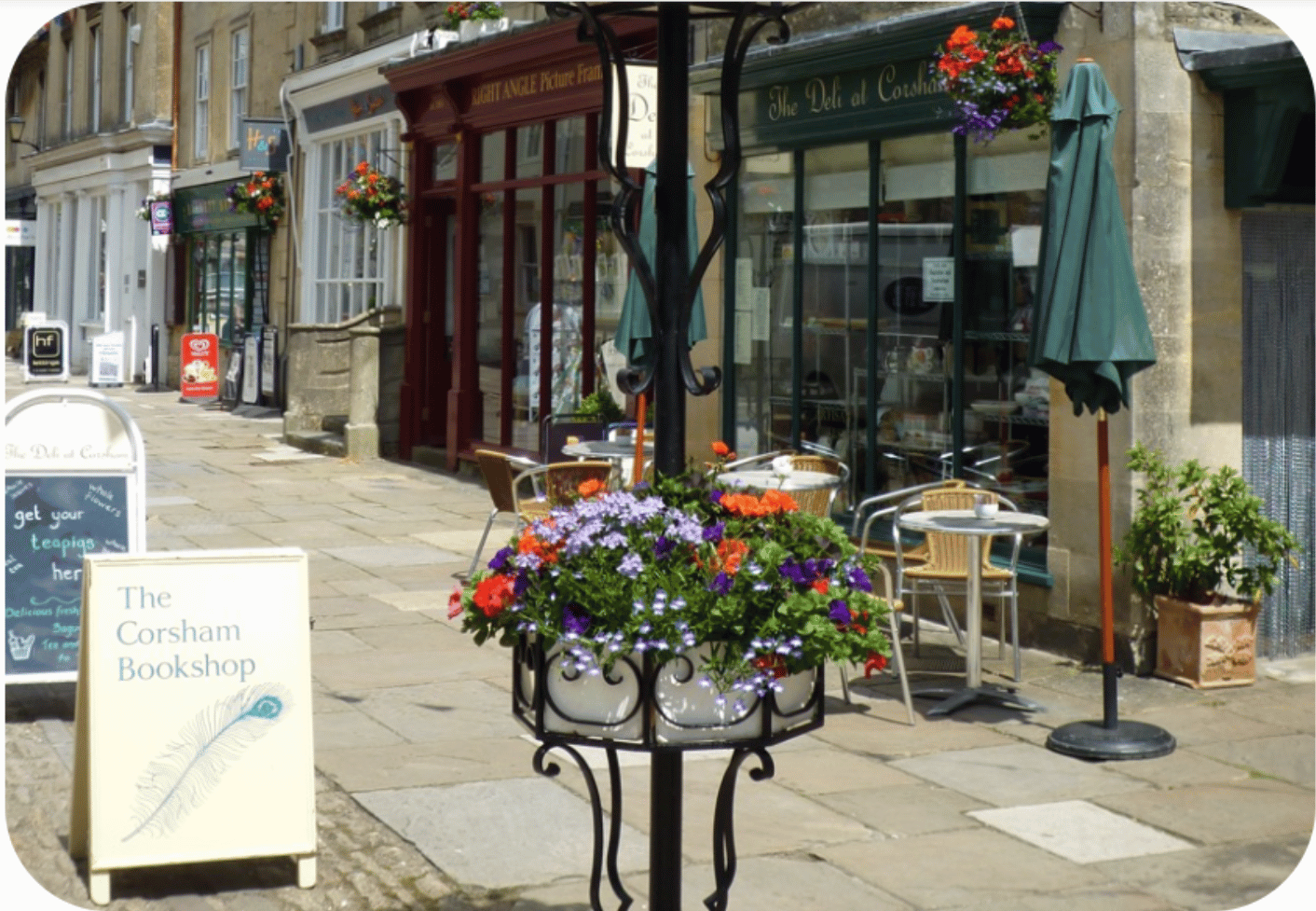
Image copyright: Visit Corsham
Corsham is a quintessential English market town known for its historic streets, handsome Bath stone buildings and rich heritage. With roots stretching back to Saxon times, Corsham developed into an important settlement during the medieval period, particularly through agriculture and the wool trade. Flemish weavers settled here, helping the town prosper during the medieval and Tudor eras.
Corsham’s historic layout remains largely intact today, with narrow streets lined with traditional stone buildings, independent shops and cafés. Much of the town was built using locally quarried Bath stone, extracted from the extensive underground quarries beneath the surrounding hills. These quarries later played a role in Britain’s wartime history and Cold War planning.
Despite its small size, Corsham offers a lively cultural atmosphere with historic architecture, local food and drink, and a growing arts scene centred around the town’s creative venues.
• Attractive Bath-stone streets and historic market town character
• Unique underground quarry and Cold War history beneath the town
• Independent shops, cafés and a lively arts scene
What to See and Do
Corsham High Street – wander the attractive historic street lined with independent shops, cafés and traditional buildings.
Burlington Bunker (Corsham Tunnels)– beneath Corsham lies an extensive network of former Bath stone quarries that were transformed during the Cold War into a secret underground government facility. Known as Burlington Bunker, the hidden complex was designed to house around 4,000 government personnel in the event of nuclear war, complete with offices, kitchens, medical facilities and its own water supply. Although not generally open to the public, the scale and history of the underground tunnels make them one of Corsham’s most fascinating stories.
Pound Arts Centre– a vibrant cultural venue hosting theatre, exhibitions, workshops and live music.
Corsham Almshouses and School Room – early 17th-century charitable buildings showcasing historic architecture.
Corsham Court - see below. A historic manor house with origins in the Elizabethan period and later Georgian additions.
Independent shops and antiques – browse a variety of specialist shops including antiques, crafts, vintage items and collectables.
Film and TV locations – Whilst the period drama Poldark (2015) is set in Cornwall, Corsham’s High Street stars as 18th-century Truro. Other popular period shows filmed in Corsham include The Suspicions of Mr Whicher(2011), Tess of the d'Urbervilles (2008) and Lark Rise to Candleford (2008). Also, Corsham provided a backdrop in Remains of the Day(1993) starring Anthony Hopkins.
Food and Drink - The Methuen Arms – a Georgian coaching inn serving seasonal food and Butcombe beers. The Flemish Weaver – a historic 17th-century ale house with a traditional beer garden. Mother & Wild – a popular local deli and café specialising in regional produce, including meat, fish and cheese from the Walcot Smokery.
A short drive from Corsham in the village of Box lies one of the great engineering achievements of the Victorian railway age. Designed by Isambard Kingdom Brunel, Box Tunnel was completed in 1841 as part of the Great Western Railway. The tunnel stretches for nearly 2 miles (3.2 km) through the hillside and is famous for the story that Brunel aligned it so the rising sun would shine directly through the tunnel on his birthday. The eastern entrance can be viewed from the A4 near Box, making it a quick and interesting detour along this route.
Corsham Court – Historic Manor House, Art Collection & Peacock-Filled Parkland
Corsham Court just off the High Street, Corsham Court is a historic manor house with origins in the Elizabethan period and later Georgian additions. The house contains an impressive art collection including works by Van Dyck, Rubens and Gainsborough. The surrounding parkland, landscaped by Capability Brown, is open to visitors on selected days and is famous for its resident population of peacocks that wander freely around the grounds. Visitors can explore the gardens and park while enjoying views of the historic house and surrounding countryside.

Image copyright: Corsham Court
Walks in and around Corsham
Surrounding Corsham are beautiful trails and countryside walks, including paths leading to Box Hill and the Cotswolds, perfect for nature lovers and hikers.
Corsham hosts a fantastic Walking Festival every year, led by a dedicated team of enthusiastic walkers. This vibrant event spans the middle weekend of June, offering a wonderful opportunity to explore the area on foot.
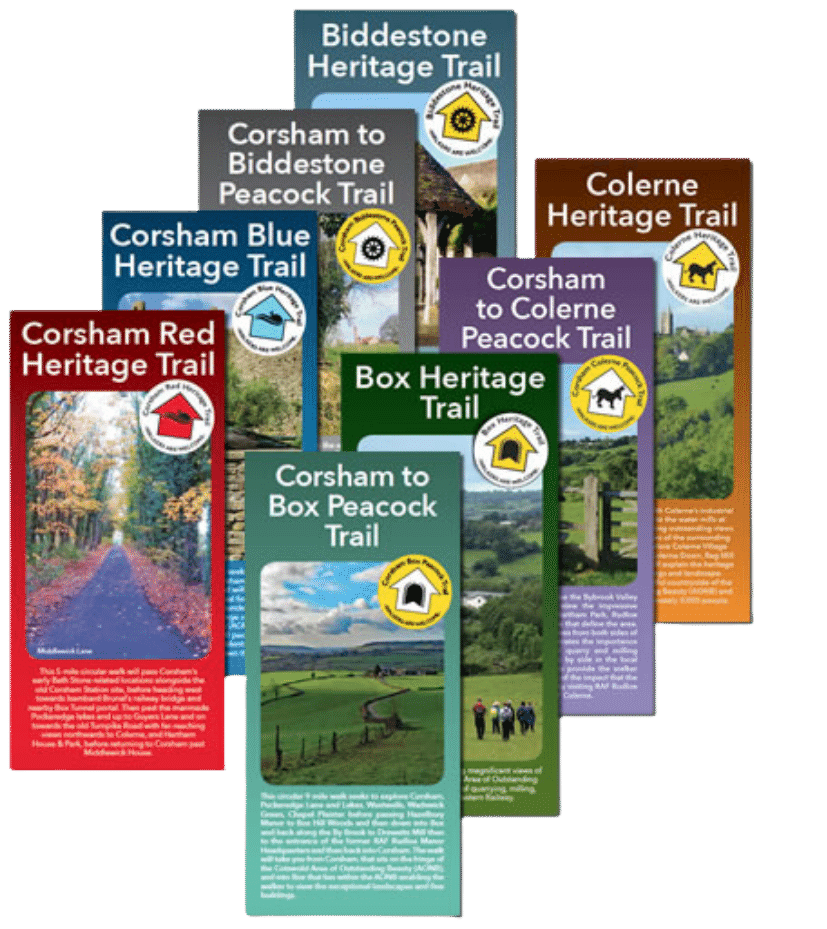
A team consisting of walkers, Cotswold Wardens, and local historians crafted the Heritage Trails, showcasing Corsham's industrial history and its surroundings. These trails encompass eight walks ranging from 4.5 miles to a more challenging 10.3 miles. Four paths centre around Corsham, while others connect to Biddestone, Box, and Colerne.
The Town Council, among other organisations, actively supported the development of these waymarked trails, including creating accompanying maps. All eight maps are freely available at the Town Hall and also accessible at the Tourist Information Centre, Springfield Campus, and The Corsham Bookshop in Corsham. Trails can be downloaded from the Corsham Walking Festival website, or below:
Leaving Corsham, the route continues north through quiet countryside towards one of the most picturesque villages in England. The drive to Castle Combe is around 5 miles (8 km) and typically takes 10–15 minutes, passing farmland and wooded lanes before arriving at this beautifully preserved village of honey-coloured stone cottages and historic streets.
Castle Combe – One of England’s Most Beautiful Villages
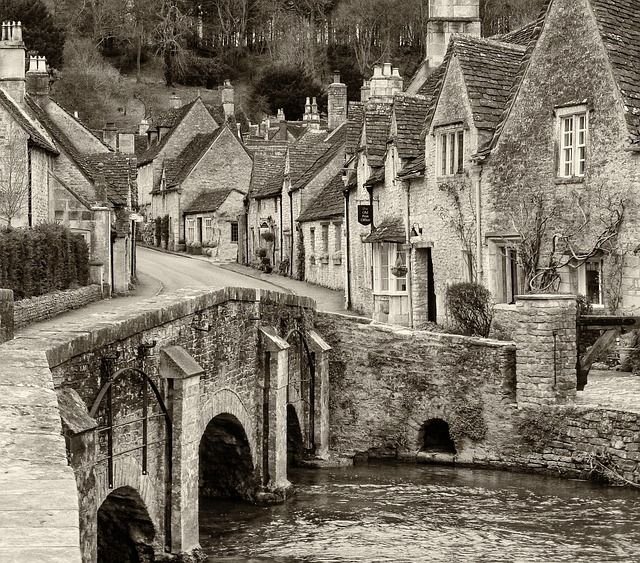
Castle Combe is often described as one of the most picturesque villages in England. Nestled in a wooded valley along the Bybrook River, the village is famous for its honey-coloured stone cottages, historic market cross and timeless rural setting.
Castle Combe developed during the medieval period as a centre for the wool trade, when the surrounding valley supported cloth production and milling. Much of the village you see today dates from this prosperous era, and remarkably little has changed over the centuries. The absence of modern street lighting and large developments has helped preserve its historic character, making it feel almost like stepping back in time.
Today Castle Combe attracts visitors from around the world who come to wander its narrow lanes, photograph the iconic bridge and cottages, and enjoy the peaceful atmosphere of one of Wiltshire’s most charming villages.
One of the most photographed and picturesque villages in England
Beautiful medieval cottages, bridge and historic market cross
Popular film location and gateway to scenic countryside walks
What to See and Do
• Market Cross and Village Square – the historic centre of Castle Combe, surrounded by traditional cottages and often considered the most photographed view in the village.
• St Andrew’s Church – a 13th-century church featuring a medieval clock believed to be one of the oldest working clocks in England.
• The Bybrook River Bridge – the iconic stone bridge offering classic views of the village’s cottages along the river.
• Village walks – explore the narrow lanes and footpaths that wind through the village and surrounding countryside.
• Castle Combe Circuit – a nearby motor racing circuit hosting events and track days throughout the year.
• The Manor House Hotel and Golf Club – a historic country house hotel with landscaped gardens and an 18-hole championship golf course.
-
How long to visit
Allow 45 minutes to 1 hour to explore the village and take photographs. Visitors staying for walks or a meal may wish to allow longer.Getting there / finding it
Castle Combe lies about 5 miles (8 km) north of Corsham and 12 miles (19 km) east of Bath, reached via small country lanes from the A420 or A4.Parking
• Castle Combe Car Park (SN14 7HU) – the main visitor car park located just outside the village
• Limited roadside parking is available near the entrance to the village, but the main car park is recommended during busy periods.The village centre itself is small and best explored on foot from the car park.
Leaving Castle Combe, the route continues north-east through rolling countryside towards Chippenham. The drive is around 7 miles (11 km) and typically takes 15–20 minutes, passing quiet rural lanes and farmland before reaching this historic market town on the banks of the River Avon. Chippenham serves as a useful junction point on the route before continuing east towards Calne and the landscapes of the North Wessex Downs.
Chippenham – Historic Market Town on the River Avon
Chippenham is a lively market town on the banks of the River Avon, known for its long trading history and convenient position between Bath, the Cotswolds and the North Wessex Downs. Compact and easy to explore, the town blends historic landmarks with a busy shopping and cultural scene.
Chippenham developed as a market town during the medieval period, when the surrounding countryside supported a thriving wool and cloth industry. Its location on historic trade routes helped attract merchants and travellers, establishing the town as an important commercial centre for the region.
The arrival of the railway in the 19th century further strengthened Chippenham’s role as a regional hub, improving connections with Bath, Bristol and London. Today the town continues to grow as a residential and commercial centre while maintaining its historic character and traditional market town atmosphere.
• Historic market town with a lively and compact centre
• Riverside walks, parks and historic buildings
• Good stop for shops, cafés and local markets
What to See and Do
• Chippenham Museum – learn about the town’s history, including its wool and cloth industry and medieval origins.
• Chippenham Market – held twice weekly, usually on Fridays and Saturdays, offering fresh produce, baked goods, local foods, crafts and household items.
• Yelde Hall – a striking 15th-century Grade I listed building in the Market Place that once served as the town’s council chamber.
• Neeld Community & Arts Centre – hosts theatre, comedy, concerts and cultural events.
• Reel Cinema Chippenham – an Art Deco cinema dating from 1939, designed by Bristol architect W. H. Watkins.
• Chippenham Riverside & Town Walk – a scenic walking route following the River Avon through the town.
• Chippenham to Lacock Walk Route – a 3-mile walk following the river through countryside between the two historic settlements.
• John Coles Park – the town’s main green space with gardens, mature trees and open lawns.
• Eddie Cochran Memorial – located at Rowden Hill, commemorating the rock-and-roll star who died following a car accident here in 1960. Chippenham Museum, showcasing local history, including its association with the cloth industry and the town's development.
Nearby
• REME Museum – around 9 miles away, this museum tells the story of the Royal Electrical and Mechanical Engineers and their role in maintaining British Army equipment.
Leaving West Wiltshire – Towards the North Wessex Downs
From Chippenham, the route leaves the historic towns of West Wiltshire and begins to climb gently into a very different landscape. The countryside opens out into the rolling chalk hills and wide valleys of the North Wessex Downs, an area recognised for its sweeping scenery, ancient trackways and prehistoric monuments.
This next section of the journey moves away from medieval villages and market towns into a landscape shaped over thousands of years. Here you’ll find some of Britain’s most remarkable prehistoric sites, including the vast stone circle at Avebury, the mysterious mound of Silbury Hill, and sections of The Ridgeway, often described as Britain’s oldest road.
As the route continues east from Chippenham, the landscape gradually reveals one of the most fascinating ancient environments in England — where chalk hills, prehistoric monuments and sweeping downland views define the character of the North Wessex Downs. Click here to move to the next chapter.
Uncover More Map
The Uncover More map highlights key points of interest, scenic viewpoints, hidden gems, and much more along the recommended route. To make the most of it, use the map in conjunction with the destination information, and explore additional options in the area you’re visiting to discover even more experiences.
If your iPhone doesn’t load via the Google Map App via the button, check out the Help page for how to update your phone or copy and paste the link into your browser: bit.ly/Wilts-map-uncover
Stonehenge and the Wonders of Wiltshire Last updated: 13 March 2026
Some links may earn Uncover Britain a small commission at no extra cost to you. This helps support the ongoing creation, review and presentation of our road trip guides.
Route information and listings are provided for general guidance only. Always use your preferred navigation system and check official websites to confirm suitability, opening times and the latest details before travelling.
Our guides are reviewed regularly and supported by a mix of editorial research and digital tools to help keep content clear and up to date. If you spot anything that needs updating, we’re always glad to hear from you.