

192 miles (308 km) with drive time of approx. 6 hours
Continuing to Dalmahoy Golf Club: 224 miles (360km) with a drive time of 7 hours
Customisable route: https://bit.ly/Scottish-Golf-Route
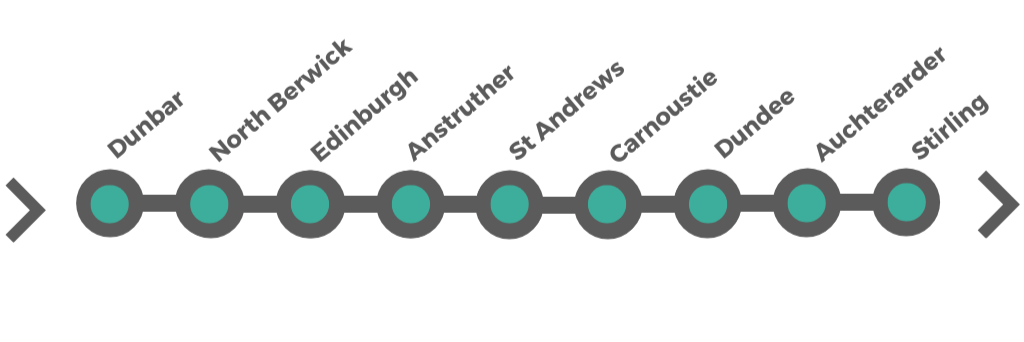
Dunbar > North Berwick > Edinburgh > Anstruther > St. Andrews > Carnoustie > Dundee > Auchterarder > Stirling
Heritage Golf Trail: Dunbar Golf Club
Dunbar Golf Club is a links course in Dunbar, East Lothian, with a 400-year-old documented golf history. This makes it one of the oldest golf courses in Scotland. One of the game's oldest recorded organisations, the Dunbar Golfing Society, played on the western side of the town in 1794. Dunbar Golf Club has hosted the Open Championship qualifier on several occasions.
The course was designed by Old Tom Morris, and it is considered to be one of the best links courses in Scotland. It is a challenging course, with a number of blind shots and elevated greens. The course is also located on a beautiful stretch of coastline, with views of the North Sea.
Dunbar Golf Club is a popular destination for golfers from all over the world. It is a challenging and rewarding course, and it offers stunning views of the Scottish coastline.
The east links has attracted some of the greatest players that have ever played the game: James Braid, JH Taylor, Harry Vardon, Willie Park, Old Tom Morris, Sandy Herd, Ted Ray, Max Faulkner and Bobby Locke. More recently, the likes of Vijay Singh, Steve Elkington (an honorary member), Colin Montgomerie, Paul McGinley, Luke Donald and Sergio Garcia have competed in championships, qualifiers and exhibition matches.
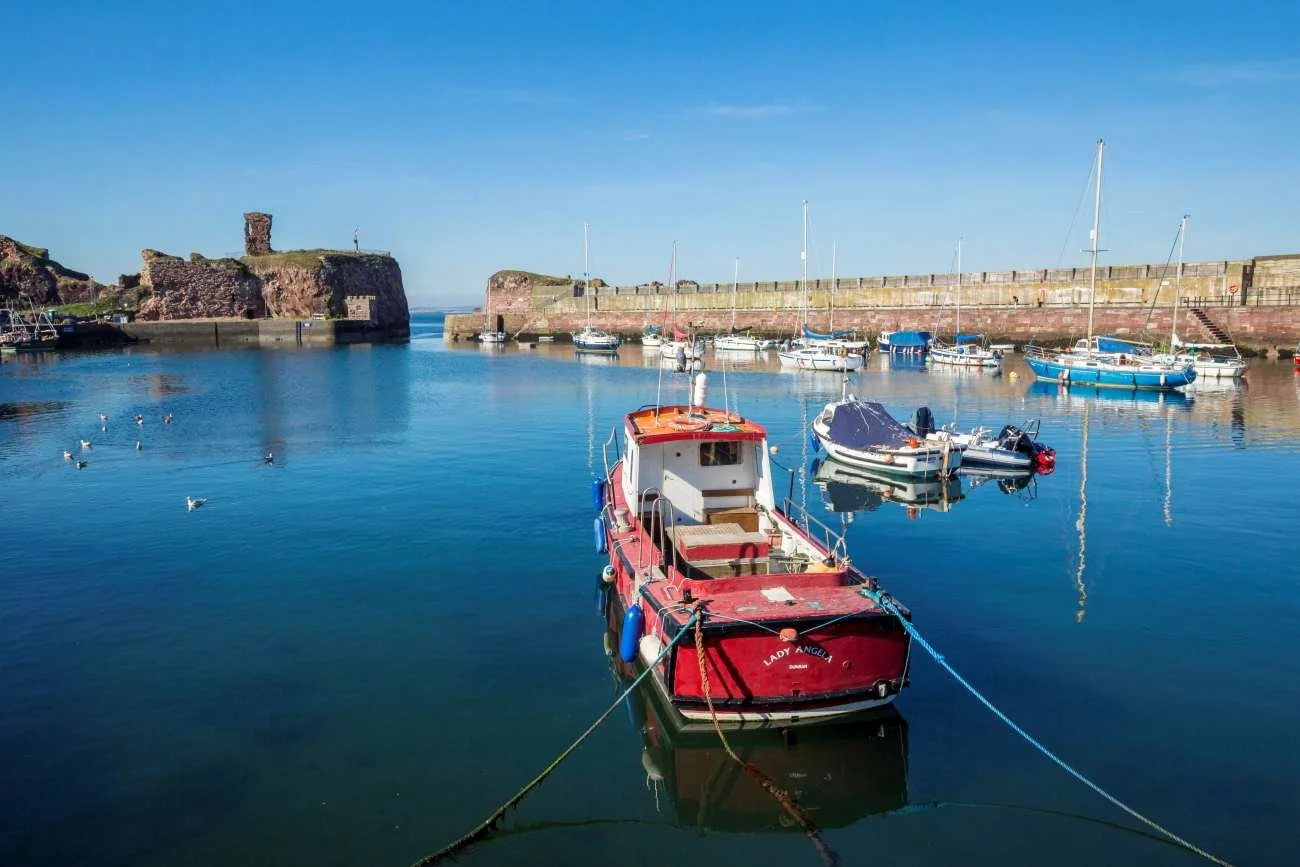
Dunbar Harbour. Credit: Visit Scotland
East Lothian Coast: North Berwick
After the open uplands of the Lammermuir Hills, the route drops suddenly to the coast and the wide light of the North Sea.
North Berwick is the journey’s first real reward — a lively seaside town that contrasts sharply with both Edinburgh and the quiet hills behind you.
Beaches, seabird cliffs and open sea views define this stretch of coast, while the harbour and town centre make it an easy place to pause, explore and reset before heading south into the Borders.

North Berwick: A Coastal Pause Between Hills & Borders
North Berwick is one of the most appealing coastal towns in southern Scotland — a place defined by sea air, wide beaches and extraordinary wildlife. Set on the southern shore of the Firth of Forth, it combines an easy-going seaside atmosphere with big natural landmarks, from volcanic hills to seabird-covered islands just offshore. It works equally well as a short stop, a relaxed lunch break, or a longer wander before continuing into the Scottish Borders.
Historically a fishing and ferry town, North Berwick has long attracted visitors for its beaches, golf courses and clear coastal light. Today it feels lively but never overdeveloped, with a compact centre, a working harbour and open views in almost every direction.
What to See & Do in North Berwick
Coastal Highlights & Wildlife - The town’s biggest draw is its setting. From the harbour, you look straight out to Bass Rock, one of the most dramatic natural landmarks in Scotland and home to the world’s largest colony of northern gannets. The Scottish Seabird Centre provides an excellent introduction to the local marine environment, with live camera feeds and boat trips running seasonally.
Beaches & Walking - North Berwick has several outstanding beaches within minutes of the town. West Beach stretches beside the golf links, while Seacliff and Yellowcraigs offer dunes, islands and expansive sands slightly further out. Coastal walking is excellent, with short sections of the John Muir Way passing through the area for those who want a gentle seaside stroll rather than a full hike.
Views from Above - For a classic panorama, climb North Berwick Law, the conical volcanic hill rising just behind the town. The short but steep walk rewards you with views across the Firth of Forth, the Bass Rock, and back inland towards the Lammermuir Hills — a perfect visual link between coast and uplands.
Harbour, Town & Food - The harbour area is ideal for a relaxed wander, with cafés, boat trips and sea views in every direction. In town, you’ll find independent shops, galleries and a strong food scene, particularly known for fresh seafood and casual dining rather than fine formality.
Optional & Quieter Stops - Just offshore lies Fidra (see accordion), a small island with a lighthouse and literary connections, best appreciated from the shore or on a boat trip rather than as a destination in its own right. It adds atmosphere without demanding extra time.
The North Berwick Golf Club - Founded in 1832, iit’s one of the oldest golf clubs in the world and offers challenging links courses with breathtaking coastal views.
-
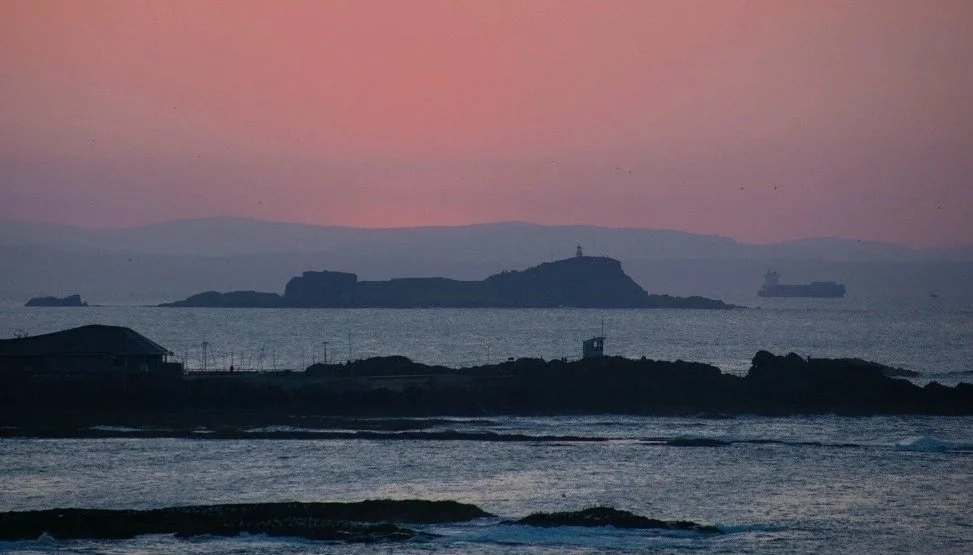
Fidra (photographed) is an RSPB Scotland nature reserve. Fidra offers a unique opportunity to explore and appreciate the natural beauty and wildlife of this protected area. Fidra Island, located off the coast of North Berwick, is managed by the Royal Society for the Protection of Birds (RSPB) and is known for its rich biodiversity and seabird colonies.
Fidra Island is home to a variety of seabird species, including puffins, guillemots, razorbills, and kittiwakes. Birdwatchers can enjoy observing these fascinating birds in their natural habitat, particularly during the breeding season when the island comes alive with activity.
Guided nature walks and self-guided trails allow visitors to explore Fidra Island at their own pace. Walking paths wind through the island's diverse habitats, offering opportunities to observe wildlife, discover native plants, and learn about the island's ecology and conservation efforts.
-
Town Centre Car Parks
Quality Street Car Park (EH39 4HR): Central location near shops and cafés. Pay-and-display with time restrictions.
The Glebe Car Park (EH39 4PL): Also close to the high street and within walking distance to the beach.
Beach/Harbour Parking
North Berwick Harbour area has limited spaces; it’s popular and can fill up quickly on sunny days.
Along the Seafront: Pay-and-display bays with time limits. Early arrival is recommended in peak season.
On-Street Parking
Limited and often permit-only near residential areas. Always check local signs.
Disabled Parking
Marked bays in central car parks and near the harbour. Blue Badge regulations apply.
Tips
Arrive Early: Summer weekends can be very busy, so you’ll have the best chance of finding a convenient space if you get there in the morning.
Pay Methods: Most car parks accept coins or contactless card. Some offer app-based payment options—check signage.
-
The town boasts a wealth of historical landmarks and attractions, including the 14th-century North Berwick Harbour, which has been in use for centuries and is still a bustling hub for fishing and boating activities. North Berwick's historical significance stems largely from its position along the ancient pilgrimage route to St Andrews. Serving as a vital crossing point between North Berwick and Fife, it provided the shortest passage across the Forth for travellers journeying from the south. Pilgrims from the north of eastern England, the Borders, and Whitekirk frequently made their way through this route.
The Glen Golf Club is a golf club located in North Berwick, East Lothian and is one of the most popular golf courses in Scotland, having been ranked among the top 100 golf courses in the world.
The Glen was founded in 1894, and it was originally designed by Ben Sayers and James Braid. The course has been modified several times over the years, but it retains its original character.
The Glen is a challenging course, but it is also a fair course. The greens are well-maintained, and the fairways are wide and forgiving. The course is also located in a beautiful setting, with views of the Firth of Forth and the Bass Rock.
The Glen is a popular destination for golfers from all over the world. It is a challenging and rewarding course, and it offers stunning views of the Scottish coastline.
Heritage Golf Trail: The Glen Golf Club
Credit: Visit Scotland
“This beautifully manicured course, with a stunning shoreline clubhouse, is an absolute must for any golfer wishing to golf in East Lothian, Scotland’s Golf Coast.The Glen is Scotland’s answer to the much heralded Pebble Beach”
Heritage Golf Trail: Royal Musselburgh Golf Club
Royal Musselburgh Golf Club is a golf club located in Prestongrange, East Lothian - at the start of the famous stretch of golf courses on the East Lothian coast. It is the 6th oldest club in the world, having been founded in 1774. The club originated at the 9-hole Musselburgh Levenhall links where the Honourable Company of Edinburgh Golfers, Royal Burgess Golfing Society and Bruntsfield Golf Club also played.
The course is a challenging parkland course, measuring 6237 yards (par 70). It is set in beautiful surroundings, with views of the Firth of Forth.
The club has a rich history, and it has hosted many prestigious tournaments, including the Open Championship qualifier.
Pride of place in the Royal Musselburgh is the Old Club Cup dating back to 1774, the oldest trophy still competitively played for in the world.
Royal Musselburgh Golf Club is a popular destination for golfers from all over the world. It is a challenging and rewarding course, and it offers stunning views of the Scottish coastline.

Heritage Golf Trail: The Royal Burgess Golfing Society
The Royal Burgess Golfing Society of Edinburgh traces its origins back to 1735 and is widely recognised as the oldest golf club in the world. There are references to it being instituted in 1735 dating from 1834. The club enjoys a parkland course located in Barnton, Edinburgh that was designed initially by Tom Morris and Willie Park Jnr, with subsequent revisions by James Braid.
The Society has been known by several names over the years. The original name of the society is believed to have been "The Society of Golfers in and about Edinburgh", and later, "The Edinburgh Golfing Society". The original golfers played on the Bruntsfield Links in Edinburgh's Old Town. The "Burgess" part of the name was influenced by the earliest members, who tended to be Burgess' of the City of Edinburgh. A Burgess was a person who owned property in Burghs. It should be noted that being a Burgess is not - nor has it ever been - a criterion for membership, although a motion was made in 1791 for this to be the case, but it was overwhelmingly rejected.
Notable members have included Jack Nicklaus and Bernard Gallacher alongside a host of royals, aristocrats and socialites.
The club has a long and illustrious history, and it has played host to many prestigious tournaments, including the Open Championship qualifier. It is a popular destination for golfers from all over the world, and it is considered to be one of the finest golf clubs in Scotland.
Visit Edinburgh
Heritage Golf Trail: Lundin Golf Links
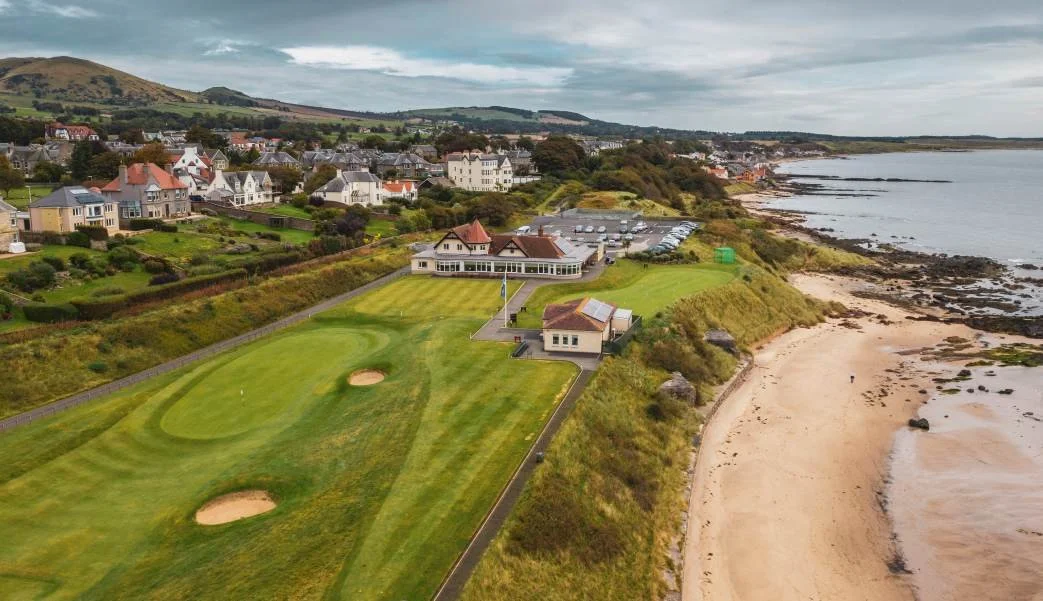
Lundin Golf Links is a classic links golf course located in East Neuk of Fife next to Lower Largo. The course is situated on a beautiful stretch of coastline, with views of the North Sea. This makes Lundin Golf Links a popular destination for golfers from all over the world, because of its stunning Scottish coastline views but also because it is a challenging and rewarding course.
The course is often selected as a final qualifying venue for the Open Championship due to its fine links fairways and excellent greens. It has also hosted the Scottish Amateur Championship and the Scottish Boys Open Championship.
Designed by both Old Tom Morris and James Braid, the course is 6,240 yards long and par 71 and is considered to be one of the best links courses in Scotland. The course is a challenging one, with a number of blind shots and elevated greens.
Credit: Visit Scotland
Heritage Golf Trail: Golf House Club, Elie
Approximately ten miles from the "spiritual home of golf" at St. Andrews, golf has been played over the links of Elie since the 1500s.
The Golf House Club, Elie is a historic members’ golf club situated in the East Neuk of Fife, along a beautiful stretch of coastline, with views of the North Sea. The current club, the Golf House Club, was founded in 1875 with the building of the clubhouse.
The clubhouse of the Golf House Club is situated directly adjacent to the first tee. The current course, a par 70 6251-yard course, was largely designed by Old Tom Morris and James Braid in 1895. It’s a course with a number of blind shots and elevated greens.
Elie Golf House Club has hosted a number of prestigious tournaments, including the Open Championship qualifier, the British Amateur Championship, and the Walker Cup.

Credit: Visit Scotland

Credit: Visit Scotland
“Elie is one of the finest links courses in Fife and for visitors, touring golfers and members alike it offers a warm welcome and an honest test of golf played over classic links terrain.”
Anstruther — Harbours, Fisheries & Sea Life
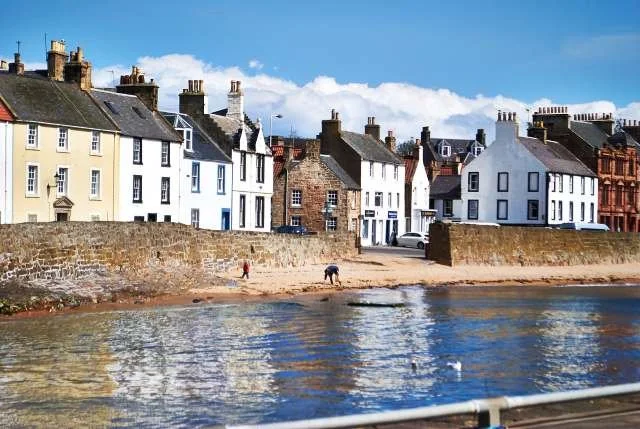
Anstruther is one of the liveliest and most characterful stops along the East Neuk. Two small harbours, a strong fishing heritage and a busy waterfront give the town a sense of movement and purpose that contrasts with the quieter villages nearby. It’s a place where you can watch boats, explore maritime history, take to the water, and enjoy some of the best seafood on this stretch of coast.
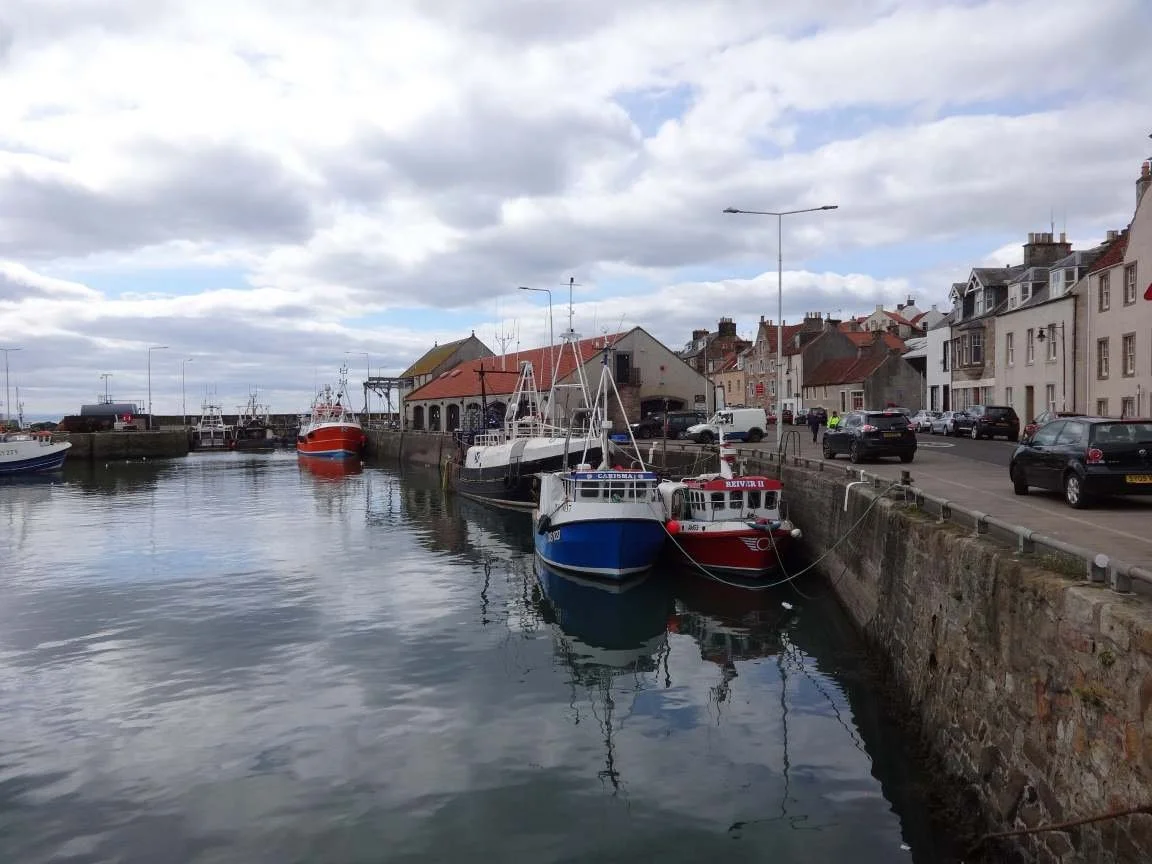
Active working harbour with constant maritime activity
Excellent insight into Scotland’s fishing heritage
Boat trips to seabird islands and coastal landmarks
Attractive old streets, tolbooths and harbour buildings
Famous fish and chips and good café stops
Easy access to short coastal walks and shoreline views
What to See & Do
Scottish Fisheries Museum — One of the best places in Scotland to understand the history of fishing communities and the boats, tools and lives behind them.
Anstruther Harbour & Billow Ness Beach — Walk the quayside, then cross to this quiet shell beach on the west side of the harbour.
Anstruther Pleasure Cruises — Boat trips out towards the Isle of May and views to the Bass Rock for seabirds, seals and open sea views.
Anstruther Lifeboat Station — Learn about modern sea rescue and the realities of coastal life.
James Street & the Tollbooth — Historic street running along the shore with 16th-century civic buildings.
Cellardyke Harbour — A smaller, quieter harbour just round the corner, still used by local creel boats.
Anstruther Fish Bar— A well-known stop for freshly landed fish and chips.
Town Trail & Anstruther Golf Club— Self-guided town trail and a compact coastal golf course with wide sea views.
-
Anstruther is a picturesque coastal town in the East Neuk of Fife. The area around Anstruther has been inhabited since ancient times, with evidence of prehistoric settlements and early Celtic communities. Its location on the coast made it ideal for fishing and maritime activities.
Anstruther grew in importance during the medieval period as a fishing village and trading port. It was granted burgh status in the 14th century, allowing it to establish markets and conduct trade with other towns in Scotland and beyond.
By the 16th and 17th centuries, Anstruther had become one of the most prosperous fishing ports in Scotland. Its fleet of fishing boats, known as "drifters," ventured out to the North Sea to catch herring and other fish, contributing to the town's economic success.
Anstruther has a long maritime heritage, with a history of shipbuilding, boat repair, and seafaring. The town's harbour was a bustling hub of activity, with fishermen, sailors, and merchants plying their trade along the coast.
Like many coastal towns in Scotland, Anstruther was affected by wars and conflicts throughout history. During the Anglo-Scottish Wars and the Wars of Scottish Independence, it faced threats from English raids and naval incursions. The town also played a role in the smuggling trade during the 18th century.
In the 19th century, Anstruther continued to thrive as a fishing and trading port. The development of new fishing techniques and technologies, such as steam-powered boats and refrigeration, helped to sustain the local fishing industry.
In the 20th century, Anstruther began to attract tourists drawn to its scenic coastal setting, historic architecture, and maritime charm. The town's picturesque harbour, lined with colourful fishing boats and historic buildings, became a popular destination for visitors exploring the East Neuk of Fife.
Today, Anstruther remains a vibrant community with a strong connection to its maritime heritage.
Kellie Castle
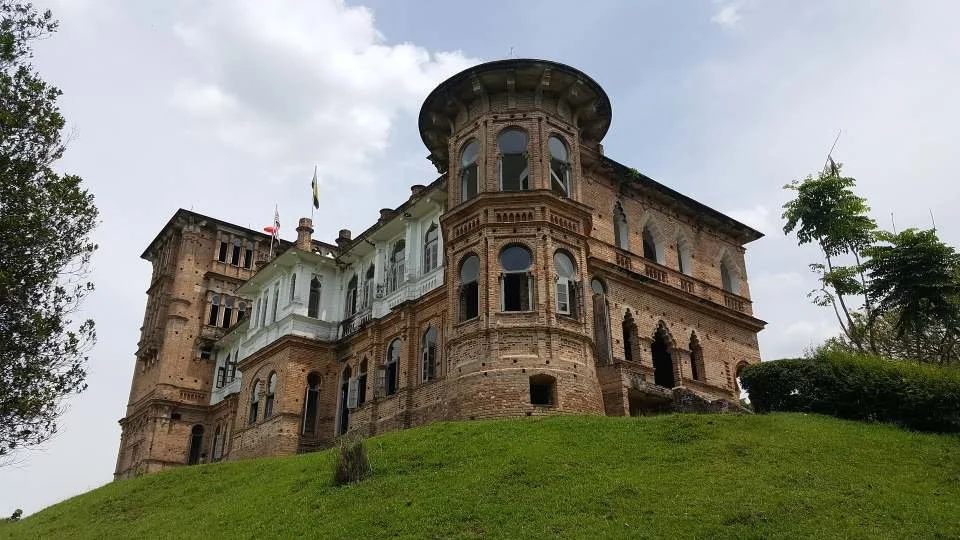
The National Trust for Scotland’s Kellie Castle , near Pittenweem in Fife, is a beautifully preserved mix of medieval fortress and Victorian Arts & Crafts home. Parts of the castle date back to the 14th century, and its layered history is evident as you explore the rooms and towers.
Inside, you can discover how the castle was rescued from near ruin in the late 19th century by a family of artists and architects. Highlights include the library’s remarkable 16th-century ornamental plaster ceiling, a long-hidden mural by Phoebe Anna Traquair, and changing exhibitions in the former stables, including displays about sculptor Hew Lorimer.
Outside, take time to wander the Arts & Crafts garden, especially in summer when the roses are in bloom.
Local legend adds an atmospheric touch: the castle is said to be haunted by Anne Erskine, who is believed to linger near one of the spiral staircases.
Kellie Castle makes an easy and rewarding stop when exploring the East Neuk of Fife, combining history, art, and peaceful gardens in one visit.
Crail: A Picture-Perfect Harbour Village
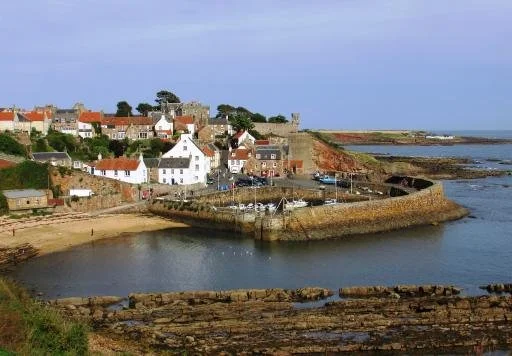
Crail is often the first true East Neuk village visitors encounter, and it sets the tone perfectly.
Pantiled roofs, crow-stepped gables and narrow lanes lead down to a small, perfectly formed harbour where fishing boats still work from the quayside. It’s easy to wander here without a plan — browsing small galleries, independent shops and cafés before drifting back towards the sea.
One of the prettiest and most intact fishing villages in Fife
Compact, walkable and full of character
Strong mix of harbour life, crafts and coastal walking
Easy access to beaches and the Fife Coastal Path
What to See & Do in Crail
Harbour & Shoreline Walks – Wander the historic harbour, watch fishing boats come and go, and follow short stretches of the Fife Coastal Path (see below) for clifftop views and sea air.
Crail Museum and Heritage Centre – Set in a 17th-century tollbooth, this small museum gives excellent context to the village’s maritime history, fishing traditions and everyday life.
Crail Parish Church & Churchyard – A striking mediaevall kirk with centuries of gravestones and a peaceful setting above the harbour.
Roome Bay – A sandy, sheltered bay just beyond the village, ideal for a short coastal detour, beachcombing or a quiet pause by the water.
Crail Pottery – Working studio and shop producing traditional ceramics; a good place to browse for locally made pieces.
Crail Golfing Society (Balcomie & Craighead Links) – One of the world’s oldest golf clubs, with dramatic true-links courses overlooking the sea, even if you’re just walking past for the views.
-
Crail’s history is deeply tied to fishing, trade and seafaring. The harbour has operated for centuries, and many of the buildings you see today reflect the prosperity brought by maritime trade. Traditional pantiles, crow-stepped gables and narrow wynds give the village a distinctive architectural feel. Over time, artists and craftspeople have been drawn here, adding a creative layer to its working coastal heritage.
-
Harbour car park and on-street parking available
Several cafés, shops and public toilets in the village
Easy walking terrain, mostly level
Beach access at Crail Roome Bay
Good stop for lunch before continuing to Anstruther and Pittenweem
Around Crail, the Coastal Path and beyond
Around Crail, the Fife Coastal Path becomes more intimate and textured. The route threads past the harbour, then quickly leaves the village behind for clifftop paths, rocky inlets and open views across the Firth of Forth.
This is where you start to feel how closely the villages sit to the sea. Short sections north or south of Crail reveal quiet coves, seabirds and changing light on the water, making it an ideal place to sample the path without committing to a long walk.
Leaving Crail, the road and the coastal path run almost side by side along the cliffs. The sea stays with you, the views barely change, and within minutes you arrive somewhere that feels noticeably different.
Where Crail is quiet and compact, Anstruther — just a few miles away — feels busier and more purposeful: a harbour still working, boats moving, and a waterfront with more energy.
The coastline hasn’t changed, but the rhythm of the villages has.
Heritage Golf Trail: Crail Golfing Society
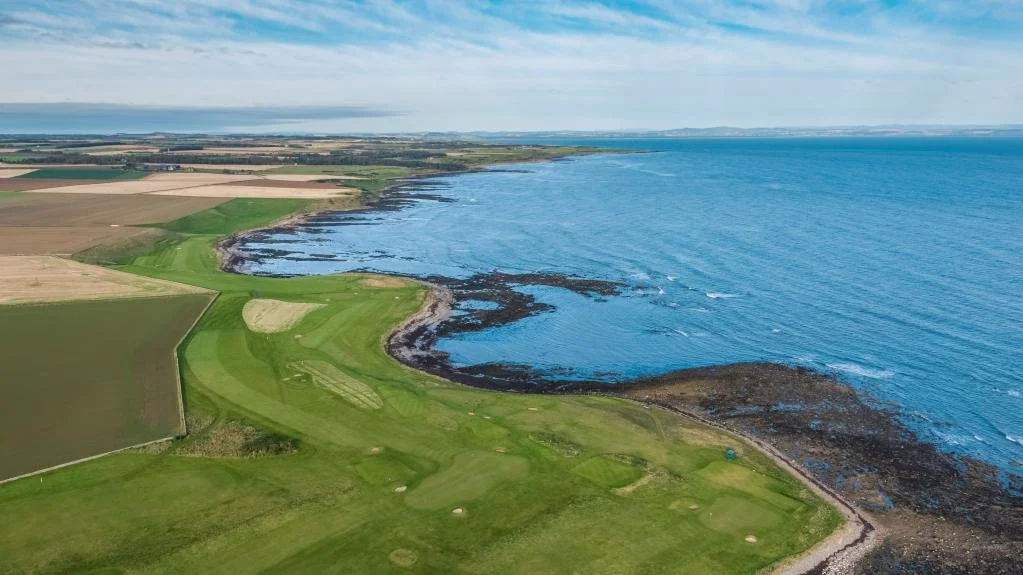
The Crail Golfing Society was founded in 1786 and is regarded as the seventh-oldest golf club in the world. Eleven gentlemen formed the Crail Golf Society on 23rd February 1786, following a meeting and talks in the Crail Golf Inn. In 1792, a scarlet jacket with a plain yellow button became the official uniform. Those who played the links without uniform could be fined a mutchkin of punch.
Its oldest course, Balcomie, was formally laid in 1894, but competitions have been played there since the 1850s. The Society was presented with one of the oldest trophies in the world is 1855, won by Allan Robertson, from the well-known ball-making family from St Andrews.
The first 9 holes of the Balcomie links were designed by Old Tom Morris, during 1894, and officially opened in 1895. The course was extended in 1900 to 19 holes.
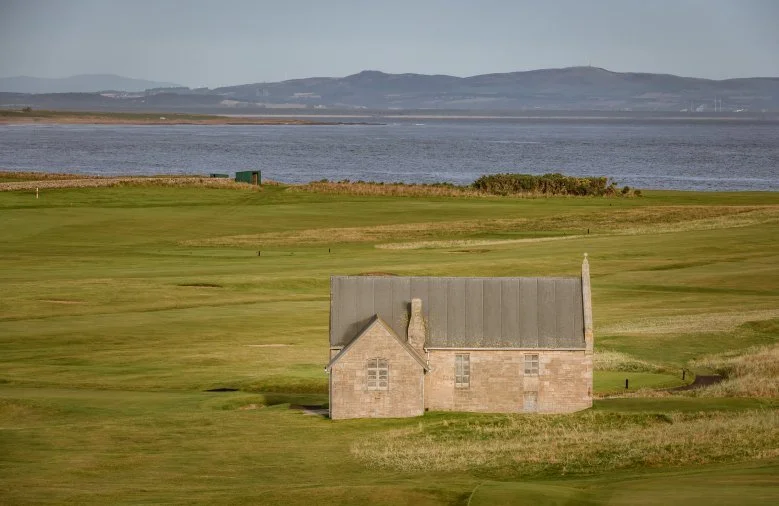
Craighead Links, the first course designed outside the USA by Rio Olympics course designer Gil Hanse, was opened in 1998. Craighead Links provides a contrasting challenge to Balcomie Links.
2018 saw 90 of the most senior female golfers take part in the Ladies Senior British Open Amateur Championship. The Scottish Amateur Championship was hosted here in 2019, with 265 competitors taking part, the winner was George Burns, from Crail.
The Crail Golfing Society is also home to the Crail Golfing Academy, which offers a variety of golf lessons and clinics for all levels of golfers.
Credit: Visit Scotland
Credit: Visit Scotland
St Andrews — Ruins, Learning & the Edge of the Sea
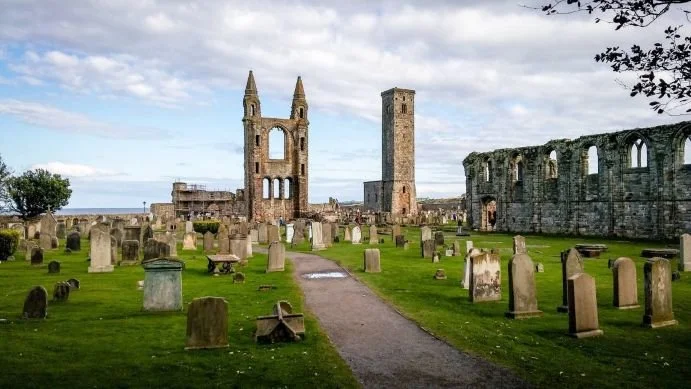
St. Andrews is where Fife’s story feels most concentrated. Cathedral ruins sit above the shoreline, university streets run down towards the sea, and the famous links stretch out beside a vast beach. Nowhere else in Scotland combines mediaeval religion, intellectual life and sporting heritage in such a small, walkable space.
This is not just a historic town to “see”. It’s a place to wander slowly, where views open up between buildings, the sea is never far away, and the past feels layered rather than preserved.
One of Scotland’s most important medieval religious centres
Home to Scotland’s oldest university (founded 1413)
The spiritual home of golf beside a vast sandy beach
Cathedral, castle and coastline within easy walking distance
A town that rewards slow wandering rather than rushing
A natural starting point for exploring the East Neuk coast
What to See & Do
British Golf Museum & St Rule's Tower— The cathedral ruins show the scale of what was once the largest church in Scotland. Climb St Rule’s Tower for wide views over the town, harbour and coastline.
St Andrews Castle — Perched on the cliffs, this is one of the most atmospheric sites in town, with siege tunnels, underground passages and views out across the North Sea.
West Sands Beach— A vast, open stretch of sand backed by the Old Course. Ideal for a long walk, especially in the evening light.
University of St. Andrews streets & quads — The historic buildings of the university are woven through the town. Wandering here is part of the experience rather than a checklist.
St. Andrews Botanic Garden — A calm, green break from the stone and sea.
St. Andrews Aquarium & East Sands Leisure Centre — Useful options for families or poor weather.
Golf in St Andrews
St Andrews is inseparable from golf, but you don’t need to play to appreciate it.
Walk beside the Old Course and St. Andrews Links and watch play unfold against the beach backdrop
Visit the British Golf Museum to understand why this place matters globally and learn more about theSt. Andrews Links
If you do play, book well in advance — this shapes your day here
-
St Andrews began as an early religious settlement linked to the cult of Saint Andrew, Scotland’s patron saint. By the 12th century it had become the centre of the medieval church in Scotland, drawing pilgrims from across Europe to its cathedral.
The town later became home to the University of St Andrews in 1413, shaping Scotland’s intellectual life for centuries. During the Reformation, figures such as John Knox preached here, marking the town as a focal point of religious change.
Alongside this religious and academic history, golf developed on the links beside the town from the 1400s, eventually making St Andrews the recognised home of the sport.
-
Parking
Peterson Street Car Park — central, good for cathedral/castle/university exploring
Argyle Street Car Park — convenient for town centre wandering
West Sands Car Park — best if you want beach and golf views first
East Sands Car Park — useful for families and quieter access to the shore
Getting around
Best explored on foot once parked — everything is close together
Arrive earlier in peak season; the town is compact and fills quickly
Tip for your day
Park once, explore the cathedral and castle area on foot, wander through town, then finish with a long walk on West Sands before leaving. -
This is a simple loop that lets you understand St Andrews without needing a map or rushing between sights. Park once, then follow this on foot.
Start: Cathedral & Harbour
Begin at St Andrews Cathedral. Walk through the ruins and, if open, climb St Rule’s Tower for the view. From here, follow the path down towards the small harbour and look back at the cathedral from sea level — one of the best perspectives in town.
Clifftop to the Castle
Follow the coastal path north for a few minutes to St Andrews Castle. Even without going inside, the clifftop position and sea views are worth the stop.
Into the University Streets
Head inland along North Street and South Street, passing university buildings, stone lanes and small courtyards. This is where the town’s academic character really shows.
Finish: The Links & West Sands
Continue west until the streets open onto the famous links beside the Old Course. Cross towards West Sands Beach and take a short walk along the sand with the course behind you.
You’ll have seen cathedral, castle, university, golf and coastline in one gentle loop — which is exactly how St Andrews is best experienced.
-
No place in the world is more closely associated with golf than St Andrews Links.
Golf has been played here since at least the early 1400s, when townspeople used the rough coastal ground known as the Links for informal games. The land was common ground — shared for grazing, walking and recreation — which is why the course still feels open and woven into the town rather than enclosed.
By the 1500s, the layout that would become the Old Course had begun to take shape. Its double greens, shared fairways and natural hazards were not designed but evolved over time, shaped by wind, sand, rabbits and repeated play. This is why the course feels organic rather than engineered.
In 1754, the Royal and Ancient Golf Club of St Andrews was formed here. The R&A went on to codify the rules of golf that are still followed across most of the world today, cementing St Andrews’ role not just as a place to play golf, but as the place that defined how the game is played.
The Old Course at St Andrews is widely regarded as the oldest golf course in the world and remains a working public course. Locals walk dogs across it on Sundays. Visitors cross its fairways to reach the beach. It is both sacred sporting ground and everyday landscape.
The famous Swilcan Bridge, Hell Bunker and the long final approach to the 18th green beside the town are among the most recognisable scenes in global sport.
Even if you never pick up a club, walking beside the Links or visiting the British Golf Museum makes it clear why St Andrews is known, without exaggeration, as the Home of Golf.
Around St Andrews, the Fife Coastal Path feels wide, open and expansive. Leaving the town from East Sands, the path follows low cliffs and grassy edges with constant views over the North Sea and back towards the skyline of St Andrews. This stretch is less about harbours and more about space — dunes, sea air and long coastal views that immediately shift you into a slower pace. Even a short 20–30 minute walk here gives a strong sense of how the coastline begins to unfold before you reach the East Neuk villages further south.

Heritage Golf Trail: The Old Course
The Old Course at St. Andrews is the oldest golf course in the world, dating back to the 15th century. Know as the “Home of Golf,” the game was first played 600 years ago. It is also one of the most famous, having hosted the Open Championship more times than any other course.
The Old Course is a links course, meaning that it is played on natural sand dunes with very little grass. The course is 7,214 yards long and par 72. It is a challenging course, with a number of blind shots and elevated greens.
Golf’s long history here begins in 1123 when King David I’s charter ratifies that the Links is common land belonging to the townspeople of St Andrews. The official charter was signed by Archbishop Hamilton in 1552, recognising the right of the people of St Andrews to play golf on the Links. In 1865, Tom Morris became the Keeper of the Green.
Notable moments include Nicklaus almost hitting Sanders, in 1970, Seve Ballesteros' famous Open Championship victory on the Old Course in 1984, Justin Rose winning the Links Trophy in 1997 and Nicklaus playing his final round in 2005.
Today more than 230,000 rounds are played over the seven public courses. St Andrews Links Trust also manages a number of additional facilities including a golf academy, three clubhouses and four shops.
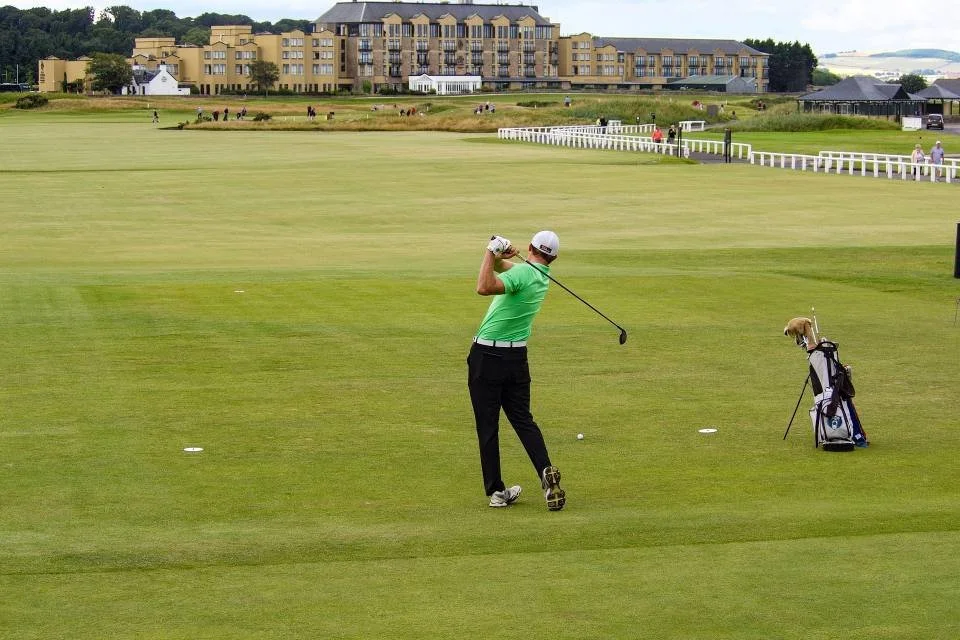
“To win at St Andrews is the ultimate.”
Heritage Golf Trail: Carnoustie Golf Links
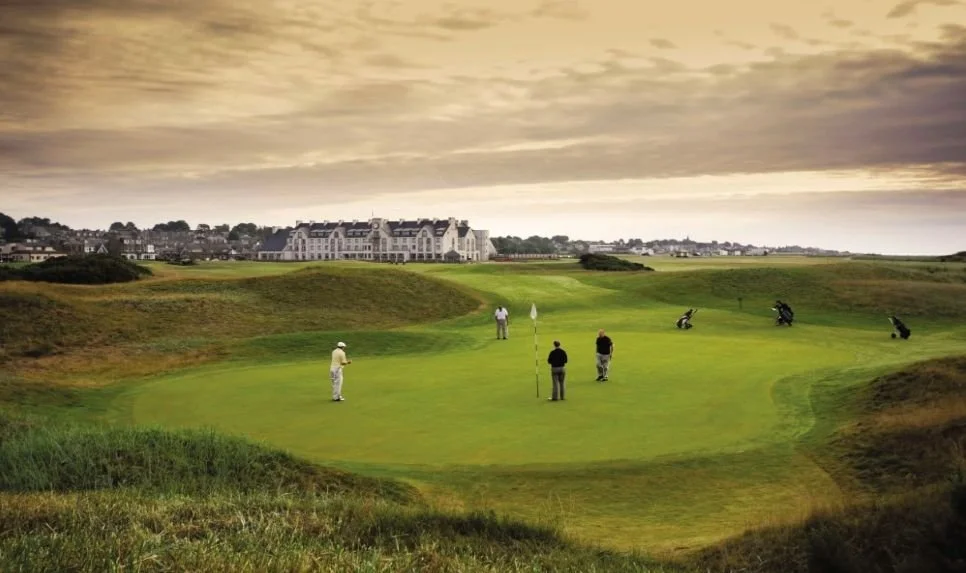
Credit: Visit Scotland
The Championship Course of Carnoustie Golf Links is located in Carnoustie, Angus, and is one of the most famous golf courses in the world, having hosted the Open Championship eight times, most recently in 2018. The Championship Course has also hosted two Women’s Open and two Seniors Open, which makes the course one of the very few to have done so in the UK. It is one of three courses used for the annual Dunhill Links, the others being Kingsbarns and the Old Course in St Andrews.
Carnoustie Golf Links, Carnoustie is a links course, meaning that it is played on natural sand dunes with very little grass. The course is 7,421 yards long and par 72. It is a challenging course, with a number of blind shots and elevated greens.
Although the course wasn't designed from scratch by James Braid, it was his expert remodelling in 1926 that brought it up to the Open Championship standard.
Dundee
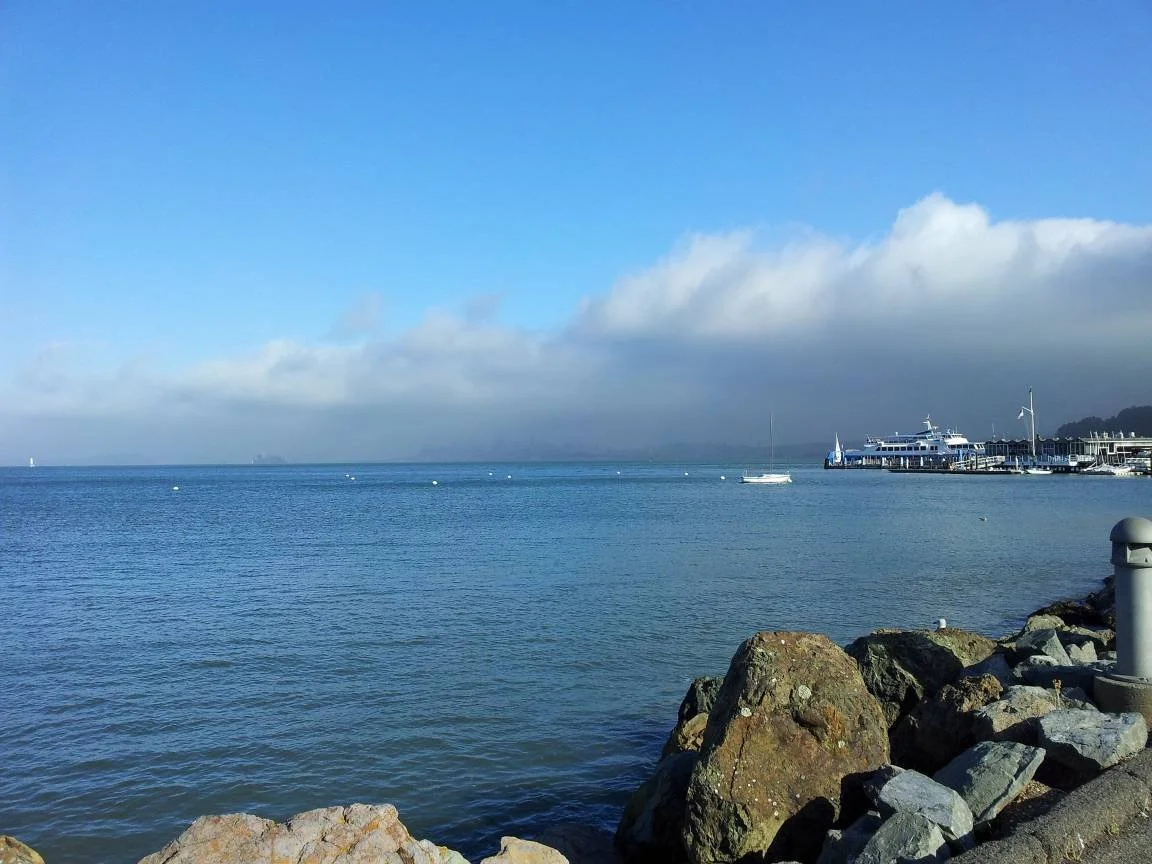
The 19th century brought further growth and prosperity to Dundee, fueled by the Industrial Revolution. The city's textile mills and shipbuilding industry boomed, attracting workers from across Scotland and beyond.
Dundee played a pivotal role in social and political reform movements, including the fight for workers' rights and suffrage. It was home to prominent figures such as Mary Brooksbank and Keir Hardie, who championed the cause of social justice. The Dundee Women’s Trail commemorates twenty-five remarkable women through bronze plaques, representing a diverse range of professions and contributions, including artists, trades unionists, social reformers, suffragettes, a shipyard welder, and a marine engineer.
Dundee made significant contributions to both World Wars, particularly in shipbuilding and manufacturing. The city suffered heavy bombing during World War II but quickly recovered and rebuilt in the post-war years.
Today, Dundee is a vibrant and dynamic city known for its cultural heritage, innovation, and waterfront development. It has undergone significant regeneration in recent years revitalising the city's skyline.
What to See and Do:
Explore Dundee's vibrant city centre, home to historic landmarks, bustling markets, and charming cafes. Wander along Reform Street and High Street to discover shops, galleries, and eateries showcasing local talent and flavours.
Take a stroll along the Dundee Waterfront, a bustling promenade lined with shops, restaurants, and public art installations. Admire the striking architecture of the V&A Dundee museum and enjoy views of the Tay River estuary. Visit the V&A Dundee, Scotland's first design museum. Explore innovative exhibitions showcasing design and creativity from around the world, housed in a stunning waterfront building designed by renowned architect Kengo Kuma.
Step back in time at Verdant Works Museum, a restored jute mill and museum that offers insight into Dundee's industrial heritage. Discover the story of jute production and its impact on the city's economy and society. Immerse yourself in McManus Galleries, a museum of art and history or contemporary art, film, and literature at DCA, a vibrant cultural hub in the heart of Dundee. Experience exhibitions, screenings, performances, and workshops showcasing local and international talent.
Dundee, located on the eastern coast of Scotland, traces its roots back to Pictish tribes who settled in the area around the 9th century. Over time, it grew into a prominent medieval burgh, serving as a hub for trade and commerce.
In the 12th century, Dundee was granted royal burgh status by King William the Lion, solidifying its importance as a centre of governance and trade within Scotland.
Dundee flourished during the Middle Ages, thanks to its thriving textile industry, particularly in weaving and jute production. The city became known as the "City of Jute, Jam, and Journalism" due to its significant contributions to these industries.
Step aboard RRS Discovery, the ship that carried Captain Scott and Ernest Shackleton on their Antarctic expeditions. Learn about Dundee's maritime heritage and the city's historic connection to polar exploration, in Antarctica in 1901! Following on with the nautical theme, take a visit to HMS Unicorn, billed as ‘The Most Original Old Ship In The World’ at nearly 200 years old, now preserved as a museum. Take a stroll along the historical, narrow Candle Street (pictured) to discover a bit more of its history.
Climb Dundee Law, an extinct volcano and iconic landmark overlooking the city. Enjoy panoramic views of Dundee and the surrounding countryside from the summit, and explore the ancient hill fort and stone tower at the top.
Enjoy a walk or bike ride along the Tay Estuary. This circular walk along the Tay Estuary has excellent views of the Tay rail bridge and Dundee and visits Balmerino, with its ruined abbey. For a different vista, take a boat trip on the Tay River.
Other interesting places to visit, are the Dundee Museum of Transport, the War Memorial, Dundee Science Centre and the Dundee Repertory Theatre. Days out include Broughty Castle Museum, Camperdown Country Park and Dundee Botanic Garden.
Heritage Golf Trail: Gleneagles
Gleneagles is a world-famous golf resort, located in Auchterarder, Perthshire was founded in 1924. Gleneagles was established by Donald Matheson, a Scottish landowner who envisioned creating a luxury resort in the picturesque countryside. The location was chosen for its stunning landscapes and proximity to major cities like Edinburgh and Glasgow.
Construction of the Gleneagles Hotel and Golf Course began in 1913, with the aim of providing guests with world-class amenities and recreational activities amidst the tranquil Scottish Highlands. The hotel officially opened its doors in 1924, boasting opulent accommodations, fine dining, and impeccable service.
Gleneagles quickly gained renown as one of the finest resorts in Europe, attracting elite guests from around the world. The hotel became synonymous with luxury and leisure, offering guests a wide range of activities, including golf, shooting, fishing, horse riding, and tennis.
During World War II, Gleneagles played a significant role as a military hospital and training facility for the British armed forces. The hotel temporarily closed its doors to civilians and welcomed wounded soldiers and medical personnel, providing essential care and support during wartime.
After the war, Gleneagles resumed its operations as a luxury resort, continuing to attract guests seeking relaxation and recreation in the Scottish countryside. The hotel underwent several renovations and expansions over the years to maintain its reputation for excellence.
Gleneagles has hosted numerous prestigious events and conferences over the years, including the 2014 Ryder Cup golf tournament. It is home to three championship golf courses, which have hosted a number of major tournaments. It is the only European golf resort to host both The Ryder and Solheim Cups.
There are three world-renowned championship golf courses. The Braid designed King’s Course, the ‘inland links’ classic, The Queen’s Course, which is one of the finest par-68 heathland golf courses in the UK, and the contemporary Nicklaus-designed PGA Centenary Course. Together, these 54 holes offer world-class golf for everyone from novices through to the finest players.
There is also the Wee Course, a perfect place for beginners with over nine par 3 holes, set amongst beautiful Scottish scenery.
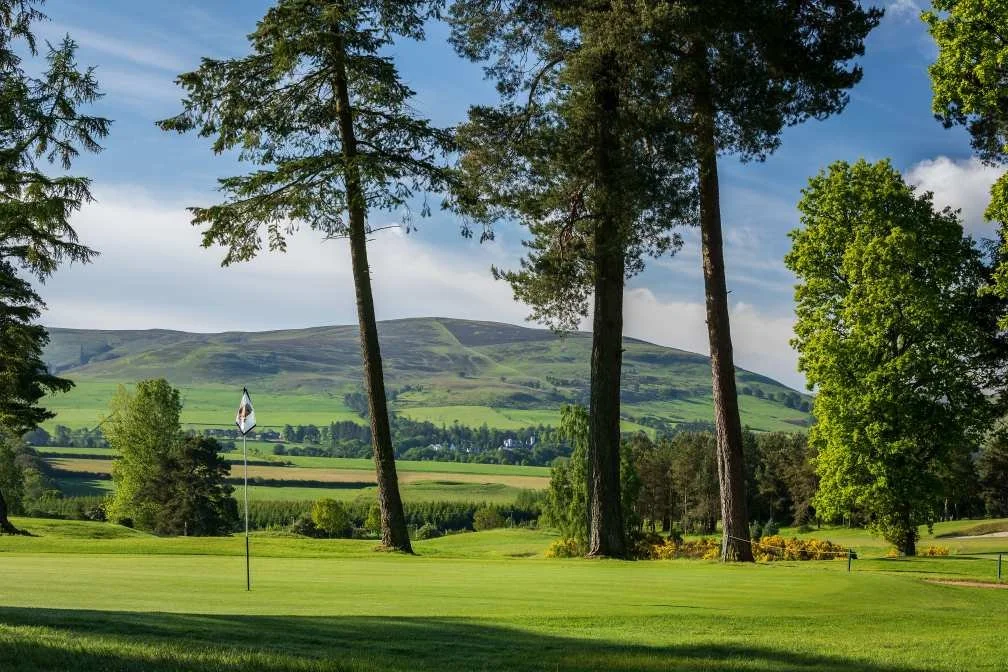
Credit: Visit Scotland
“If Heaven is as good as this, I sure hope they have some tee times left.”
Stirling

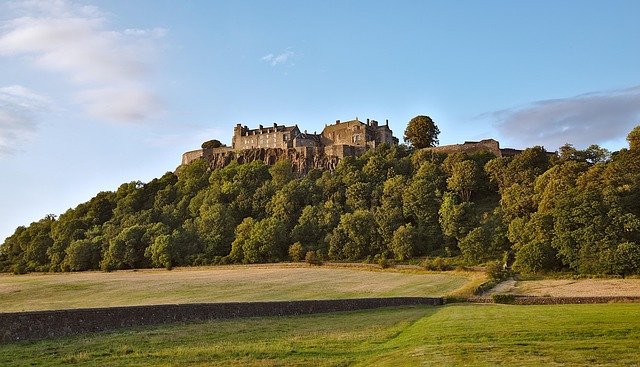
Stirling, located in central Scotland, boasts a rich history dating back over a thousand years and offers a wealth of attractions for visitors to explore. It was once the capital of Scotland and proverbially it is the strategically important "Gateway to the Highlands". Stirling has long been of strategic importance in Scottish history due to its location atop a prominent volcanic hill overlooking the River Forth. It served as a royal residence and political centre during the Middle Ages.
The Battle of Stirling Bridge in 1297, led by William Wallace and Andrew Moray, was a significant victory for the Scots in their fight for independence from English rule. The battle site and the iconic Stirling Bridge are still visible today. The Battle of Bannockburn in 1314, saw Robert the Bruce defeat the English.
Stirling Castle, one of Scotland's most important historic sites, dates back to at least the 12th century. It has played a key role in Scottish history, serving as a royal palace, military stronghold, and symbol of royal power.
Stirling was the birthplace of Mary, Queen of Scots in 1542 and a favoured residence of Scottish monarchs, including Mary, Queen of Scots, who was crowned at Stirling Castle in 1543, aged just nine months. The nearby Church of the Holy Rude also has royal connections, serving as the site of royal baptisms and weddings.
Stirling played a role in the Industrial Revolution, particularly in textiles and manufacturing. The Old Town Jail, now a museum, provides insights into the city's industrial past and its impact on daily life.
Things to See and Do:
Wander through Stirling's charming Old Town and discover its historic buildings, cobbled streets, and lively atmosphere. Stop by local shops, cafes, and pubs to soak up the city's vibrant culture.
Visit the site of the Battle of Stirling Bridge and the adjacent Old Stirling Bridge. Learn about the battle's significance and enjoy scenic views of the River Forth and the surrounding landscape.
Find out more about the Battle of Bannockburn at the Battle of Bannockburn Experience, where you can stand on the site of Robert the Bruce’s greatest victory and witness a digitally re-created version of the battle, up close.
Explore Stirling Castle and immerse yourself in centuries of history. Tour the royal apartments, great hall, and regimental museum, and enjoy panoramic views of the surrounding countryside from the castle walls. Stirling Castle is one of the largest and most important castles in Scotland, both historically and architecturally. The castle sits atop an intrusive crag, which forms part of the Stirling Sill geological formation. It is surrounded on three sides by steep cliffs, giving it a strong defensive position. Its strategic location, guarding what was, until the 1890s, the farthest downstream crossing of the River Forth, has made it an important fortification in the region from the earliest times.
Visit the Church of the Holy Rude, one of the few surviving medieval churches in Scotland. Admire its stunning architecture and learn about its royal connections through guided tours and exhibitions.
Ascend the National Wallace Monument, a towering monument commemorating William Wallace's legacy and Scotland's fight for independence. Enjoy panoramic views from the top and explore the exhibition on Wallace's life and times.
Explore Cambuskenneth Abbey, a medieval monastery located just outside Stirling. Marvel at its Gothic architecture and tranquil surroundings, and learn about its history through guided tours and interpretive displays.
Take advantage of Stirling's scenic surroundings and outdoor recreational opportunities. Go hiking or cycling in the nearby Ochil Hills, or enjoy water sports on the River Forth.
Take a walk or bike ride through Stirling Old Town, a well-preserved medieval town, or enjoy a boat trip on the River Forth. Visit the Stirling Smith Art Gallery and Museum, which tells the story of Stirling's history and culture. See a show at the Stirling Festival Theatre, which hosts a variety of performances throughout the year.
Heritage Golf Trail: Dalmahoy Golf Course
Dalmahoy Golf Course is set in a beautiful parkland setting and offers stunning views of the Pentland Hills, Edinburgh. The famous course is well-known as the venue where the European Ladies won their first Solheim Cup, and where famous names such as Seve Ballesteros, Sam Torrance and Nick Faldo have competed in the Scottish Seniors Open.
The East Course was designed by James Braid to Championship standards, and an 18-hole, 7,475-yard course, hosting major championships such as the Solheim Cup in 1992, the Scottish PGA Championship on numerous occasions and the Scottish Seniors Open in 2006, 2007 and 2008.
The West Course is shorter, at 5,168 yards, and has tight fairways and small greens that demand accuracy. This course offers a good mix of shorter par 4s and par 3s, alongside some very tough par 4’s and a par 5 which is the longest on either course.

Scottish Heritage Golf Last updated: 24 April 2026
Some links may earn Uncover Britain a small commission at no extra cost to you. This helps support the ongoing creation, review and presentation of our road trip guides.
Route information and listings are provided for general guidance only. Always use your preferred navigation system and check official websites to confirm suitability, opening times and the latest details before travelling.
Our guides are reviewed regularly and supported by a mix of editorial research and digital tools to help keep content clear and up to date. If you spot anything that needs updating, we’re always glad to hear from you.