
MEMBER

Mayflower & Pilgrims
Embark on an exciting journey of exploration along the Mayflower & Pilgrims trail, where you have the freedom to chart your own course and determine the starting point of your personal narrative. Follow this captivating trail through the northern villages, venture towards the initial eastern endeavour, and experience the thrill of sailing along the scenic south coast. With this road trip adventure and an official app as your guide, the possibilities for discovery are boundless.
Edward Winslow’s Worcestershire:
Northern Roots: Northern villages
Eastern Footsteps: First attempt
Nautical South Coast: Sailing
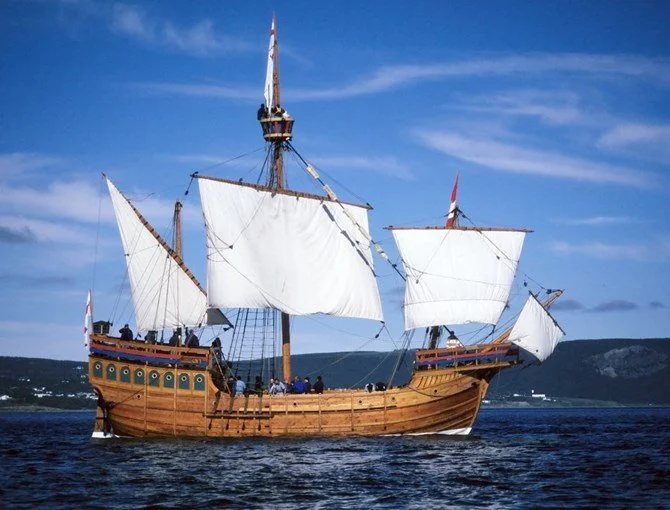
The fascinating story of the Mayflower voyage, and the stories behind the Pilgrims, can be discovered with this trail around the important places and the significant people who are part of the narrative. As the ship that transported English Separatist passengers – who became known as the Pilgrims – the Mayflower is one of the most important ships in history. Sailing across the Atlantic over 400 years ago, the passengers were heading towards a 'new promised land' where they would establish the Plymouth Colony in 1620.
The story of the Mayflower ends with the sea crossing from Plymouth, UK, to what is now Plymouth, Massachusetts, in 1620. However, with your visit to Worcestershire, you can trace the story back to the origins of the people who became known as the Pilgrims – who were the passengers on the Mayflower. Follow the story from the beginning of the Separatist movement in England.
Discover more about the Mayflower and the Pilgrims' story here. If you are researching if one of your ancestors was on board, you can read the passenger list here.
About this route
This route is arranged by area: Worcestershire, Northern villages, Eastern footsteps and Nautical south coast - therefore it can be split into 4 to make the overall trip more manageable.
In total, the road trip is 716 miles (1153km) with a drive time of around 18 hours and 30 mins.
To make the most of this trip and discover more, spend a minimum of 2 days / 2 nights in Worcestershire, 3 days / 3 nights in the Northern villages, 2 days / 2 nights in the East and 4 days / 3 nights in the South Coast. That’s a minimum of 11 days / 10 nights. Make it a 2-week break to make it a discovery of a lifetime.
Overnight stays
Find the overnight stays for this route at the bottom of the page.
Click the map’s top-right icon to create a larger view.
Mayflower 400™ self-guided tours App

Explore the Mayflower Trail with the official Mayflower 400™ self-guided tours App, which turns your mobile device into a personal GPS tour guide of the UK towns, cities and villages connected to the Mayflower.
Enjoy free guided walking and driving tours of places, such as Plymouth, from where the Pilgrims set sail for America on the Mayflower.
Learn the stories behind the places the Pilgrims were from and where and why they travelled
Discover iconic places on the Mayflower trail – including the Mayflower Steps in Plymouth
Find out about the Mayflower’s history as you explore the journey of the ship and her passengers
Follow the early story of the Separatists including Brewster, Bradford and Clifton in their hometowns and villages
Detailed maps of the walking tours and driving routes through the Mayflower destinations
Alerts when you approach an historical point of interest, landmarks, museums, and attractions using built-in GPS
Pictures of landmarks and attractions on the walking routes
Offline guides to all the Mayflower walking tours
No need to follow a schedule
The Mayflower Self-Guided App
Click the link below to download the FREE APP:
Edward Winslow and the Mayflower
WORCESTER > DROITWICH SPA = around 6 miles / 9.6 km

Edward Winslow was a Separatist who travelled on the Mayflower in 1620. He was one of several senior leaders on the ship and later at Plymouth Colony - an English colonial venture in America from 1620 to 1691. In Plymouth, he served in several governmental positions such as assistant governor, three times governor, and was the colony's agent in London.
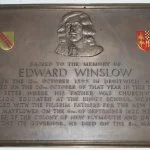
Edward Winslow was born in Droitwich Spa, Worcestershire, on 18 October 1595. After his early year’s education, he attended the King’s School at Worcester Cathedral. Winslow had been championed for a scholarship by the Dean of Worcester Cathedral to attend the King’s School and it was a fabulous opportunity to be educated alongside titled gentry. This education allowed Winslow to grasp the opportunities that later arose.
Edward Winslow was baptised at St. Peter’s Church. Here, the vestry built onto the church in 1973 was dedicated to his memory. The church began life as a wooden Saxon church, although there are no traces of this now. However, there are retaining parts of the Norman building, including a fine example of a Norman-style chancel arch. The church we see today was completed in 1500 AD, following a 12th-century addition of the extension and the building of the clock tower in the 14th century. Today, it looks as it did in the time of Edward Winslow.
His father, Edward Winslow Senior was Under-Sheriff of Droitwich Spa and is said to have owned a Salt Mine here. Droitwich Spa is well known for its brine which is ten times stronger than seawater. Read more about the brine, Roman occupation, and Droitwich through history here.
See the bronze statue of Edward Winslow that stands in the town centre at St. Andrews Square. In his memory, there is also an avenue named after Winslow as well as a Mayflower Road.
In Worcester, there are optional tours available at Worcester Cathedral and its library to view books and maps with detailed accounts of Pilgrim travellers from the early 1600s. Winslow's will is held at the Cathedral Library. There's an interesting blog to read here.
The City Archives at The Hive offer optional tours to view Edward Winslow’s Baptism record as well as the Marriage Bond of William Shakespeare and Anne Hathaway.
Worcester
Worcester is a cathedral city with a fascinating history and fine examples of historic buildings. The city is best known for its magnificent cathedral. Worcester Cathedral is the Anglican cathedral in Worcester and is beautifully situated on a bank overlooking the River Severn. The city is also famous for the world-renown Worcester Porcelain. Visit The Museum of Royal Worcester for the story of Worcester porcelain, located in the Royal Worcester porcelain's former factory site. Continuing with the theme of famous things from Worcestershire, there's Worcestershire Sauce and one of the most picturesque county grounds in England – the beautiful Worcestershire County Cricket Ground.
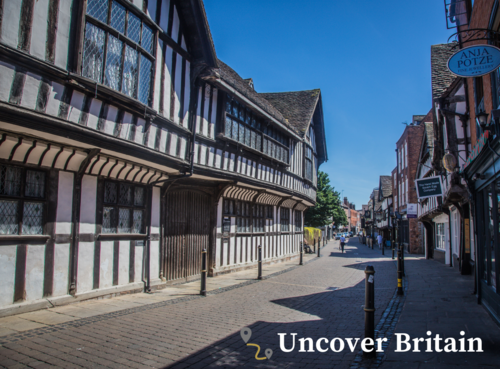
Here, you can see some exceptional historic buildings such as The Guildhall, a Grade I listed municipal building in the High Street, plus black-and-white historic buildings to visit. Admire the half-timbered buildings on Friar Street. These include the National Trust's Greyfriars’ House & Garden and the 500-year-old Tudor House. The Tudor House Museum has hands-on exhibits in a timber-framed, 16th-century house with lead windows. In The Commandery, encounter the past brought to life in a beautiful Grade I listed building with an 800-year history. The Commandery is most famous for being the Royalist Headquarters during the Battle of Worcester in 1651. The tower was used by Charles II to view the battle, and, after the Royalist defeat, the cathedral was used to hold the captured prisoners. Learn about the Battle in the English Civil War.
Worcester City Art Gallery hosts local-history displays, fine art and relics in a Victorian-era brick building with a gift shop and café.
Hidden Gem
Check out Worcester Walks for amazing tales of kings and Vikings, triumphs and tragedies on easy circular walks around historic Worcester.
Food & Drink
For an afternoon treat, stop at the beautiful art-deco-style The Centenary Lounge – an elegant five-storey Grade II listed Georgian building.
For an evening meal, Browns at The Quay offers dining-in with a global menu in a converted, riverside warehouse with a terrace.
Parking: The following have no height restrictions: Corn Market (WR1 2DJ) with 83 spaces, Newport St (WR1 3NR) with 166 spaces and Croft Road (WR1 3NZ) with 199 spaces - all Pay & Display.
Droitwich Spa
Droitwich Spa is a historic town with Roman origins. Droitwich gets its name from the Romans and shows how much they valued the commodity. The natural Droitwich brine is ten times stronger than seawater, only the Dead Sea has saltier water. The town's motto is Sal sapit omnia meaning 'salt flavours everything'. Today, you can see evidence of its historic past: old waterways used for the transportation of salt and spa water pumping stations in the town. In the early 19th century, John Corbett turned the town into a fashionable spa for visitors to enjoy the benefits of flotation in brine and so brine baths were built. The original Brine Baths have long since closed.
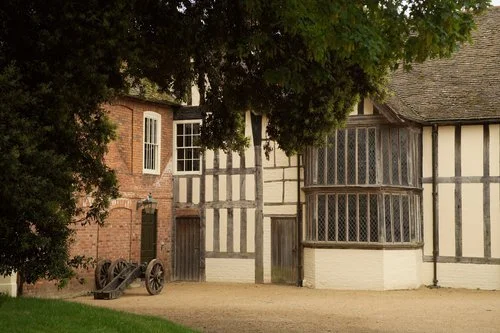
An ideal starting point for visitors is the Heritage Centre in Victoria Square. The building is a 'black-and-white' building that dates from the 1930s, known as St. Richards House. The building is built on the site of the historical Brine Baths that were established in the 1800s. The Salt Museum tells the story of the salt-making industry based in Droitwich Spa. There are well-preserved finds on display, alongside reconstructed faces from Roman skulls, which highlight details of their lifestyles. Learn more about the area's salt industry that Edward Winslow Senior was involved with, as well as the Roman settlement in Bays Meadow and a Roman Fort. There are also other displays and exhibitions to enjoy. Today, if you fancy a dip, there's the Droitwich Lido Park, with its open-air pool containing Droitwich brine, which is added to the pool water to make it the same density as seawater.
The Droitwich Junction Canal was constructed in 1854 to link the Barge Canal in Droitwich to the Worcester and Birmingham Canal at Hanbury and has now been reborn from a derelict channel to become a thriving boating route and a peaceful retreat for the local community. The Canal & River Trust has an audio trail to find out all about the history and restoration of the Droitwich Canals.
A nature trail leads through woodland, grassland and alongside the River Salwarpe at Ombersley Way. Worcestershire Wildlife Trust has a leaflet with a map and more details.
History enthusiasts must visit The Raven Hotel which has a considerable historical past This ancient building was built during the reign of Elizabeth I, however, the central part of the building is much older and was once known as the Manor of Wyche, the birthplace of St. Richard de Wyche in 1197.
A little further along St. Andrew's Street is St. Andrew's Church, built of stone in the Norman and early English decorated styles. Among many interesting parts of the church is the chapel dedicated to St. Richard; here the old bells can be seen and, except two are inscribed – it was said that at one time his relics were contained here.
Hidden Gems
Grafton Wood Nature Reserve is an ancient woodland that's home to a rare butterfly and bat, located near Grafton Flyford, just north of A422.
Tardebigge Locks, a 20 mins drive away, is the longest flight of locks in the UK with 30 locks in total (over a 2.5-mile stretch).
Food & Drink
Parks Café Bar is within a beautiful building and found in the heart of the historic centre, serving classic sandwiches, paninis, jacket potatoes, salads and main courses.
The Hadley Bowling Green is an Elizabethan pub located in nearby Hadley Heath.
Parking
High Street (WR9 8EW), 198 spaces, Rickett's Lane (WR9 8EW), 102 spaces, and Lido Park (WR9 8AA), 106 spaces. All have no height restrictions and are Pay & Display.
Great Malvern
Great Malvern, Malvern Spa and of course, The Malvern Hills are all a part of what makes this area unique, steeped in history, culture and nature. Its history dates back to ancient times, with evidence of human activity in the area dating back to the Neolithic and Bronze Ages. The town is known for its natural springs and the Malvern Hills, which have attracted people for centuries due to their believed healing properties.
In medieval times, Malvern gained significance as a place of pilgrimage. In the 11th century, a Benedictine priory was established, known as Great Malvern Priory. The priory became a centre of religious and cultural activity, drawing visitors from far and wide.
During the 19th century, Malvern experienced a significant transformation with the emergence of the spa industry. The town's natural springs and fresh air were believed to have therapeutic benefits, attracting wealthy visitors seeking health and relaxation. The development of luxurious hotels and spa facilities contributed to Malvern's growth as a fashionable spa town.
The Victorian era brought further prosperity to Malvern, with the establishment of boarding schools and the expansion of residential areas. Many affluent families sent their children to schools in Malvern, contributing to its reputation as an educational hub.
Malvern also played a significant role in the development of technology. In the late 19th and early 20th centuries, the town became a centre for scientific research and innovation. Physicists Sir James Dewar and Sir Geoffrey Ingram Taylor conducted groundbreaking research at Malvern's research laboratories, which later led to important advancements in fields such as radar technology and telecommunications.
During World War II, Malvern's scientific expertise was put to use in military research and development. The town became a vital centre for the production of military equipment, including the development of the first operational radar system.
Familiarise yourself with the town with the Malvern Town Walk Trail.
Great Malvern is largely Victorian, but its roots go back much further. The oldest parts of the town can be seen around the Priory Church, which was founded in 1085 when Benedictine monks settled here and built a Priory. The 900-year-old church contains some of the finest medieval stained glass in the country.
Read about the fascinating history of the Priory.
The Malvern Theatres, situated in the centre of Great Malvern, is one of the leading regional venues for a range of first-rate artistic performances, including West End shows. Make sure you plan your visit!
The famous Morgan Motor Company has an Experience Centre where you can see some impressive cars and tour the factory. This is the last wholly owned British car manufacturer in the UK. You can also hire a Morgan for a half-day, a whole day or longer. How about driving the Elgar Route in a Morgan?
Many key figures such as Charles Darwin and Florence Nightingale visited the town to participate in the popular Water Cure treatments - from the Malvern Spa - that were started by Doctors Gulley and Wilson in the 1800s. These days, you can book a treat for yourself in the first-class spa at the Malvern Spa.
Hidden Gem
Both C.S. Lewis and J.R.R. Tolkien are said to have gained creative inspiration from Worcestershire. The Shire, the fictional area of Middle Earth in The Hobbit and Lord of the Rings are believed to be inspired here. C.S. Lewis is said to have been inspired by the Malvern gas lamps for his opening description of Narnia in The Lion, the Witch and the Wardrobe. A map of the lamps is available from the Tourist Information Centre.
Food & Drink
Ye Olde Anchor Inn, a 'black-and-white' building dating back to 1601, serves a traditional lunch.
For a dining experience, The Boathouse offers Mediterranean tapas and a wine bar with fantastic views over the River Severn while you enjoy the food and soak up the atmosphere.
Parking
The following have no height restrictions: Priory Road South (WR14 3DS), 121 spaces, and Victoria Road (WR14 2TD), 72 spaces both Pay & Display. Link Top (WR14 1EP), 23 spaces are free.

Exploring the Malvern Hills & Elgar Route
Exploring the Malvern Hills
Take a walk up to the Malverns and visit British Camp. There are several walks to be enjoyed for a range of abilities. The Tourist Information Centres in Malvern, Tenbury Wells and Upton upon Severn have a comprehensive selection of local and regional maps, to help you make the most of your walk. There are 19 suggested walks available via Visit the Malverns.
The Elgar Route is a 37-mile circular signposted route through the Malvern Hills countryside and Worcester, taking in the surroundings that inspired Elgar.
Visit the Elgar Route website for details and view the map.
The ‘Elgar Route’ is a fantastic driving route – a must for fans of his music and those interested in discovering more about the landscape around the Malverns that inspired so much of Elgar’s music. The route, with its inspirational scenery, takes in places of interest and favourite places of Elgar to visit.
Highlights include the birthplace of Elgar, at the Firs, Lower Broadheath, now owned by the National Trust. Visit Elgar’s grave at St Wulstan’s Church and stroll around Prior Park where Elgar’s statue is located. The route includes Elgar’s former home and the former Elgar brothers’ shop. See where Elgar was an organist and where he taught the violin at the stunning Great Malvern Priory.
There are optional themed walks including Worcestershire Beacon, British Camp, Elgar’s birthplace and Worcester city centre.

Pilgrim Northern Roots: Northern Villages
RETFORD > BABWORTH > SCROOBY > AUSTERFIELD > GAINSBOROUGH > IMMINGHAM > GRIMSBY AND THE LINCOLNSHIRE WOLDS
The travel distances below provide an idea of distance to these destinations:
Babworth to Scrooby = around 7 miles
Scrooby to Austerfield = around 2.5 miles
Austerfield to Gainsborough = around 13 miles
Gainsborough to Immingham = around 34 miles
Immingham to Grimsby = around 8 miles
Grimsby into the heart of Lincolnshire Wolds = around 15 miles
Pilgrim Roots Resources
Pilgrim Roots offers a wealth of information including a self-guided tour and lots of video resources, plus a great overview of the Mayflower connections in the area – where five leading Mayflower passengers once called home – as well as other Scrooby and Leiden Separatists. The Pilgrim Roots region boasts: Babworth, where Richard Clyfton preached; Austerfield where William Bradford was baptised. Scrooby, where the Brewsters lived and worshipped. Sturton-le-Steeple, where John Robinson, the Pilgrims’ pastor, was born and later returned to preach; and Gainsborough where John Smyth led a congregation of Separatists.
Babworth, Gainsborough and Scrooby
The northern villages are where the roots of where some of the Separatists' stories begin. It is thought that the Separatists worshipped in secret at Gainsborough Old Hall – a well-preserved medieval manor house. The house was owned by merchant William Hickman, born in 1549, and he purchased the hall in 1596. (Here you can read about his mother, Rose Hickman, A Tudor Lady – which details how the Hickman family had become known for their Puritan leanings and that after the 'Act Against Puritans’ it became illegal to become a Puritan – which is possibly what influenced their move up north and the subsequent purchase of the hall). It is understood that William Hickman provided his permission for these meetings to take place. The preacher at these meetings was John Smyth who is thought to be a later founder of the Baptist church and was a strong influence on the Pilgrims.
From this congregation, a separation occurred, when at first, they gathered at Babworth and then at Scrooby in Nottinghamshire, about 10 miles from Gainsborough. Richard Clifton, who was born on 12 February 1585, became the preacher at Scrooby. Clifton had been rector at All Saints Church, Babworth, near Scrooby, but had lost his job in 1605. Clifton’s followers began to meet secretly in Scrooby, at the manor house home of William Brewster. Clifton led the congregation with Brewster.
Retford
Retford, also known as East Retford, is one of the oldest boroughs in England and, as well as having links with the Mayflower Pilgrims, it is steeped in other history and local folklore, including the notorious highwayman, Dick Turpin. Its history can be traced back to ancient times, with evidence of human activity in the area dating back to the Roman period.
During the medieval period, Retford grew in importance as a market town. It was granted a charter in 1246 by King Henry III, allowing it to hold a weekly market and an annual fair. The market brought economic prosperity to the town, attracting traders and merchants from the surrounding areas.
A visit here should begin with the Mayflower Pilgrim Visitor Centre, which includes a museum and tourist information, an art gallery, working artisan studios, a local craft shop and farm shop, and a café. Here you can learn more about Retford in the heart of an area that was a hotbed of religious thinking in the 16th century. Nearly every English-speaking, non-conformist religion can trace its routes here and the museum explains why it happened like this. Also, learn about the religious courts that were sometimes held in Retford.
Visit the award-winning Kings Park, the century-old variety-style Majestic Theatre and St. Swithun's Parish Church, a Grade II listed church, founded in 1258. In the region, visit North Leverton Windmill, built in 1813, with an agreement to the mill for 'members of the company, but also for other farmers and industrious poor persons'.
Podcast Pilgrim Trail - Retford
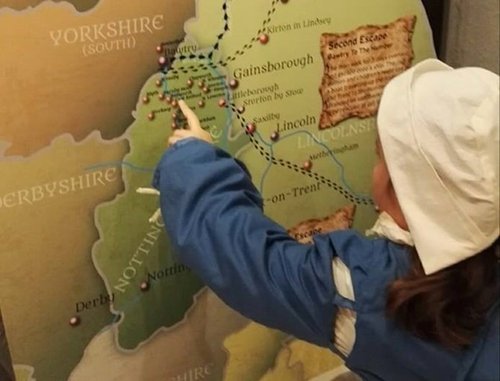
Sherwood Forest
Sherwood Forest and its legendary outlaw, Robin Hood are known throughout the world. The forest was also once a royal hunting ground that was enjoyed by kings and nobility; and now in contrast to this, it is a RSPB national nature reserve protecting the fauna and flora within. The forest is home to almost a thousand oak trees, and there are hundreds of giant oak trees across the forest, a testament to the history of the forest. This includes the iconic Major Oak, an ancient tree that has been standing between 800 – 1,100 years, with a canopy spread of 28 metres and a trunk circumference of 11 metres. Visit Sherwood Forest, steeped in history and folklore and follow one of the walks and trails to enjoy this unique habitat for wildlife and a magical destination.
Cresswell Crags
Around 15 miles from Retford, you can find Cresswell Crags – a striking and impressive limestone gorge which is peppered with pre-historic caves. Archaeological finds have included ice age tools and remains. With regular cave visits and a museum, you can learn more about its history. Enjoy refreshments at the café with far-reaching views.
Clumber Park
The National Trust's Clumber Park, over 3,800+ acres, includes the longest double avenue of lime trees in Europe (over 2 miles!) and a walled kitchen garden, which is now home to the National Collection of apple varieties, including the new variety ‘Pilgrim 400’, and over 130 varieties of rhubarb! With 19th-century glasshouses and a palm house, a Garden Tea Room and beautiful lakeside.
Babworth
All Saints Church in Babworth can be accredited for being the 'spiritual home' of the Mayflower Pilgrims. It's a 15th-century church, situated in the hamlet of Babworth, and found along a country lane lined with ancient trees.
Between 1586 and 1605, Richard Clifton was rector at All Saints Church. In a sealed crypt, Clifton’s ceremonial chalice and a Geneva bible were discovered in the 1950s after being hidden away.
Hidden Gem
Look out for the 'Mayflower Mouse', a world-famous mouse carving by Robert 'Mousey' Thompson. The chancel and sanctuary contain furniture by Robert Thompson (part of the 1920s Arts and Crafts movement), bearing his famous carved mouse trademark.
Podcasts

Scrooby
William Brewster was brought up in Scrooby and believed to have founded a Separatist Church in his family home – the manor house at Scrooby. He was fined for non-attendance at St. Wilfrid’s Church here at Scrooby. He attended the church with his family in the early 17th century, before fleeing to Holland. Visit the church to see Brewster's pew and where William and Mary would have worshipped with their young children.
App & Tours
Visit the app for destination details.
Brackenbury’s Britain offer personalised tours of the Mayflower story in Nottinghamshire and Lincolnshire.
Podcasts
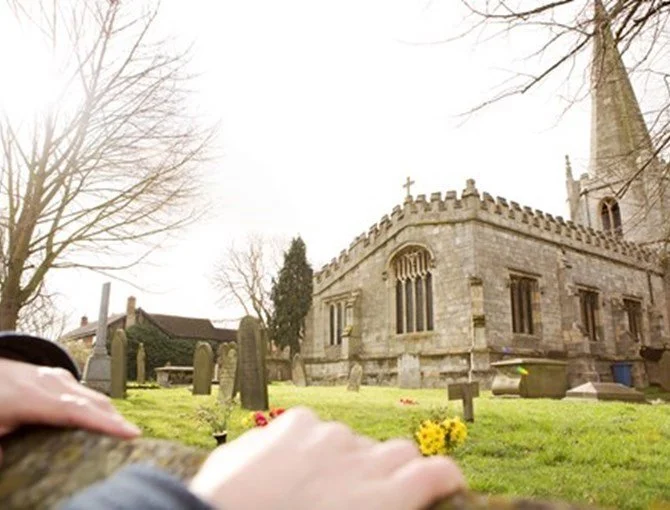
The Austerfield and Immingham Story
Austerfield
The Austerfield Pilgrim connection comes from William Bradford, who became the second elected governor of the Plymouth Colony in Massachusetts in 1621. Bradford went on to serve the colony for almost three decades. Bradford went on to escape to Holland with William Brewster. Bradford later became a signatory to the historic Mayflower Compact, in America. He shared his experience of the early years of the colony in his journal 'Of Plimoth Plantation'.
St. Helena’s Church in Austerfield was where Bradford was baptised and you can still see the original font today. Austerfield is also home to the Manor House – the house in that William Bradford is thought to have spent his childhood, being bought up by his grandfather and uncles as he was an orphan.
According to Cotton Mather, in around 1602, the young William Bradford "came to enjoy Mr Richard Clyfton's illuminating ministry". The path from William Bradford’s home to Richard Clifton’s church in Babworth went past William Brewster’s home in Scrooby. The two men walked to the church together. The preaching of Richard Clyfton inspired William Brewster and William Bradford to launch the "Pilgrim Adventure". Download Pilgrim Adventure from Nottinghamshire County Council.
Immingham
The town of Immingham is located in North East Lincolnshire, on the east coast of England. It was from the Immingham shores that the Pilgrims fled England in 1608 to start a new life in Holland, following the failed escape from Boston, where the Separatists were arrested in Fishtoft and eventually sent home. The congregation's attempt was partially successful in that the men folk, who were already onboard, were taken to Holland by the captain after the escape was interrupted by armed men who subsequently arrested the women and children who had not made it on board. Eventually, the women and children joined the men in Holland following a public outcry about their arrests.
Leiden, Holland
This story then picks up in Leiden, Holland. Following their escape from England, the Mayflower Pilgrims carved new lives there for 12 years after they bought land near Pieterskerk. The Pilgrims built houses that became known as the Engelse poort (English Alley). Leiden was a city of freethinkers with relative religious tolerance and life there had a profound influence on the lives of the Pilgrims – even after their departure, where, for example, the innovation of 'Civil Marriage' was taken with them to America. From 1620 some of the Pilgrim community emigrated from Leiden to North America. The ships that took the Pilgrims across the Atlantic have become famous: Mayflower (1620), Fortune (1621), Anne and Little James (1623) and the second Mayflower (1629).
Austerfield
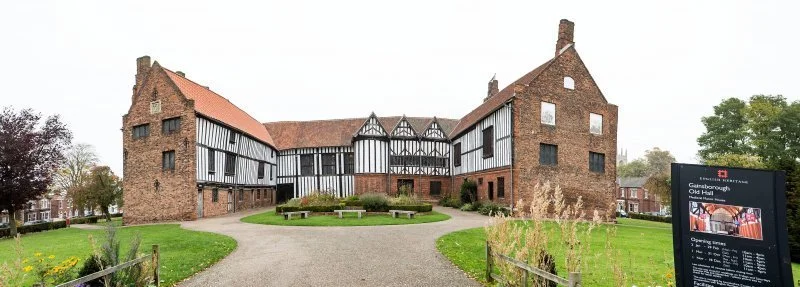
The Gainsborough Congregation
With what is thought to have been a large congregation of around 60 or 70 meeting in secret, the Separatists are thought to have worshipped at Gainsborough Old Hall, which was owned by William Hickman. Continuing to allow John Smyth to preach there, Hickman found himself under the watchful eye of the Bishop of Lincoln. As the congregation were unable to legally emigrate because they couldn’t obtain permits, they had no choice but to escape by other means in 1607-08. At least 40 of the congregation, along with John Smyth began their escape journey to Amsterdam, where they are known to have joined around 300 English Separatists in exile.
En route, you may visit nearby Sturton-le-Steeple, where John Robinson, the pilgrims’ pastor, was born and later returned to preach. SturTon-le-Steeple is quoted as being one of the most important villages in Christian history, read more details from Pilgrims and Prophets who run optional tours.
Gainsborough Old Hall is now an English Heritage attraction. It was built in the latter part of the 15th century with Elizabethan additions and has an impressive kitchen with an enormous fireplace, a noble great hall, and an imposing lodgings tower. Gainsborough Heritage Centre has exhibitions, holds regular events, and offers local archives plus research assistance for tracing relatives, with a shop and Telephone Exchange tearoom. For model railway enthusiasts, don't miss the Gainsborough Model Railway, one of the largest model railways in ‘O’ gauge, depicting The East Coast Main Line.
In the Anglo-Saxon period, Austerfield was part of the Kingdom of Northumbria. The village's name is believed to originate from the Old English words "east" and "feld," meaning "eastern field." The area was primarily agricultural, with farming being the main occupation of its inhabitants.
Nearby, places of interest and attractions include South Yorkshire Aircraft Museum, Bawtry Golf Club, The Dome, one of the UK's top 5 Sports and Leisure attractions and Cusworth Hall an imposing 18th-century country house that is home to the Museum of South Yorkshire Life.
Hidden Gem
William Butten was a young servant who did not survive the voyage and unfortunately died within sight of land. Today there is a commemorative plaque at Butten Meadow, in Austerfield, found in a quiet area near the village church.
Driving Trail
There is a full-day driving trail around nearby Doncaster on the Mayflower app.
Podcasts
An introduction to the village of Austerfield.
Food & Drink
Nearby Bawtry offers a choice of places to eat, including award-winning The Ship Inn and the Crown Hotel, with rustic restaurant interiors and an extensive menu.
Nearby, Lincoln & The Magna Carta
Lincoln is 18 miles from Gainsborough, and well worth a visit. The origins of Lincoln can be traced to the Iron Age, with evidence of human habitation in the area as early as 300 BC. The city's strategic location on a prominent hilltop overlooking the River Witham made it a favourable site for settlement.
During the Roman period, Lincoln, known as Lindum Colonia, became an important Roman city and a major administrative centre. It was a thriving hub of commerce and trade, with its own forum, basilica, and public baths. The Roman city walls and the Newport Arch, a well-preserved Roman gateway, are remnants of this era.
In the early medieval period, Lincoln emerged as a centre of political and ecclesiastical power. It became the capital of the Kingdom of Lindsey and a significant religious centre with the construction of Lincoln Cathedral. The cathedral, built in the Gothic architectural style, stands as one of the finest examples of medieval architecture in England. The Bishop's Palace, located next to the cathedral, also bears witness to the city's importance during this period.
Lincoln played a notable role in the events of the Norman Conquest in 1066. William the Conqueror built Lincoln Castle, a formidable fortress, to assert his authority over the region. The castle served as a symbol of Norman power and control.
Throughout the medieval period, Lincoln continued to flourish as a centre of trade and industry. It was known for its wool production and had a thriving market that attracted merchants from all over the country. The iconic Steep Hill, a steep and narrow street, still bears witness to the city's medieval layout and charm.
A visit to Lincoln should include a visit to the spectacular Lincoln Cathedral, Lincoln Castle and the Magna Carta. One of only four surviving original copies of the document is owned by Lincoln Cathedral and is housed in Lincoln Castle. 'Magna Carta' means 'Great Charter' and is one of the most important documents in history.
The Magna Carta, one of the most important legal documents in history, is associated with Lincoln due to its historical significance and the presence of Lincoln Castle in the city. The Magna Carta was originally issued in 1215 by King John of England and is considered a cornerstone of constitutional law and individual rights.
Lincoln Castle, constructed by William the Conqueror in the 11th century, played a significant role in the early years of the Magna Carta. In 1215, one of the original copies of the Magna Carta was sent to Lincoln for safekeeping, along with other important documents. The castle served as a secure location to store these valuable records.
Today, Lincoln Castle proudly houses one of the four surviving original copies of the Magna Carta. This document is on public display in the purpose-built David P.J. Ross Magna Carta Vault, which was opened in 2015 to mark the 800th anniversary of the Magna Carta. The vault provides a controlled environment to preserve and showcase this historic artifact.
The presence of the Magna Carta in Lincoln is significant as it highlights the city's historical importance and its connection to the development of legal and constitutional principles. The Magna Carta remains a symbol of the rule of law and individual liberties, and its display in Lincoln offers visitors the opportunity to view this iconic document and learn about its historical context and impact.
Immingham (to Holland)
From here, in 1608, two groups of Separatists met at the nearby coast to board a Dutch boat sailing to Holland. The escape was interrupted by armed troops leaving the women and children left behind as some of the men had already gotten on board. When the troops arrived, the boat fled and following a difficult voyage through a storm, they arrived in Amsterdam. It is thought those left behind, sheltered on the porch of St. Andrew’s Church. Francis Hawkins, believed to be in one of the groups became ill and buried in the graveyards here.
The Pilgrim Monument, made with rock from Plymouth, Massachusetts, is a memorial to those who made the journey, and is found in Pilgrim Park. When wandering around the town, spot the names of Mayflower passengers, such as Bradford and Clyfton.

Immingham Creek is now part of the large port of Immingham. The origins of Immingham can be traced back to the Anglo-Saxon period. The name "Immingham" is believed to derive from the Old Norse personal name "Imma" and the Old English word "ham," meaning a settlement or village. The town's coastal location on the Humber Estuary made it an ideal spot for trade and maritime activities.
The transformation of Immingham into a significant port began in the late 19th century. The opening of the Manchester, Sheffield and Lincolnshire Railway in 1867 led to the establishment of Immingham Dock, which became the port's focal point. The dock was strategically located and had direct rail connections to industrial centers in the Midlands and Yorkshire, facilitating the efficient transportation of goods.
Find out more about the local history and the port at the Immingham Museum and Heritage Centre, based at the Civic Centre. A small display relates to the Pilgrim Separatists and the museum and heritage trail tells the story of the escape.
Heritage Trail
A new heritage trail takes visitors on a walk from the museum to the church, the Pilgrim Fathers Monument and Mill Lane, bringing to life local history along the way. Ask for details at the Museum and Heritage Centre.
Hidden Gem
Located between Gainsborough and Immingham, St. Michael's Church in Glentworth is a superb late 11th-century church with a stained-glass window and home to a remarkable Elizabethan memorial to the Wray family – supporters of the early Separatists.
Grimsby
Nearby, visit Great Grimsby, a large coastal town and manor seaport which was once home to the world’s largest fishing fleet. Its history can be traced back to ancient times and is intertwined with its maritime heritage and role as a fishing port.
The origins of Grimsby can be traced to the Viking era when it was known as "Grim's by," named after a Danish fisherman or Viking leader named Grim. The town's location on the eastern coast of England made it an ideal spot for fishing and trade, and it gradually developed into a bustling fishing settlement.
During the medieval period, Grimsby grew in importance as a trading centre and fishing port. It became one of the most significant fishing ports in England, specializing in the trade of herring and other seafood. The town's prosperity was built on its maritime industry, and it attracted merchants and fishermen from various regions.
Grimsby's maritime heritage reached its peak during the 19th and early 20th centuries when it became the largest fishing port in the world. The town played a crucial role in the development of the distant water trawling industry, which involved fishing in distant seas such as the North Atlantic. The fishing industry in Grimsby thrived, and the town's economy was centred around fishing, processing, and trading seafood.
The Fishing Heritage Centre illustrates the experiences of the lives of the trawlermen. The Time Trap Museum depicts the history of the town, within old police cells. Grimsby Minster has 900 years of history to discover. The title of Minster – an honorific title was given in 2010.
Just 3 miles away, Cleethorpes offers a beautiful sandy beach with lots of attractions as a seaside resort. Download the visitor brochure.
Lincolnshire Wolds
The Lincolnshire Wolds are an Area of Outstanding Natural Beauty (AONB), meaning the designation has protected the landscape. It is a landscape of woodland, grassland and abandoned chalk pits that provide important habitats for rare flowers and wildlife. Situated between Lincoln and the coast in Northeast Lincolnshire, the Wolds are surrounded by flat fens, coastal marsh and the Lincoln Clay Vale. There are far-stretching views to the Pennines in the west and the coast from the east, as the Wolds is the highest land in eastern England (between Kent and Yorkshire). Covering an area of 216 miles² (558 km²), there are plenty of ways to enjoy the Wolds. Take a look below at a pick of days out and walks and trails in the area.
Days Out
Red Hill Nature Reserve is situated above Goulceby featuring the exposure of the Red Chalk, a formation that only occurs in Norfolk, Lincolnshire and Yorkshire.
Cadwell Park Motor Racing Circuit is home to car and motorcycle racing and hosts a round of the British Superbike championship.
Lincolnshire Wolds Railway at Ludborough Station is the home to the only full-sized steam railway in Lincolnshire.
Claythorpe Watermill and Wildfowl Gardens are located between Alford and Louth. This riverside attraction is on the grounds of a beautiful former watermill.
Snipe Dales Country Park is situated on the southern edge of the Lincolnshire Wolds and is one of the few surviving semi-natural wet valley systems.
Bolingbroke Castle is a prime example of a 13th-century castle design complete with a large gatehouse, round towers and a moat. Explore the ruin with only the ground floors of the towers and the lower parts of the walls remaining.
Information Service
The Lincolnshire Wolds Countryside Service have lots of useful information to help you make the most of your visit to the area. There is a selection of downloadable leaflets for walking and routes available here.
Walks
With footpaths and bridleways, the Wolds are a fantastic place to stretch your legs. Here is a small selection. Check out more here.
The Silver Lincs Way is a 25-mile linear walk, from Grimsby & Louth Ramblers. It links the two towns and follows paths along the Eastern Wolds.
Mill Rundle Walk is a 3¼ mile walk that starts and finishes at the Manor House. It is a reasonably easy level walk that goes around Alford on a circular tour across open farmland along the route of the Mill Rundle.
Pilgrims' Eastern Footsteps
BOSTON AND HARWICH
The travel distances below provide an idea of distances:
Boston to Harwich = around 69 miles
The Boston & Pilgrim Story
Boston – where today's Lincolnshire, Nottinghamshire and Yorkshire meet – was where the Separatists first came up with the idea of sailing to America.
They made their first attempt to escape to Holland one autumn night in 1607. Having walked some 60 miles from Scrooby, they met in secret at Scotia Creek in Fishtoft, known as 'The Wash'. They had arranged to meet a captain with a ship who was to take them to Holland, however, he betrayed them, and the Separatists were arrested and tried at the Guildhall in Boston. After a month, all of the prisoners, except seven of the ringleaders, were sent back “from whence they came”. The ringleaders were ordered to the higher Assizes court of Lincoln. The second attempt escape to flee to Holland – this time from the coastal town of Immingham – was successful.
When the Pilgrims successfully reached America in 1620 aboard the Mayflower, they founded what would become Boston, Massachusetts widely known to be named after Boston, Lincolnshire. However, there are also 16 other Bostons in the USA (Alabama, Arkansas, Connecticut, Georgia, Indiana, Kentucky, Louisiana, Massachusetts, Michigan, Missouri, New York, Ohio, Pennsylvania, Tennessee, Texas and Virginia.)
Pilgrims' Footsteps
Exploring beyond the central Market Place, you will find a network of medieval lanes that branch off. These lanes are part of the original medieval streetscape heritage. Here you can walk in the footsteps of the Pilgrims. Wander along Wormgate, Dolphin Lane and Emery Lane where today, you will find a mix of modern shopping with a medieval backdrop.
The Harwich & Pilgrim Story
Could Harwich be the beginning of the story of the Mayflower ship or indeed the end because of its links to the ship itself and the sailing? The Mayflower was built in 1590: although it is not known where it is believed to have been built in Harwich, and it was based here until 1610. There are no records of where the ship was built although, if not Harwich, it is believed to have been another East Anglian port. Certainly, after its construction, the Mayflower was based in Harwich, along with her master Christopher Jones. This is confirmed when he is mentioned in an Admiralty document, dated January 1610, in which he was identified as 'Christopher Jones of Harwich, Master of the Mayflower of the same place'.
The captain, Christopher Jones, lived in Harwich and was married twice here. His house still stands on Kings Head Street near the waterfront. Steps have been taken to turn this house into a museum – details here. Parts of the building have been restored to its original features.
Captain Jones’s name appears in Harwich’s royal charter of 1604 and a copy of the charter is displayed in the rebuilt church and the Guildhall.
From here, The Mayflower sailed to Plymouth and then left Plymouth on 6 September 1620 for the Atlantic crossing that took 66 days and carried 102 passengers.
To learn more about the Mayflower and its Harwich take the Harwich Maritime Trail or a guided tour with the Harwich Society. There is also an exhibition in the Ha’penny Pier Visitor Centre and displays in the Visitor Centre at Esplanade Hall.
Boston
Today, you can learn more about the Separatist prisoners with a visit to the Guildhall, built in the 1390s. Imagine the stories and secrets the walls have borne witness to. See the cells where Brewster, Bradford and the others were held. Also, visit the Pilgrim Fathers Memorial at Scotia Creek within the Havenside Countryside Park on the north bank of the River Haven.
Boston is a lively market town with a unique history and heritage. Its medieval wealth, which had come from the wool trade and the extensive exporting of the wool from here, is evident in the medieval buildings, including St. Botolph’s Church, Boston Guildhall and the Market Place. The church is known as 'The Stump' and is a well-recognised landmark due to its 83 m high tower, which offers superb views. The marketplace is host to the twice-weekly open-air markets that have been held here since the 12th century. There are additional market stalls on Bargate Green. Birdwatchers and nature lovers can enjoy a visit to the nearby RSPB sites of Frampton Marsh, primarily made up of wetlands and reedbeds, between the outfalls of the Rivers Welland and Witham, and Frieston Shore. The latter is a tidal salt marsh, which also encompasses the habitats of saline lagoons and wet grassland.
Hidden Gem
Maud Foster Windmill is a seven-storey 80 ft tall windmill – one of the largest operating in England. Visit this historic, Grade I listed building and see stoneground flour being made the traditional way.
Medieval Heritage
Read more about the medieval heritage and Hussey Tower. Learn about 'jettying' off buildings – keep an eye out for Shodfriars Hall from Heritage Lincolnshire's leaflet here.
On Screen
Hollywood actress Ashley Judd visited the Guildhall on TV's 'Who Do You Think You Are?' to find out more about her heritage. Judd is a descendant of William Brewster, her 10 times great-grandfather.
Judd is among the 35 million Americans who can trace their ancestry back to the Mayflower, this revelation was made to Judd on the show.
Food & Drink
For a traditional pub, visit The Kings Arms and the Wheatsheaf at Hubberts Bridge. The Ye Old Red Lion, established in 1665, serves Lincolnshire tapas.
Parking
The following have no height restrictions: West End (PE21 8SS), 100 spaces, Municipal Buildings (PE21 8SS), 50 spaces and Boston Central (PE21 8XT), 20 spaces – are all Pay & Display.

Harwich
The port of Harwich is a must-see destination for all sea lovers as well as history lovers. It is the place where the Mayflower ship is believed to have been built. See the house where Christopher Jones lived and the church where he was married. However, here you can also find out more about the seafarers Hawkins, Drake and Frobisher – who all sailed from Harwich during the reign of Queen Elizabeth I on various expeditions.
Other attractions include the Electric Palace, one of Britain’s first cinemas, the atmospheric Redoubt Fort, which dates back to the Napoleonic Wars, and the Grade I listed building Harwich Guildhall.
Enjoy a stroll on the Ha'penny Pier and visit the old Radar Tower at Beacon Hill Fort, which was the first radar installation of the Second World War and can be opened on request to the Harwich Visitor Centre.
The Historic Harwich Society provides informative guided tours. There's a Maritime Heritage Trail where you can learn more about its role as a 'Haven Port', which is a haven for ships at times of adverse winds. You can also uncover stories of Harwich's famous residents and visitors – such as Samuel Pepys, the famous diarist and his links to the town, and King William, who was four times a royal passenger on the packet boats from Harwich to Holland. The trail includes the Low Lighthouse, now the town's Maritime Museum, Treadwheel Crane, Lifeboat Museum, The Angelgate, The Navyard Wharf, Trinity House, Christopher Jones House, Customs House and The Guildhall, among other places. There is also an audio trail.
Mayflower Trail
Follow the Mayflower Trail is just over half a mile long and has eight waypoints, starting from St. Helen’s Green.
Harwich Harbour Trail
Discovering Britain has produced an in-depth booklet on the harbour. Visit a natural harbour and a man-made beach. Discover how waves, warships and wealth shaped the town.
Hidden Gem
Harwich Seascapes offer Landscape photography from Harwich and Dovercourt. With a range of canvases, framed prints and gifts showcasing the beauty of the seaside town.
Food and drink
The Pier overlooks the harbour, ships and docks and is a stone’s throw from the estuary where the fresh fish is landed daily.
The Alma Inn and Dining Rooms have been at the centre of Harwich life since the 1850s serving ale to the citizens, sailors, soldiers and farmers.
For a family-friendly pub, The Mayflower is just 5 minutes away from the port.
Parking
Lower Marine Parade (CO12 3ST) 150 spaces, Harwich International Port (CO12 4SR), 250 spaces, and Main Road (CO12 4NP,) 75 spaces – are Pay & Display with no height restrictions.
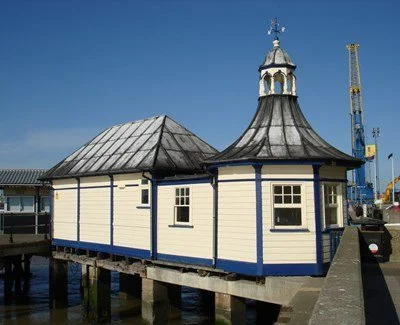
Experience: from £27.50 per person
GO BEHIND THE SCENES AT ONE OF NEWMARKET’S RACING YARDS

The Ultimate Newmarket Experience is the perfect way to learn all about the home of horseracing. This full day’s tour begins at the famed Newmarket training grounds watching the spectacle as horses make their way up Warren Hill during their morning exercise. Learn all about the history of the town and its strong royal connections.
Enjoy a behind-the-scenes tour at one of Newmarket’s stables to see what happens on a typical day in a racing yard. Then head to The National Stud to see the resident stallions and retired National Hunt legends. Meet the newborn foals and find out what goes on in producing future champions of the turf.
The tour then moves on to the National Horseracing Museum where you can learn more about the fascinating history of the Sport of Kings through a series of interactive exhibitions. Even have a go on the horse simulator which isn’t as easy as you might think! Marvel at the collection of British Sporting Art in Palace House from the likes of George Stubbs and Sir Alfred Munnings as well as meet ex-horseraces in the Rothchild’s Yard. Read more on this amazing experience via the link below as there is literally too much to mention, including the Early Riser Tour, On the Trail of Dick Francis and Newmarket’s Racing Royalty.

Nautical South Coast
SOUTHAMPTON > DARTMOUTH > PLYMOUTH
The travel distance below provides a picture of distance on these destinations:
Southampton to Dartmouth = about 150 miles
Dartmouth to Plymouth = about 31 miles
Along the south coast, you will learn about the final weeks and days before the sailing of the Mayflower and the issues with the Speedwell. The south coast is also home to key naval and seafaring centres and one-time bustling medieval ports.
Steeped in history and well-preserved medieval buildings – you can learn more of the Pilgrims' final moments before sailing and get a glimpse of some of the original buildings that were also in view to the Pilgrims too. Along the coast, you can learn more about how the Speedwell, carrying the Separatists from Leiden in Holland, didn't get very far before the Speedwell began to take on water again and see the final place the Mayflower set sail from.
With many museums, country estates, medieval halls and places of interest, there will be much to learn from the nautical south coast adventure. There are plenty of self-guided walking tours – you won't miss a thing. Along the way, you will have the opportunity to learn more about the Titanic and the novelist Jane Austen. Follow a Jane Austen walking trail featuring places that she visited.
Southampton Mayflower Story
The Mayflower arrived in Southampton in late July 1620. She was due to sail onwards in convoy with the Speedwell, which arrived a few days later. The intent was to prepare both ships for the long voyage ahead, with the thriving seaport of Southampton offering the ability to meet the provision and equipment requirements.
Passengers known or thought to have boarded here include John Alden, who was a cooper, William Brewster, who had been in hiding, and Stephen Hopkins from Hampshire. Hopkins was known as the only Mayflower passenger who had experience of the New World before sailing as he had been shipwrecked in Bermuda in 1609.
Around two weeks later, in August 1620, the two ships – the Mayflower and the Speedwell set sail, but the Speedwell was found to be taking on water, so the two ships were put into Dartmouth for repairs. Following repairs, the ships got beyond Land's End in Cornwall, but the Speedwell was found to be taking on water again and returned to Dartmouth for more repairs.
The Separatists decided to go on to America on the Mayflower and 11 people from the Speedwell boarded the Mayflower, making a combined 102 on board for the voyage. The Mayflower left Plymouth on 6 September 1620 and headed for the New World.
The remaining 20 Speedwell passengers who didn't board, including Robert Cushman, returned to London. Cushman was an important leader and the organiser of the Mayflower voyage, serving as Chief Agent in London for the Leiden Separatist contingent. It was likely that Cushman was one of the first Mayflower passengers when the ship sailed from London to Southampton to meet the Speedwell coming from Leiden.
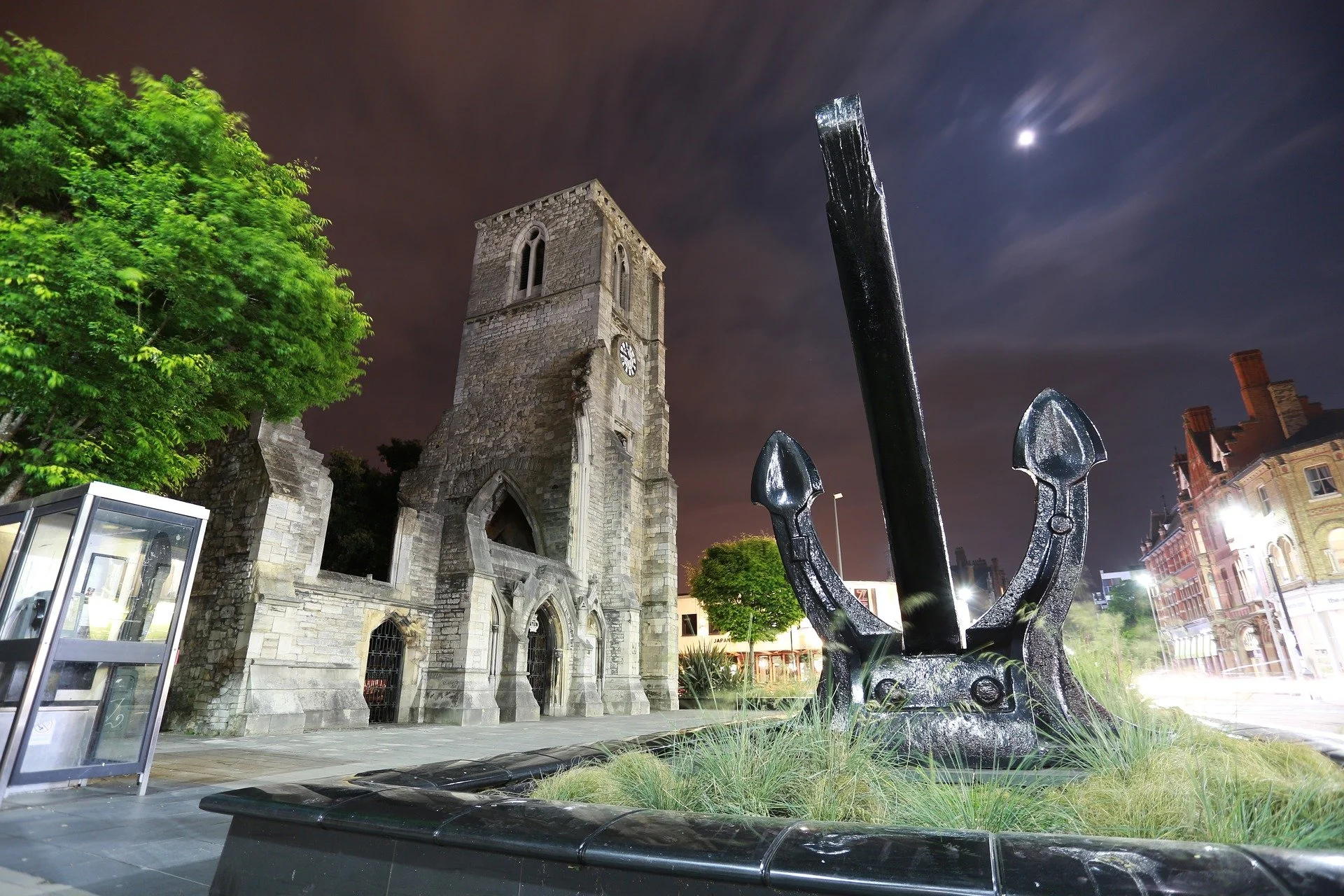
City Archives
Southampton has extensive records about the Pilgrims, which can be found in the city archives. Southampton Archives Services hold a rich variety of material relating to the city and its people dating back to 1199. Details of the city archives, including family history, local history and a maritime archive, can be found here.
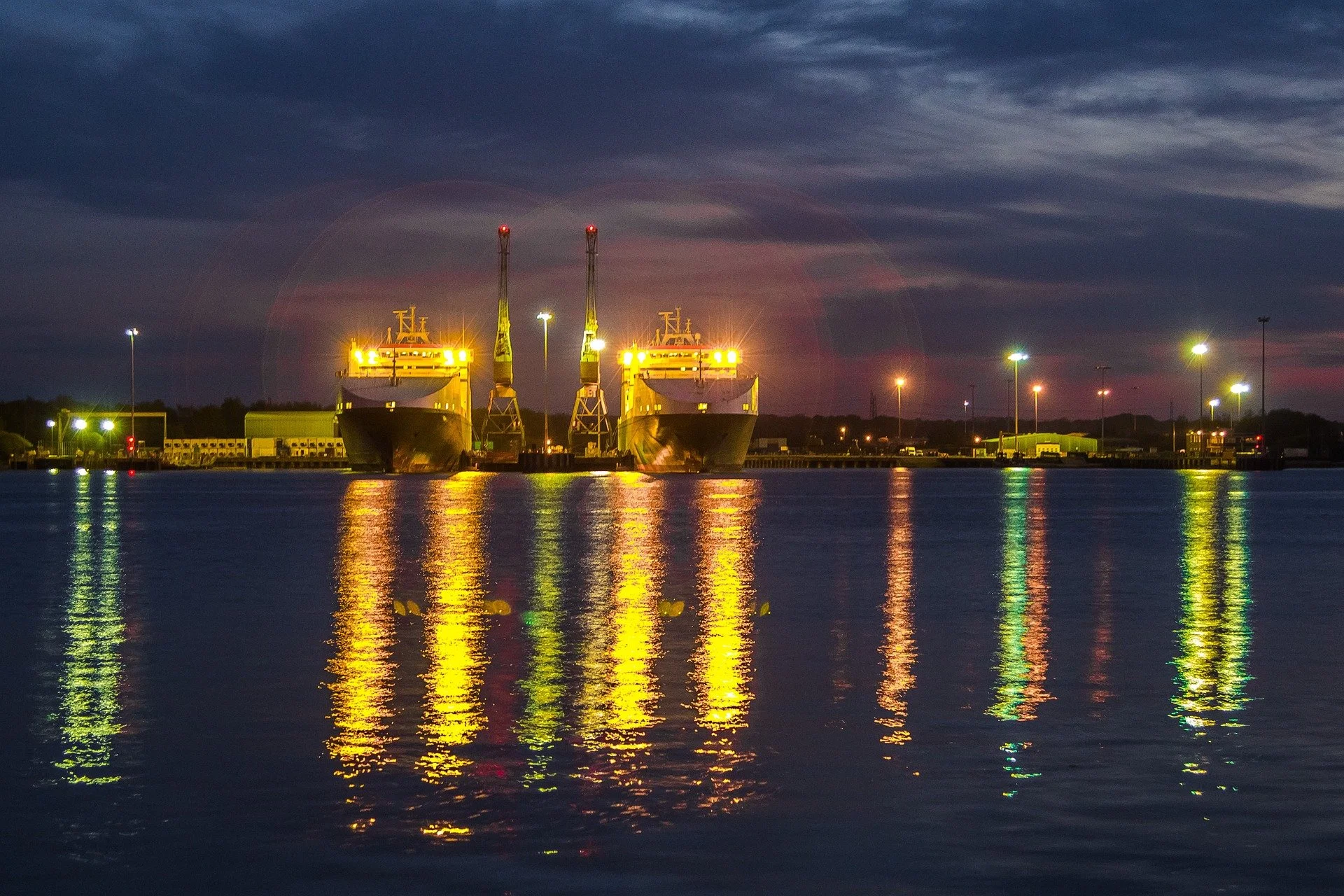
Southampton
Southampton is an historic city located on the south coast of England. It has a rich and diverse history that spans over thousands of years, with influences from the Roman era, medieval period, maritime trade, and World War II.
The area where Southampton now stands has been inhabited since prehistoric times, and evidence of Roman occupation has been found in the region. The Romans established a settlement known as Clausentum in the 1st century AD, which served as an important trading port.
During the medieval period, Southampton flourished as a bustling port and trading centre. It was granted the status of a town in the 12th century and became a member of the Hanseatic League, an influential trading alliance. Southampton's strategic location made it a vital hub for maritime commerce, and it became known for its wool trade, wine imports, and shipbuilding industry.
In 1348, the town was devastated by the Black Death, a deadly plague that decimated the population. However, Southampton recovered and continued to thrive as a major port and centre of maritime activity.
One of Southampton's most notable historical events occurred in 1620 when the Pilgrim Fathers set sail from the city aboard the Mayflower, bound for the New World. This journey marked the beginning of the colonization of America by English settlers.
During the Industrial Revolution, Southampton experienced significant growth and development. The construction of railways and the establishment of steamship services further enhanced its importance as a port. The docks were expanded, and new industries emerged, including engineering, shipbuilding, and the production of aircraft.
In the 20th century, Southampton played a crucial role in World War II. The city was heavily bombed during the Blitz, resulting in extensive damage and loss of life. Southampton's port, docks, and shipyards were prime targets for German airstrikes due to their strategic importance. The city made significant contributions to the war effort, serving as a crucial departure point for troops and supplies during the D-Day landings.
The city has a vibrant atmosphere with an impressive cultural and retail offering. The Mayflower is not the only voyage the city is well-known for. The Titanic set sail from White Start Dock in 1912.
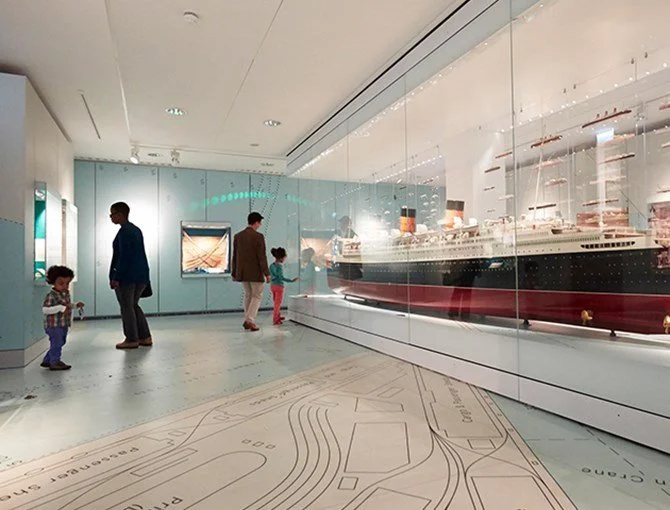
The SeaCity Museum tells this tragic story here and you can learn more about the port’s status as the ‘gateway to the world’ with stories of Roman traders, Saxon settlers, Huguenots seeking refuge and glamorous ocean liner passengers heading across the Atlantic and around the world.
See the Tudor House and Garden, Southampton's most important historic building, with over 800 years of history. Visit English Heritage's Medieval Merchants Hall – a restored late-13th-century building; it is complete with replica period furnishings. The Hall is one of several nearby historic places, including Netley Abbey, Calshot Castle, Hurst Castle and Portchester Castle, which are all within easy travelling distance.
Outstanding art galleries in the city include some of the finest collections outside of London and there are many local artists and creatives too, showcasing and selling their work. These include Southampton City Art Gallery, John Hansard Gallery, Solent Showcase and Southampton Common Gallery.
For evening entertainment, the Mayflower Theatre regularly shows West End musicals and ballets. Afternoon tea and a Cheese and Wine platter are also served.
Hidden Gem
The novelist Jane Austen lived here from 1806-1809. Follow the city's Jane Austen walking trail featuring places that she visited. There are eight plaques each at a location associated with Jane Austen.
Food & Drink
Smugglers is an award-winning bar and restaurant in the heart of Southampton’s Bedford Place. Old Mill Restaurant serves food in interesting surroundings in Botley Mills. For sandwiches, cakes and more, Miss Ellie's Café is a popular traditional café.
Parking
New Road (SO14 0AA), has 70 spaces, Civic Centre (SO14 7FW) has 60 spaces, and Grosvenor Square (North) has 88 spaces. Pay & Display and have no height restrictions.
Having set sail from Southampton, the Mayflower, with Pilgrims from the north of England, and the Speedwell, carrying the Separatists from Leiden in Holland, didn't get very far before the Speedwell began to take on water again – this is thought to be either because she carried too much sail, which strained her timbers, or possibly the direct result of sabotage by the reluctant crew.
The ships diverted to Dartmouth for repairs, arriving on 23 August 1620. As the Pilgrims were regarded with some suspicion by locals, whilst the repairs were being made to the Speedwell in the harbour at Bayard's Cove, the Mayflower was moored further upstream in an area now known as Pilgrim Hill.
While much has changed on the waterfront since, the Pilgrims would still recognise the Tudor Bayard's Cove Fort, Lower Street, Smith Street, St. Saviour’s church and Agincourt House, now the Bayard's Cove Inn.
Mayflower Heritage Trail
As well as the downloadable app from the Mayflower, you can also download Dartmouth Mayflower Heritage Trails as an overview of the three available trails:
The Town Trail, including the Museum, Pillory Square, The Butterwalk, St. Saviour's Church, Bayard's Cove Inn, Bayard's Cove Fort and Bayard's Cove.
The Packhorse Trail follows an 'ancient packhorse route' taking in history from the Domesday village of Townstal to today's harbour.
The Castle Trail begins at Bayard's Cove and goes to Warfleet Creek, an important suburb of Dartmouth in 1620, and on to Dartmouth Castle and St. Petrox Church, with sea views along the way.
Dartmouth Mayflower Story
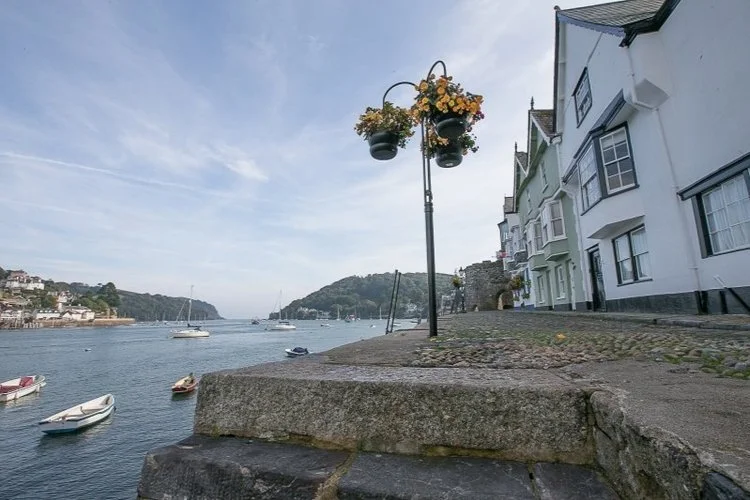

Dartmouth
Dartmouth is a truly picturesque nautical town, combining heritage, fantastic shopping and places to eat, with a vibrant waterfront hosting an active sailing community. Its history dates back to ancient times, and it has played a significant role in maritime trade, exploration, and defence throughout the centuries.
The area where Dartmouth now stands has been inhabited since prehistoric times, with evidence of early settlements and burial mounds in the region. The town itself was founded in the 12th century as a deep-water port and strategic location for trade and defence.
During the medieval period, Dartmouth became an important trading centre and one of the largest ports in England. The town's location on the River Dart made it an ideal harbour for ships, and it flourished as a hub for the export of local goods, such as tin, cloth, and wool. Dartmouth also played a role in the wine trade and was a significant stopping point for ships en route to other parts of Europe.
Dartmouth's maritime importance continued to grow during the Tudor era. The town was closely associated with explorers and navigators, including Sir Humphrey Gilbert and Sir Walter Raleigh, who set sail from Dartmouth on their expeditions to the New World. The town's shipbuilding industry thrived, and it played a crucial role in providing vessels for the English navy.
In the 17th century, Dartmouth played a role in the English Civil War. It initially supported the Royalists but eventually came under Parliamentary control. The town's defences were strengthened, and Dartmouth Castle was constructed to protect the entrance to the River Dart.
During the 18th and 19th centuries, Dartmouth continued to be an important port, particularly in the trade of timber and other goods. It also became a popular destination for wealthy merchants and naval officers, leading to the development of elegant Georgian and Victorian architecture that still characterizes the town today.
The Port of Dartmouth Royal Regatta is one of the largest UK sailing events, attracting visitors from all over the world, and attracting thousands of visitors over a week in August.
English Heritage's Bayard’s Cove Fort is a Tudor fort, built between 1522 and 1536, to protect the harbour from attack. It is much as it was in the day of the Pilgrims. Also, English Heritage's Dartmouth Castle has stood guard over the narrow entrance to the Dart Estuary and port of Dartmouth for 600 years. Explore this fascinating complex of defences, which was begun in 1388.
St. Saviour’s is a medieval building that was dedicated in 1372 as a chapel of ease and features in Simon Jenkins' popular book 'England's Thousand Best Churches'. St. Petrox church is part of a complex of historical buildings that make up Dartmouth Castle. It dates from 1641, however the earliest reference dates 1192, when it is believed to have provided a light at the harbour entrance.
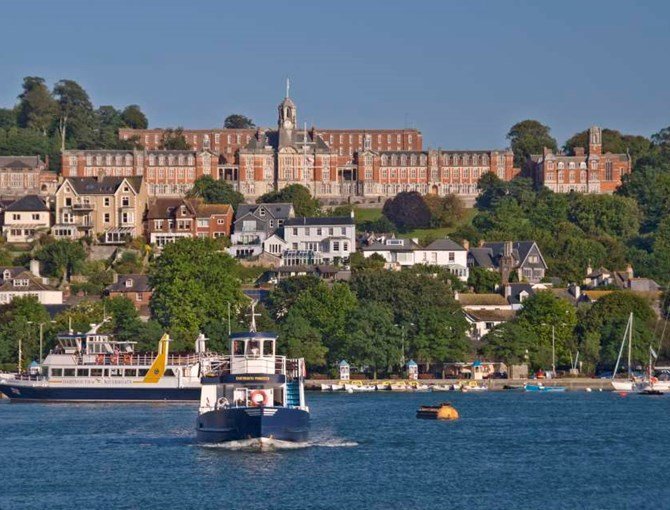
The Britannia Royal Naval College is situated on a hill overlooking Dartmouth Port. The college dates from 1863 and is where all Royal Naval officers receive their initial service and training. The College is open for guided tours. It is thought to be the place where Queen Elizabeth II met Prince Philip.
The nearby Dartmouth Museum is located in Butterwalk, a historic terrace of rich merchants' houses that were built around 1640. The museum shares stories of the town’s maritime history. At Dartmouth Visitor Centre you can see the oldest preserved steam engine in the world, which was invented by Thomas Newcomen, who was born in Dartmouth.
Hidden gem
Dartmouth Old Barometer, a quirky piece of history, can be found tucked away on a side street and is often unnoticed by visitors. Presented to the mariners of Dartmouth in 1860 it can be found fixed to the north wall of Holset House.
Food & Drink
The Dartmouth Castle Tearooms have a traditional menu and offer fabulous views. Café Alf Resco is an atmospheric café serving delicious fresh food and is known by the locals for its breakfasts.
Nearby, The Start Bay Inn, Slapton Sands, a 14th-century thatched pub, specialises in seafood.
Parking
The following have no height restrictions: Mayor's Avenue (TQ6 9NF), with 205 spaces, Darthaven Marina (TQ6 0BH), with 100 spaces and Dartmouth Park & Ride (TQ6 9LW), with 180 spaces are all Pay & Display.
Plymouth Mayflower Story
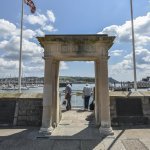
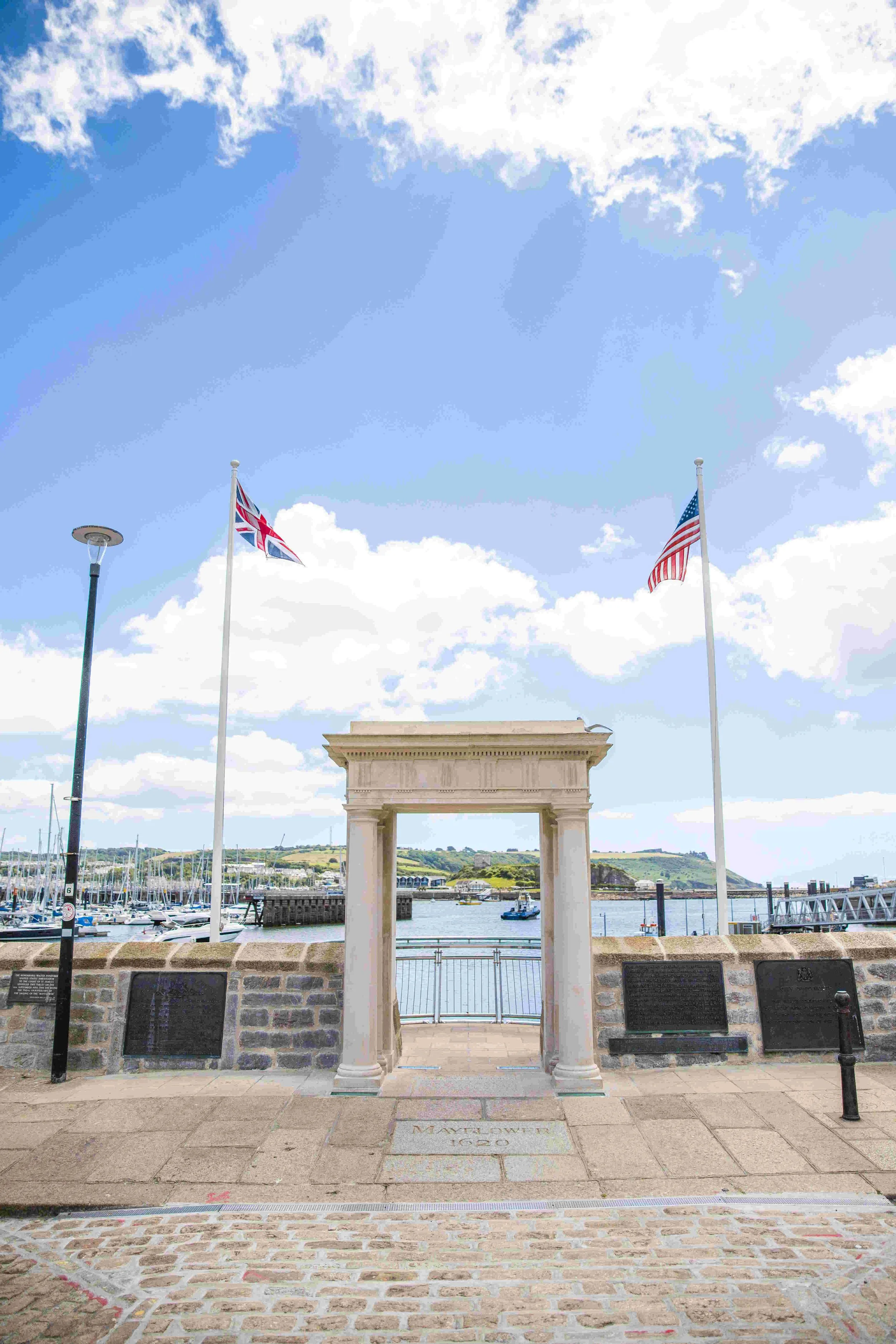
Today the last steps of the Mayflower Pilgrims are marked by the 'Mayflower Steps', which signify the last stop for the Pilgrims before the Mayflower's epic voyage across the Atlantic. The Mayflower Steps are situated close to the site in the Barbican area of Plymouth.
With all the stops and starts, the passengers had already spent up to six weeks on board. When the Speedwell was finally declared unfit for the journey, some of the Pilgrims returned home. Those who stayed on joined the Mayflower and it became more crowded. Provisions were stocked up again. The Mayflower finally sailed on 16 September 1620 with up to 30 crew and 102 passengers on board.
Some of the historic buildings in the port are as they were in 1620 when they were part of a bustling port. These include Island House, a Grade II listed building on the Barbican, which was built between the 1570s and 1600s and is known for being the last place that accommodated the Pilgrims. The Elizabethan House, built in the late 1500s, is a rare, surviving example of its time. It is found adjacent to an 'oasis of tranquillity' that can be found in the Elizabethan Gardens with colourful flowers and fragrant herbs in the old Elizabethan manner, two minutes walk from the Barbican. The Old Customs House is a Grade II listed building, dating from 1586, now a cellar bar and long-room restaurant.
Plymouth
It has a long and illustrious history that spans thousands of years, with significant contributions to maritime exploration, trade, and military defence.
The origins of Plymouth can be traced back to the Bronze Age when the area was inhabited by Celtic tribes. The town began to take shape during the Roman period, known as "Sutton" at the time and served as a trading port. Roman remains have been discovered in the area, including a fort and a villa.
Plymouth's significance grew during the medieval period as a prosperous fishing and trading town. It became an important centre for the wool trade and developed strong connections with other ports in Europe. The town received its first royal charter in 1439, further boosting its status.
During the Elizabethan era, Plymouth played a crucial role in maritime exploration. Sir Francis Drake, a renowned English seafarer, set sail from Plymouth to circumnavigate the globe in 1577. Plymouth was also a departure point for other notable explorers, such as Sir Walter Raleigh and Sir John Hawkins.
Plymouth's importance as a naval and military stronghold grew over the centuries. In the late 17th century, the Royal Citadel, a significant fortress, was constructed to protect the city and its important harbour. Plymouth played a key role in defending England against foreign invasions, particularly during the Napoleonic Wars and World War II.
During World War II, Plymouth suffered extensive damage due to heavy bombing raids, known as the Plymouth Blitz. The city's naval facilities and dockyards were primary targets for German airstrikes. The destruction caused significant loss of life and damage to historical buildings and infrastructure.
Plymouth is Britain's 'Ocean City' with a vast nautical history to discover, including Sir Francis Drake, the Spanish Armada and, of course, the Mayflower sailing in 1620. A good starting point would be to begin at the Mayflower Museum, which is set over three floors and explores the story of the voyage of the Pilgrims. The museum also covers the journey aboard the Mayflower to the New World. Visit the Elizabethan House to see the original building, part of the landscape for the Pilgrims.
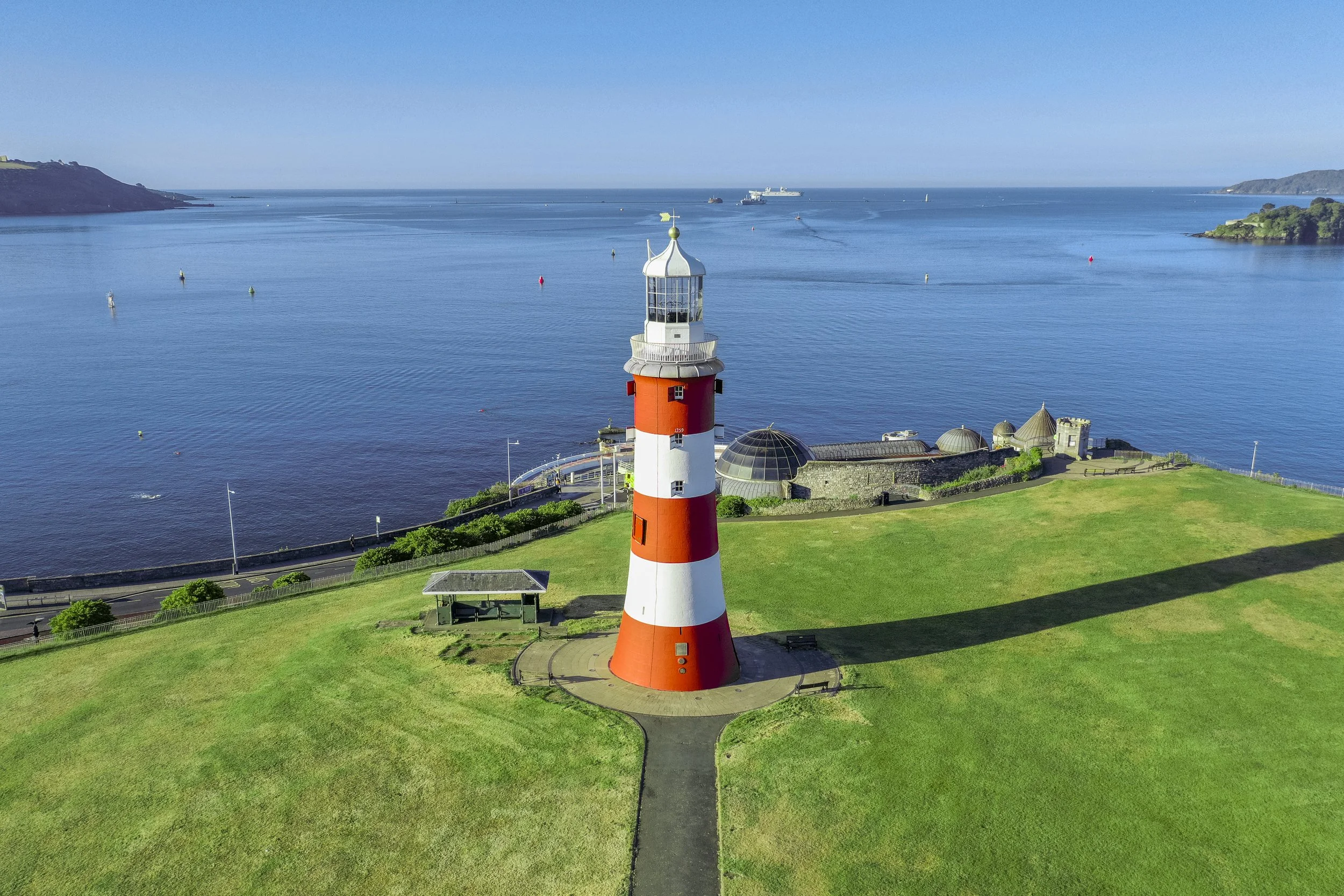
National Marine Aquarium is the UK's largest aquarium and is run by the Ocean Conservation Trust. Admire Smeaton's Tower. The centrepiece of Plymouth's Hoe, the lighthouse is one of the southwest’s most familiar and well-loved landmarks. Other places of interest are the Armada Memorial, the Drake Statue, Mountbatten Tower and the Naval 1914 to 1918 War Memorial.
Royal William Yard, situated in Stonehouse, a suburb of Plymouth, was the major victualling depot of the Royal Navy and an important adjunct of Devonport Dockyard. It was designed by the architect, Sir John Rennie, and was named after King William IV. These days it's a place to eat, shop and relax.
The National Trust's Saltram House is full of treasures and has a secret garden to explore.
Jewel in Plymouth Sound
Be one of the first to set foot on Drake's Island in 30 years with exclusive guided tours on offer. The 2-hour tours set off from Mount Batten Pier. Learn about the history of the island, walk the tunnels, see the wildlife and view Plymouth from a whole new perspective.
Plymouth Gin
The Black Friars has been the home of Plymouth Gin since 1793 and is the oldest working gin distillery in England.
Originally it adjoined a Dominican Priory, dating from the year 1431. It is thought that in 1620 some of the Pilgrim Fathers could have dined here before their departure.
Plymouth Gin remains in full production today and exports extensively to the USA. 'Appellation Controlee' has to be distilled in Plymouth and it is specified as an ingredient in many cocktails, including the American 'Charlie Lindbergh'. Here, enjoy the Plymouth Gin Distillery Tour, Gin Connoisseur’s Tour and Master Distiller’s Private Tour and stop in the cocktail lounge or restaurant.
Food & Drink
There’s a great choice of traditional pubs, serving pub food and an extensive selection of drinks all wrapped in the history of the Barbican. The Three Crowns overlooks the harbour, along with many other delights such as The Ship and HonkyTonk Wine. If you venture back toward the main street there are hidden gems such as The Bottling Plant and The Catch.
You can also enjoy fabulous views on the Hoe at The Terrace Café and Ocean View at the Dome.
Parking
Mayflower Street West (PL1 1NF) with 81 spaces, Plymouth City Market (PL1 1PS) with 65 spaces and Athenaeum (PL1 2SU) with 115 spaces. They have no height restrictions and are all Pay & Display.
Overnight Stays

This map is optimised to use on your mobile.
Click the map’s top-right icon to create a larger view.
Secret Stays® are mostly spaces to park overnight, with no, or few facilitiesget, where ‘camping behaviour’ is not permitted. This means you can rock up in your van but not get out awnings, chairs etc - if you want this - book a campsite. Consider a campsite every few days, for facilities such as fresh water, waste disposal, etc.
Secret Stays® can be free but also can have a fee paid for parking, an entry ticket or a purchase such as a meal, it's a fantastic way to support a business and stay somewhere different and probably off-the-beaten-track! Overnight stays provided correspond with the regional routes featured.
Please always respect the venue and be considerate as stopovers can be refused at any time. It's usually polite to telephone ahead and check and is often a requirement, especially as places can change seasonally. Never litter or empty waste without permission or unless there is a designated disposal at a stopover.
Use the filter or zoom in/out to find a great place to stay on your route. Enquire directly with the place of choice.
Campsites
Find a mixture of touring, holiday and caravan parks, as well as campsites, farm sites and other types. This selection means that a variety of leisure vehicles are catered for, however, you must check directly to ensure that your chosen venue is suitable for your vehicle type, as well as your requirements.
Secret Stays®
A collection of aires, pub stops, venues, car parks, park-up spots and viewpoints. Please read more details below.
Fan of Motorsport? Take a detour for the British Grand Prix 2024

Mayflower & Pilgrims. Last updated 08.12.2023
Disclosure: Uncover Britain may receive affiliate compensation for some of the links included at no cost to you if you decide to purchase via the link. This is how we are able to offer such great value to our membership. Please support Uncover Britain in continuing to offer, as well as grow our content for you by using our links where possible, thank you.
Disclaimer: Due to the varying combination of vehicles and driver abilities, we provide route information for information purposes only. You are always advised to use your preferred navigation system to ensure the route you choose is suitable for both your vehicle and your ability.
Inclusion within our road trips may not necessarily constitute a recommendation, you are always advised to decide upon the suitability of the relevant point by visiting the website directly, using the link provided.
Advice: We aim to verify the information contained within the road trips at least twice yearly, however, things can change quickly. Always ensure you follow the link provided for any attractions, campsites, pub stays etc to ensure you have the latest information from the relevant source, prior to travel. We will act upon any updates provided. Please use the link below to report any suggestions, amendments or updates.